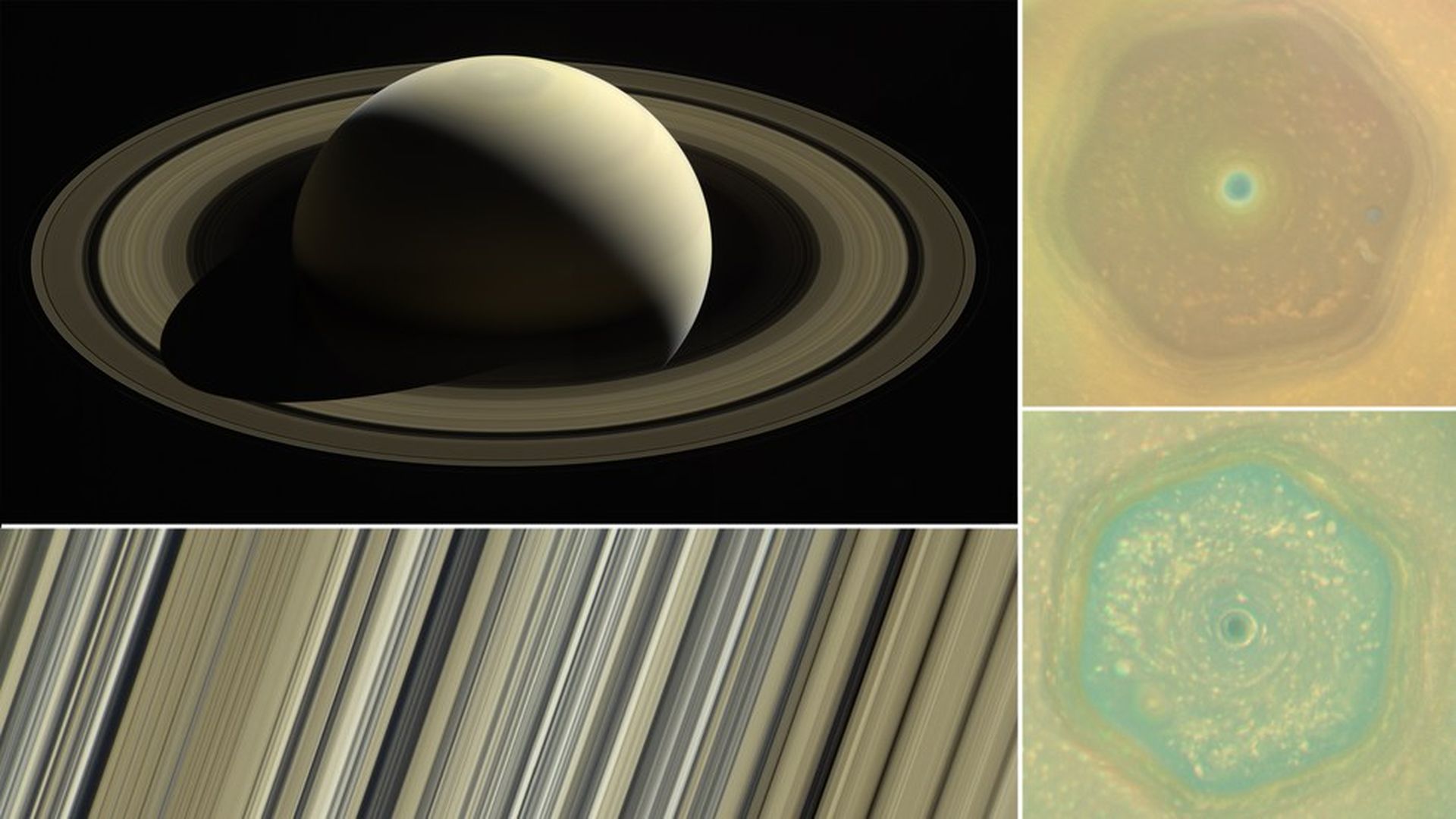
The Cassini spacecraft has been in orbit around Saturn for 13 years, beaming data and photographs back to Earth. When it deliberately dove into Saturn's atmosphere today, it marked the end of one of our most in-depth looks at an alien planet to date and our only link to the Saturnian system. There are no plans to return.
The mission might be over, but there are discoveries yet to come as scientists sift through over 635 gigabytes of data sent back to Earth. Although we're certainly leaving out some (shoutout to Pan, the ravioli-shaped moon that took the internet by storm), here are three top findings so far.
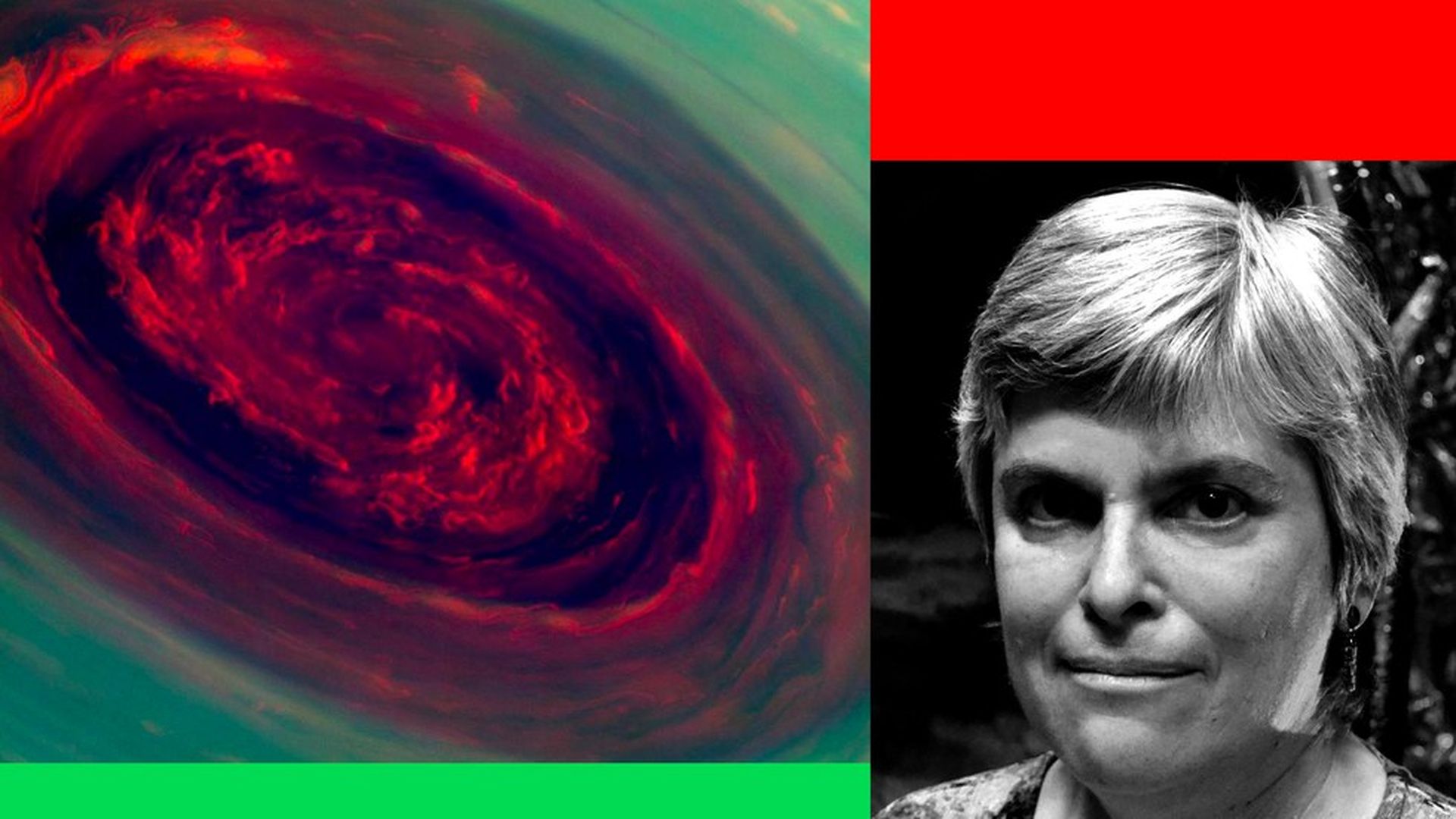
On Friday, the 20-year-long Cassini mission to Saturn will end. The spacecraft has flown through the planet's rings and discovered subterranean oceans on its moons. To protect the moons from the risk of being contaminated, it will plunge into Saturn's atmosphere and disintegrate. Axios spoke with scientist and engineer Jo Pitesky, who has been with the project for 13 years, about Cassini's discoveries and what it means to be part of a decades-long space mission.
The highlights:
The end: The spacecraft's final moments will be scientifically invaluable and the information gained will be "incredibly precious," says Pitesky. "There could be no better requiem for [Cassini]."
The feeling: "You think you know what this stuff is going to look like, and then it just knocks your socks off. I don't think any of us will ever, ever, ever get tired of that."
What's next: "I fully expect that there will be any number of science surprises coming from Cassini's dataset for decades."
More of that conversation, edited for length and clarity, is below.