Russia and China form a front

Add Axios as your preferred source to
see more of our stories on Google.
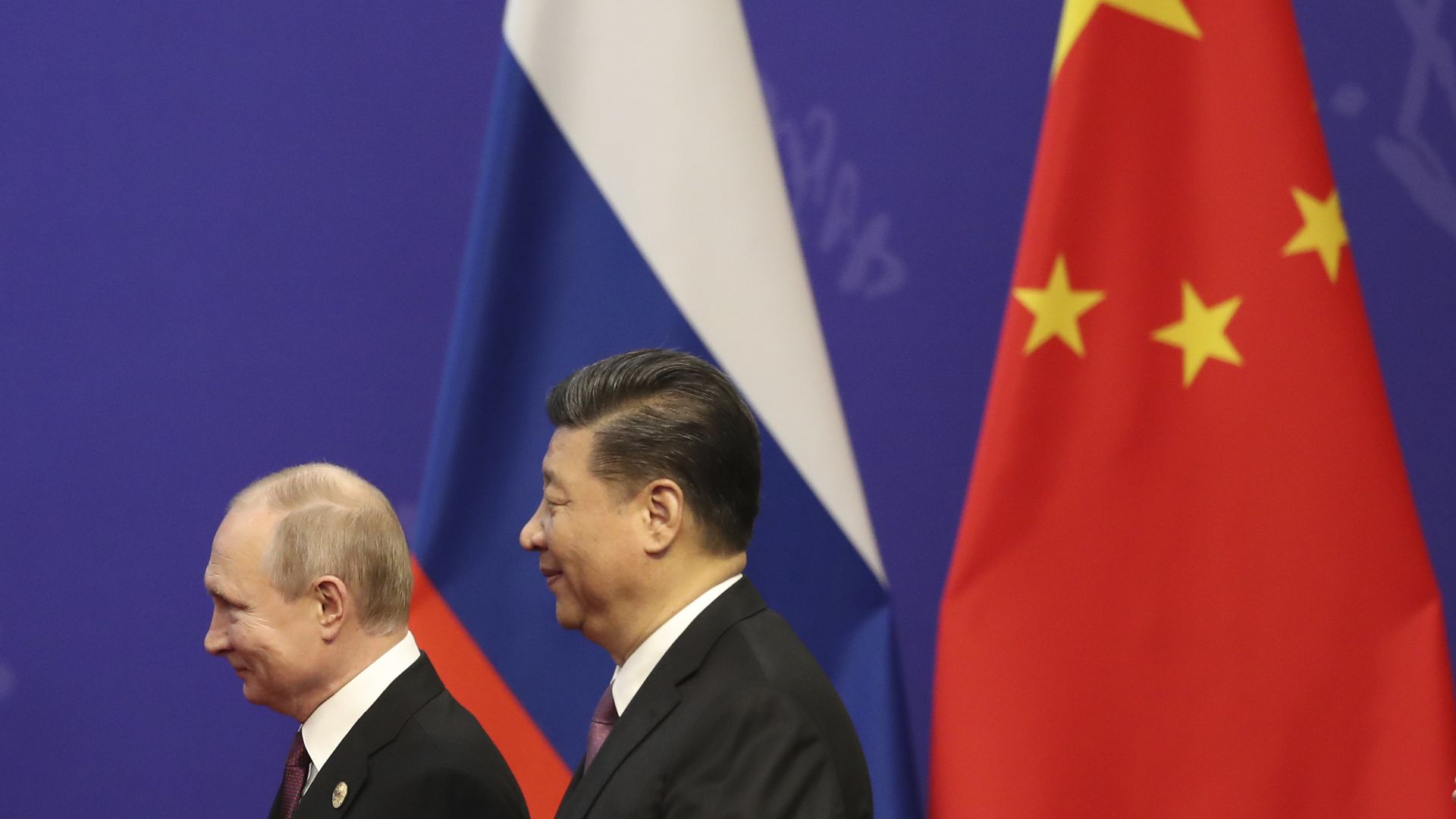
Vladimir Putin and Xi Jinping. Photo: Kenzaburo Fukuhara/Pool/Getty Images
Security officials increasingly view Russia and China — separately and together — as a threat to U.S. security.
Between the lines: “What I consider two of our strongest adversaries are now working together to try to undermine stability in the United States of America,” former CIA director and Defense secretary Leon Panetta says. “This is not like dealing with some kind of rogue nation."
- “They have great cyber capabilities. They have capabilities in space and on missiles. They both have very strong military capabilities," Panetta tells "Axios on HBO." (See a clip.)
- “Their cooperation in order to make use of some of these capabilities against the United States — that is a very dangerous moment for the United States of America.”
Zoom out: Russia and China aren’t formal allies but they are de facto allies.
- They share about 2,600 miles in border and major economic synergies.
- Chinese President Xi Jinping and Russian President Vladimir Putin have emphasized their newfound cooperation through steps trivial (flipping pancakes together) and substantial (joint military exercises and a linked oil-and-gas system).
- As both McMaster and Petraeus point out, both countries have suffered serious economic blows from U.S. sanctions and tariffs, and consequently share a deep and recently elevated desire to challenge the U.S.-led global order.
What to watch: Historically speaking, there may be limits to how close the two powers can get. They are longstanding regional rivals, and there is specific tension over influence in Central Asia and China's record of copycatting Russian military technology.
- And while he may be happy for another cudgel against the despised U.S., Putin won't be satisfied in the role of second fiddle to the giant next door.
Our thought bubble, per future editor Steve LeVine: Smart U.S. policy will attempt to create discord between Russia and China through carrot and stick.
- A major blunder would be pushing too hard with financial punishments, and incentivizing Moscow and Beijing to bypass the U.S. trade and monetary order.
- When the dollar's primacy materially dwindles, that will be game over in the balance of power with the East.
Go deeper:
