June 23, 2025


It's Monday! Welcome back, Pros. We've got a scoop on the AI reconciliation provision if you just keep scrolling.
1 big thing: AI moratorium rebranded "temporary pause"
/2025/06/23/1750688261418.gif?w=3840)
A 10-year freeze on state AI regulations has been updated in the Senate reconciliation bill as it inches closer to the finish line.
Why it matters: Changes to the AI provision were crucial to satisfy the Senate's Byrd Rule and get the parliamentarian on board.
What's inside: The AI provision approved by the parliamentarian is now called a "temporary pause" rather than a "moratorium," according to bill text seen by Maria.
- Senate Commerce Chair Ted Cruz had made broadband grants contingent on whether states were pursuing AI regulations.
- Cruz's office did not immediately respond to requests for comment.
What they're saying: "The most important part about this new text is that it allows the Trump administration to rescind BEAD grants and then only restart them if states agree to the AI pause," said Americans for Responsible Innovation senior VP of government affairs Doug Calidas.
- Calidas added that the pause covers the whole $42 billion pot of money for BEAD, not just the $500 million appropriated for support for AI under the broadband equity program.
- The new language sets aside $25 million for master services agreements for AI infrastructure, which sources familiar said helped the provision survive the Byrd bath.
Staff for Senate Commerce Democrats told Axios that it's their understanding the entire $42 billion pot is at risk and noted that former Cruz staffer and NTIA nominee Arielle Roth would be in charge of carrying it out once confirmed.
- The reason the provision made it through the parliamentarian was because individual parts of the section now have a CBO score with a small budgetary impact.
- Despite language tweaks, the intent is to try to make the choice as painful as possible for states between state AI laws and potentially billions of dollars in broadband funding, one of the Democratic staffers said.
- The staffer added that language includes "automated decision systems," making the ban on laws much broader than it seems.
What's next: Byrd baths are ongoing now and a motion to proceed — when the Senate will vote on whether to move forward with debate — on the budget bill is expected around Thursday, according to a source familiar.
- There are 20 hours of debate equally divided, followed by a vote-a-rama likely over the weekend.
- Revised text will likely be released along with the motion to proceed, but could be held back until a vote on passage.
- Amendments are filed between the motion to proceed and votes.
The bottom line: There's still fierce bipartisan pushback to the move and doubts that it will survive in the bill's final iteration.
- Sen. Ed Markey posted on X: "My amendment to strip the AI moratorium from the reconciliation bill is ready to go. I urge other members to join me and block this dangerous provision." Sen. Maria Cantwell will lead an amendment process as well, one Democratic staffer said.
- Republican senators including Marsha Blackburn and Josh Hawley have said they don't support the provision.
- Groups including Moms Against Media Addiction, Common Sense Media and Public Citizen are circulating a petition against the AI moratorium that had more than 60,000 signatures as of Monday morning.
2. Q&A with North Carolina attorney general Jeff Jackson
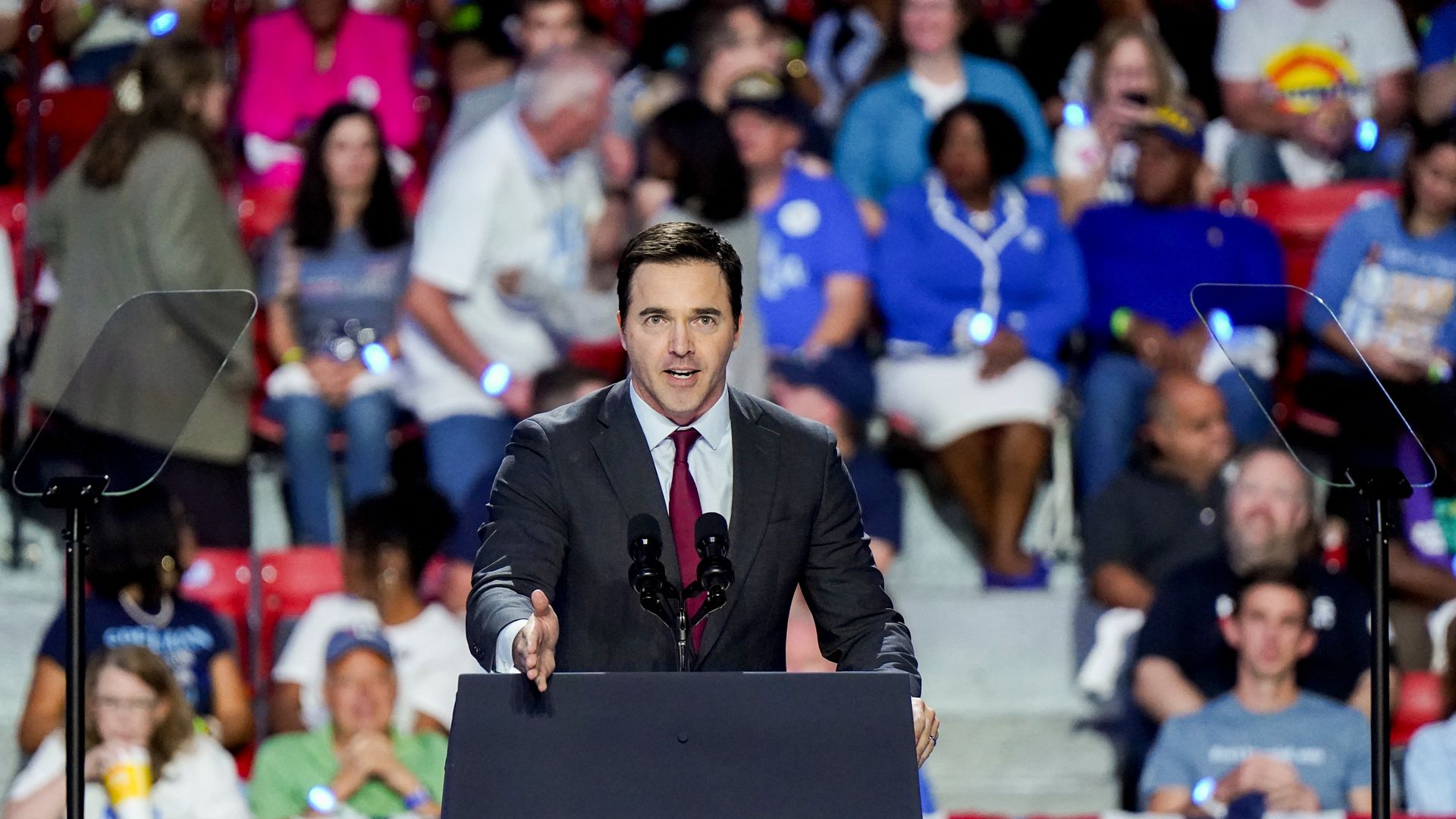
North Carolina's Democratic attorney general Jeff Jackson, a former congressman, knows all too well how difficult it is to pass tech bills on Capitol Hill.
Why it matters: Jackson is one of the dozens of state AGs pushing hard against the AI regulatory moratorium in the reconciliation bill, which just survived parliamentary review.
- Ashley caught up with Jackson as he works with other AGs and Democratic and Republican members of Congress to continue letting states pass AI legislation.
This conversation has been edited and condensed for clarity.
Why are you speaking out against the AI moratorium?
Congress is just going to abdicate here like they did with the internet, privacy and social media.
- It's only a matter of time until states decide they have to erect safeguards, particularly around consumer protection and voter protection.
- There's no reason we should have any confidence that Congress will even make a genuine attempt to put up some safeguards here because they just have a clear track record of failing to do so.
How has your thinking evolved on states since your time on the Hill?
When I served in Congress, right after ChatGPT hit and the AI conversation spiked, it resulted in a number of bills being filed, some of which were very narrowly targeted and had a very high level of bipartisan support.
- And I watched as none of them were allowed to get any traction whatsoever.
- There's a credible argument that we don't want to hinder innovation... but at one point, we got word from House majority leadership that, categorically, all AI bills were going to get blocked. That tells me this is not really about innovation, that this is about something else.
What do you think of the argument that different state bills make it harder for smaller tech companies to comply, while larger companies can manage?
I'm sympathetic to that argument, but we're not weighing one set of national safeguards against a patchwork from 50 states.
- We're weighing a patchwork from 50 states against the overwhelming likelihood of nothing.
- Given that choice, I can't imagine signing up for locking in a decade of doing nothing here when we're facing the most transformative technology in the history of mankind.
3. Hill hearing watch: COPPA, competition and more

It's a very busy week on the Hill — here's what we're tracking:
- DOJ budget: Attorney General Pam Bondi testifies today at 2pm ET before a House Appropriations panel on the Department of Justice's FY26 budget request.
- The White House wants a flat $233 million for the antitrust division headed up by Gail Slater, and is proposing to allow it to use an estimated $118 million in excess merger filing fees.
- Bondi will also testify before a Senate Approps panel on Wednesday at 10am ET.
2. Quantum questions: Tomorrow at 2pm ET, the House Oversight and Accountability panel on cybersecurity and IT convenes a hearing titled "Preparing for the Quantum Age: When Cryptography Breaks."
3. Competition policy: A half hour later, at 2:30pm ET, the Senate Judiciary Antitrust Subcommittee meets for a hearing on "Deregulation & Competition: Reducing Regulatory Burdens to Unlock Innovation and Spur New Entry."
4. China AI: The House China Select Committee holds a hearing on Wednesday at 9am ET to examine how the U.S. can outcompete China in AI.
- Anthropic's Jack Clark, the AI Policy Network's Mark Beall Jr., and the Center for Strategic and Budgetary Assessments' Thomas Mahnken testify before lawmakers.
5. COPPA 2.0: The bipartisan Children and Teens' Online Privacy Protection Act is on the agenda at Wednesday's 10am ET Senate Commerce executive session.
- In March, Sens. Ed Markey and Bill Cassidy reintroduced the legislation, which passed the Senate in a package with KOSA last year.
✅ Thank you for reading Axios Pro Policy, and thanks to editors Mackenzie Weinger and David Nather and copy editor Amy Stern.
- Do you know someone who needs this newsletter? Have them sign up here.
View archive