January 09, 2024

Good afternoon ... The House is finally back in town today!
1 big thing: Affordable internet access tops 2024 telecom goals

Illustration: Annelise Capossela/Axios
Making good on promises to help more Americans get online will be the leading telecom issue this year, industry sources told Maria.
Driving the news: The 2021 infrastructure law is just now poised to yield results, but Congress has yet to authorize key programs and address roadblocks to construction.
- USTelecom CEO Jonathan Spalter: "We are literally on the last lap of our national effort to close the digital divide, and the devil is in the details."
Threat level: The FCC this week will begin to wind down an internet subsidy program that nearly 23 million Americans rely on if Congress doesn't take "immediate" action, the agency said.
- The Affordable Connectivity Program, enacted through the Infrastructure Investment and Jobs Act, is projected to dry up in May.
- Reps. Yvette Clarke and Brian Fitzpatrick plan to introduce a bill tomorrow to reauthorize the program at a level near the White House's $6 billion request, sources familiar told Axios.
What they're saying: "The ACP is in jeopardy and, absent additional funding, we could lose the significant progress this program has made towards closing the digital divide," FCC Chair Jessica Rosenworcel said in a letter yesterday to lawmakers.
- The Fiber Broadband Association said the FCC's alert to Congress will help those currently enrolled "navigate their options and should facilitate their continued access to critical broadband service, especially provided over fiber infrastructure."
Meanwhile, whatever money comes from the $42.5 billion investment in the Broadband Equity, Access, and Deployment Program is undermined if ACP falls apart, stakeholders say.
Catch up fast: NTIA closed out 2023 by announcing BEAD allocations to 56 states and territories, moving into the later phases of implementation.
- Throughout the year, grantees will have to get approval for initial spending proposals, go through a challenge process and pick subgrantees.
- It's a process that's expected to go into 2025.
Yes, but: Success hinges on improving a permitting process that industry players say is too cumbersome.
- "The volume of applications for broadband projects will significantly increase over the next year as BEAD funds come alive, coupled with sustained investment from the private sector," said Mike Saperstein, Wireless Infrastructure Association senior vice president of government affairs.
- "With federal and state leaders eager to show progress, they'll realize that permitting delays still stand in the way of getting shovels in the ground, and therefore denying broadband to people desperately lacking a connection."
- Movement is expected this year on the American Broadband Deployment Act, which the House Energy and Commerce Committee has advanced, while states move forward with their own permitting plans.
Separately, Congress' to-do list also includes meeting the surging demand for wireless connectivity, in part by reauthorizing the FCC's lapsed spectrum auction authority.
- Meredith Attwell Baker, CTIA CEO: "I'm encouraged to see congressional leaders in recent days recommit themselves to restoring FCC auction authority as quickly as possible."
2. Scoop: Senate NIST AI bill gets House companion
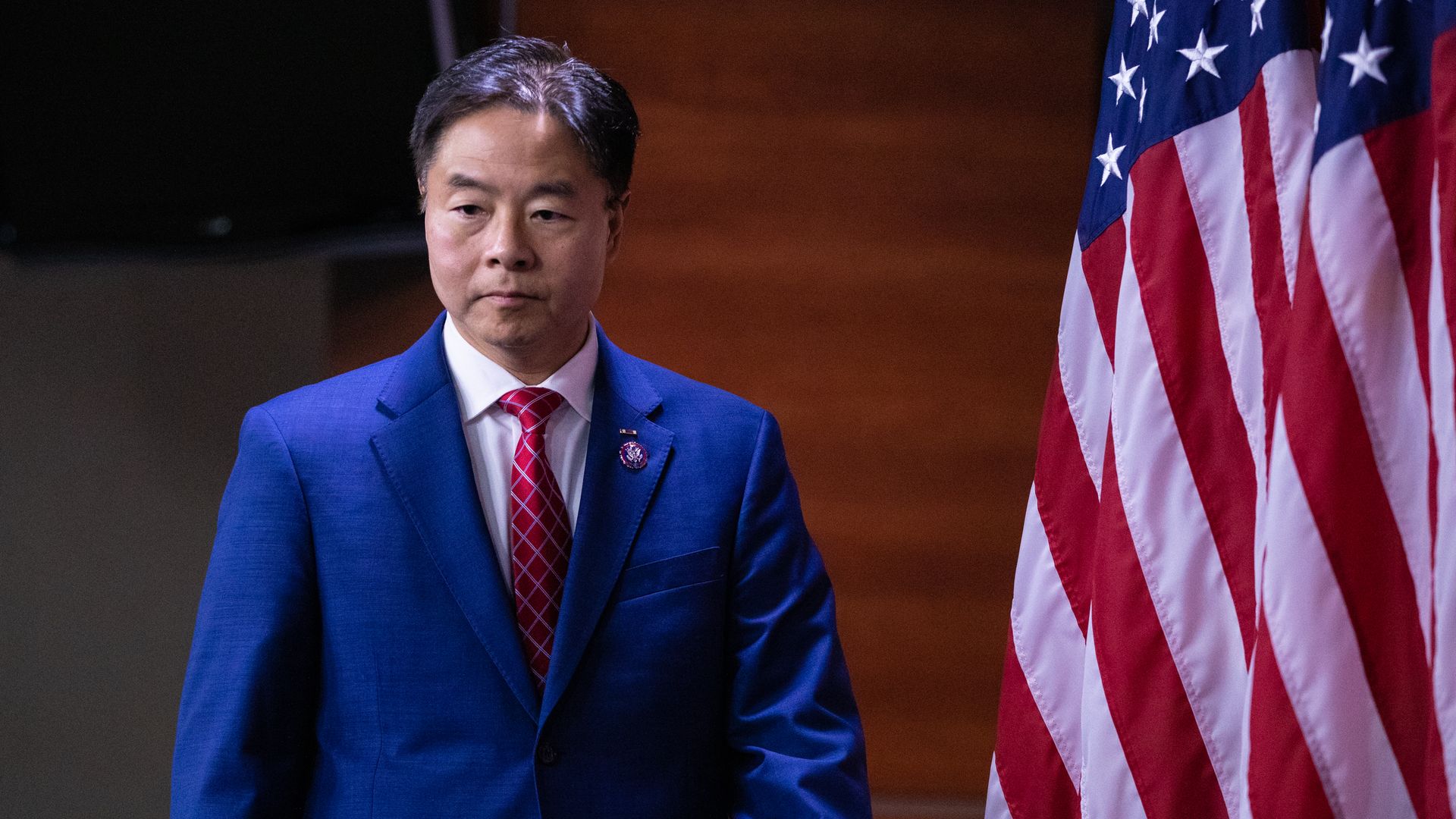
Lieu in October 2023. Photo: Anna Rose Layden/Getty Images
House lawmakers are set to introduce legislation this week requiring federal agencies to follow the National Institute of Standards and Technology's AI risk framework, per a copy of the bill obtained by Ashley.
Driving the news: The companion bill to Sens. Mark Warner and Jerry Moran's Federal Artificial Intelligence Risk Management Act is sponsored by Reps. Ted Lieu, Don Beyer, Zach Nunn and Marc Molinaro.
Why it matters: Having a House companion gives the AI bill momentum in a crowded field of proposals.
- Industry groups and academics have been pushing for the measure, arguing that any AI systems the government uses should abide by the NIST framework to set a good example for AI deployment across the country and standardize practices used to mitigate risk.
Details: The bill directs the OMB to issue guidance requiring agencies to incorporate the framework into their AI risk management efforts.
- It also requires agencies to contract with outside entities only if they agree to abide by "certain actions consistent with the framework," per bill text.
✅ Thank you for reading Axios Pro Policy, and thanks to editor Mackenzie Weinger and copy editor Brad Bonhall.
- Do you know someone who needs this newsletter? Have them sign up here.
View archive