First look: Bennet presses AI companies on transparency, labeling

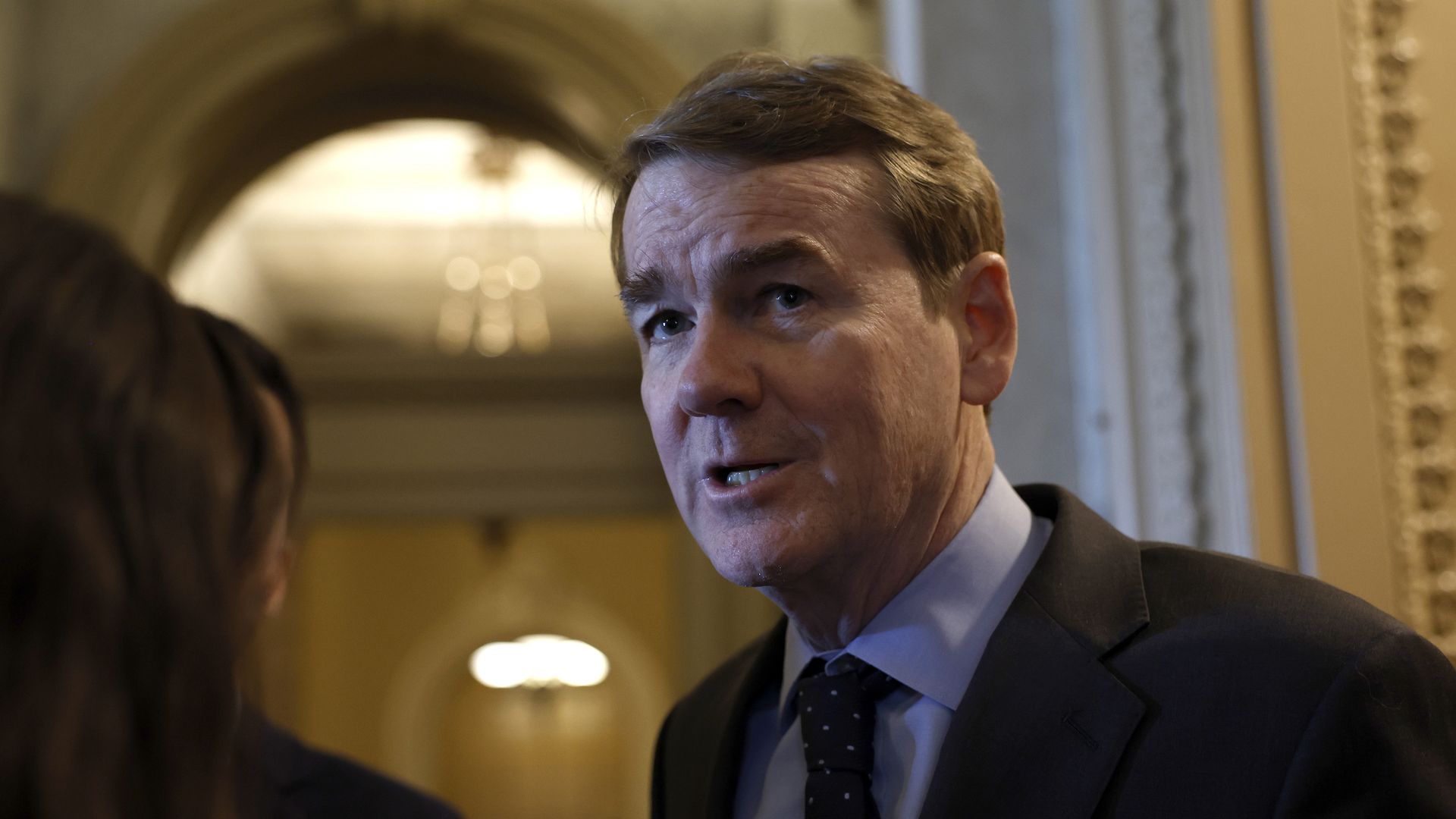
Bennet speaks to reporters outside the Senate chamber in March. Photo: Anna Moneymaker/Getty Images
Sen. Michael Bennet is pushing top AI companies to explain how they disclose and identify generative-AI formed content on their platforms, per a letter sent Thursday and shared first with Axios.
Why it matters: Bennet has the ear of Senate Majority Leader Chuck Schumer, and he has been pressing tech platforms on how they're incorporating safeguards into AI development, especially regarding its impacts on children.
- Bennet has also been promoting his bill on a commission to regulate digital platforms in the U.S. Schumer says regulating AI is a major goal for the rest of this year and Congress has to act.
What they're saying: "Continuing to produce and disseminate AI-generated content without clear, easily comprehensible identifiers poses an unacceptable risk to public discourse and electoral integrity," Bennet writes in the letter to leaders of Meta, OpenAI, Alphabet, Stability AI, Anthropic, Twitter, TikTok, Microsoft and Midjourney.
- "Americans should know when images or videos are the product of generative AI models, and platforms and developers have a responsibility to label such content properly."
- "The sophistication and scale of these tools has rapidly evolved and outpaced our existing safeguards."
Details: Bennet asks companies to answer questions by July 31, including:
- What technical standards are being used to identify generative AI content.
- What policies companies have for users who violate such standards.
- How distribution of generative AI content is being tracked.
- What tests and evaluations are being used.
- Whether social media platforms have official policies for AI-generated content related to campaigns and elections.
- Whether social media platforms will commit to taking down misleading AI content.
The intrigue: Meta on Thursday announced a number of new policies around AI on its platforms, including new transparency features for users and researchers.
Between the lines: Tech companies working on AI have been dealing with questions and demands from Congress for years on everything from privacy to election security, and are now savvy enough to roll out new policies just as they're being told they need to have them.
- That doesn't mean Congress will think companies' own policies are good enough. But it makes it less likely they will be scolded for being irresponsible.
