February 26, 2025


Happy Wednesday! There's still bipartisan interest in PBM legislation in the House, if lawmakers can just agree on the appropriate legislative vehicle.
🚨 Situational awareness: Join Axios Pro: Policy & Quorum on Monday for a live conversation breaking down what's ahead for health care policy in 2025. Secure your spot here.
1 big thing: PBMs still ripe for House overhaul

The House Energy and Commerce health subcommittee today laid the groundwork for continuing last year's efforts to overhaul PBM business practices, possibly including new transparency measures and eliminating spread pricing in Medicaid.
Why it matters: There may still be bipartisan support for pursuing PBM legislation, Victoria reports.
State of play: At a hearing this morning, Health subcommittee Chair Buddy Carter referenced his Drug Price Transparency in Medicaid Act, which would have banned spread pricing in Medicaid, among other things, but was dropped from the year-end funding deal.
- Energy and Commerce Chair Brett Guthrie raised questions around PBM rebate models, as well as transparency and delinking PBMs' compensation from the cost of drugs in Medicare.
Friction point: But Democrats remain upset that Republicans pulled out of a bipartisan agreement to include the health package in the year-end funding deal.
- Last night's vote on the GOP budget resolution is also resonating, with Democrats repeatedly bringing up potential Medicaid cuts while Republicans insisted they would target only "waste, fraud and abuse."
E&C Health Ranking Member Diana DeGette said Democrats would overwhelmingly support a standalone PBM bill combined with extensions of expiring health programs, if it's brought up before the next government funding deadline.
- "What is the plan of the majority to get that bipartisan plan, including PBM reform [and] all these important health care extenders that we agreed on last year, to the floor?" DeGette asked.
- Carter responded that the GOP isn't clear on next steps, but that "it will be cleared up soon."
What we're watching: There's a ticking clock, with temporary health extenders funding community health centers, delaying Medicaid DSH payment cuts to safety net hospitals and extending Medicare telehealth flexibilities all due to expire by the end of next month.
2. Medicaid caps less of a focus: Guthrie
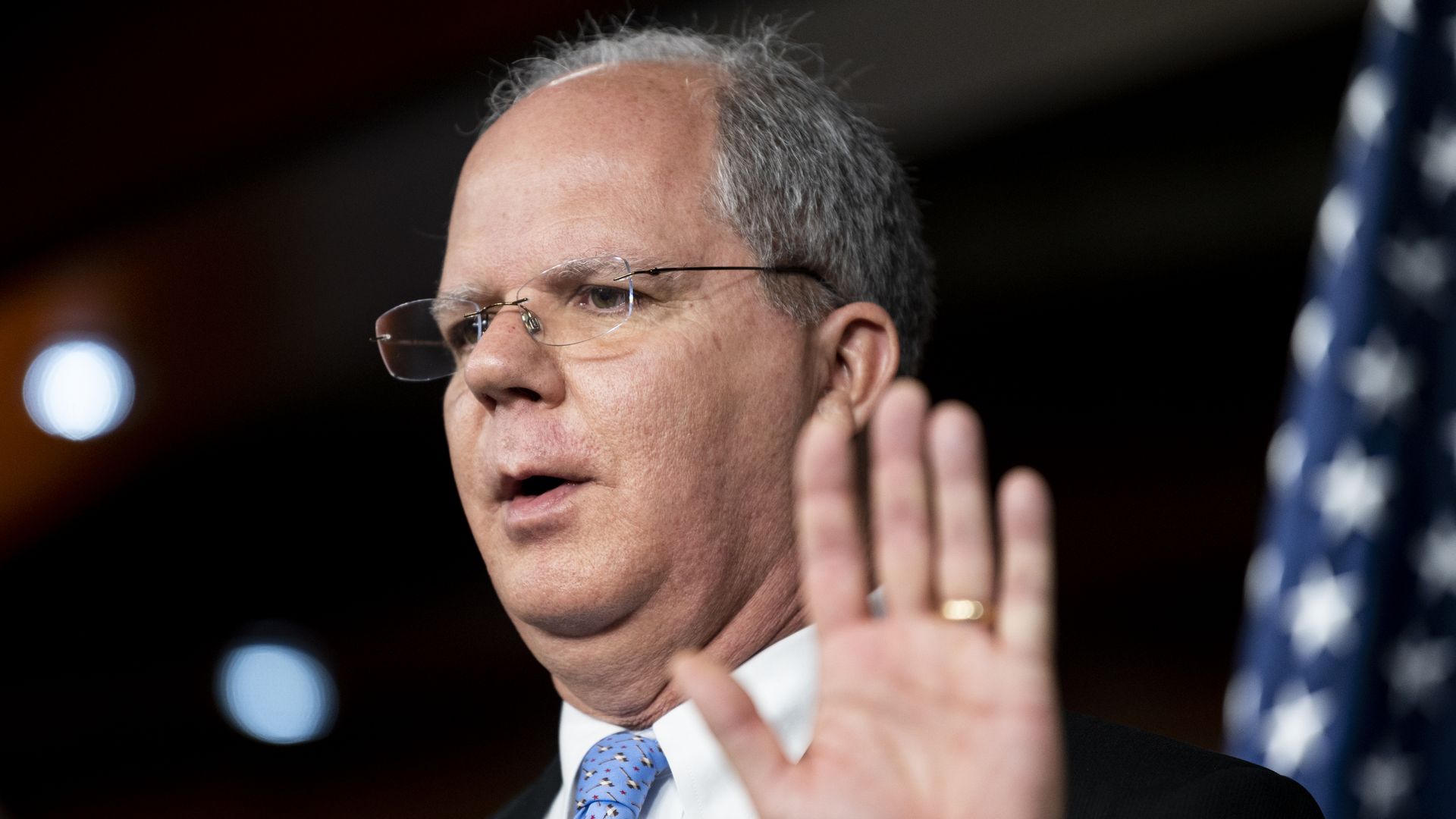
Medicaid per capita caps are becoming less of a focus for House Republicans' reconciliation package, Energy and Commerce Chair Brett Guthrie said before last night's cliffhanger vote on the GOP budget resolution.
Why it matters: Capping the amount of Medicaid funding for each enrollee is one of the most controversial ideas that has been discussed and has sparked concern about heavy coverage losses, Peter reports.
- GOP leaders are trying to reassure nervous moderates that they will not make draconian cuts to the safety net program.
Yes, but: The option has not been firmly ruled out, given the need to hit the $880 billion savings target Guthrie's committee has been given.
- Other options on the table that could lead to coverage losses include imposing work requirements and lowering the federal share of spending for the Medicaid expansion population.
What they're saying: "You know, those are not as [much] part of the conversation as they have been in the past," Guthrie told reporters yesterday when asked about per capita caps.
- Rep. Jeff Van Drew, a more moderate member from New Jersey, went even further. "The cap, I believe, is dead," he told Peter last night.
- Van Drew said he had spoken to President Trump, House leadership and Guthrie about targeting only "waste, fraud and abuse" in Medicaid.
- Still, what exactly qualifies as "waste" is not totally clear.
- Trump today doubled down on his pledge not to touch Medicaid, saying: "It won't be 'Read my lips' anymore. We're not going to touch it. Now we are going to look for fraud."
Between the lines: Guthrie said there is widespread agreement among Republicans about work requirements for "able-bodied" Medicaid enrollees.
- He also expressed interest in lowering the federal share of costs for the Medicaid expansion. Nine states have "trigger" laws that would end the Affordable Care Act's Medicaid expansion if federal funding were lowered.
The bottom line: The budget resolution puts the Energy and Commerce Committee in a tough spot.
- Other options include repealing Biden-era eligibility rules and cracking down on provider taxes, which some conservative analysts criticize as "money laundering."
- But it's still possible the Senate will end up lowering the budget savings target in the face of lingering concerns about Medicaid cuts.
Victoria Knight contributed reporting.
3. Catch me up: Lilly expansion, USDA bird flu plan

- Lilly expansion: The drug giant said it will invest an additional $27 billion to build four manufacturing plants as Trump threatens new tariffs on pharmaceuticals. More from CNN.
- Bird flu plan: Agriculture Secretary Brooke Rollins laid out a five-step strategy to containing the outbreak and lowering egg prices. Details in WSJ.
- Price transparency: Trump revisited health price transparency for hospitals and insurers in a new executive order, Maya Goldman reports.
✅ Thank you for reading Axios Pro Policy, and thanks to editors Adriel Bettelheim and David Nather and copy editor Brad Bonhall. Do you know someone who needs this newsletter? Have them sign up here.
View archive