
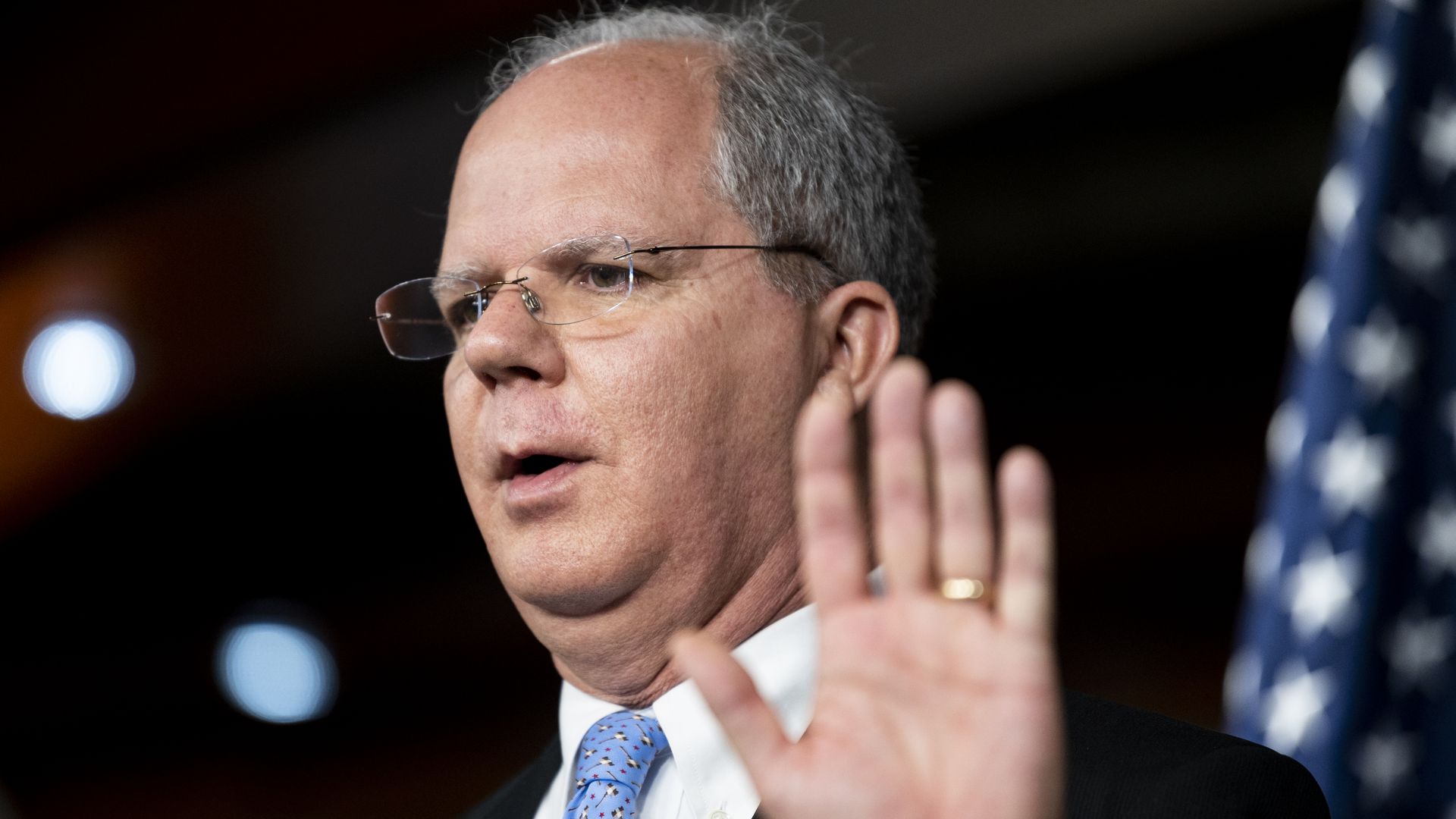
Guthrie. Photo: Bill Clark/CQ-Roll Call via Getty Images
Medicaid per capita caps are becoming less of a focus for House Republicans' reconciliation package, House Energy and Commerce Chair Brett Guthrie said before last night's cliffhanger vote on the GOP budget resolution.
Why it matters: Capping the amount of Medicaid funding for each enrollee is one of the most controversial ideas that has been discussed and has sparked concern about heavy coverage losses.
- GOP leaders are trying to reassure nervous moderates that they will not make draconian cuts to the safety net program.
Yes, but: The option has not been firmly ruled out, given the need to hit the $880 billion savings target Guthrie's committee has been given.
- Other options on the table that could lead to coverage losses include imposing work requirements and lowering the federal share of spending for the Medicaid expansion population.
What they're saying: "You know, those are not as [much] part of the conversation as they have been in the past," Guthrie told reporters Tuesday when asked about per capita caps.
- Rep. Jeff Van Drew, a more moderate member from New Jersey, went even further. "The cap, I believe, is dead," he told Axios on Tuesday night.
- Van Drew said he had spoken to President Trump, House leadership and Guthrie about targeting only "waste, fraud and abuse" in Medicaid.
- Still, what exactly qualifies as "waste" is not totally clear.
- Trump on Wednesday doubled down on his pledge not to touch Medicaid, saying: "It won't be 'Read my lips' anymore. We're not going to touch it. Now we are going to look for fraud." It remains to be seen how exactly "fraud" is defined and whether Trump sticks to the pledge.
Between the lines: Guthrie said there is widespread agreement among Republicans about work requirements for "able-bodied" Medicaid enrollees.
- He also expressed interest in lowering the federal share of costs for the Medicaid expansion. Nine states have "trigger" laws that would end the Affordable Care Act's Medicaid expansion if federal funding were lowered.
- Guthrie argued that it's a fairness issue. "If you're in Kentucky, you're a disabled child, the federal government spends 72 cents for you; if you're a healthy adult, it's 90 cents," he said.
The bottom line: The budget resolution puts the Energy and Commerce Committee in a tough spot.
- Beyond Medicaid work requirements and lowering the federal share of spending, other options include repealing Biden-era eligibility rules and cracking down on provider taxes, which some conservative analysts criticize as "money laundering."
- It is also possible the Senate will end up lowering the budget savings target in the face of lingering concerns about Medicaid cuts.
Victoria Knight contributed reporting.
