April 29, 2024

Back to the grind, friends. The large number of retiring health policy veterans in the 118th Congress is creating a pileup of legacy bills and causes for the lame-duck session.
- Know anyone who's changing jobs? Send us your tips for the next edition of our monthly people moves.
1 big thing: Members seek to cement legacies
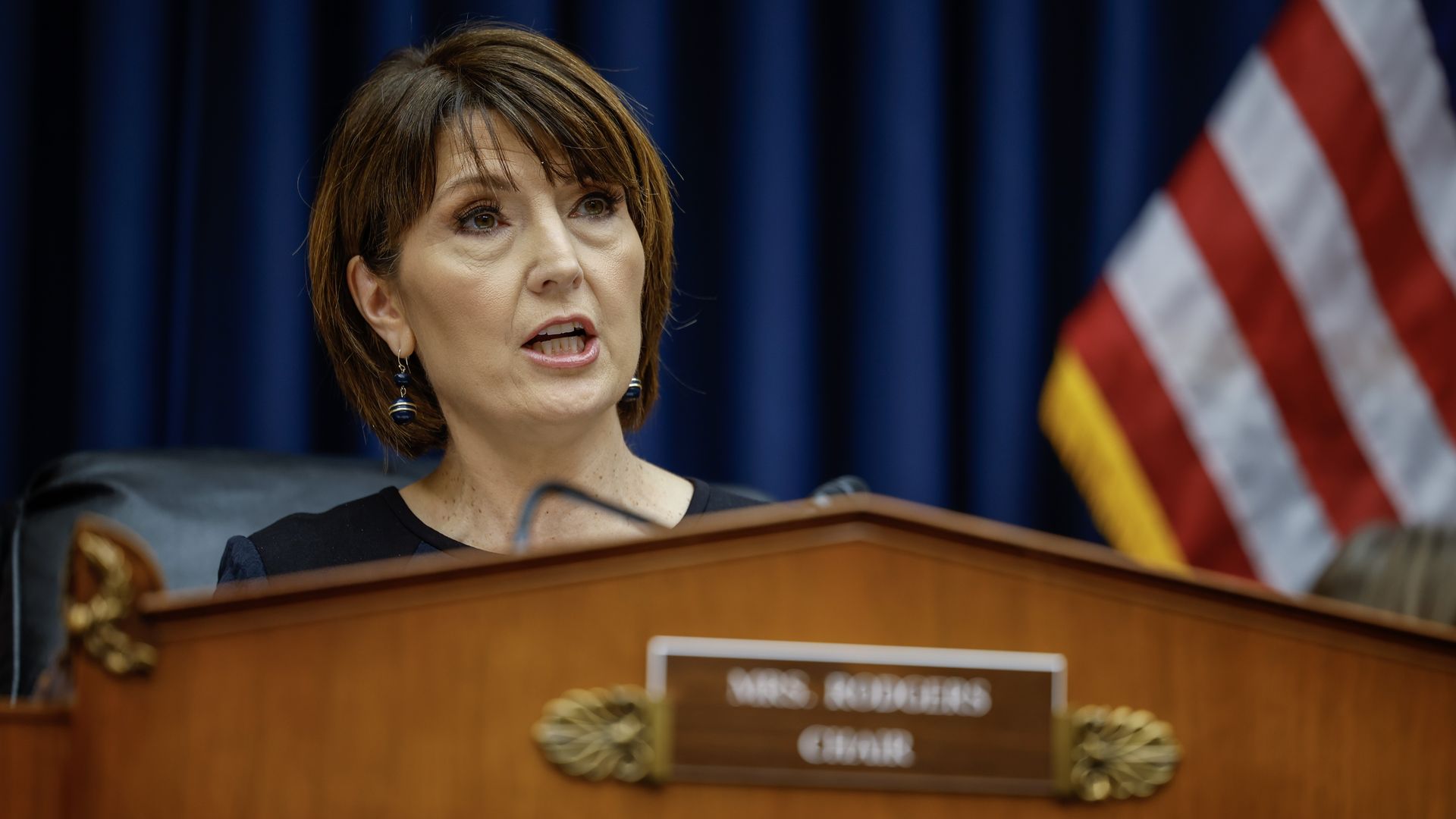
McMorris Rodgers. Photo: Chip Somodevilla/Getty Images
The unusually large number of health policy veterans leaving Congress this year is creating a logjam of legacy bills and causes for a lame-duck session, Victoria reports.
Why it matters: Lawmakers often go out of their way to accommodate retiring colleagues, and there are some big asks on health price transparency, weight-loss drugs, the 340B drug discount program and provider issues.
Some key players trying to leave an imprint:
House Energy and Commerce Chair Cathy McMorris Rodgers
- Rodgers has made it clear that she's intent on getting the House health transparency package over the finish line in the Senate.
- There was a near-agreement in March to include hospital and PBM transparency measures in the government funding deal. But it fell apart amid concerns it could sink the must-pass package.
- Rodgers also wants the Senate to act on her bill to ban quality-adjusted life years from being used as a metric for determining a drug's value in federal health programs.
Rep. Michael Burgess
- Burgess' Preventive Health Savings Act would change how the Congressional Budget Office scores health care legislation dealing with preventive services. The House passed it in March, and he's pressing for the Senate to do likewise.
- Burgess is also intent on revamping the physician payment system and restrictions on physician-owned hospitals.
Rep. Brad Wenstrup
- Wenstrup told Axios that he's hoping to reframe the discussion on health care from insurance coverage to the "actual health of America."
- Part of that includes securing Medicare coverage of blockbuster weight-loss drugs. He wants Ways and Means to hold a hearing on the Treat and Reduce Obesity Act, or TROA.
- He's also pushing for physician payment reform, as well as CBO scoring reform and preventing overdose deaths.
Rep. Larry Bucshon
- Bucshon has long pushed for action on the VALID Act, which would give the FDA authority to regulate laboratory developed tests (more on that below).
- He's also prioritizing physician payment reform, prior authorization legislation and 340B transparency reform, per his office.
Sen. Mike Braun
- Braun has several big items on his to-do list, including the Promising Pathways Act which would give priority reviews to treatments for terminal diseases with limited or no other options, such as ALS.
- He also has a health care price transparency bill that's he working on with HELP Chair Bernie Sanders, which would require negotiated rates and cash prices for shoppable hospital services.
Sen. Tom Carper
- Carper is also pushing for action on TROA, as well as his dual-eligibles legislation, a hospital-at-home bill, along with action on youth mental health provisions that passed out of the Senate Finance Committee in November.
2. Cassidy bashes new FDA lab-developed test rule

Cassidy. Photo: Anna Moneymaker/Getty Images
Senate HELP Committee Ranking Member Bill Cassidy is taking the FDA to task for a new rule increasing oversight of laboratory-developed tests, Peter reports.
Why it matters: Overhauling this testing regulation was originally going to be legislative, through the VALID Act. But with that bill stalled, the FDA is going forward on its own — and sparking controversy.
Between the lines: Cassidy argues the agency does not have the statutory authority to make the move on its own, and that it could harm innovation.
- "During the pandemic, we saw how too much government interference and red tape delays lifesaving care to Americans," he said.
- He called on Congress to intervene.
The other side: The FDA argues it's risky for patients to rely on in-vitro diagnostic tests that might not be fully accurate.
- The agency today said it would treat the tests as medical devices under the Food, Drug and Cosmetic Act and phase out its current approach of not always enforcing the requirements.
- "LDTs are being used more widely than ever before — for use in newborn screening, to help predict a person's risk of cancer, or aid in diagnosing heart disease and Alzheimer's," FDA commissioner Robert Califf said.
Our thought bubble: The FDA's action is a sign of the diminished prospects for the VALID Act.
- Former FDA commissioner Scott Gottlieb wrote on X that the rule "reflects the lost hope at FDA that Congress would pass the VALID Act, a more tailored approach to LDTs."
3. Catch me up: Hospital data, LGBTQ protections

Illustration: Tiffany Herring/Axios
1. Hospital data: The phase-out of a COVID-era reporting requirement means that starting this week, hospitals don't have to disclose data on admissions, occupancy and other indicators of system stress from respiratory diseases.
2. LGBTQ protections: New protections for gay and transgender medical patients that the Biden administration announced on Friday are likely to draw legal challenges, per the New York Times.
3. Pharmacy unionization: Staff at a CVS Omnicare in Las Vegas voted overwhelmingly to unionize amid growing nationwide backlash to what pharmacists say are unsafe work conditions.
4. Antibiotic overuse: New WHO data show there were "worrisome high rates" of antibiotic use in hospitalized COVID-19 patients despite low rates of suspected bacterial infections.
5. Seniors' mental health: The share of patients with mental health diagnoses rose 40% nationally from 2019 to 2023, with the most significant jump among seniors, FAIR Health found.
✅ Thank you for reading Axios Pro Policy, and thanks to editors Adriel Bettelheim and David Nather and senior copy editor Bryan McBournie. Do you know someone who needs this newsletter? Have them sign up here.
View archive