October 03, 2023

Tuesday's here, gang. The FDA's move to regulate lab-developed tests has some in Congress eager to resurrect the VALID Act, which was dropped from two legislative packages during the last session.
- There also are new questions about how the Biden administration is policing Medicaid managed care.
1 big thing: FDA testing rule revives push for VALID Act

Illustration: Eniola Odetunde/Axios
A long-awaited move by the FDA to put regulation of lab-developed tests under its control hasn't dampened congressional interest in addressing the issue and reviving the VALID Act, Victoria reports.
Why it matters: Legislation offers more legal certainty than a proposed rule that could quickly be ensnared in legal challenges by academic medical centers and laboratory industry groups that oppose the effort.
- But the VALID Act was dropped from two legislative packages last year and faces uncertain prospects this session.
Details: The FDA's proposed rule would treat in-vitro diagnostic tests that have long escaped strict agency scrutiny as medical devices under the Food, Drug and Cosmetic Act and end the agency's discretionary enforcement approach over five years.
- Use of the tests has expanded in recent years, to help diagnose cancer and other diseases, and to identify if patients are candidates for targeted therapies.
- The FDA said that the rule is needed since laboratory developed tests "may not provide accurate test results," leading patients to either seek unnecessary care or to delay or forego treatment altogether.
- FDA commissioner Robert Califf has repeatedly asked Congress to give his agency the needed power rather than relying on the rulemaking process.
The VALID Act was introduced in 2020 by Sens. Michael Bennet and Richard Burr and Reps. Larry Bucshon and Diana DeGette. Burr has since retired.
- The measure was included in the Senate's 2022 FDA user fee reauthorization package, but never made it into the House's version.
- VALID later was dropped from the end-of-year omnibus amid opposition from academic medical centers, saying it would impose burdensome regulations.
- This year's House version of VALID was introduced in March and would give the FDA explicit authority to regulate laboratory developed tests as well as create a new product category for tests to be reviewed under, via an electronic system.
What they're saying: Members of Congress are still insisting that legislation is needed so lawmakers can have more say in shaping the regulatory framework.
- "I think there's a lot of positive things in the VALID Act that are not going to be in this rule at the end of the day but you know, we also want to get through the comment period and see how they might adjust it," Bucshon told Axios on Monday night.
- He said he's talking to the House Energy and Commerce Committee staff about having a hearing on VALID but hadn't yet asked Chair Cathy McMorris Rodgers for one.
McMorris Rodgers said in a statement on Friday that, "this rule goes well beyond any of the proposed LDT legislation and will stifle innovation of diagnostics."
- "The FDA should rescind this rule and allow Congress — the people's voice — to consider the matter," she added.
The other side: The American Clinical Laboratory Association, one of the laboratory industry groups, said in a statement it opposes the FDA's proposed rule and want to continue working with Congress on "diagnostic-specific legislation."
Our take: Even with new momentum, the VALID Act doesn't appear to have enough juice behind it in this Congress, especially with the ongoing fights over federal spending and multitude of other health matters that have to be settled.
2. First look: CMS pressed on Medicaid managed care
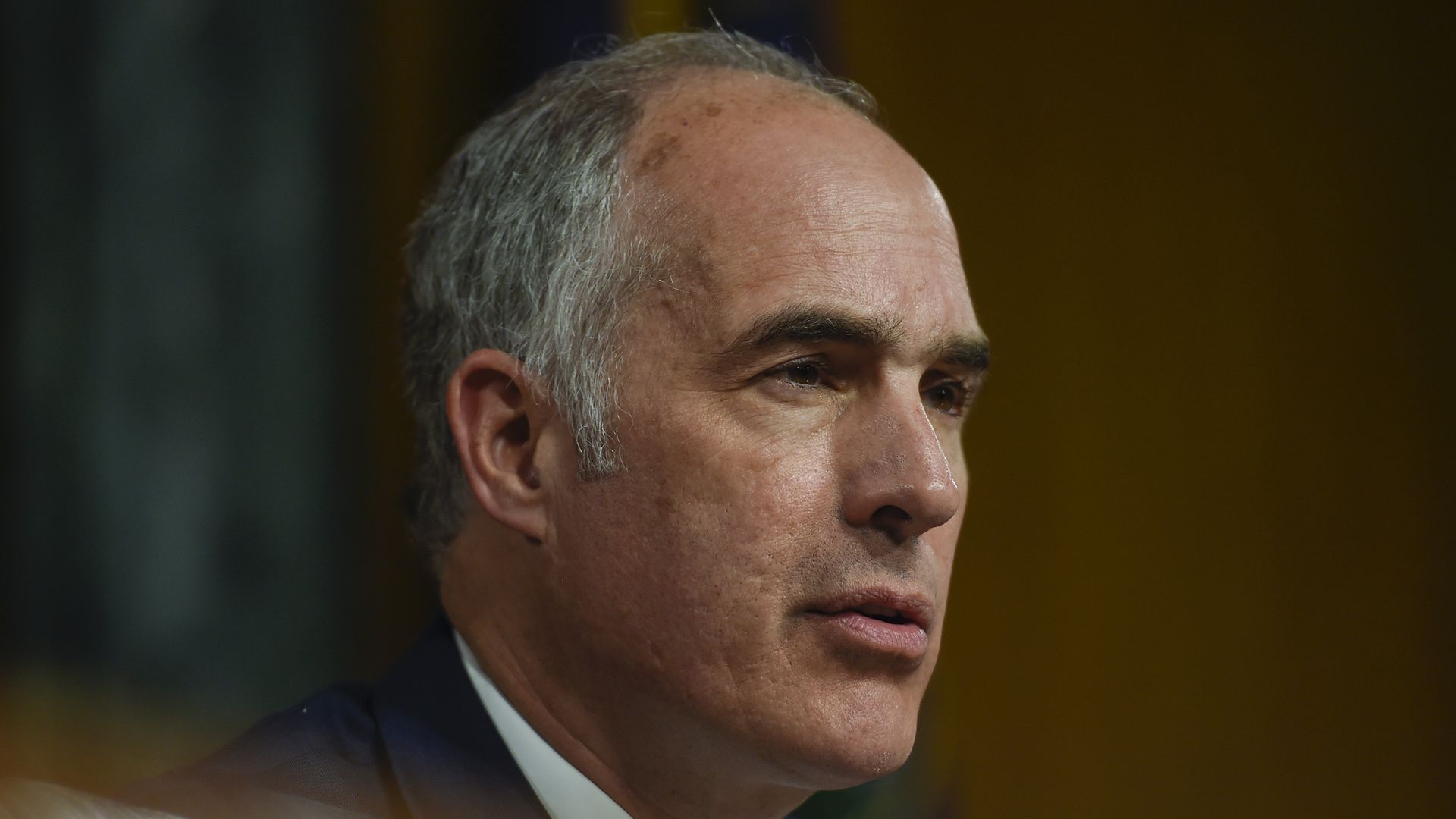
Casey speaks at the Capitol. Photo: Leigh Vogel/Getty Images
Sen. Bob Casey is pressing the Centers for Medicare and Medicaid Services for answers about its oversight of Medicaid managed care plans, pointing to denials of coverage for necessary care, Peter reports.
Why it matters: A Casey letter provided to Axios shows that scrutiny is expanding from the insurers who administer benefits to the oversight role of the administration.
- The inquiry comes after Senate Finance Chairman Ron Wyden and House Energy and Commerce Ranking Member Frank Pallone last week announced an investigation into MCOs' coverage denials.
What they're saying: "I am seeking information to ensure appropriate steps are taken to ensure MCOs are not putting their bottom line ahead of the interests of patients seeking care," Casey writes in the letter, dated Tuesday, to CMS administrator Chiquita Brooks-LaSure.
- The catalyst is an HHS inspector general report from July that found that Medicaid managed care organizations the watchdog reviewed denied coverage for one out of every eight prior authorization requests on average.
- In some cases the rate was much higher: 12 of the 115 MCOs in the review had denial rates above 25%, the IG found.
What's next: Casey asked CMS a series of questions about its plans for stepping up oversight of MCOs and asked for answers by Nov. 16.
✅ Thank you for reading Axios Pro Policy, and thanks to editor Adriel Bettelheim and senior copy editor Bryan McBournie.
- Do you know someone who needs this newsletter? Have them sign up here.
View archive