January 25, 2024

1 big thing: Lobbying burst for hospitals and PBMs
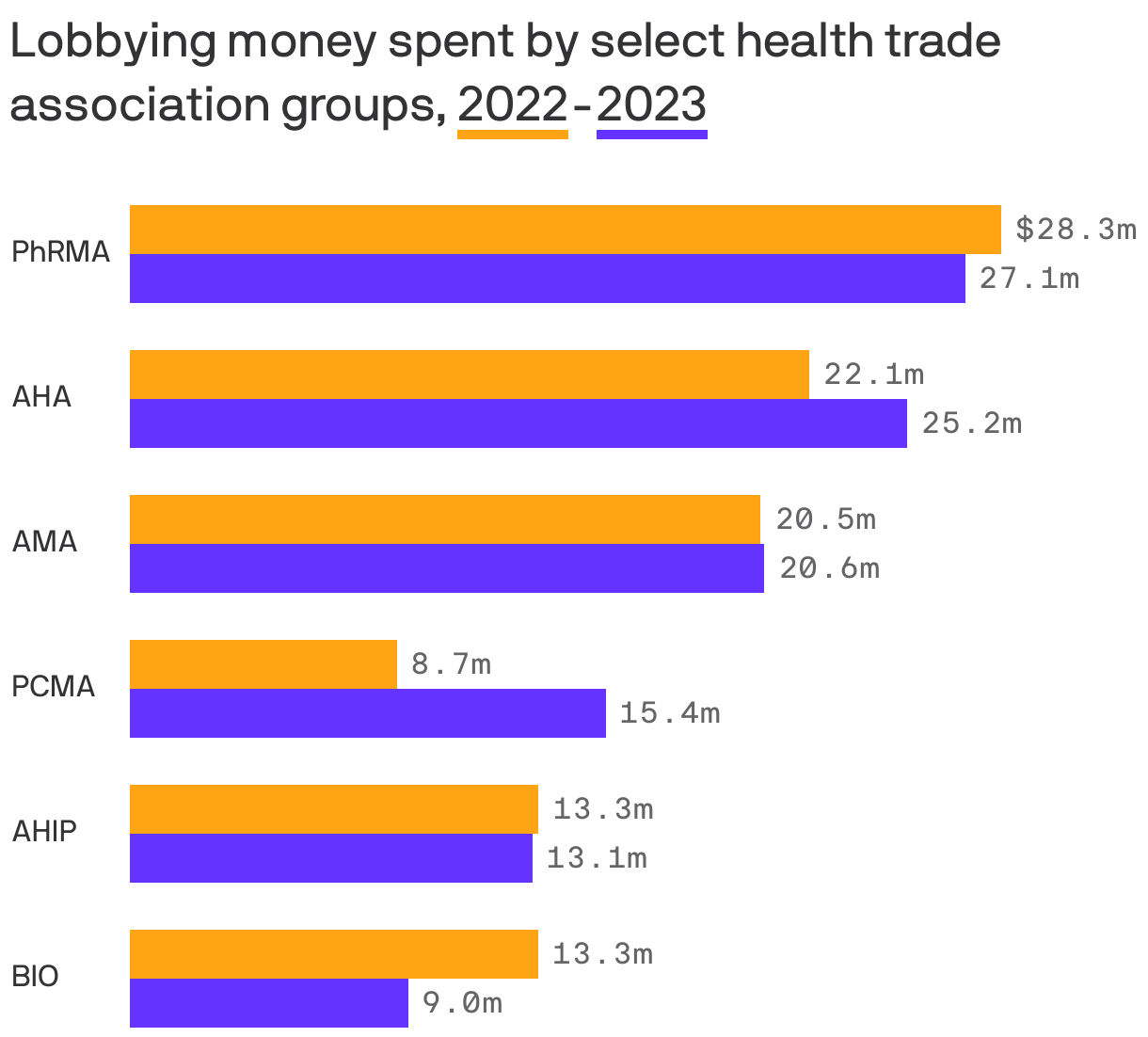
Hospitals and PBMs spent much of last year on the congressional hot seat and amped up their lobbying budgets playing defense, Victoria reports, based on a review of latest round of federal lobbying disclosures.
Why it matters: Hospitals forestalled site-neutral payment policies while PBMs avoided a bicameral effort aimed at overhauling their business practices and increasing transparency.
- But those proposals remain very much in play for the second session of the 118th Congress.
By the numbers: PCMA, the trade association for PBMs, almost doubled its spending in 2023, to $15.4 million from $8.7 million in 2022.
- A lot of that was concentrated in Q4, when the group doled out $5.3 million. The House in December passed its health cost transparency bill that included new reporting requirements on PBMs, which critics accuse of helping to drive up drug prices.
- The American Hospital Association also boosted its lobbying expenditures last year, laying out $25.2 million — a $3 million increase over 2022.
- The big hospital trade group also concentrated on the year-end legislative push, spending $8.1 million in Q4, the most it's spent in any quarter in the last two years.
- Hospitals have been fending off Medicare site-neutral payment proposals that would pay the same for outpatient services regardless of whether they're delivered in hospital outpatient departments or doctors' offices. A limited version made it into the House-passed transparency package.
While the drug industry went through its share of upheaval, the big trade group PhRMA spent slightly less on lobbying in 2023 — $27.1 million, down from $28.3 million the year before.
- The American Medical Association spent $20.6 million, virtually unchanged from 2022.
- AHIP also spent about the same: $13.1 million, down from $13.3 million in 2022.
- And BIO spent $4 million less on lobbying last year: $9 million, compared with $13.3 million in 2022.
Zoom in: The drug companies behind blockbuster anti-obesity treatments didn't spend significantly more on lobbying last year — even though there was considerable discussion about the Treat and Reduce Obesity Act, which would usher in Medicare coverage of the drugs for weight loss.
- Novo Nordisk, which makes Ozempic and Wegovy, spent $4.2 million in 2023, compared with $4.6 million in 2022.
- Eli Lilly, which makes Mounjaro, spent $7.9 million in 2023, up from $6.8 million in 2022.
- A who's who of interest groups rallied for TROA last year, including Amgen, the National Kidney Foundation, AHIP, the American Gastroenterological Association and Boehringer Ingelheim.
Of note: Both Lilly and Novo also make insulin products. Beyond weight loss drugs, Novo said it was lobbying on "insulin pricing and affordability" while Lilly focused on the "INSULIN Act" and the "Affordable Insulin Now Act."
The intrigue: Two of the other top hospital trade associations that also lobby against site-neutral policies, the Federation of American Hospitals and America's Essential Hospitals, had noteworthy spending patterns.
- Similar to AHA, America's Essential Hospitals also spent more in Q4 of 2023 than in any other quarter of the last two years and wound up devoting a total of $1.8 million to lobbying last year, compared with $1.6 million in 2022.
- The Federation of American Hospitals spent less in 2023 than in 2022: $2.4 million, down from $2.8 million.
2. Sanders targets drug CEOs pre-subpoena vote
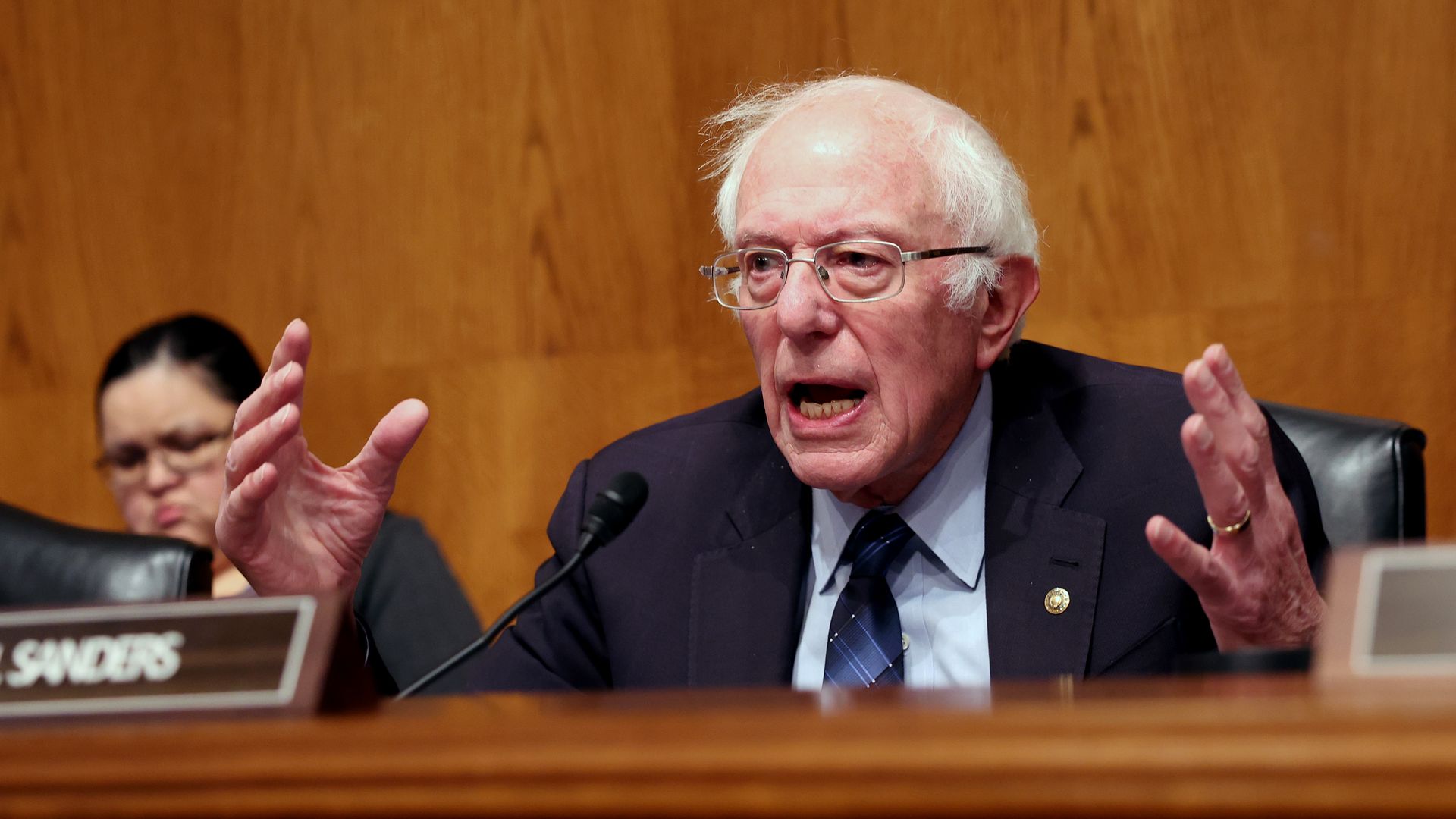
Sanders at a Senate HELP Committee hearing. Photo: Kevin Dietsch/Getty Images
View archive