July 06, 2023

Good afternoon ... Bored with recess yet? We'll be back to our regular publishing schedule next week when Congress returns.
- Meantime, Victoria and Maya spent their recess doing a deep dive into how AI might affect Congress and health care. And no, AI isn't going to start writing your policy briefs for you. Yet.
1 big thing: Congress faces the AI learning curve
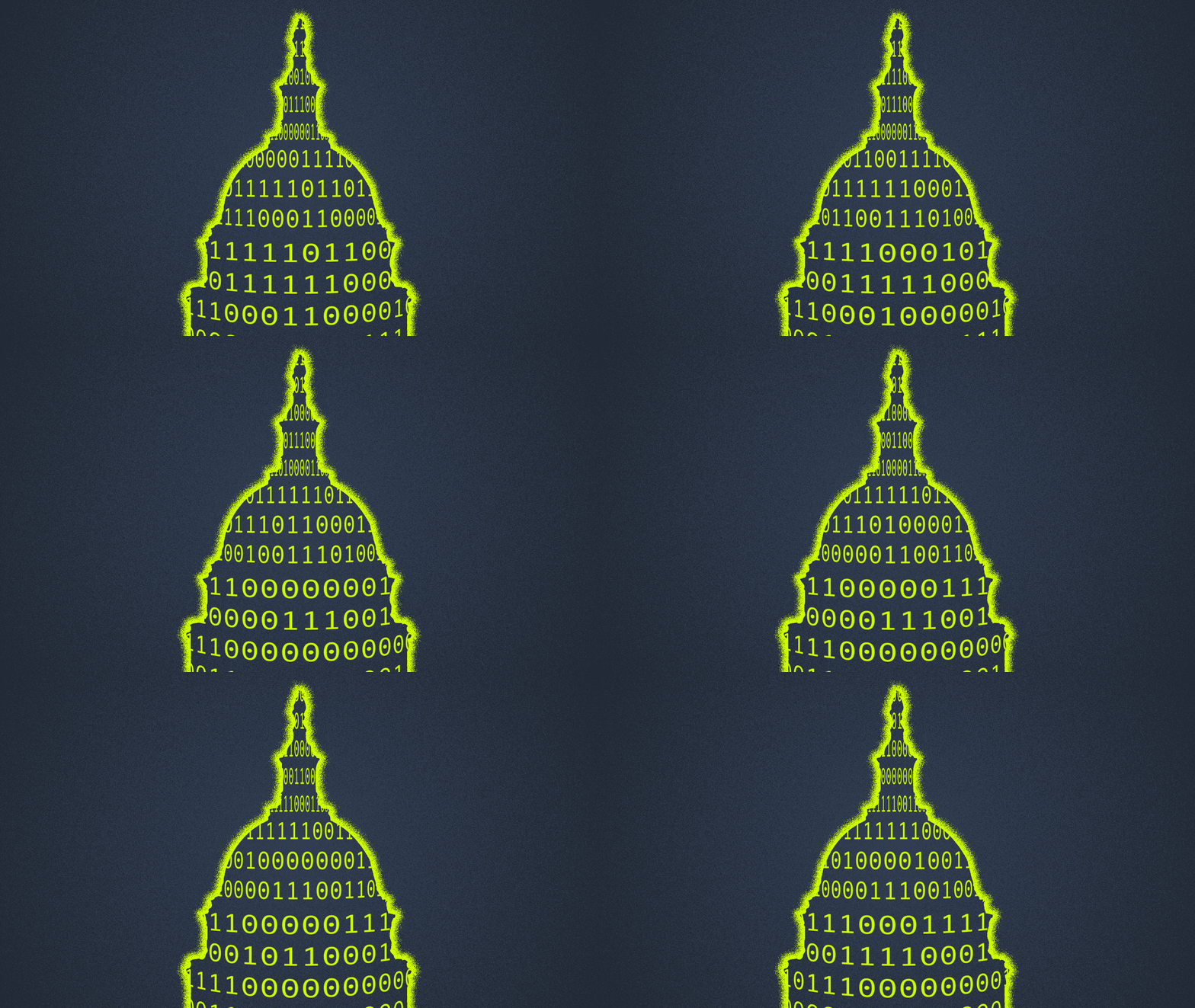
Illustration: Brendan Lynch/Axios
Congress isn’t moving any legislation on AI in health care yet — but lawmakers are definitely interested in the topic, Victoria and Maya report.
Why it matters: New generative AI technologies are already being incorporated into health care systems with little oversight.
- Although AI has been involved in various aspects of the health care system for years, the difference now is the rapid advancement of generative AI, such as ChatGPT.
The big picture: So far, Congress is still in the wait-and-watch phase.
- “We're still in the learning stages and still trying to figure all this out,” Rep. Buddy Carter, a member of the Energy and Commerce health subcommittee and the Congressional Artificial Intelligence Caucus, told Axios.
- Senate Finance Committee Chair Ron Wyden told Axios he's concerned about AI being used to deny insurance claims — an issue he previously discussed at a recent hearing.
- “As these companies get bigger, and have deeper and deeper pockets, they’re going to be able to hire more people and buy more tech, and if anything, use the new technologies to turn down more people, more quickly," Wyden said.
- For now, though, all he could offer was that "we’re going to look at this carefully.”
Details: In the last few months, several tech giants — including Microsoft, Amazon and Google — have announced partnerships with health care companies or facilities to use generative AI technologies.
- Some current AI uses include assisting with writing clinical notes in electronic health records, drafting electronic notes to patients and streamlining the prior authorization process.
- The White House has developed an AI blueprint, and the Department of Commerce’s National Institute of Standards and Technology has developed an AI risk management framework, but both are pretty broad and don’t touch on health care specifically.
Other federal offices have weighed in on AI in health more directly: The FDA has already approved, authorized or cleared more than 500 AI or machine-learning enabled medical devices.
- But some health technologies are exempted from FDA review, according to the 2016 21st Century Cures Act, leaving a potential area for Congress to step in.
- CMS already reimburses for some AI-based care, which the agency calls "software as a service."
- The Coalition for Health AI also recently released a blueprint for how to responsibly implement AI systems in health care in a way that aims to reduce negative outcomes and doesn’t make existing biases worse.
Behind the scenes: “We are talking to both Senate and House members, leadership from the AI caucuses,” said Brian Anderson, a co-founder of the Coalition for Health AI and chief digital health physician at Mitre.
- “There is a steep learning curve for many of the folks in this space, but they have been very willing to listen, and the conversations have been very open-ended.”
- Cybil Roehrenbeck, a partner at Hogan Lovells and executive director of the AI Healthcare Coalition, said she's most interested in policy aimed at speeding up review pathways for new technologies.
What they’re saying: Other lawmakers acknowledged that there may be issues with AI rapidly expanding into health care, but seemed slow to commit to acting in any regulatory capacity.
- Asked if she had any particular areas of concern, Rep. Anna Eshoo, a co-chair of the Congressional AI Caucus, responded: “The health care system relies on accuracy. Because the system is absolutely dependent on accuracy, people’s lives depend on it. The data in must be good and the data out must be good.”
Of note: At least one congressman is ready to rely on AI for prescribing drugs. Rep. David Schweikert introduced a bill this Congress that would allow AI to do just that.
What we’re watching: Majority Leader Chuck Schumer released a legislative AI framework in June and plans to set up “AI insight forums” this fall.
2. What the health industry wants on AI

Illustration: Maura Losch/Axios
Health care industry groups have started laying out their own thoughts on how AI should be used and regulated within the field, Maya and Victoria report.
Yes, but: They're not saying much about what Congress should do — at least for now.
Where it stands: The AMA House of Delegates last month called for more regulatory oversight of insurers’ use of AI in reviewing prior authorizations and patient claims.
- Insurers should require humans to examine patient records before denying medical care, the AMA said.
- AMA delegates voted to work with the Federal Trade Commission on protecting patients from false and misleading medical advice from AI. They also voted for the AMA to develop its own organizational principles on AI use in medicine.
- The AMA has also adopted guidance for classifying AI procedure codes.
- "That's an extremely helpful document just in terms of setting out some clear definitions," said Cybil Roehrenbeck, leader of Hogan Lovells' health care lobbying practice. "We've asked policymakers to look at adopting [the AMA's definitions] more broadly."
Other trade groups have weighed in, too. The American Nurses Association released a position paper on the ethical use of AI in nursing last year that says technology to assist clinical practices should supplement — not replace — nurses’ knowledge and skills.
- The American Hospital Association has many posts on its website about how hospitals can leverage AI, some dating to 2018.
The intrigue: Despite their clear interest in AI, the AMA, American Hospital Association and AHIP all declined to comment on what they’d like to see Congress do on AI.
- That’s understandable, said Tom Leary, head of government relations at the Healthcare Information and Management Systems Society, a trade group focused on improving health care information technology.
- “We’re all kind of scrambling,” he said. “We all know that in the background, there's been predictive analytics capabilities. … Now we're really sprinting on this topic.”
Zoom in: Policymakers should take incremental steps toward regulating AI, and pilot programs could be a useful way to do so, Leary said.
- One area in particular that’s ripe for regulation is privacy. If Congress doesn't tackle AI's potential impact on privacy, “others are going to define the policy landscape and the legal landscape,” Leary said.
- Data used in the AI models could also be an area of concern. “For the generative models, it’s a lot more data just coming from the internet. Or we don’t know where the data is coming from, you don’t know what they were trained on,” said Brian Anderson, co-founder of the Coalition for Health AI.
- “Therefore the level of [data] transparency into these large language models is much harder to regulate, but it’s appropriate that Congress looks at this.”
Our thought bubble: This is only the beginning. As AI continues to take off, expect to see more from clinicians about what they need from policymakers on the subject.
- One place to look: Comments to the Office of Science and Technology Policy are due tomorrow on AI.
✅ Thank you for reading Axios Pro Policy, and thanks to editors David Nather and Mackenzie Weinger and copy editor Brad Bonhall.
- Do you know someone who needs this newsletter? Have them sign up here.
View archive