May 29, 2025


👋 Happy Thursday. Hope you're continuing to enjoy a bit of a breather. We're sharing more about what Daniel explored during a recent Arizona trip.
- We'll be back in your inbox Tuesday unless there's breaking news.
🎶 Today's last song is from Geoff Cooper, CEO of the Renewable Fuels Association: "Nearly Lost You" by Screaming Trees.
1 big thing: Arizona mine faces permitting and Trump tests
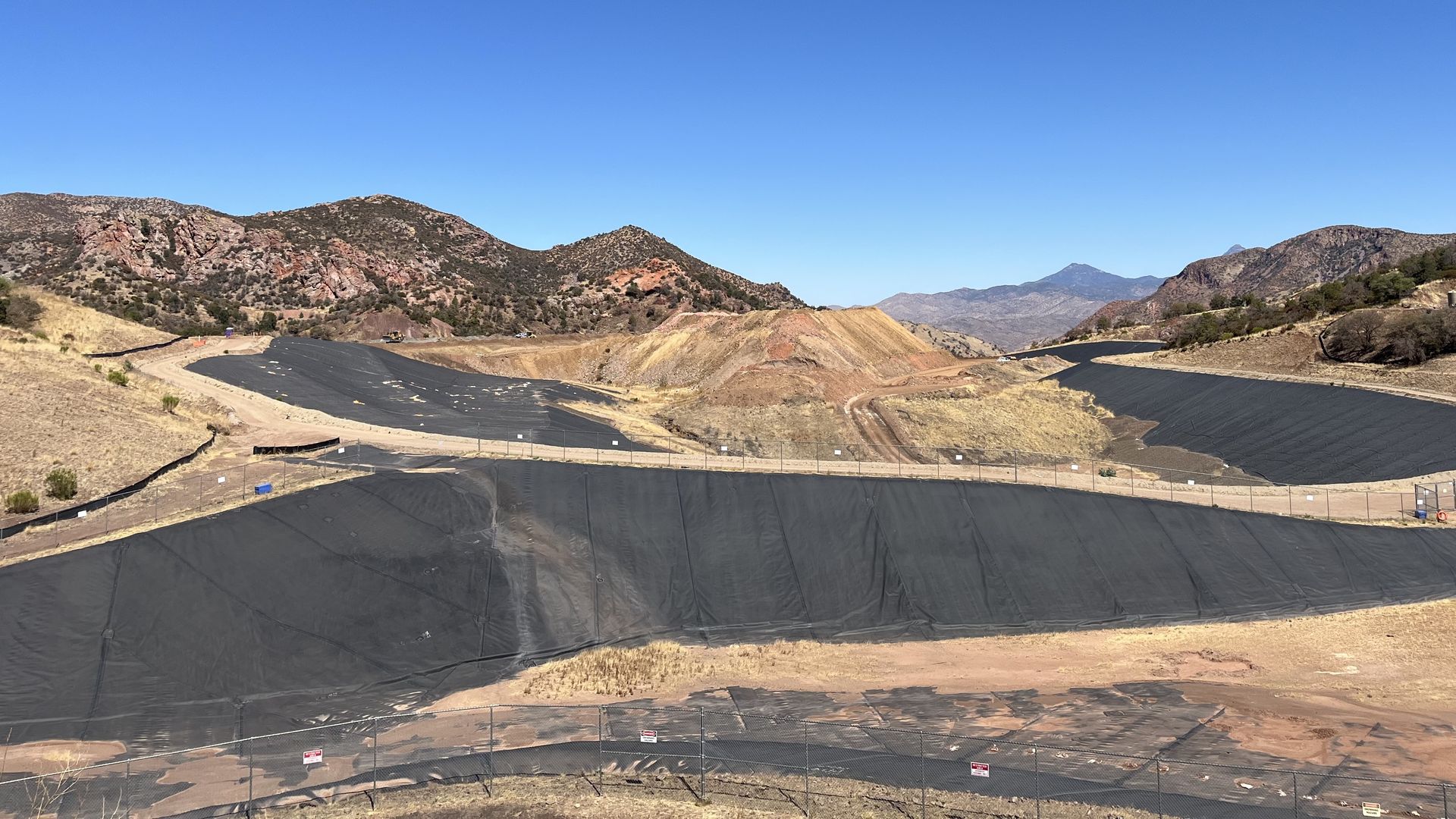
PATAGONIA, Ariz. — A critical-minerals mine could serve as a national example of sustainability — if it can clear federal permitting and community engagement hurdles.
Why it matters: South32's Hermosa mine was the first mining project that the Biden administration added to a fast-track permitting program.
- It's a test for whether mining projects in the battery supply chain can escape the Trump administration's deepening purge of Biden-era energy funding.
- The Grand Canyon State is also a microcosm of larger debates in Congress and elsewhere over mining. Those debates have intensified in the race to compete with China and shore up defense supply chains.
The big picture: The $2.2 billion mine in southern Arizona is positioned to produce two federally designated critical minerals: manganese and one of the largest untapped deposits of zinc.
- Although South32 has state permits to begin construction, it's applying for federal permits for expansion into the Coronado National Forest.
Yes, but: A $166 million grant that the Energy Department awarded to South32 is being examined as part of an agency-wide review of funding priorities.
Zoom in: The 45,000-acre Hermosa site in the Patagonia Mountains was abuzz with activity during a tour for contractors and mining experts that Daniel joined in late April.
- Company officials led the group to a lookout point with sweeping views of the entire operation, where construction is about 40% finished.
- Officials talked up the mine's relatively small footprint and efforts to reduce environmental impacts.
- The company is working with city and county officials on a Community Protections and Benefits Agreement that aims to provide investment for housing, education, social services, or other areas.
Zoom out: President Trump wants to speed up permitting for mines, including for Rio Tinto's Resolution Copper project in Arizona.
- The Supreme Court this week rejected a Native American group's appeal contending that project will destroy a sacred area.
- The DOE has targeted Biden-era requirements for community outreach and environmental justice considerations, while Democrats have warmed to the idea of some mining.
- "Not every mine is the right mine, but not all mines are bad, either," Sen. Ruben Gallego told Daniel.
Between the lines: Developing such mines "can't be forced journeys," said South32 Hermosa president Pat Risner, who spoke on the sidelines that week at the Society of Environmental Journalists conference in Tempe.
- "The municipalities need everyone to be heard, and there are diverse views," he said.
The other side: Some longtime residents and environmental groups worry about the mine's effects on animal and bird migratory paths and disruptions to the landscape and air quality.
- The mine has divided residents of Patagonia, a 19th-century mining town that's become an enclave for retirees, mountain bikers and nature-lovers.
- "Their definition of sustainability is woefully inadequate for this biologically diverse area," said Carolyn Shafer, mission coordinator for the Patagonia Area Resource Alliance.
Our thought bubble: Like real estate, mining is about location, location, location.
- Each project will have a unique footprint, making it difficult to replicate South32's or predict the broader mining industry's success.
2. Trump starts down nuclear waste disposal path

As the Trump administration begins seeking how to get rid of nuclear waste, one group of experts has a suggestion: Start with a burial site that takes only defense-generated waste.
Why it matters: With nuclear power gaining wider public acceptance, some in Congress and elsewhere agree that determining what to do with radioactive leftovers over the long term must become a bigger piece of the puzzle.
- The lone U.S. repository — New Mexico's Waste Isolation Pilot Plant — is barred from burying high-level waste.
Driving the news: President Trump's nuclear executive orders last week called on the Energy Department and other agencies to submit a report within 240 days for a national nuclear waste management policy.
- "We think this 'waste report' could serve as a presidential recommendation for congressional action next year," ClearView Energy Partners said.
Context: The Obama, Trump and Biden administrations' decision to mothball Nevada's Yucca Mountain to bury commercial reactors' spent fuel has largely stalled the commercial waste-storage debate.
- Biden officials pursued a "consent-based siting" process that seeks to find volunteers to host a site. But it's unclear whether and how Trump will continue the process.
Zoom in: Columbia University's Center on Global Energy Policy convened a roundtable with industry officials and experts to discuss burying defense high-level waste and spent fuel before tackling commercial waste.
- In a report last week, it cited a 2015 Energy Department study.
- That study concluded that "a strong basis exists" for a defense-only repository and that it could be done faster than developing a commercial one.
What they're saying: "If you had another repository up and running, that's some progress, and it gives us experience doing consent-based siting" for a commercial site, said Matt Bowen, a Columbia research scholar who helped lead the roundtable.
3. Catch me up: Permitting, tires, Murkowski

1. 💼 Permitting change: Emily Domenech is becoming executive director of the Federal Permitting Improvement Steering Council.
- A former top aide to Speakers Kevin McCarthy and Mike Johnson, she recently has been a senior vice president at Boundary Stone Partners.
2. 🛞 Rubber meets road: Energy & Commerce Chair Brett Guthrie applauded Trump's signing into law a bill killing a Biden-era rule requiring rubber tire makers to clean up planet-warming emissions from manufacturing.
- "This flawed rule created enormous costs, threatening to destroy the domestic production of rubber tires and raise prices for consumers," Guthrie said in a statement.
3.💲 Growth spot: The Club for Growth is airing a TV spot in Alaska imploring Sen. Lisa Murkowski to back the reconciliation bill. "Tell Murkowski — don't block Trump's agenda," it says.
4.⚡ Cancel culture: Businesses closed, canceled or downsized over $14 billion worth of U.S. low-carbon manufacturing and energy generation projects so far this year, per a new summary of tracking data from E2. Our colleague Ben Geman has more.
✅ Thank you for reading Axios Pro Policy, and thanks to editors Chuck McCutcheon and David Nather and copy editor Brad Bonhall.
View archive