Axios What's Next

August 14, 2024



A top EV charging company is working to fix some of the biggest headaches facing electric car owners, Joann reports today.
- 👋🏻 Thank you so much for your support, ideas and feedback. Aug. 16 will be our last daily send of the What's Next newsletter — but coverage of all the ways we work, play and get around will continue to appear on Axios.com.
- We also hope to see you in person at What's Next events, and plan to share special coverage of those with you. Follow Axios Events to be the first to know about them.
Today's newsletter is 1,079 words ... a 4-minute read. Copy edited by Amy Stern.
1 big thing: Fixing EV charging headaches
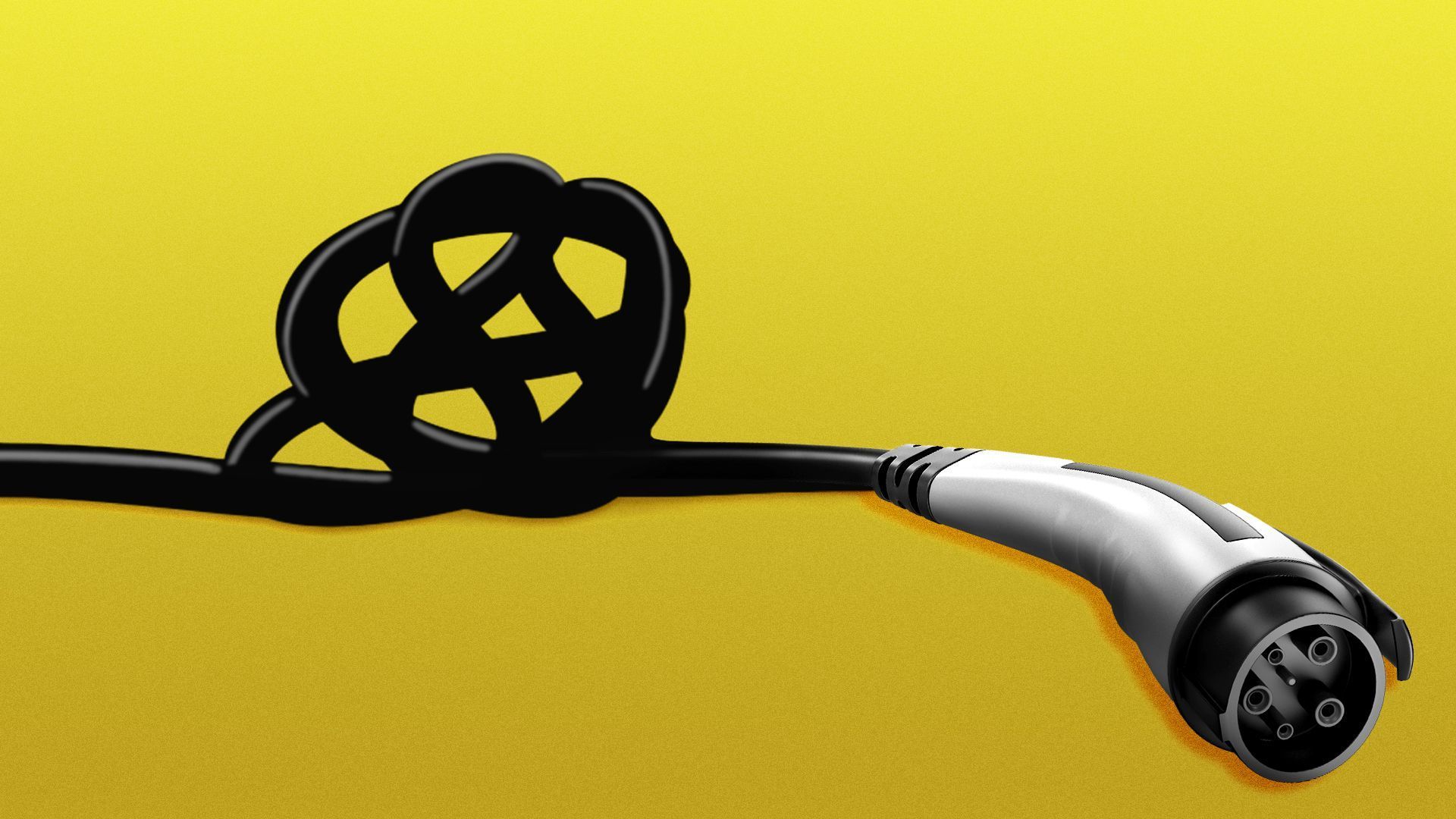
EVgo, one of the nation's largest charging networks, is rolling out efforts to diagnose equipment issues in real time as part of a broader plan to replace outdated chargers and improve customer service, the company tells Axios exclusively.
Why it matters: While the number of public chargers continues to grow, many networks still aren't reliable enough to ease the public's charging anxiety — a leading concern about EVs.
Driving the news: EVgo says it's making several enhancements to its network through its EVgo ReNew program, introduced in January 2023 to bolster reliability and convenience.
- These include a new "Canary Model," which the company describes as "a powerful performance monitoring tool designed to automatically identify and analyze patterns and diagnose issues in real time."
- Collecting data from actual charging sessions will help augment EVgo's preventative maintenance efforts, the company says.
Zoom in: EVgo says it has upgraded, replaced or decommissioned older charging equipment at more than 500 stalls in over 20 states since the beginning of 2022.
- It plans to remove or replace legacy equipment with higher power chargers at up to 180 additional charging stations this year.
- It's also expanding charging locations to accommodate six to 10 vehicles per site.
- And it's upgrading charger connectivity and software to keep machines working properly.
Payments are being streamlined too.
- Drivers who enroll in EVgo's Autocharge+ program can start a charging session just by plugging in (they'll be billed automatically).
- Autocharge+ sessions increased more than 200% in the second quarter of 2024 compared to the same period a year ago, EVgo says.
What they found: Since January 2023, EVgo has seen a significant reduction in the percentage of charging sessions requiring call center assistance.
- And its ranking on the J.D. Power 2024 U.S. Electric Vehicle Experience Public Charging Study, out today, was its highest since 2022, EVgo executive vice president Sara Rafalson tells Axios.
The big picture: The biggest reason for most charging hiccups is a communications breakdown between vehicle and charger software, according to a study by Los Angeles-based Charger Help, which operates and maintains charging stations for utilities, fleets and other customers.
- While the report cites a wide swath of issues, "a startling lack of interoperability ... stands out as the overarching threat to system reliability and broader EV adoption in the United States."
Between the lines: Think of it as a handshake between the vehicle and the charger.
- Unlike Tesla — which developed the software for both its vehicles and its Superchargers, ensuring compatibility — networks like EVgo, Electrify America and ChargePoint need to learn how to shake hands with cars from many automakers.
- EVgo has been trying to head off such communications glitches through advanced testing of more than 70 electric vehicle models at its El Segundo, Calif., charging lab.
The bottom line: EV drivers just want confidence they'll be able to charge where and when they need to.
2. New warning for old cars

Ford and Mazda are telling customers not to drive certain older vehicles equipped with faulty air bags that were recalled years ago but never replaced by their owners.
Why it matters: The warnings are an urgent reminder of the danger from the largest and most complex safety recall in U.S. history, affecting 67 million Takata air bags in tens of millions of vehicles.
- Even minor crashes can cause the affected cars' air bag to explode, sending out metal fragments that can kill or produce life-altering, gruesome injuries, according to the National Highway Traffic Safety Administration (NHTSA).
- 27 people in the U.S. have been killed and at least 400 injured by exploding Takata air bag inflators, NHTSA says.
Driving the news: Ford and Mazda North American Operations issued urgent "Do Not Drive" warnings Tuesday for more than 457,000 vehicles with recalled, unrepaired Takata air bags.
- The recall includes Ford, Lincoln and Mercury vehicles from the 2004 to 2014 model years, including Ranger pickup trucks, Mustang and GT sports cars, Fusion sedans and Edge SUVs.
- Recalled Mazdas are of the same general vintage, and include Mazda6 sedans, CX-7 and CX-9 SUVs, and B-series pickups.
- The replacement air bag is free, and Ford and Mazda are offering free towing, mobile repair and, if necessary, loaner vehicles.
Friction point: Many of the unrepaired vehicles are older and often on their second or third owner, so it's much more difficult to notify them about outstanding recalls.
The bottom line: Consumers can check for recalls on their car by entering their license plate number or vehicle identification number on NHTSA's recall website.
3. Fresh signs of Martian water

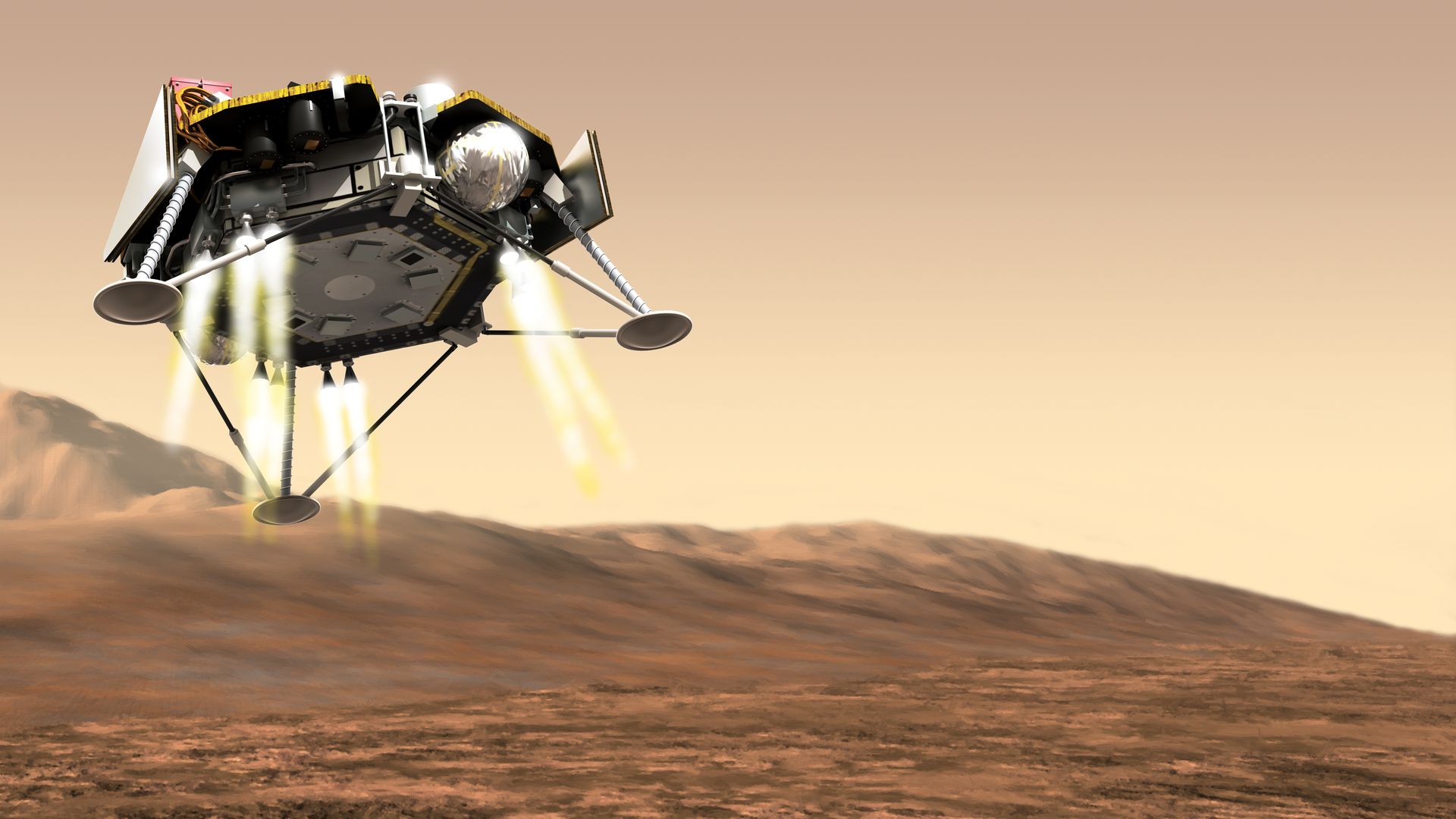
A new study from UC San Diego researchers based on data from NASA's InSight Lander suggests Mars has large amounts of liquid water miles beneath its surface.
Why it matters: Studying Martian water can help scientists better understand the Red Planet's history, and whether it can — or ever could — sustain life.
What they're saying: "An important ingredient for life is beneath Mars … it's potentially habitable," says study co-author Vashan Wright, a geophysicist at UC San Diego's Scripps Institution of Oceanography.
Yes, but: "It does not mean there is life on Mars."
Catch up quick: NASA's InSight Lander launched in 2018 and was the first robotic explorer to closely study Mars' crust, mantle and core.
What they did: Wright and his team used InSight data to measure the speed of seismic waves from Mars-quakes and meteor impacts.
- Their speed reveals characteristics of what they're traveling through, like the type of rock that makes up Mars' crust, where the crust has cracks, and what fills those cracks — in this case, the researchers say, large amounts of water.
4. Food delivery, with less waste


A reusable container service for restaurant takeout and delivery launches in Washington, D.C., this week through a partnership with Uber Eats.
Why it matters: Takeout meals create a ton of single-use plastic waste. Brothers Kevin and Harrison Kay aim to create a sustainable solution through their startup, To Go Green.
How it works: The company provides six types of durable, reusable polypropylene containers to restaurant partners, who deploy them when customers order meals through the To Go Green platform. Uber couriers make the deliveries.
- For carryout and delivery, customers have up to three weeks to return the containers to restaurants for cleaning and reuse.
- Customers can return the containers directly or arrange a pickup for $7.99 through the platform. (They'll be charged a $5 fee per missing container.)
- The containers are designed to be light, ventable and microwavable, and can sustain roughly 1,000 uses.
Was this email forwarded to you? Get your daily dose of What's Next by signing up here for our free newsletter.
Sign up for Axios What's Next
