Axios What's Next

January 05, 2024
Younger Americans are increasingly curious about what life was like before the internet, smartphones and so on, Jennifer reports today.
Today's newsletter is 1,241 words ... 5 minutes.
1 big thing: Before the internet
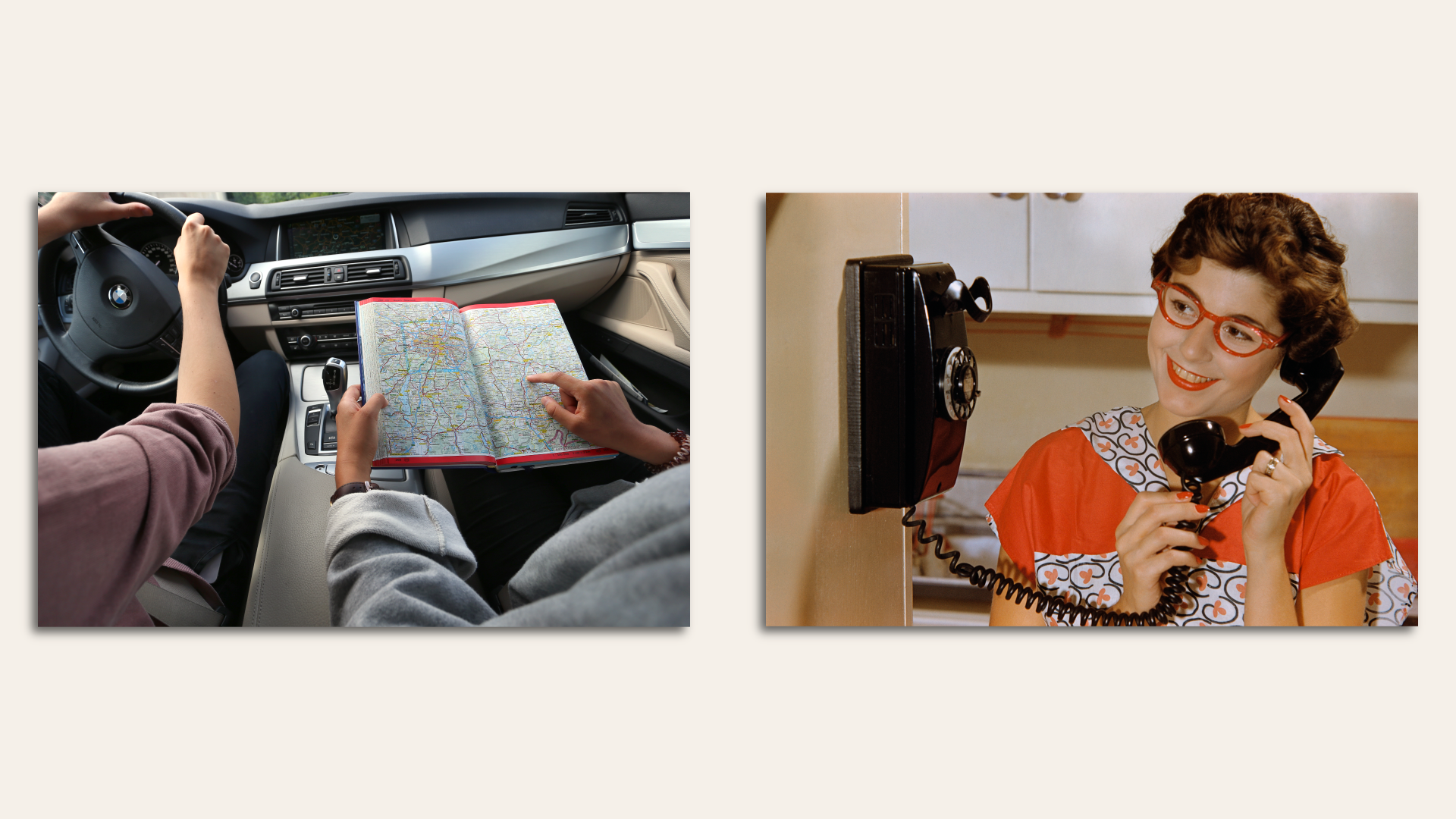
Before GPS and cellphones, the glove compartment of your car would be crammed with paper maps and atlases β and people used to talk on phones, some of them with rotary dialers. Photo at left: Karl-Josef Hildenbrand/picture alliance via Getty Images; at right, William Gottlieb/Corbis via Getty Images
Expect 2024 to feature more talk about "pre-internet" life β a subject of intense curiosity to the growing cohort of people who never experienced it, Jennifer reports.
Why it matters: Boomers, Gen Xers and elder millennials are now the last people who remember what it was like to use a pay phone, a paper map, a typewriter, etc.
Driving the news: There's mounting fascination among the "youngs" in how people socialized, found where they were going, and got things done before the mid-1990s, when the internet, email and mobile phones started becoming common.
- They're turning to vintage TV shows like "Friends" and "Seinfeld" to catch a glimpse, or asking questions on Quora and Reddit about what life was like.
- A growing number of articles and personal essays meditate on what it was like to live without being reachable at all times or carrying all the world's accumulated knowledge in your pocket.
- Social scientists use terms like "digital immigrants" and (cheekily) "the last of the innocents" to describe people who came of age in the era of phone books, VCRs, answering machines and paper AAA TripTik maps.
- Dinner table conversations have Gen Zers asking their elders: How did you meet up with people? How did you find what you wanted to buy?
Reality check: Even people who did grow up pre-internet find it increasingly hard to recall how things worked. (Jennifer sheepishly raises her hand.)
- By today's standards, things were more boring and inconvenient β you couldn't play Candy Crush while standing in line, couldn't find the answer to whatever question popped into your head, and couldn't reach anyone, anytime.
"Many who lived through these 'Dark Ages' will tell you how life seemed less busy, less stressful and more enjoyable," Christopher McFadden writes on the news site Interesting Engineering.
- People got together in person more often since they couldn't text or Zoom β and paid more attention to each other.
- Boredom begat creativity and useful ideas. After all, it's easier to let your mind wander productively when you're not addictively scrolling TikToks.
- Pop culture was a lot less fragmented since everybody had to watch TV shows at the hour they aired (at least, before VCRs).
The other side: The safety advantages to today's world are infinite. Instant phone access to your children and other family members in case of emergency is just one example.
- The luxury of being able to look up anything that's on your mind, any restaurant menu, anything at all, anytime... is amazing.
- The ability to take infinite photographs and store them safely online is a great joy.
- Emails and texts are a lot easier to compose than the handwritten letters we used to dutifully send to friends and family. (OTOH: Thank-you notes have become a lost art.)
Where it stands: Our collective sense that we spend too much time online has led to an inchoate nostalgia for pre-internet times.
- According to a Harris Poll published by Fast Company, "most Americans would prefer to live in a simpler era before everyone was obsessed with screens and social media."
- That sentiment is strongest among Gen Xers and older millennials, the poll found.
Yes, but: Those same poll respondents might be in for a rude shock if they actually had to get through their day without a smartphone.
The bottom line: The digerati seem to be coalescing around the term "pre-internet" to describe the era, which refers to all of human history up until 1994 or 1995.
- This distinguishes it from the "before times" β a phrase derived from a 1966 "Star Trek" episode β that has come to mean the period prior to the COVID-19 pandemic.
- Sign of the times: a T-shirt being sold on Amazon says, "I miss my pre-internet brain."
2. The year's best cars and trucks
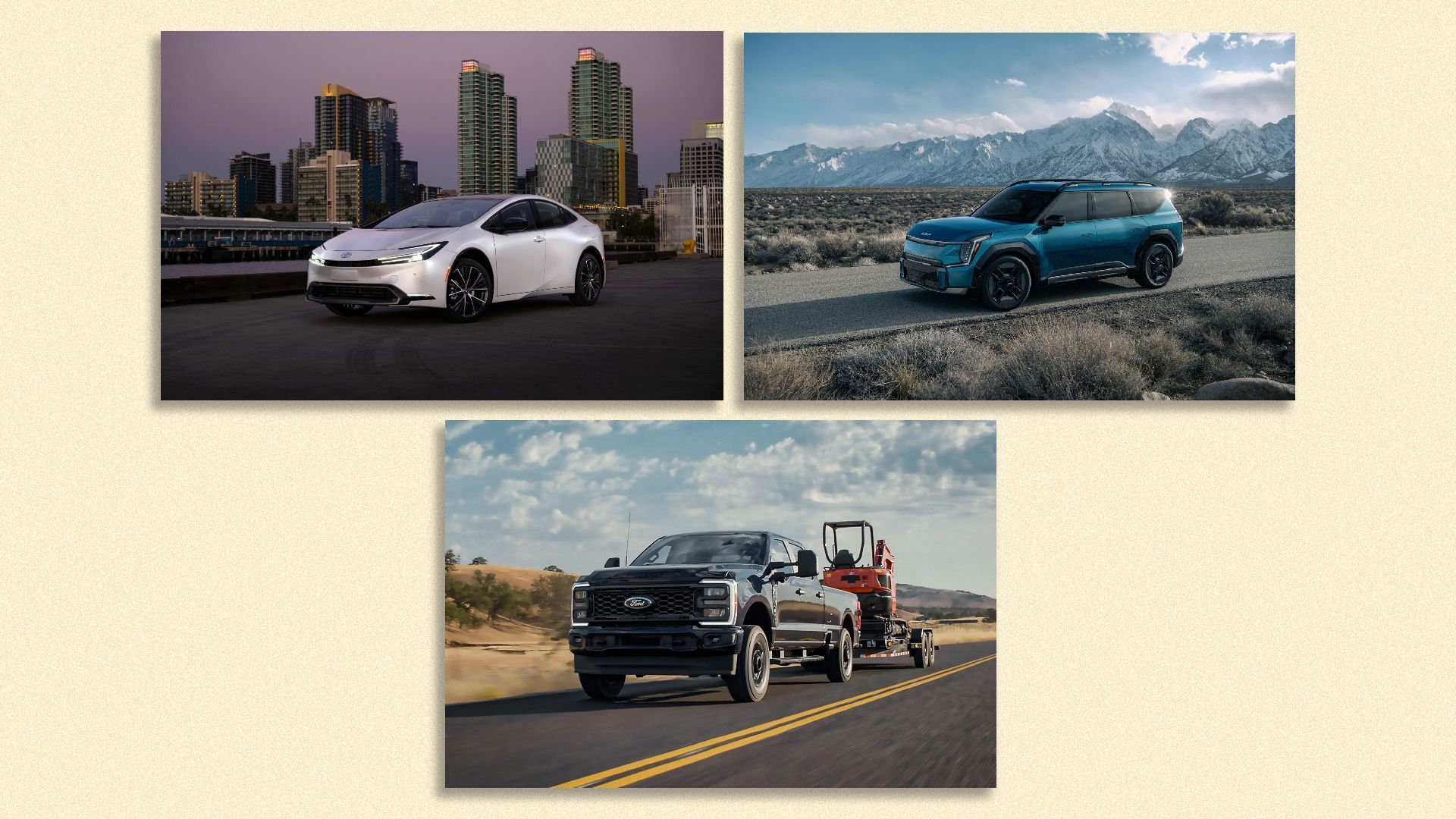
The Toyota Prius, Kia EV9 and Ford Super Duty pickup (clockwise from top left) won top honors for 2024. Images courtesy of Toyota, Kia and Ford
The Toyota Prius, Ford Super Duty and Kia EV9 are the winners of the 2024 North American Car, Truck and Utility of the Year awards, Joann reports.
Why it matters: The fact that the year's best vehicles feature a variety of powertrains β hybrid, gasoline and electric battery β is a reflection of the historic transition underway in the auto industry.
The big picture: The winners were chosen from a preliminary list of 52 eligible vehicles, after three rounds of independently verified voting stemming from hundreds of hours of test driving, research and evaluation.
- Cars are judged on automotive innovation, design, safety, performance, technology, driver satisfaction, user experience and value.
- I'm one of 50 automotive journalists on the jury.
Details: The redesigned Toyota Prius hybrid (along with the Prius Prime plug-in hybrid version) was named car of the year, beating the electric Hyundai Ioniq 6 sedan and gas- or hybrid-powered Honda Accord.
- The Ford Super Duty, used mostly for hauling and towing, beat two Chevrolet truck models: the new Silverado EV and the midsize Colorado.
- Kia's EV9 β the first three-row electric SUV for families β was the best utility of the year, beating the Genesis Electrified G70 and the Hyundai Kona (available in both gas and electric versions).
π¬ Joann's thought bubble: All are deserving award winners, even if my choices were different. (That's why we add the votes of all 50 jurors!)
- While I admire the look of the new Prius, I voted for the Ioniq 6 because of its spacious and modern interior and fun-to-drive qualities.
- I also preferred the Colorado over the Super Duty, although I recognize they serve different purposes.
- As for the EV9, it's great β except for the location of the ignition button on the shifter stalk, too close to the steering column. I'm in love with the Electrified G70.
3. πΊοΈ Homelessness, mapped

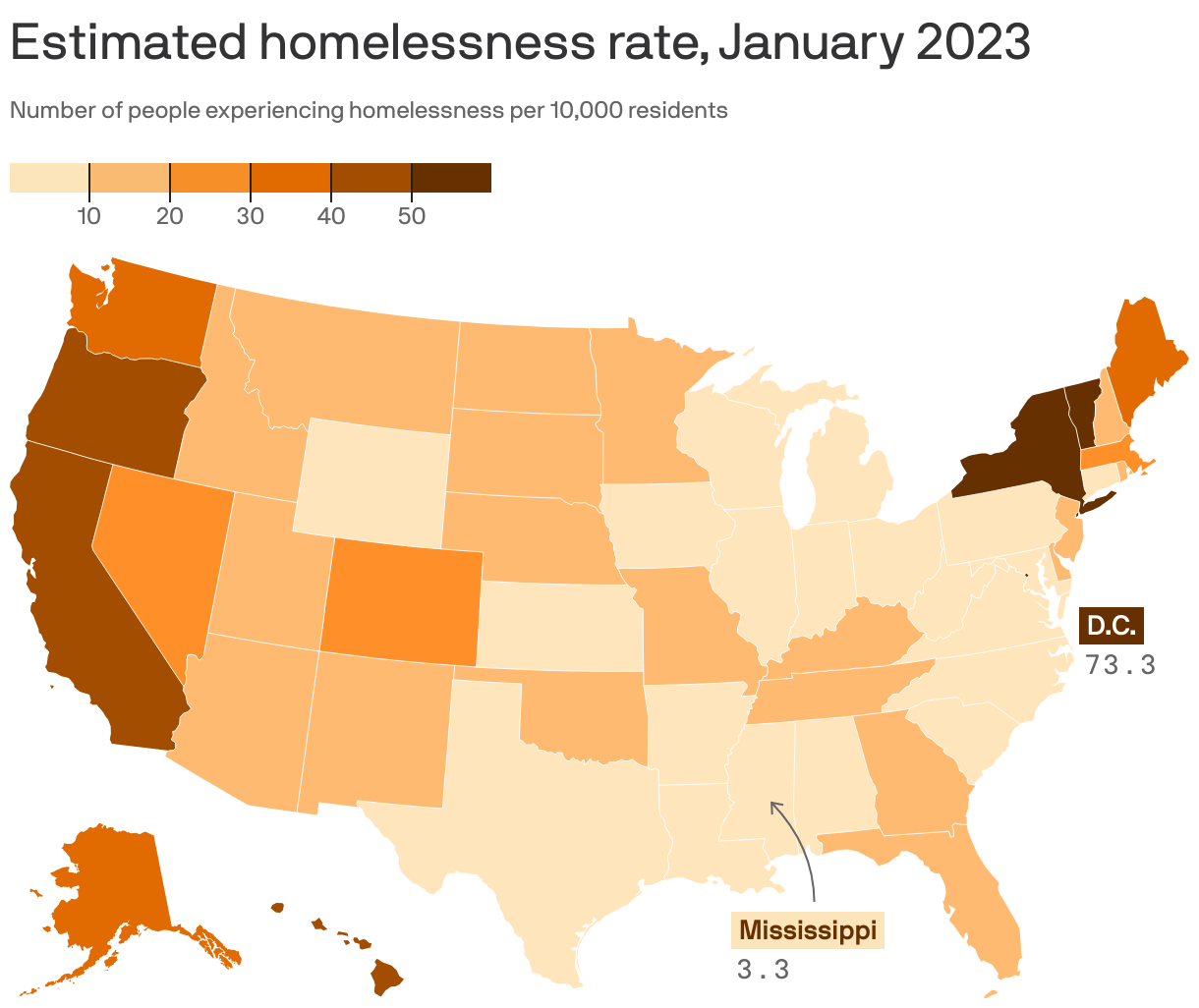
Washington, D.C., New York and Vermont had the country's highest concentrations of people experiencing homelessness in 2023, Alex and Alice Feng write from a Department of Housing and Urban Development report.
By the numbers: D.C. had an estimated 4,922 people experiencing homelessness in 2023 β or 73.3 per 10,000 residents.
- New York had 103,200 (52.4 per 10,000), while Vermont had 3,295 (50.9 per 10,000).
- Mississippi had the lowest rate, with 982 people experiencing homelessness (3.3 per 10,000).
How it works: Every year, HUD attempts to estimate the number of people experiencing homelessness on a single night β in this case, in late January 2023 β to offer a snapshot useful to policymakers, advocates, researchers and others.
4. The best NA beers for Dry January
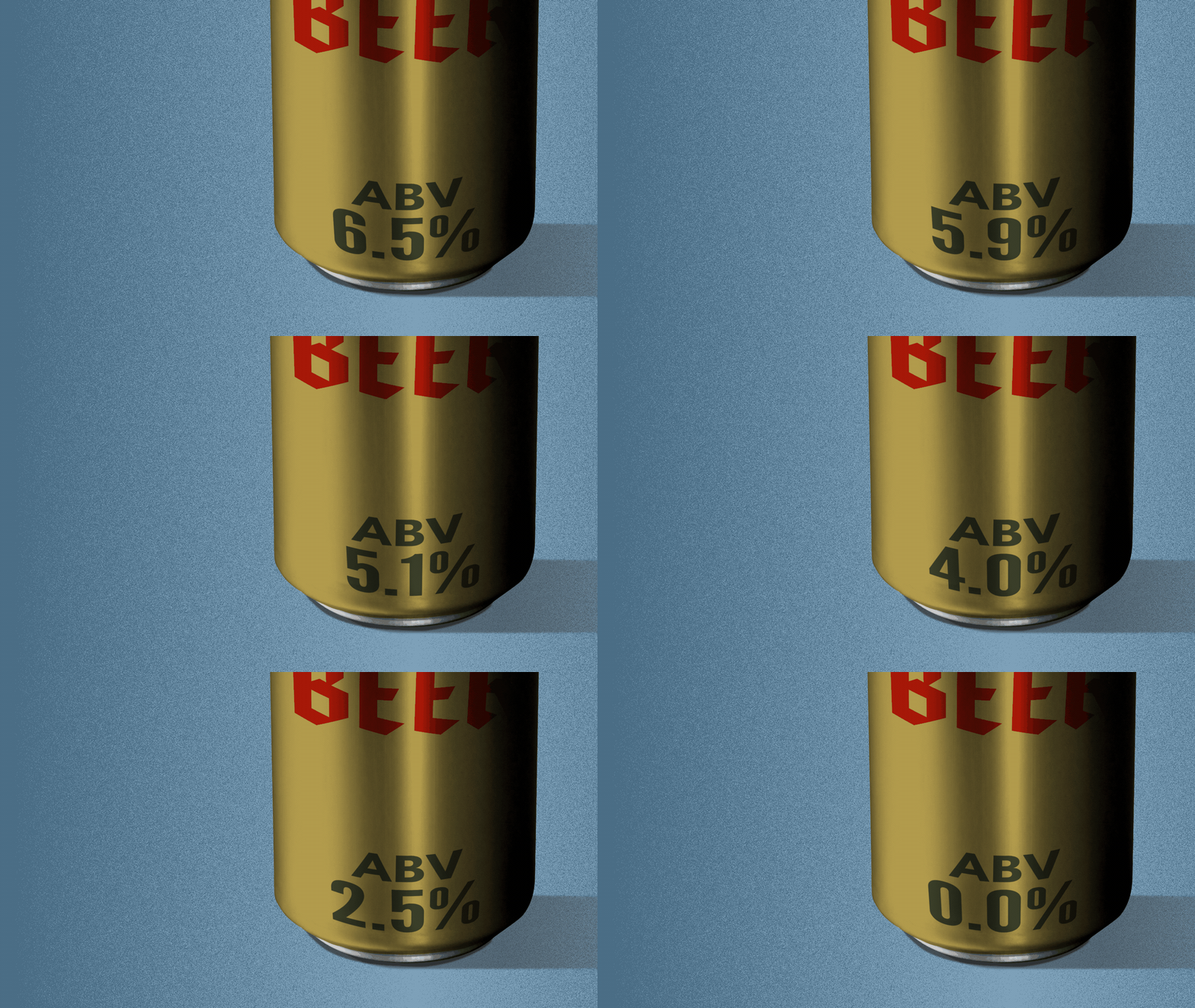
Illustration: Brendan Lynch/Axios
Just because you're drying out this January doesn't mean you need to stop drinking beer, writes Axios Denver's John Frank β our resident beer expert.
- We put more than 30 non-alcoholic options from a variety of styles to the test, all scored by a diverse panel of beer drinkers.
The favorites...
- Hazy IPA: Sam Adams Just the Haze. Bursts with tropical fruits and finishes with a soft mouthfeel.
- IPA: Athletic Run Wild IPA. A go-to with the right balance of hops and malt.
- Pilsner: Untitled Art Italian Style Pils. Light, refreshing and tastes like beer.
- Dark beer: Deschutes Black Butte Non-Alcoholic. Rich and smooth without being filling.
- Fruited beer: Bravus Blood Orange IPA. Fruit in NA beer really amps the flavor.
- Lager: Athletic Upside Dawn Golden. Classic and clean-flavored.
- Wheat: Blue Moon Non-alcoholic Belgian White. A lot of orange and spice character in a full-body sip.
π¬ John's thought bubble: I entered this taste test with plenty of skepticism because NA beer is just so different from the real thing.
- But I came away impressed with how much the best ones emulated the beer-tasting experience.
Big thanks to What's Next copy editor Amy Stern.
Was this email forwarded to you? Get your daily dose of What's Next by signing up here for our free newsletter.
Sign up for Axios What's Next

The next decade of big, sweeping changes will unfold in cities and communities where new technologies like 5G, AI and drones are transforming how we work, live and play together. Whatβs Next will guide you through the revolution.