
Axios What's Next

October 25, 2022
Plant-based meat was a pandemic-era culinary phenom, but does it have staying power? Jennifer looked at the evidence — and tried "Beyond Steak," which debuted Monday.
- What do you think? Send us a line at [email protected]
Today's newsletter is 1,094 words ... 4 minutes.
1 big thing: Tough times for plant-based meat
Illustration: Rae Cook/Axios
Companies that make faux burgers and other meat substitutes are laying off employees and staring down weak sales, amid what Beyond Meat describes as "ongoing softness in the plant-based meat category," Jennifer reports.
Why it matters: The biggest fast-food chains and meat producers have raced to cash in on fake meat, sensing consumer appetite for sustainable and animal-friendly alternatives.
- But high prices and flattening demand have dogged the industry.
Driving the news: Beyond Meat announced a 19% workforce reduction this month amid steepening revenue declines.
- McDonald's shelved plans to introduce a McPlant burger nationally.
- Brazil's JBS is closing Planterra Foods, its U.S. plant-based meat business, and Canada's Maple Leaf Foods has whittled its plant-based meat division.
- Impossible Foods laid off 6% of employees, though it positions the move as part of a reorganization and says sales are growing.
“It’s worth asking: Are we nearing the end of a decade-long fad?” asks The Takeout.
State of play: Despite the drumbeat of bad news, Beyond Meat officially introduced "Beyond Steak" on Monday — a splashy new product available at more than 5,000 Kroger and Walmart stores.
- It's "designed to deliver the juicy, tender, and delicious bite of sliced steak tips," a Beyond Meat spokesperson tells Axios.
- "Early feedback on taste and texture has been very positive, so we’re confident this is a product consumers are going to be very impressed with," the spokesperson said.
- A separate product — Beyond Carne Asada Steak — was rolled out last month for a limited time at Taco Bell locations in Dayton, Ohio.
Meanwhile, arch-rival Impossible Foods is gearing up to introduce a plant-based steak of its own — and not just any cut.
- “I’ve tasted our filet mignon prototypes, and they’re pretty damn good,” Impossible Foods founder Pat Brown said at MIT Technology Review’s ClimateTech conference this month.
The big picture: Amid a recent 10.5% annual sales drop in refrigerated meat alternatives, the product's purveyors are looking to the long term — which includes seeking price parity with "real" meat, which tends to be less expensive.
- "We believe that broader nutritional and environmental benefits of plant-based protein will continue to make plant-based meat a compelling option for consumers," Beyond Meat tells Axios.
What they're saying: "Vegetarians were doing just fine without fake meat before Beyond and Impossible came along, and hardly have reason to add expensive alt-proteins into their diet," Marnie Shure writes in The Takeout.
- "Vegetarians and vegans were never the intended customer for Beyond: These products exist to cater to flexitarians ... and those folks aren’t going to spend more on a habit they haven’t yet cultivated."
Yes, but: There are still bullish predictions for plant-based meats, and Impossible Foods — a private company that doesn't have to report its numbers — tells Axios it's seeing "hyper-growth, with over 60% year-over-year sales growth in retail alone."
- "We’re not experiencing anything like what Beyond Meat has reported – quite the contrary," an Impossible Foods spokesperson tells Axios.
- "In fact, we're responsible for the vast majority of the category's growth and have been for some time."
Taste test: Beyond Meat sent private chefs to cook Beyond Steak for journalists in advance of the product announcement.
- Vox employees found it delicious, but "opinions var[ied] on texture and how close it comes to tasting like steak from a real cow."
- Fast Company's reporter and her husband were very impressed with both taste and texture.
- Personally? I found it a bit too chewy, but my partner liked it well enough — and his daughter gave it a rave.
Go deeper: McDonald’s bringing back McRib for a “farewell tour"
2. Drought to tighten its grip on U.S. this winter, forecasts show
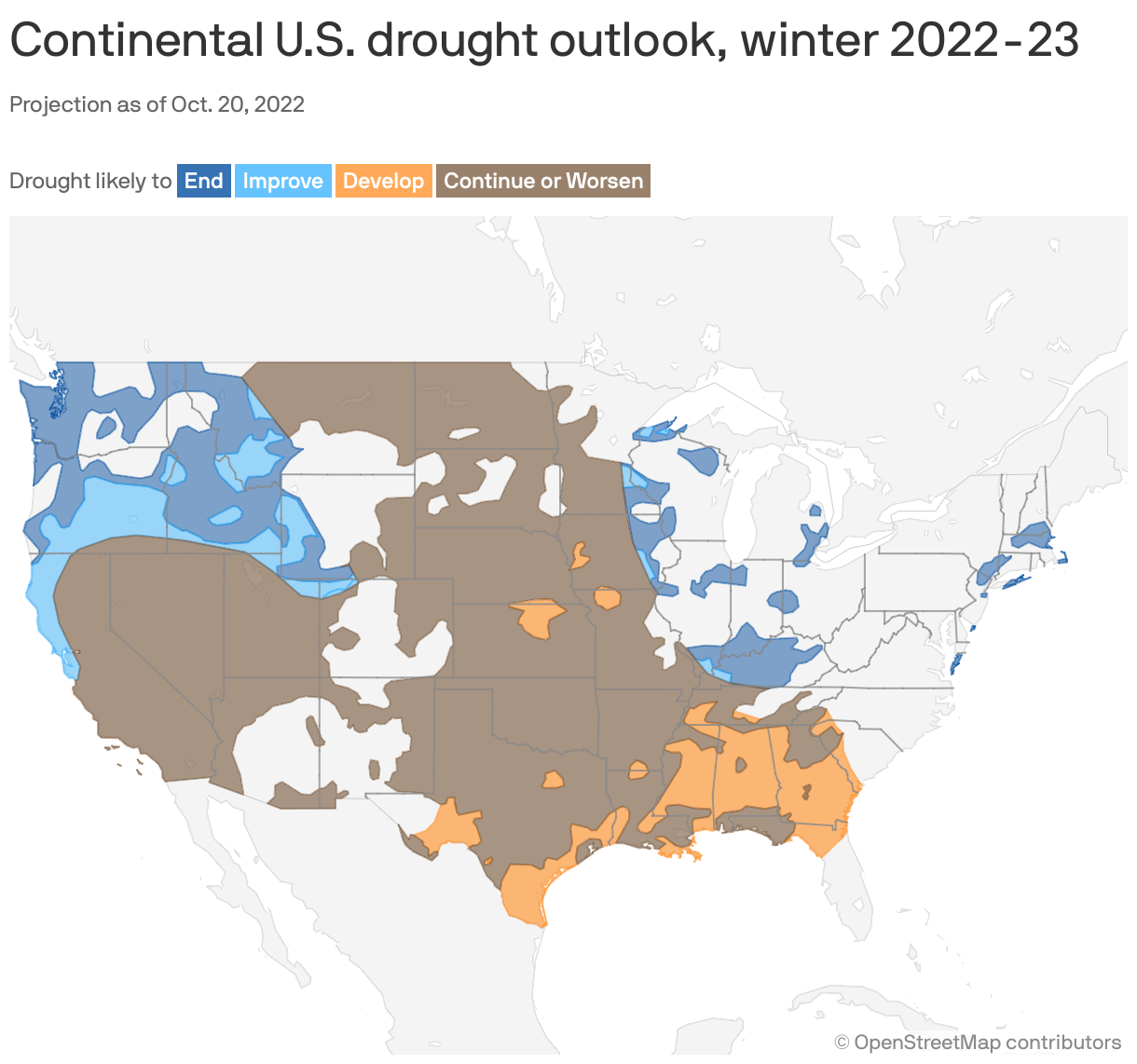
The third straight La Niña winter in the U.S. is likely to cause drought to expand and deepen from California to the Plains, branching out across the Southeast, Axios' Ben Geman and Andrew Freedman report, based on information from NOAA.
How it works: Currently, water levels along certain stretches of the Mississippi River are so low that centuries-old shipwrecks are being revealed, and modern-day barge traffic is imperiled.
- Farmers in multiple states are facing the prospect of a challenging winter wheat season.
- After a dry winter, if spring rains falter in Texas, there would be a growing possibility of summer water supply constraints, experts warn.
The big picture: The new seasonal drought outlook through January depicts a weather pattern that is heavily influenced by a rare, three-winter "triple dip" La Niña in the tropical Pacific Ocean.
- About 82% of the country was facing at least abnormally dry conditions last Tuesday, the largest drought footprint in the lower 48 states since the U.S. Drought Monitor was unveiled in 2000.
What they're saying: “If we don't get replenishment this winter, and especially this spring after La Niña wanes away, water supply issues could become much worse than they were last summer in Texas,” state climatologist John Nielsen-Gammon told Axios via email.
3. Survey: Consumers want a cybersecurity label for "smart" devices


Consumers don't trust the security of their internet-connected products, but an "Energy Star"-style ratings system could help, Sam Sabin writes for Axios Codebook.
By the numbers: Fewer than 10% of U.S. adults in a new BlackBerry survey said they believe robot vacuums, smart refrigerators, smart air purifiers, smart ovens, pet cameras, and autonomous vehicles are safe from cyber threats.
- Only one in five adults thought smart speakers are safe from cyber threats, the highest-ranked device among the 10 included in the survey.
- Eighty percent of adults said a cybersecurity "star rating" system would make them feel safer while using an internet-connected device.
4. The (self-driving) future of the vending machine
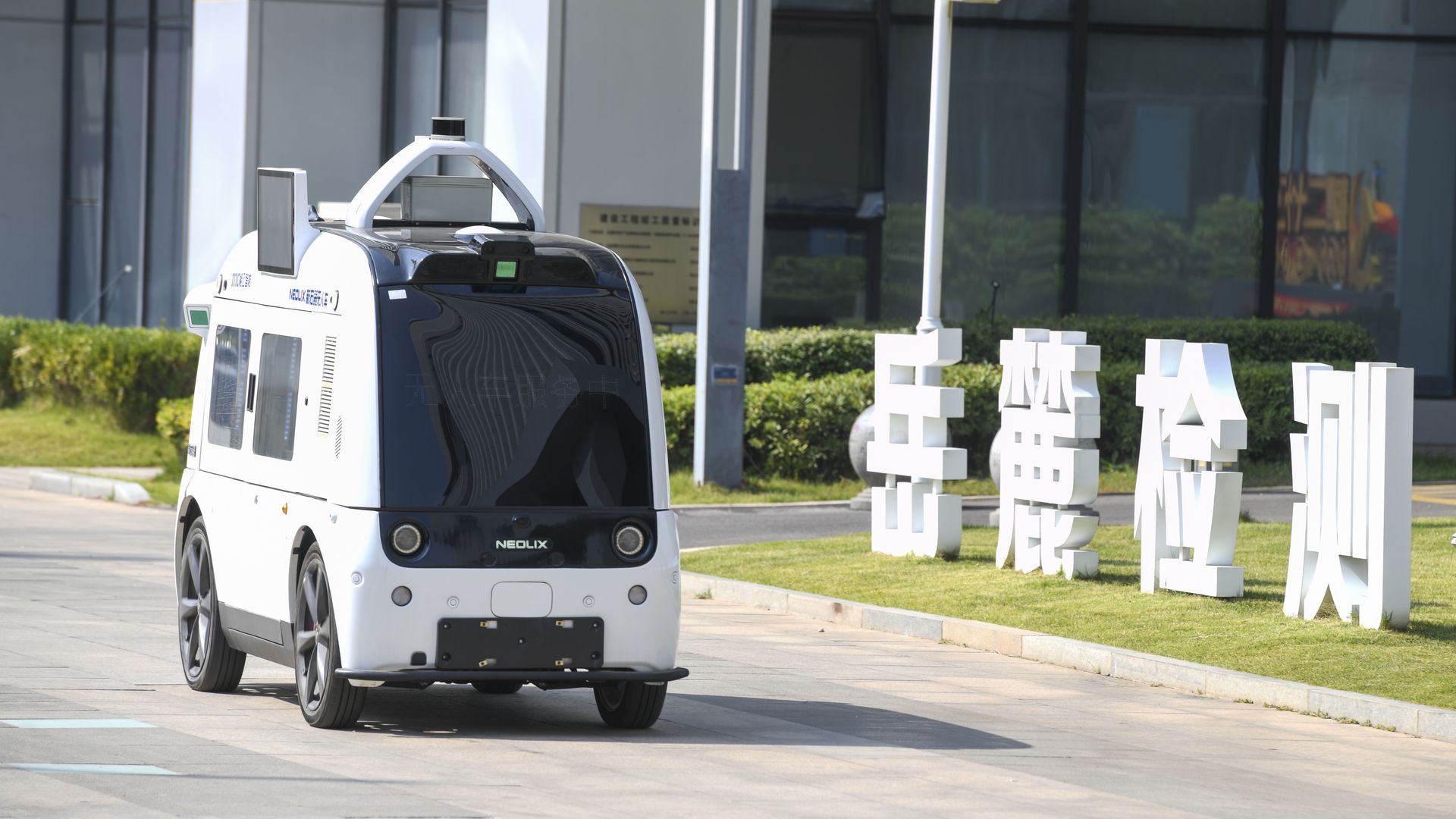
A Neolix self-driving vending car at an industrial park in Changsha, Hunan Province. Photo: Yang Huafeng/China News Service via Getty Images
A self-driving vending car made by the Chinese company Neolix makes the rounds at an industrial park in Changsha, Hunan Province, selling hot and cold beverages to workers.
- Mobile robots are also starting to be deployed as vending machines in the U.S.
- Coffee-serving bots are now trolling Charlotte, N.C., and other places.
5. Trending dog: The cream dachshund
Honey is a cream dachshund who lives on the Upper East Side. Photo: Valerie Kingson Bloom
Move over, French Bulldogs: Cream-colored dachshunds seem to be emerging as the "hot" new dog on the Upper East Side of Manhattan, Jennifer reports from the neighborhood.
- While Frenchies and "doodles" still dominate, the number of creamies seems to be growing steadily, Jennifer and her daughter, a professional dog walker, have observed.
- While there are different types of creams, the English Cream Dachshund is perhaps the best-known — though all of them garner "ooohs!" on New York City sidewalks.
- At Crown Dachshunds, a leading cream breeder, a puppy costs $3,700-$4,500.
- "A rare breed variant" known for its "remarkable cream coat," the English Cream has been "dubbed one of the softest of the doxie breed, comparable to the fur of a chinchilla," according to Dachshund World.
A sincere "thank you" to What's Next copy editor Patricia Guadalupe.
Was this email forwarded to you? Get your daily dose of What's Next by signing up here for our free newsletter.
Sign up for Axios What's Next

The next decade of big, sweeping changes will unfold in cities and communities where new technologies like 5G, AI and drones are transforming how we work, live and play together. What’s Next will guide you through the revolution.