Axios What's Next
April 04, 2023

1 big thing: Recycling robots
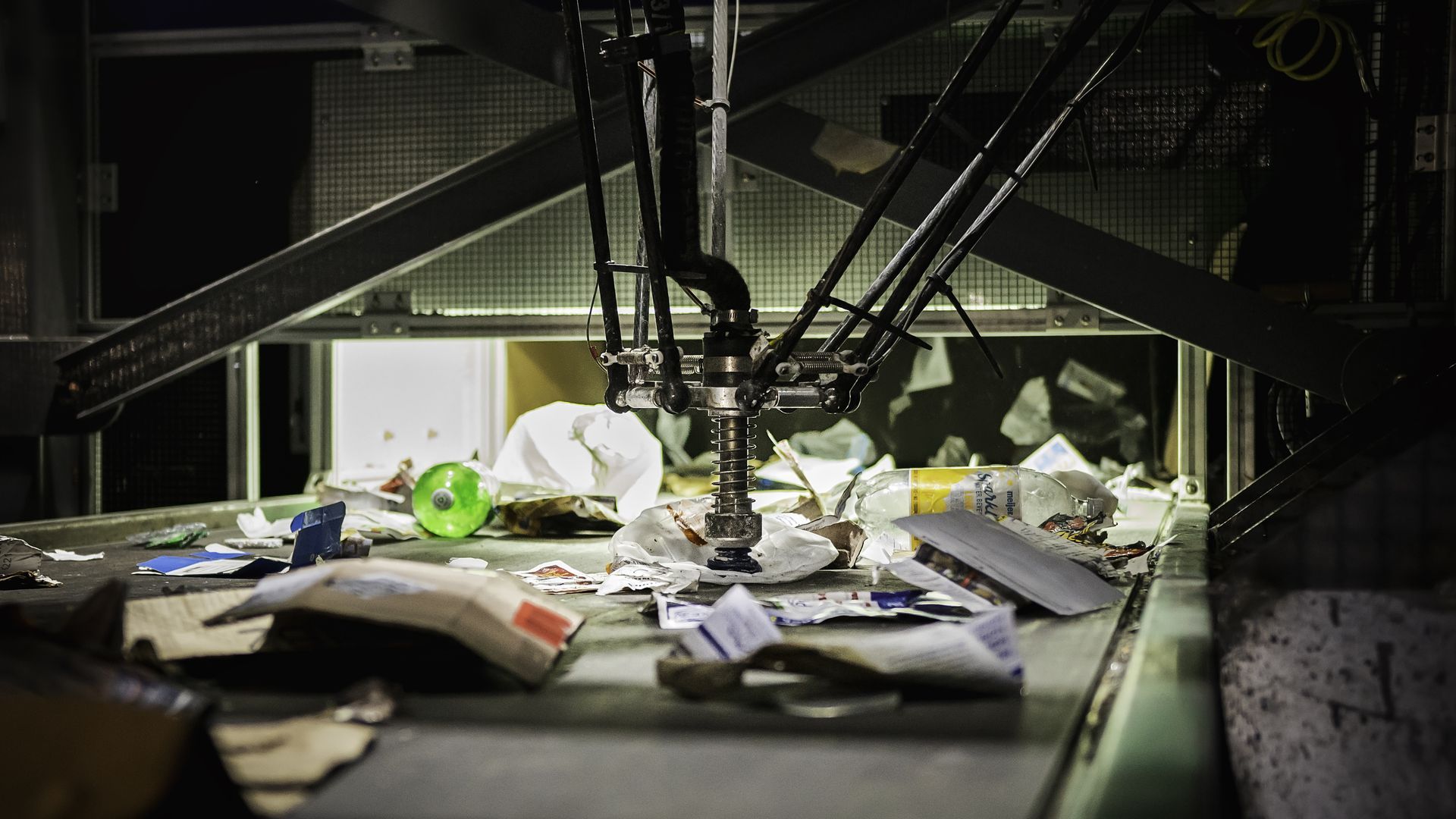
A high-speed robotics system from AMP Robotics picks out recyclables on a conveyor belt in a Waste Connections recycling facility. Photo courtesy of AMP Robotics
The recycling industry is getting a helping hand from robots, which can sort trash faster and more safely than humans, and artificial intelligence, which gathers valuable data about what's been thrown out, Jennifer A. Kingson reports.
Why it matters: Automation could help solve recycling's many problems, including the rise in hard-to-recycle plastic waste and consumer botch-ups that lead to contaminated recycling streams.
Driving the news: A new generation of trash-sorting robots with articulated arms and brainier vision systems is beginning to work alongside humans at recycling centers.
- The robots are getting better at culling recyclables from trash streams, which keeps the materials out of landfills.
- While still expensive — sometimes $300,000 each — they're coming down in size to occupy the same footprint as a human worker.
On the software side, AI-driven optical technology can provide real-time data about waste stream contaminants — such as too much peanut butter left in a jar — and other metrics.
- "It's giving us this data so that we can make better decisions," says Matt Flechter, recycling market development specialist at the Michigan Department of Environment, Great Lakes, and Energy, which is experimenting with robotic sorters from Glacier and Machinex.
- His hope? Using that data to steer manufacturers toward more recycling-friendly product designs.
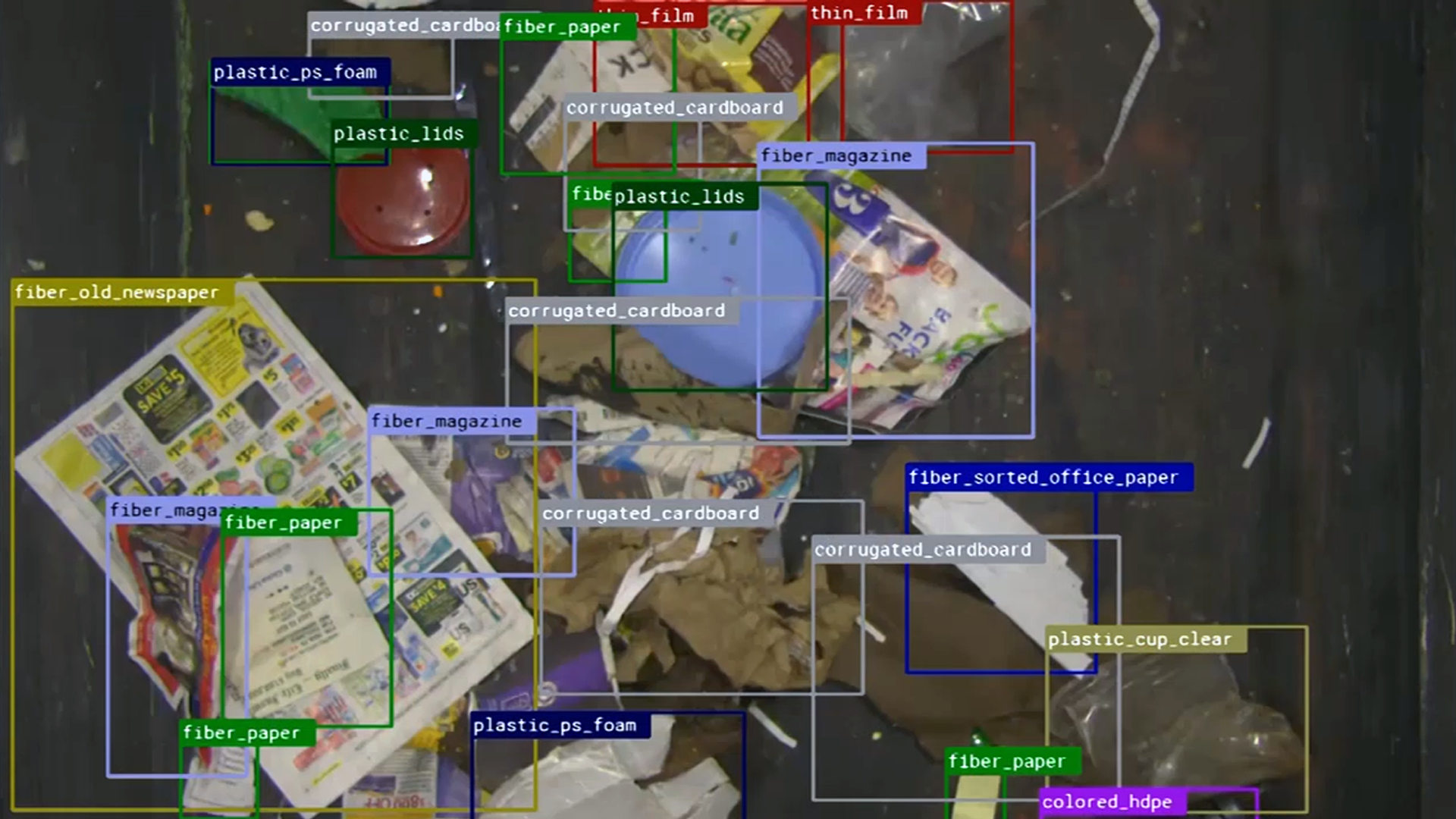
How it works: Robots train their AI vision on the waste stream and use their arms to suction out recyclables.
- "It's like a vacuum cleaner," Flechter says. "It knows what to pick up as things are coming across the conveyor belt. It's reading the optical signature of whether it's a yogurt tub, water bottle, paper bag or a milk carton."
- Many such systems can learn about new types of packaging and materials over time.
Case study: Recycle Ann Arbor installed a sorting robot from Machinex called the SamurAI at one facility in November.
- While it's sorting as fast as a human, its accuracy still needs work, Bryan Ukena, CEO of Recycle Ann Arbor, tells Axios.
- "We continue to tweak and say, 'No, this isn't the right item we want to pick — we want to pick this item,'" he says. "And so it's a process that you go through, but it learns."
Between the lines: Recycling line jobs are monotonous, dangerous and hard to fill — and robots are starting to do them faster and more accurately.
- This doesn't mean that people will be tossed out of jobs, says Rebecca Hu, co-founder of Glacier.
- "There's just not enough sorting capacity today to begin with," she tells Axios. "As you install more of these types of robots, people are getting moved to safer or more mundane parts of the operation."
Where it stands: These are early days, but AI recycling startups have lofty goals of boosting the circular economy and combating climate change.
The big picture: Recycling in the U.S. has been beset by problems, from China's ban on importing waste to poor consumer compliance, a patchwork of local recycling rules, and the money-losing economics of running a recycling program.
- Currently, buyers who want to create new packaging out of recyclables can't get as much suitable material as they'd like.
What's next: With robotics and AI, "our real goal is to reduce the cost of sorting these materials as well as increasing their value," says Matanya Horowitz, founder of AMP Robotics, the leading company in this space.
- "Ultimately we think it's important that the industry be able to take dirtier and dirtier materials if you want to increase the amount of materials that are recycled."
What we're watching: Expect to hear more about "extended producer responsibility" laws, which attempt to hold manufacturers responsible for the cost of recycling their products.
2. This AI can do your taxes

Illustration: Aïda Amer/Axios
3. Bill Gates' "memorable" autonomous ride

Illustration: Sarah Grillo/Axios
4. Easter ... potatoes?

Illustration: Annelise Capossela/Axios
Axios What's Next

The next decade of big, sweeping changes will unfold in cities and communities where new technologies like 5G, AI and drones are transforming how we work, live and play together. What’s Next will guide you through the revolution.