Axios What's Next

September 01, 2022
Alex here. I've been digging into efforts to put solar panels in new or unexpected places, which led to today's story on one state's attempt to give its canals some energy-generating shade.
- Have you seen or read about other novel solar deployments? Drop us a line at [email protected].
Today's Smart Brevity count: 871 words ... 3Β½ minutes.
1 big thing: Throwing some (solar) shade
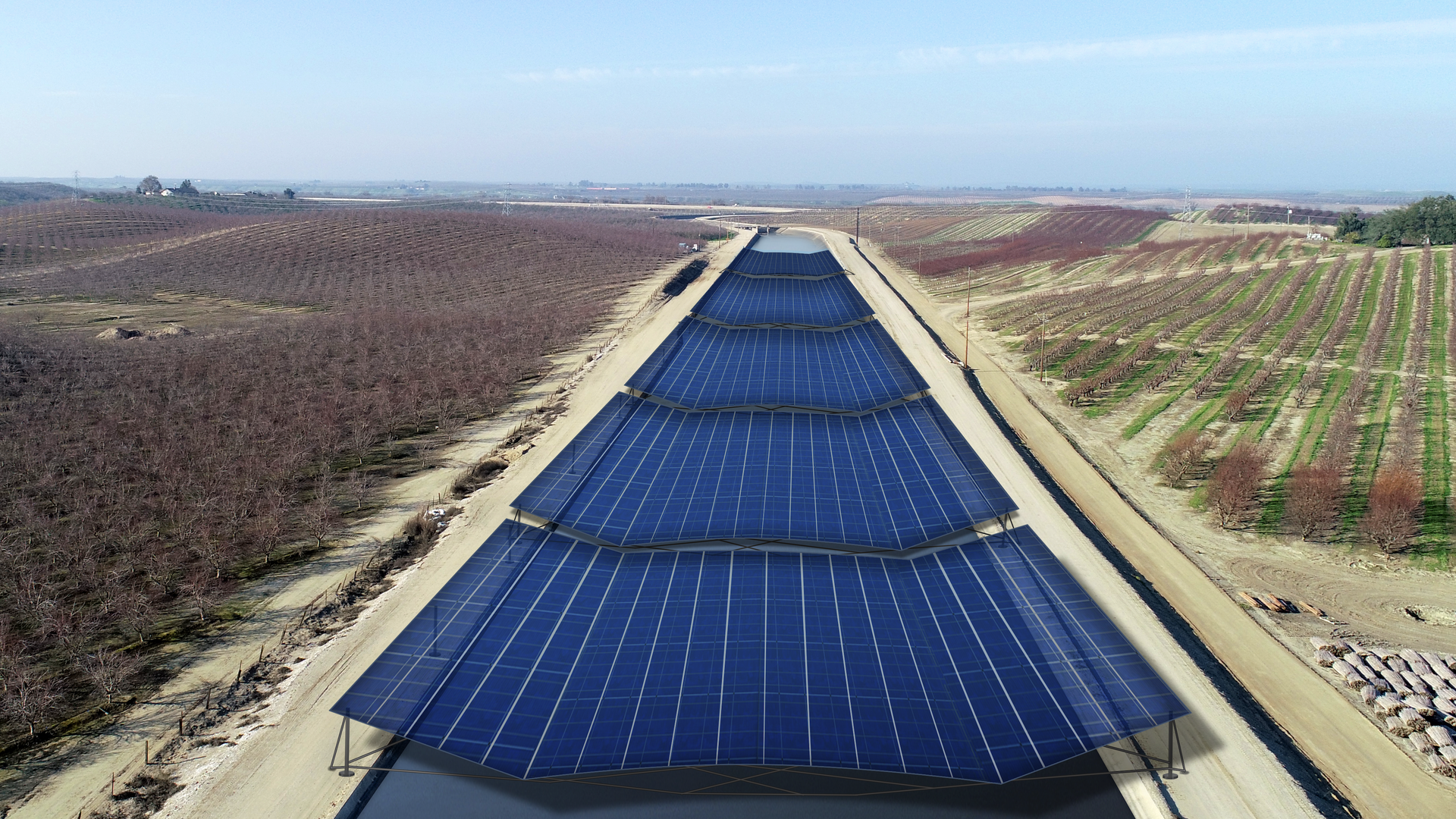
Rendering courtesy of Solar AquaGrid LLC
An innovative plan to conserve water by covering aqueducts with solar panels is about to undergo testing in drought-stricken California, Alex Fitzpatrick reports.
Why it matters: Water is becoming more precious by the day in the Golden State and the Western U.S. more broadly, in part due to climate change.
- Los Angeles County, for instance, just issued a 15-day outdoor watering ban amid problems with a pipeline carrying H2O from the Colorado River.
- As water sources like the Colorado and Lake Mead continue drying up, conservation will become even more urgent throughout the region.
Driving the news: About 8,500 feet of solar panels will be installed above two portions of Turlock Irrigation District (TID) aqueducts in Central California in a $20 million state-funded effort dubbed Project Nexus.
- The idea is that the panels will shade the water running underneath, preventing loss due to evaporation.
- The panels will also generate electricity, which could either be used by TID's systems or fed into the grid for consumer use.
Details: The state is working alongside TID, Solar AquaGrid (a Bay Area sustainable project developer) and UC Merced on Project Nexus, with construction set to begin early next year.
- While it follows a similar effort in India, Project Nexus will be the first such system in the U.S.
What they're saying: "My hope is that everybody's looking at our pilot project," says TID external affairs manager Josh Weimer. "I hope that we're able to do it well and that it will spur both the water industry and also the solar industry to say, 'This is a new opportunity for us that we haven't looked at before.'"
Backstory: Canals are the lifeblood of the agricultural industry in California's Central Valley.
- California utilities, meanwhile, are under orders to add more renewable power generation.
- The state's big electric vehicles push will only increase the demand on its already-strained grid.
By the numbers: A 2021 UC Merced study found that covering all 4,000 miles of California's canals could save 63 billion gallons of water annually, or enough for around 2 million people's residential use.
- And the electricity generated by the panels would be equal to about a sixth of California's current power needs.
Yes, but: The UC Merced study was based on hypotheticals. The point of Project Nexus is to test the idea's real-world efficacy.
- Moreover, getting people to use less water β goodbye, lawns β will inevitably be part of any workable solution to the crisis, though efforts like this one may be able to help, too.
What's next: Other states and utilities are eyeing similar plans, and if the approach proves fruitful, it could be replicated elsewhere around the country and world.
2. Unions, so hot right now


Labor unions are the most popular they've been in about a half-century, according to a new Gallup poll, Axios' Kate Marino writes.
By the numbers: About 71% of Americans say they approve of unions, up from 64% pre-pandemic and a low point of 48% in 2009, Gallup found.
The big picture: Low unemployment helped shift the balance of power between workers and employers, laying the groundwork for union drives at corporate giants like Starbucks and Amazon.
- And before that, the pandemic highlighted the difficult conditions facing essential workers.
3. Nuclear's big comeback
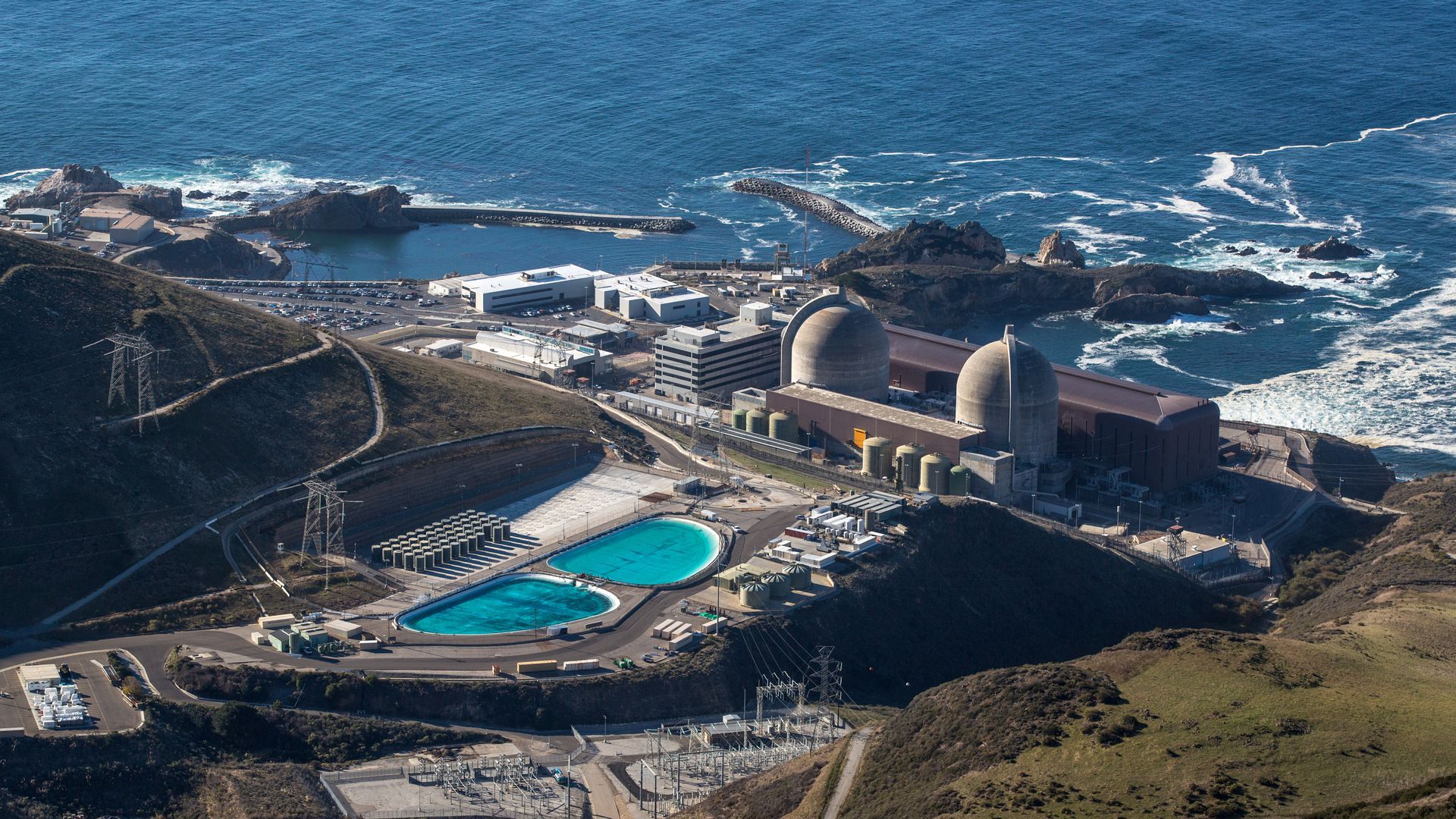
Diablo Canyon, the only operational nuclear plant left in California. Photo: George Rose/Getty Images
The energy and climate crises are forcing governments to take a fresh look at nuclear power, Axios' Matt Phillips reports.
Why it matters: Pressure on politicians to find reliable, low-carbon power supplies has them reconsidering the long-standing stigma surrounding nuclear plants.
State of play: California's Legislature is considering a new bill to extend the life of the state's last nuclear plant, currently slated to be shut down by 2025.
- Germany, which was set to shutter its remaining nuclear plants by the end of the year, is now debating whether to keep some open as it faces energy shortages due to plunging Russian natural gas imports.
- And in energy-poor Japan, the prime minister has called for the reopening of idled nuclear reactors and a broader policy shift toward nuclear β for the first time since 2011's Fukushima disaster.
Yes, but: Don't expect a surge of new plant construction, analysts say.
- That's because of safety and waste concerns β not to mention the plants are incredibly expensive to build.
4. πΈ Kart cruisin'
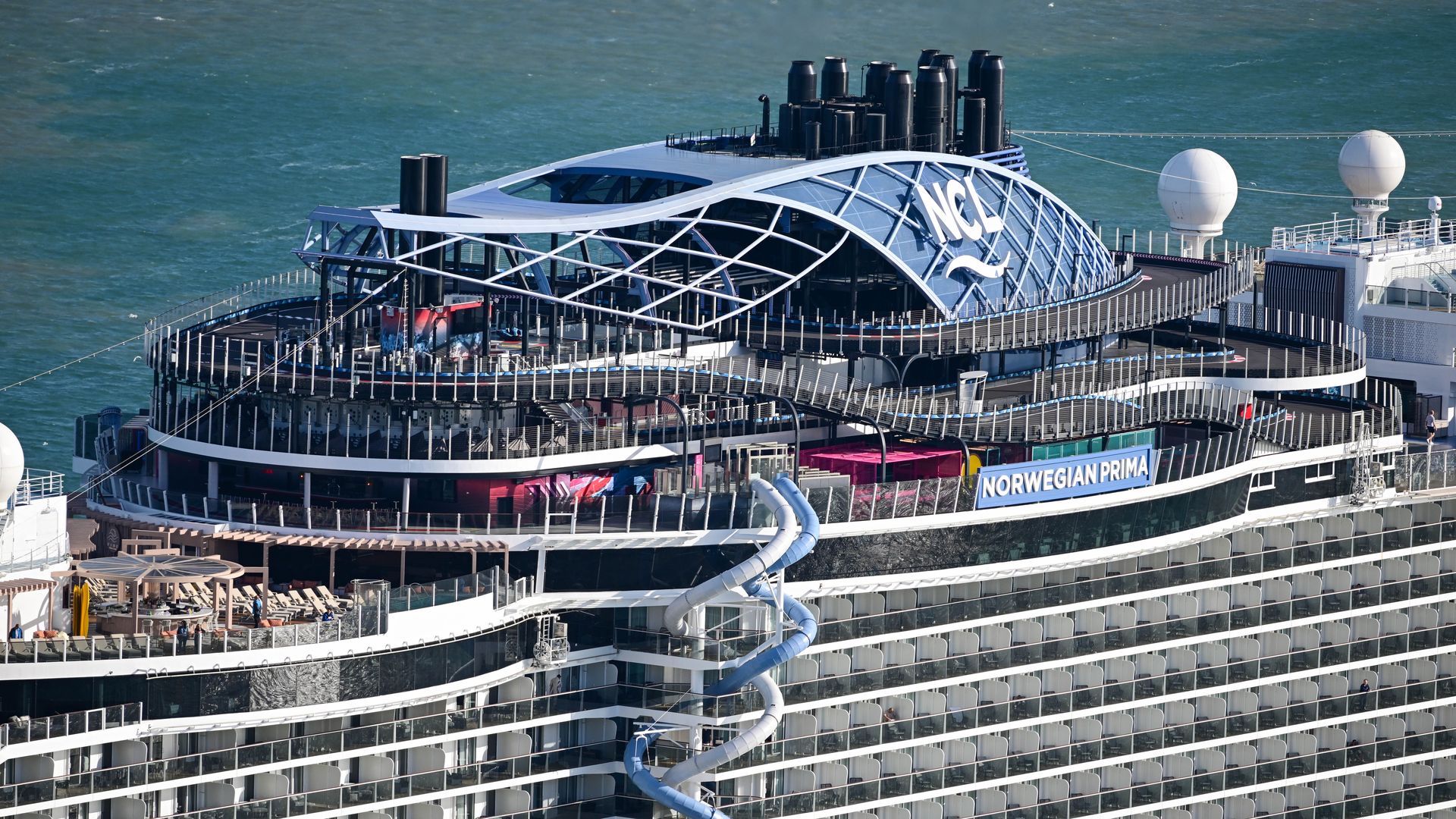
A three-deck go-kart track is seen atop the Norwegian Prima cruise ship as it arrives in Portland, England. Photo: Finnbarr Webster/Getty Images
Among the standout features of Norwegian Cruise Line's new Prima 3,100-passenger ship: A three-deck go-kart course, seen above as the vessel pulls into Portland, England, on its inaugural voyage.
- While it isn't the biggest cruise ship around, Prima boasts lots of next-gen amenities β like a three-deck theater that can be converted into a nightclub, per The Points Guy.
Be smart: The cruise industry is enjoying a revival following long pandemic shutdowns, and companies are pulling out all the stops to draw vacationers back to the seven seas.
5. One fun thing: Movies on the cheap
Photo: Noam Galai/Getty Images
Movie tickets will be $3 Saturday at thousands of theaters nationwide, Axios' Kelly Tyko reports.
Why it matters: Theater chains are trying to boost attendance amid a late summer lull.
By the numbers: This year's box office is up from last year but down more than 30% compared to 2019, Axiosβ Sara Fischer reports.
- Streaming and a relative lack of must-see blockbusters have taken a toll on the theater biz.
A hearty thanks to today's What's Next copy editor, Kathie Bozanich.
Was this email forwarded to you? Get your daily dose of What's Next by signing up here for our free newsletter.
Sign up for Axios What's Next

The next decade of big, sweeping changes will unfold in cities and communities where new technologies like 5G, AI and drones are transforming how we work, live and play together. Whatβs Next will guide you through the revolution.