Axios What's Next

May 31, 2024



Electric charging "trees" could make it far easier to own an EV in big cities, Joann reports today.
- 🤖 Join Axios virtually Wednesday at 2pm ET for our AI+ NYC Summit hosted in partnership with Tech:NYC.
- You'll watch industry experts from sports, robotics and more provide their insights on the modern AI wave. Register to livestream the event here.
Today's newsletter is 1,081 words ... 4 minutes.
1 big thing: Urban charging "trees"

A New York startup called Gravity hopes to plant a network of high-powered electric curbside "trees" across the city that can recharge electric cars in as little as five minutes.
Why it matters: EVs make sense in congested cities like New York — where transportation is a major source of greenhouse gas emissions, air pollution and noise — but charging is a gigantic hurdle.
- Even leading EV markets like Los Angeles have urban "charging deserts" without enough publicly accessible, fast-charging stations to meet demand, according to data from commercial real estate giant CBRE.
Driving the news: Google-backed Gravity, which recently opened what it claims is the country's fastest EV charging site at a Manhattan parking garage, now plans to bring the same technology to curbside plugs.
- Working with design architects at Rangr Studio, Gravity just released a new concept for curbside charging.
- Called "DEAP Trees" (for Distributed Energy Access Points), they're sleeker and taller than other curbside chargers — without messy cables that clutter the landscape and trip up pedestrians.
- Instead, their charging cable pivots down from a hinged swing arm, and raises back up after charging. That flexibility means the system is compatible with any EV, no matter where its charging port is located.
Friction point: Curbside charging could help boost urban EV adoption, but it needs to be fast enough to keep turnover high in neighborhoods where drivers are often vying with one another for spots.
- EVs take many hours to charge at a typical Level 2 charger, which means they're sucking up valuable real estate while sipping electrons.
- DC fast chargers can replenish an EV battery in under an hour, but they're far more expensive to install and often require significant utility upgrades.
- DEAP Trees are available in two speeds, providing 200 miles of range in either 13 minutes (200kW) or 5 minutes (500kW) — increasing the number of EVs that can charge there each day, a boon for widespread adoption.
- Gravity says they can tap into existing power supplies, and provide fast charging without sapping nearby buildings.
The intrigue: Gravity is designing its chargers to be bidirectional, so in the future, vehicles that already have a charge but are still plugged into the system could supply power to nearby buildings during peak demand periods.
Yes, but: Most EVs aren't yet ready to handle bidirectional charging, or even charging speeds faster than 350 kW.
State of play: New York's current largest network of public fast chargers is operated by Revel, the ride-hailing company known for its fleet of bright blue Teslas.
- Revel has 54 public charging stalls in Brooklyn and Queens, with more locations coming soon — including 48 plugs at LaGuardia Airport.
- The city has also partnered with another charging company, FLO, on a four-year residential curbside charging pilot.
- FLO has installed 100 plugs along streets in all five boroughs, and reports high utilization and reliability.
Zoom out: New York's goal is to reach carbon neutrality by 2050, with 80% of trips done by walking, biking or mass transit.
- That'll require 1.6 million EVs, supported by nearly 160,000 Level 2 chargers and 60,000 fast chargers.
- Following the early pilot with FLO, the city soon plans to solicit bids for 10,000 curbside chargers.
- Gravity hopes its fast-charging trees will be considered, and that the city won't limit itself to only Level 2 curbside plugs.
What they're saying: "There's a big opportunity to get this right," says Gravity co-founder and CEO Moshe Cohen, who wants cities to future-proof their charging infrastructure so they're not saddled with obsolete tech a decade from now.
2. Boeing submits safety plan

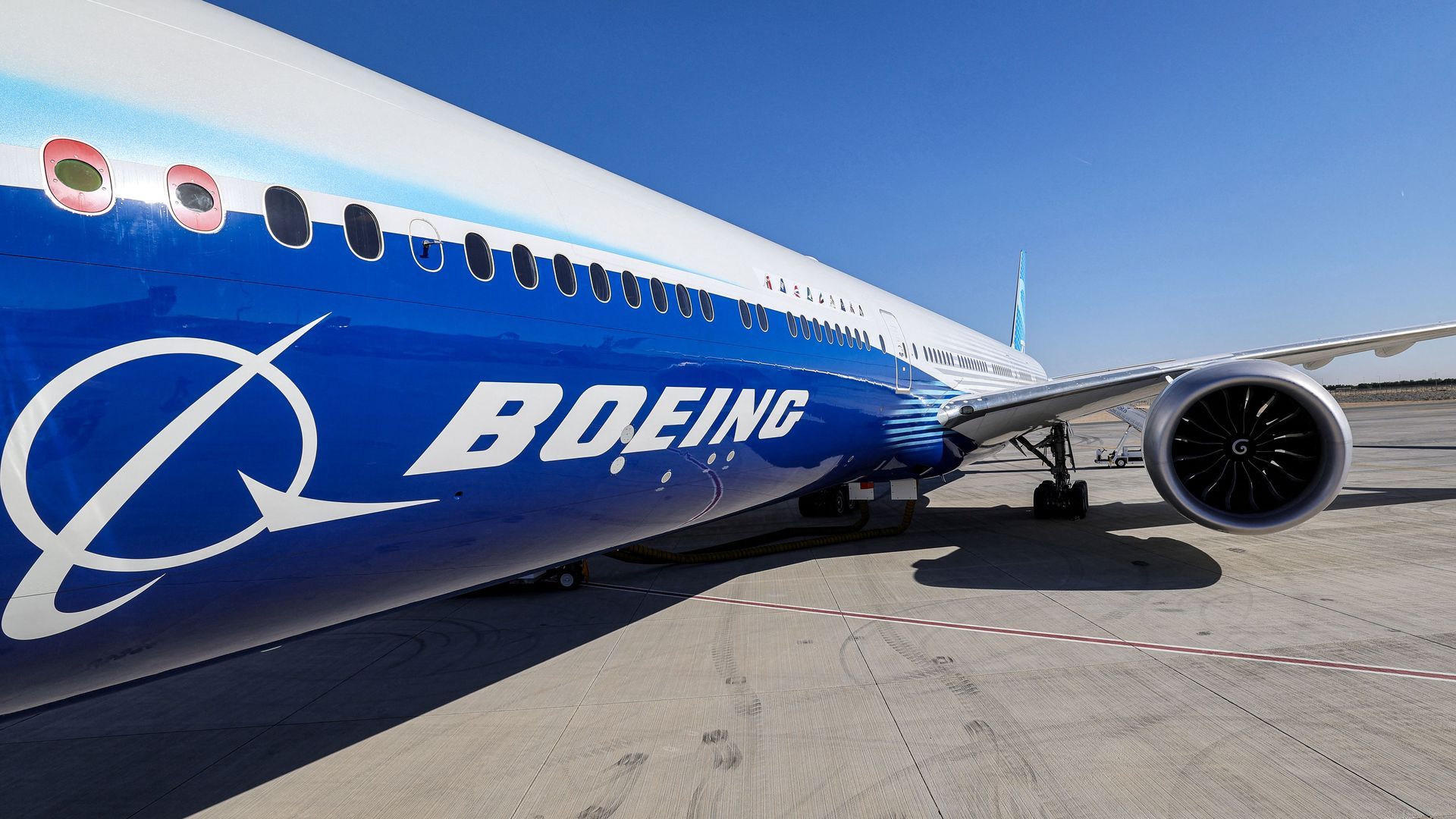
Boeing gave federal regulators a plan for resolving safety problems uncovered after January's 737 MAX 9 mid-flight door plug blowout, the Federal Aviation Administration said yesterday.
Why it matters: Boeing was ordered earlier this year to draft an improvement plan within 90 days after federal inspections found serious issues.
Driving the news: FAA Administrator Michael Whitaker confirmed that Boeing had submitted the plan, but stressed that it does not end the administration's increased oversight on the company.
- Whitaker said Boeing will not be able to increase 737 MAX 9 production until it follows through with the plan and meets certain unspecified metrics set by the FAA.
- It's unclear if Boeing will release the details of its safety plan to the public.
3. Another VinFast delay

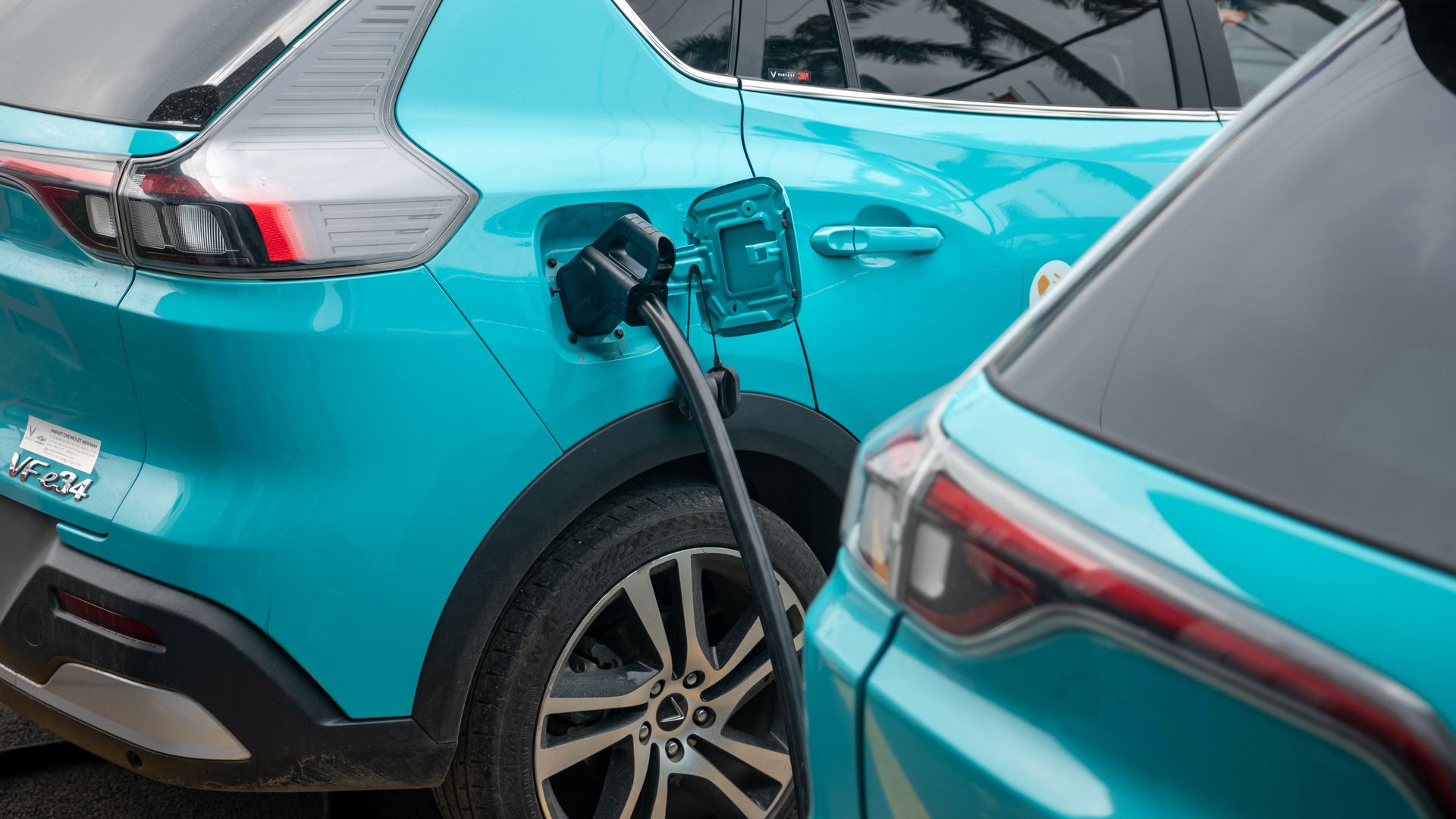
Vietnamese electric vehicle maker VinFast could once again delay the timeline of its planned $4 billion North Carolina plant, Reuters reports.
Why it matters: VinFast — which has pledged to hire more than 7,000 workers at the site — has already delayed its construction timeline from 2024 to 2025.
Between the lines: The report comes about a month after VinFast assured investors that the plant, about 30 miles southwest of Raleigh, was on track.
Yes, but: Little progress has been made at the site.
- The company has downsized its plans and is waiting on necessary permits to begin construction.
What they're saying: VinFast is "conducting a thorough review and evaluation of all aspects of the construction process for our North Carolina factory," the company tells Axios — though it didn't confirm the Reuters story.
The big picture: Domestic interest in VinFast's vehicles, which are new to the U.S. market, remains low.
- The company sold fewer than 1,000 cars in North America last year, a recent Hunterbrook Media investigation found.
- More than 70% of the 35,000 vehicles it delivered last year were to companies owned by CEO Pham Nhat Vuong, according to Securities and Exchange Commission filings first reported by Reuters.
4. Inside Charlotte's new Capt. Sully museum


The Sullenberger Aviation Museum, formerly the Carolinas Aviation Museum, opens tomorrow.
Why it matters: The museum is named after Captain C.B. "Sully" Sullenberger, best known for the "Miracle on the Hudson."
Catch up quick: Sullenberger landed Charlotte-bound U.S. Airways Flight 1549 safely in the Hudson River on Jan. 15, 2009, with no fatalities.
- In January 2023, the 32-year-old Charlotte museum unveiled its new name honoring Sullenberger — who said at an unveiling ceremony that he never thought he'd have a museum named after him.
Zoom in: The new 105,000-square-foot facility will span multiple buildings.
- In addition to interactive exhibits like flight simulators, the site will house more than 45 historic planes and will offer STEM education programs.
The big picture: Museum leaders say they hope it'll serve as an economic catalyst and a hub for innovation.
- They expect 120,000 visitors annually, plus more than 15,000 students using the space for STEM programming and career development labs.
Big thanks to What's Next copy editor Amy Stern.
Was this email forwarded to you? Get your daily dose of What's Next by signing up here for our free newsletter.
Sign up for Axios What's Next
