Axios What's Next
April 15, 2024

Meta is pushing its virtual reality headset for use in grade school classrooms, Jennifer reports today.
Today's newsletter is 1,158 words ... 4½ minutes.
1 big thing: VR goes to school
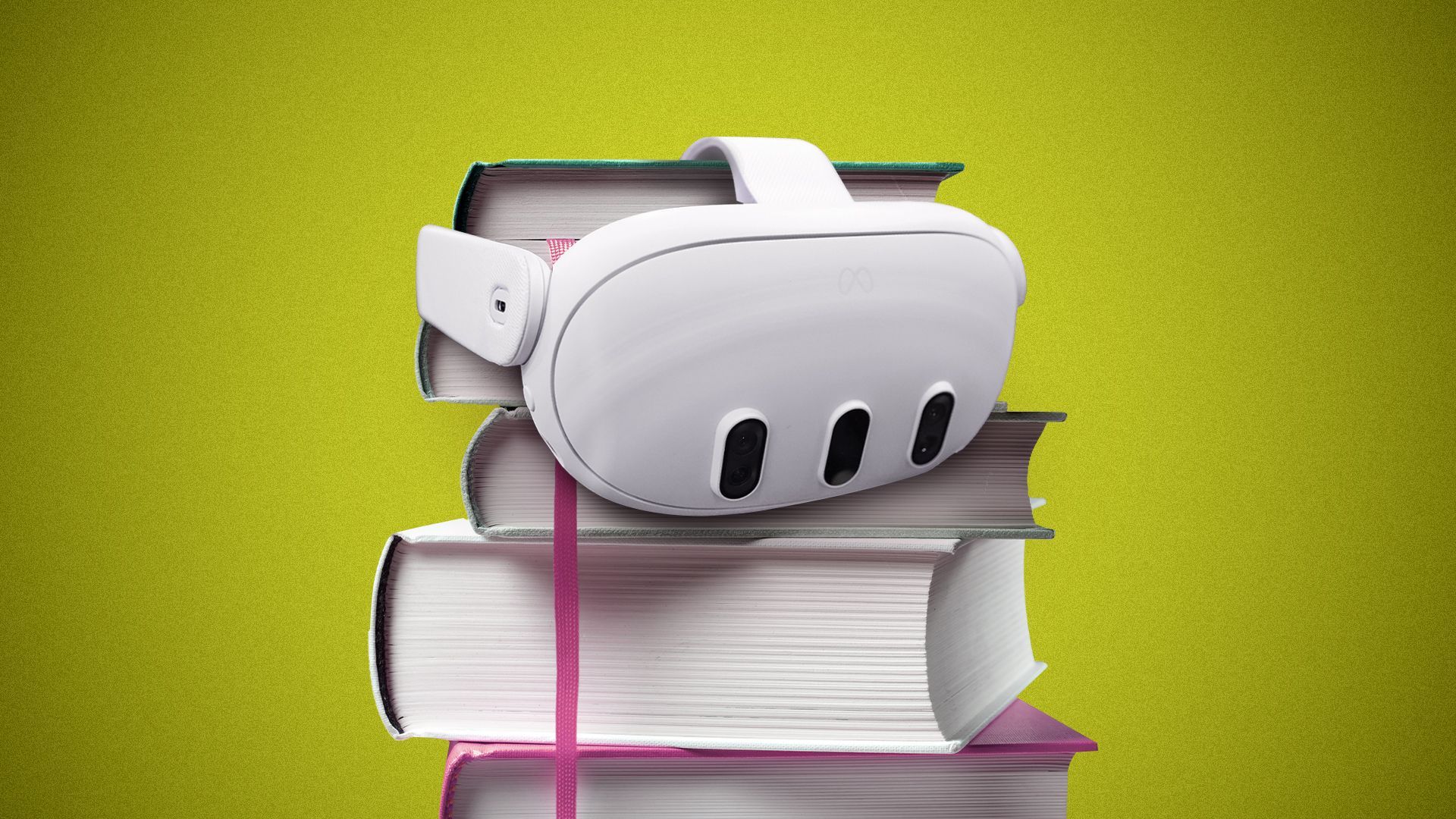
Illustration: Natalie Peeples/Axios
If Meta has its way, students will tour faraway museums, walk among dinosaurs and view human intestines up close — all from the comfort of their classroom, using Quest virtual reality (VR) headsets, Jennifer reports.
Why it matters: As educators grapple with AI and other new tech tools, a deep-pocketed push to turn VR into a classroom staple raises new questions about the future of learning — and what's best for kids.
Driving the news: Facebook parent Meta announced plans today to try to make the Quest VR headset a central piece of school equipment.
- In time for the fall semester, it'll make available a suite of visually engrossing education apps that teachers can use with students ages 13+.
- Meta won't be developing the educational content itself — it'll just provide the platform for companies that are building VR learning experiences, like Roblox.
What they're saying: "We accept that it's going to take a long time, and we're not going to be making any money on this anytime soon," Nick Clegg, president of global affairs at Meta, told Axios — in an interview conducted remotely using Quest VR headsets.
- "We're investing billions of dollars in constantly iterating on the technology."
Teachers have been clamoring for such a product, Clegg said.
- "They tell us that, perhaps unsurprisingly, the immersive experience is just a lot more fun, engaging and memorable for students than it is teaching them things from dusty textbooks."
The big picture: "Of all the ways in which metaverse technologies like virtual, mixed and augmented reality could prove to be transformative, the potential they have for education is one of the most exciting," Clegg wrote in a blog post published today laying out the new initative.
Friction point: Parents and educators may not think it's a great idea for students to have more screen time in class — teaching has already migrated away from pencil, paper and books.
- Clegg's response: "This whole technology is most emphatically not about screens."
- "The whole point of immersive technology is precisely that we get well beyond screens and we feel that we are inhabiting a shared space."
Case in point: "If you're teaching a bunch of kids about ancient Rome, just imagine what fun it is to walk with the whole class through the streets of ancient Rome together," Clegg said.
- "And people can giggle and say, 'Oh, look, there's Brutus plunging a knife into the back of Julius Caesar.'"
Yes, but: The two big competing VR/MR (mixed reality) headsets — Meta's Quest and Apple's Vision Pro — are heavy, expensive and don't work for people with some vision impairments.
- Plus, there are plenty of VR skeptics who say it's much better for kids to communicate and socialize in person without headsets.
Threat level: A 2021 science paper looked at 85 studies on the effects of VR tech on kids and adolescents and found concerns over "cybersickness," visual symptoms, obesity and sleep disorders.
💬 Our thought bubble, from Axios' Scott Rosenberg, managing editor for technology: Quest is the most popular VR platform ever, and it's doing reasonably well — but not achieving the kind of scale Meta/Facebook is used to.
- So the education strategy is a long-term growth effort, like Apple's in the 1980s, when it hit a wall with business adoption of Macs.
- And Axios' Ina Fried notes that maintenance could be a hassle — not just disinfecting them between students, but also the fact that they're not easily repaired.
The bottom line: Meta is searching for a killer app for its Quest headsets, which today are primarily used for gaming. Could it be education?
2. Renters' doubts rising

Illustration: Natalie Peeples/Axios
Nearly 40% of renters are worried they'll never be able to buy a home, up from 27% last summer, Axios' Brianna Crane reports from a new Redfin survey.
Why it matters: Affordability and optimism are hitting all-time lows.
The big picture: Renting is cheaper than owning in many U.S. markets, but nearly 1 in 4 renters regularly struggles to make monthly payments, per Redfin.
- Out-of-reach home prices, difficulty saving for a down payment, and high mortgage payments and interest rates are among the top reasons renters say they won't become homeowners anytime soon.
The intrigue: Roughly 14% of renters say they never wish to own a home, down from nearly 19% in Q2 2023, according to Redfin's survey.
3. We tried it: "Sound therapy"
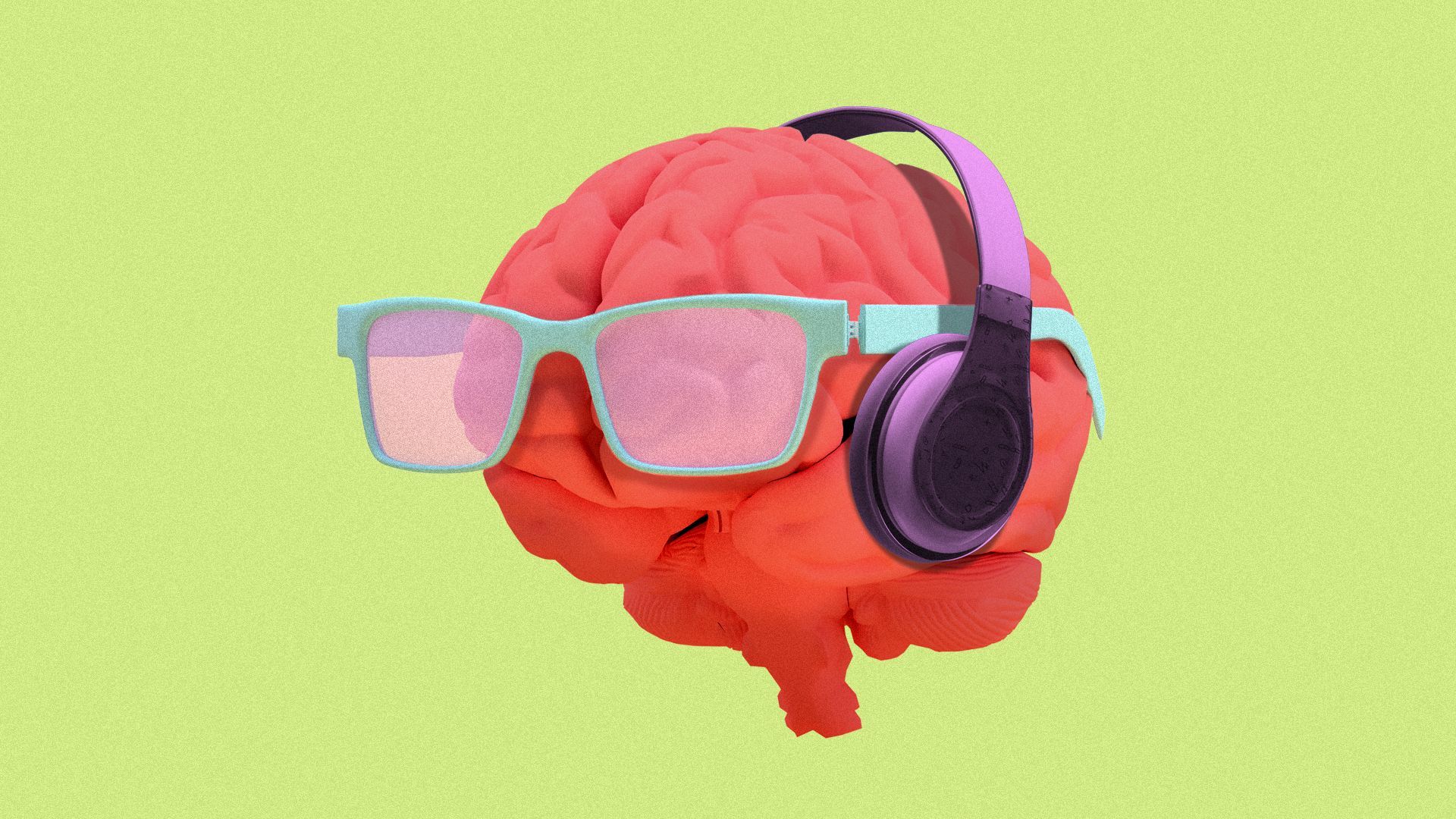
Illustration: Sarah Grillo/Axios
Can "sound therapy" actually help you focus, relax or drift off to sleep? Color me skeptical — until I tried it, Alex writes.
Why it matters: Sound therapy, in which specially designed sounds are used to trigger desired psychological outcomes, is an emerging field with increasingly big bucks behind it, as Axios' Aaron Weitzman has reported.
How it works: One sound therapy startup, Soaak, has turned its in-person clinical offerings into an app.
- Soaak's app offers a range of sound frequencies designed for different goals, like "anti-anxiety," "focus" and "mood boost."
- They're available in different formats, including "original" (which sound like sci-fi tones), "nature" (more like white noise) and "music" (gentle acoustic guitar, etc.)
By the numbers: A Soaak app subscription goes for about $30 a month, or $300 annually.
Reality check: The scientific jury is still out on whether sound therapy truly works, though some studies suggest a link between sound and emotion.
💬 Our thought bubble: I used Soaak's app each morning for about a week, and dang if I didn't feel like it was easier to stay on task as my days were spinning up.
- The "Focus" frequency, in the original flavor, was my favorite, producing what felt like a gentle and surprisingly pleasant tickling sensation in my ears.
Yes, but: Some of the offerings, like "Wealth and Prosperity," seem a little too out there for my tastes.
- I also get a similar reaction to "binaural beats," which can be found all over platforms like Spotify and YouTube.
The bottom line: One person's results can't suggest broad efficacy, but I'll probably keep using it.
4. Speed limit confusion

Illustration: Annelise Capossela/Axios
A 10-mile stretch of Colorado's I-70 is now using variable speed limits (VSLs) during extreme weather and traffic congestion, Axios Denver's John Frank reports, causing confusion for some drivers.
Driving the news: Colorado transportation officials are adopting VSLs to better manage traffic conditions and reduce crashes where weather, downhill stretches and congestion often cause delays, they tell Axios.
How it works: Automated software figures out the optimal speed limit for each road segment based on current conditions, which is then posted to electronic signs.
- The limit can go as low as 30 mph in icy or wet conditions, officials say.
- On one recent day, the signs showed 65 mph before falling to 45 mph. The speed limit then rose and fell by 5 mph repeatedly over several miles.
Yes, but: VSLs don't necessarily work all the time — whether because drivers intentionally ignore the speed limit or continually need to brake and speed up to match the ever-changing signs.
Big thanks to What's Next copy editor Amy Stern.
Was this email forwarded to you? Get your daily dose of What's Next by signing up here for our free newsletter.
Sign up for Axios What's Next

The next decade of big, sweeping changes will unfold in cities and communities where new technologies like 5G, AI and drones are transforming how we work, live and play together. What’s Next will guide you through the revolution.