Axios Vitals

January 02, 2025


Happy New Year, Vitals gang! Buckle up for a big year of news. Today's newsletter is 1,008 words or a 4-minute read.
1 big thing: Drug development's quantum leap


Quantum computing and biotech companies are testing whether next-generation computing technology could help them develop better drugs and cut the time and cost of finding new ones.
Why it matters: Making drugs faster and cheaper with quantum computers could solve one of pharma's most vexing problems and simplify a process that now can take decades and cost billions.
- Quantum computing is advancing, but it still hasn't been harnessed to solve real-world problems that classical computers can't. Biotech could be a proving ground for the technology, which some skeptics say has been hyped, like AI.
Where it stands: Today's quantum computers are largely used for research problems — modeling materials or chemical reactions.
- Pharma and tech companies are hoping they can soon provide a more efficient and accurate way to analyze an ever-growing amount of data.
Quantum computers should be able to precisely simulate molecules and the way they interact, which current classical computers can, at most, approximate.
- Accurate predictions of the behavior of the thousands of atoms in a proposed drug and its environment would be a game-changer.
- Google and German pharma giant Boehringer Ingelheim are collaborating on using quantum computing for molecular simulations, and French quantum computing startup Pasqal is partnering with Qubit Pharmaceuticals to tackle the problem.
Some pharma companies are using quantum computing for another type of problem: mathematical optimization to find the best solution to a problem that can be solved many ways.
- Moderna, in partnership with IBM Research, is experimenting with using quantum computers to predict how messenger RNA molecules fold.
- The loops, hairpins and other features of RNA structure influence how proteins are synthesized and genes are expressed — critical information when designing an RNA-based drug.
- Quantum optimization could answer questions like how to get the same immune response from a vaccine at a lower dose, or with a vaccine formula that could be kept at room temperature.
2. GLP-1 withdrawal can have lasting effects

The surging popularity of GLP-1 drugs is beginning to obscure the health consequences if people stop taking them, physicians warn.
Why it matters: While many patients can shed up to 20% of their body weight using the injectables, the cost of the drugs and side effects like nausea and vomiting lead many to quit. In most of those cases, their weight returns.
- "A lot of people are going on these drugs and then going off, and there's not going to be a benefit from doing that," said Ethan Lazarus, an obesity medicine physician in Colorado.
Almost half of GLP-1 users with obesity had discontinued their medication one year in, according to research published in JAMA. Other analyses show even higher discontinuation rates.
Driving the news: Concern about the long-term effects of withdrawal is intensifying as more public and private insurers clamp down on coverage of GLP-1s for weight loss.
- Researchers have observed that people's hunger can return voraciously when they drop off the drugs, possibly because the body's left in a GLP-1 deficit that affects brain signaling and feelings of satiety.
Between the lines: Some obesity medicine doctors are worried long-term weight loss will become more difficult for patients who cycle on and off GLP-1s.
3. Whooping cough cases highest in a decade

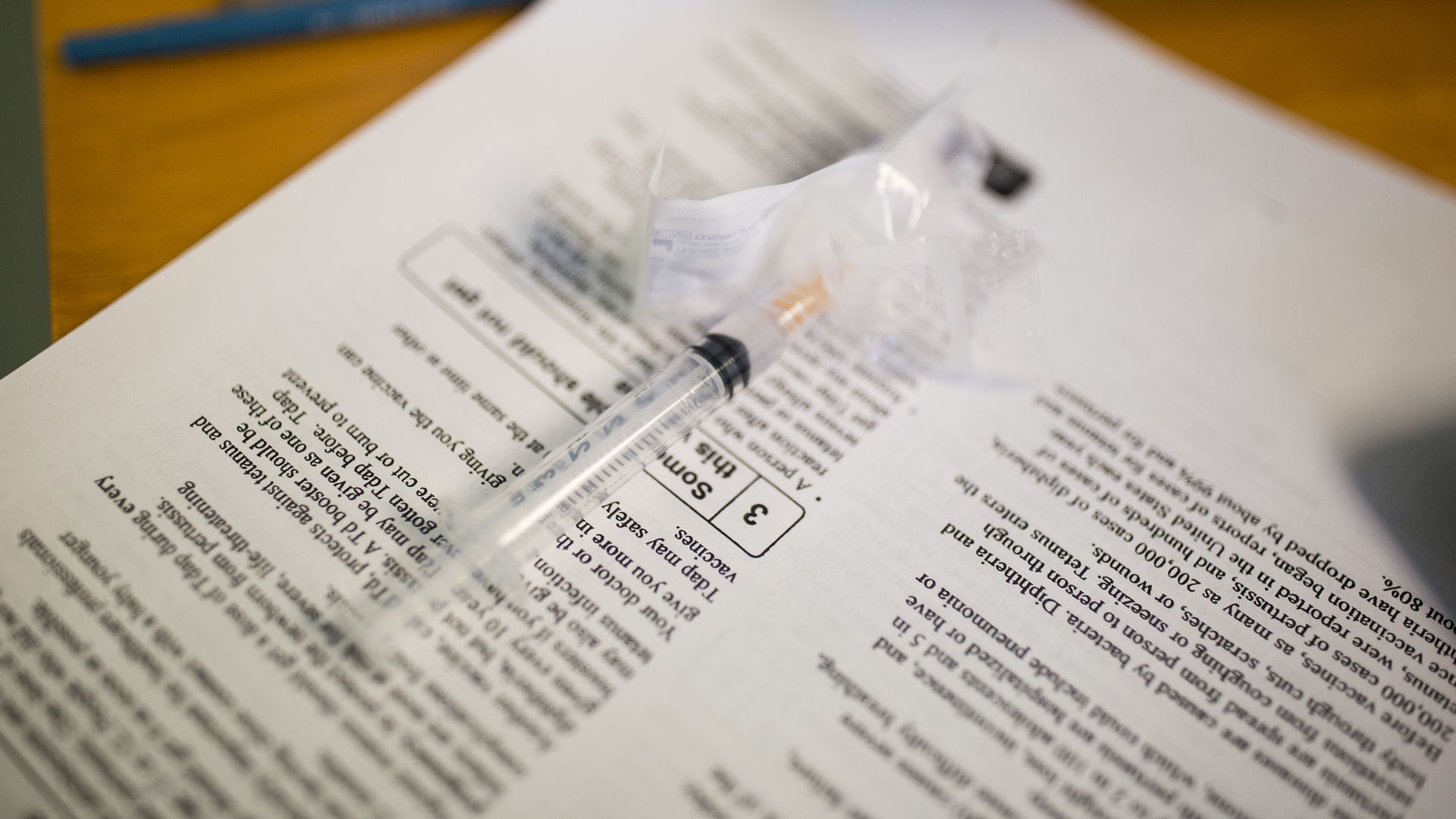
More than 32,000 cases of whooping cough were recorded in the U.S. in 2024 — the highest annual total in a decade.
The big picture: It marked a return to pre-pandemic levels where more than 10,000 cases were typically reported each year. Preliminary data show that more than six times as many cases have been reported by Dec. 14, compared with the corresponding period in 2023.
By the numbers: More than six times as many cases of the bacterial disease, also known as pertussis, have been reported by Dec. 14 as of the same date in 2023.
- In 2023, 5,198 cases had been reported as of the same week.
- As of Sept. 21, there had been at least 15,661 cases recorded in the U.S. — a figure that more than doubled by mid-December.
Threat level: Infants under 1, whose immune systems are still developing, are the group with the highest number of reported cases of whooping cough, and are at greatest risk for serious disease and death, per the CDC.
- Lower children's vaccination rates have ushered in more outbreaks of the disease, as parents increasingly opt out of shots citing non-medical religious exemptions.
4. Why RFK Jr.'s movement targets seed oils


Online influencers and the Robert F. Kennedy Jr.-led health movement share a skepticism of seed oils and their impact on people's health. But many nutritionists say the concerns are overblown, lack context or just aren't based in science.
Why it matters: The debate over oils extracted from canola, soy, sunflower and other plant seeds ultimately ties back to Americans' overreliance on processed foods and other, broader dietary habits that many people want the government to help address.
Driving the news: RFK Jr. has said Americans are being "unknowingly poisoned" by them and claimed beef tallow is a healthier option.
- "To turn the page on our chronic disease crisis, the new administration should initiate a thorough, science-based review of seed oil," author Nina Teicholz recently wrote in the Washington Examiner.
- There's even an app that points users to restaurants that cook without seed oils, whose omega-6 fatty acids are blamed for causing inflammation in high levels and causing other health risks, per Eater.
But studies have repeatedly found the products are safe to consume and may even be associated with lower risks of cardiovascular disease, cancer and Type 2 diabetes, according to the New York Times.
- Experts say it's not that omega-6 is bad for you; it's that Americans tend to eat too much of it.
5. Catch up quick
🏥 Insurance company denials of cancer treatments and screenings recommended by physicians are raising the stakes in oncology, an investigation shows. (NBC News)
☠️ Sunscreen, tampons and antiperspirants are laced with poisons that can make people sick, and reports of contaminated items keep coming. (Bloomberg)
🥴 Norovirus cases are surging, with 91 outbreaks of the highly contagious stomach bug reported in early December — well above numbers from the past few years. (AP)
Thanks for reading Axios Vitals, and to senior health care editor Adriel Bettelheim, managing editor Alison Snyder and copy editor Matt Piper. Please ask your friends and colleagues to sign up.
Sign up for Axios Vitals