
Axios Vitals

June 11, 2026

Hello, Thursday! Today's newsletter is 821 words, a 3-minute read.
1 big thing: Fraud crackdown can help pay for war, GOP says
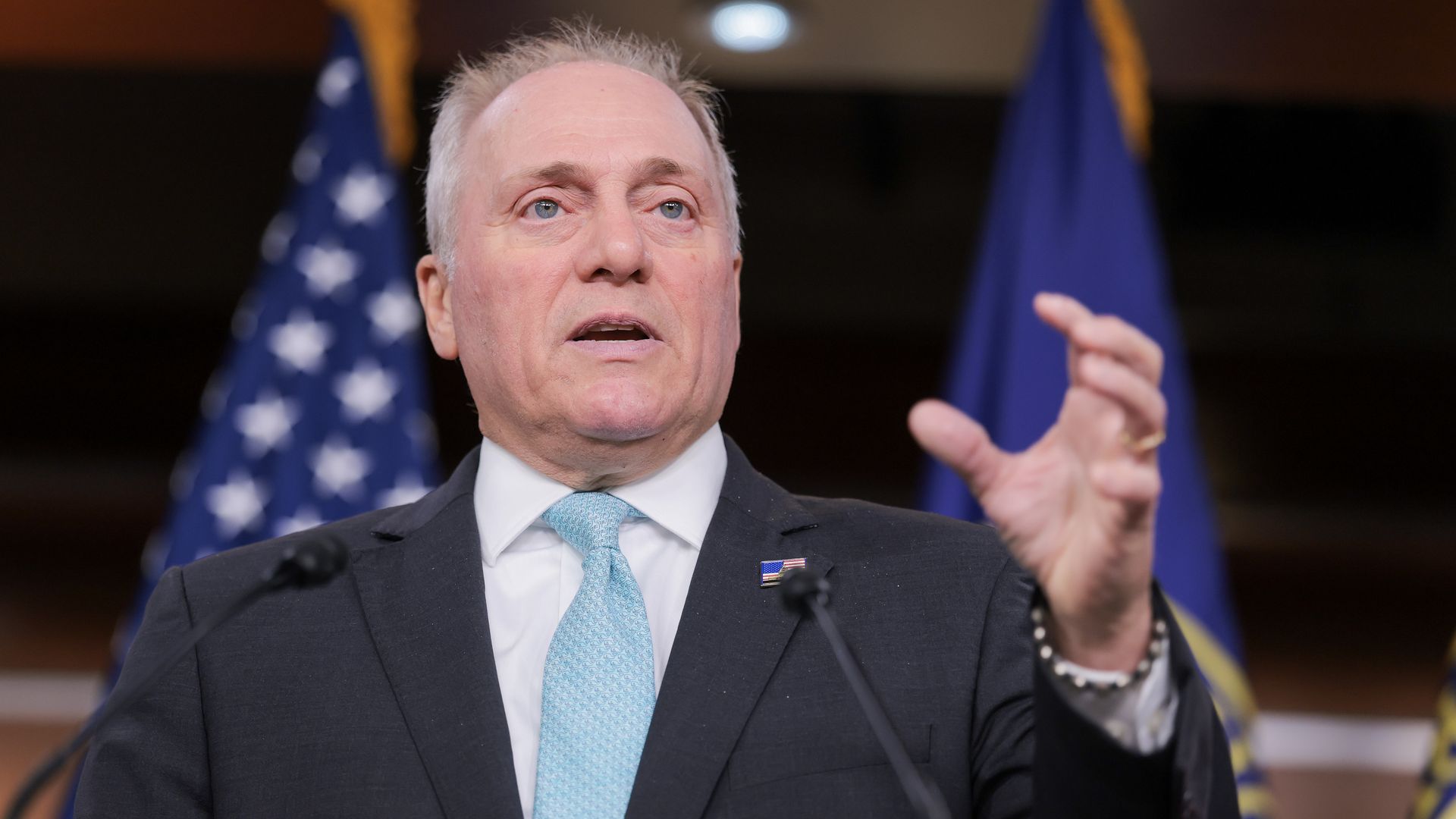
House Republicans are looking at paying for Iran war costs with savings from the ongoing crackdown on fraud in federal health programs as they begin the process of assembling another party-line budget bill.
Why it matters: GOP lawmakers contend Medicare and Medicaid are rife with theft, but the new effort risks crossing the line into benefit cuts that could prompt political backlash in an election year.
Driving the news: The push is part of a third effort to use the party-line process known as reconciliation to bypass a Democratic filibuster in the Senate.
- Health care policy changes could offset tens or even hundreds of billions in military spending and also pay for tax provisions and other changes aimed at voters' affordability concerns.
Reality check: There is deep skepticism, even among many Republicans, that another party-line bill is possible this close to the election.
- Senate Republicans are generally less interested in reconciliation than their House counterparts.
- But House leaders are starting to plan the effort, and the ideas give a sense of where the GOP's health priorities lie even if the package dies.
What they're saying: "There are a number of things that are out there to give more tools to the departments," House Majority Leader Steve Scalise (R-La.) told Axios.
- "There's hospice care, where you have criminal organizations, really, that have been set up for stealing tens, if not $100 billion of taxpayer money from those programs," he said.
- He said one idea is "a fraud fund" to "go root that out and protect the taxpayers of this country."
Between the lines: There still are questions about how congressional scorekeepers would quantify savings from anti-fraud efforts.
- If the math doesn't add up, Republicans might have to veer into benefit restrictions, which are more controversial and politically dicey.
- One area of focus is in-home care for elderly and disabled Medicaid beneficiaries, which the GOP has said is a major source of fraud but is widely viewed as essential.
2. Home care costs could swamp seniors


One year of home care now costs more than twice the average retiree's annual Social Security benefits, and costs are growing much faster than inflation, according to an AARP analysis shared first with Axios.
Why it matters: Most older adults will need such personal care services, which aren't covered by Medicare. The majority wind up paying out of pocket or leaning on family members as caregivers.
Driving the news: The cost of home care rose almost 8% from May 2025 through May 2026, per federal data released Wednesday. That's nearly double the rate of general inflation during that period.
- AARP calculated in March that a year of home care cost $51,480 — but seniors currently receive an average of $24,950 from Social Security each year.
- "It's not like if you need home care, you can go back to work and earn more than your Social Security check," said AARP public policy officer Debra Whitman. "You're really relying on the assets that you have at that point."
Zoom in: Some of the home care cost increases can be attributed to rising wages for personal care aides.
- The median wage for aides increased 22% from 2021 to 2025. The median hourly rate for an aide last year was $17.21.
3. Mapped: States with menopause legislation

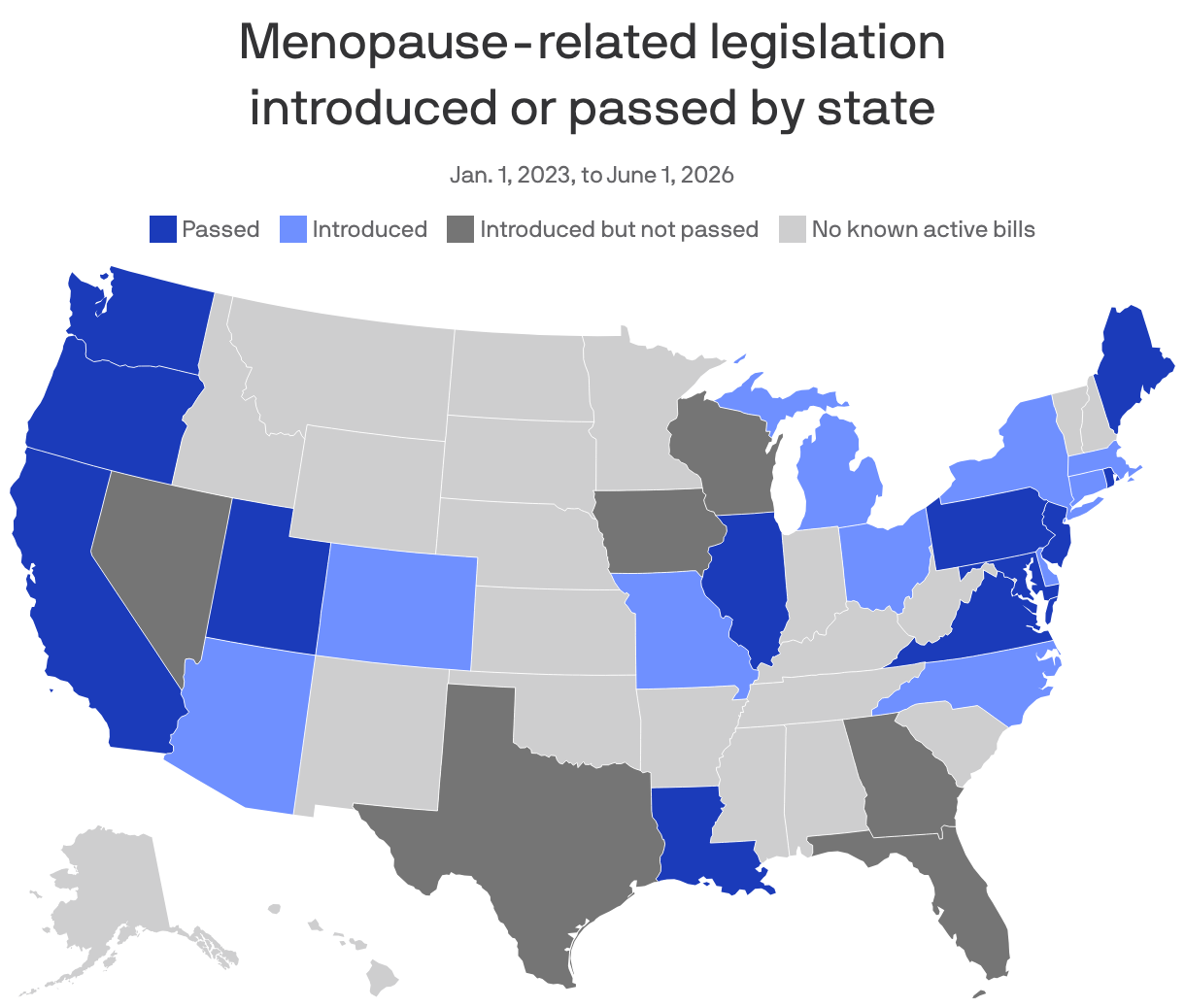
Dozens of states are transforming the once-taboo subject of menopause into a public policy priority.
The big picture: Growing awareness of the condition's toll on workplace productivity has coincided with a surge in demand for care, fueling growth among telehealth companies and menopause-focused clinics.
By the numbers: More than half of U.S. states have seen menopause-related legislation introduced or enacted since 2023.
- Recent examples include Maryland's sweeping law that requires insurance coverage and continuing clinician training, New Jersey's menopause insurance coverage mandate and Utah's move to expand hormone therapy coverage for state employees.
- California became the first to require menopause-related clinician education in 2024, but efforts to go further have stalled, with Gov. Gavin Newsom (D) vetoing two bills that would have mandated insurance coverage for treatments.
What's next: Swing states like Pennsylvania are the ones to watch, Lisa McDonald, who tracks legislation for The 'Pause Life, tells Axios.
- Philadelphia enacted what advocates describe as the nation's first municipal workplace anti-discrimination protections addressing menopause, and lawmakers are now considering broader statewide measures.
4. Catch up quick
⚕️The leader of the American Diabetes Association apologized for the expulsion of five members over criticism of federal research cuts and pledged to rebuild trust. (Stat)
🧑🏼⚕️ A study found that as autism and ADHD diagnoses rose, the average genetic risk among those diagnosed fell, which suggests that diagnostic criteria are playing a part. (MedPage)
💰 Parabilis Medicines, a startup making medicines for "undruggable" targets, raised a record haul for a venture-backed biotech company. (BioPharma Dive)
Thanks for reading Axios Vitals, and to editors Adriel Bettelheim and David Nather and copy editor Matt Piper. Please ask your friends and colleagues to sign up.
Sign up for Axios Vitals