
Axios Vitals

October 26, 2023
Happy Thursday, Vitals gang. Today's newsletter is 1,117 words or a 4-minute read.
1 big thing: Workforce pressures adding up
Illustration: Brendan Lynch/Axios
Staffing shortages, more dangerous workplaces, aging physicians and the increasing politicization of medicine: The warning signs for America's burned-out health care workforce are all there, Axios' Caitlin Owens writes.
Why it matters: A strained health care system may be heading in a dangerous direction in the pandemic's aftermath, according to new data points and a blunt warning from the head of the nation's leading medical association.
- "The physician shortage that we have long feared — and warned was on the horizon — is here. It's an urgent crisis, hitting every corner of this country," American Medical Association president Jesse Ehrenfeld said in a speech yesterday.
The big picture: Since the pandemic, hospitals and health systems have struggled to attract and retain enough staff, and emboldened workers are taking labor actions to demand better pay and safer conditions. Some appear to be leaving the industry altogether.
- Patients are having a harder time getting appointments, data suggests, and further shortages will only compound delays in the system.
By the numbers: Two-thirds of respondents to a recent Kaufman Hall survey of hospitals, health systems and medical groups said that staffing shortages have forced them to run at less than full capacity at some point over the past year.
- 63% said they are struggling to meet patients' demand for care at the doctors' practices that they own, and nearly a third said patients' concerns and complaints about access to this care are increasing.
- Meanwhile, health workers' reports of harassment more than doubled between 2018 and 2022, the CDC reported this week.
The factors driving doctors away from the field, in Ehrenfeld's view, are many, and it will take big changes to save the profession.
- They include reducing administrative burden, allowing more foreign doctors to practice here, and making it easier for doctors to take care of their mental health.
2. Insured Americans struggling to afford care


As health care costs continue to rise, more than half of working-age Americans said they've struggled to afford care this year, Maya writes on a new Commonwealth Fund survey.
Why it matters: It's the latest evidence of how people with insurance are struggling to pay medical bills, forcing them to forgo or delay needed care.
By the numbers: Nearly a third of adults reported having medical or dental debt, and nearly half of them said it's at least $2,000.
- 43% of those in employer-sponsored health insurance, which is the largest source of insurance coverage in the U.S., said they had difficulty affording care.
- Almost 40% of adults reported skipping or putting off health care in the past year because they couldn't afford it. Of this group, 57% said their health worsened as a result.
What they're saying: "We found that insurance did not appear to protect many people sufficiently from the budget squeeze," said Commonwealth vice president Sara Collins, the lead study author.
3. New speaker's health record
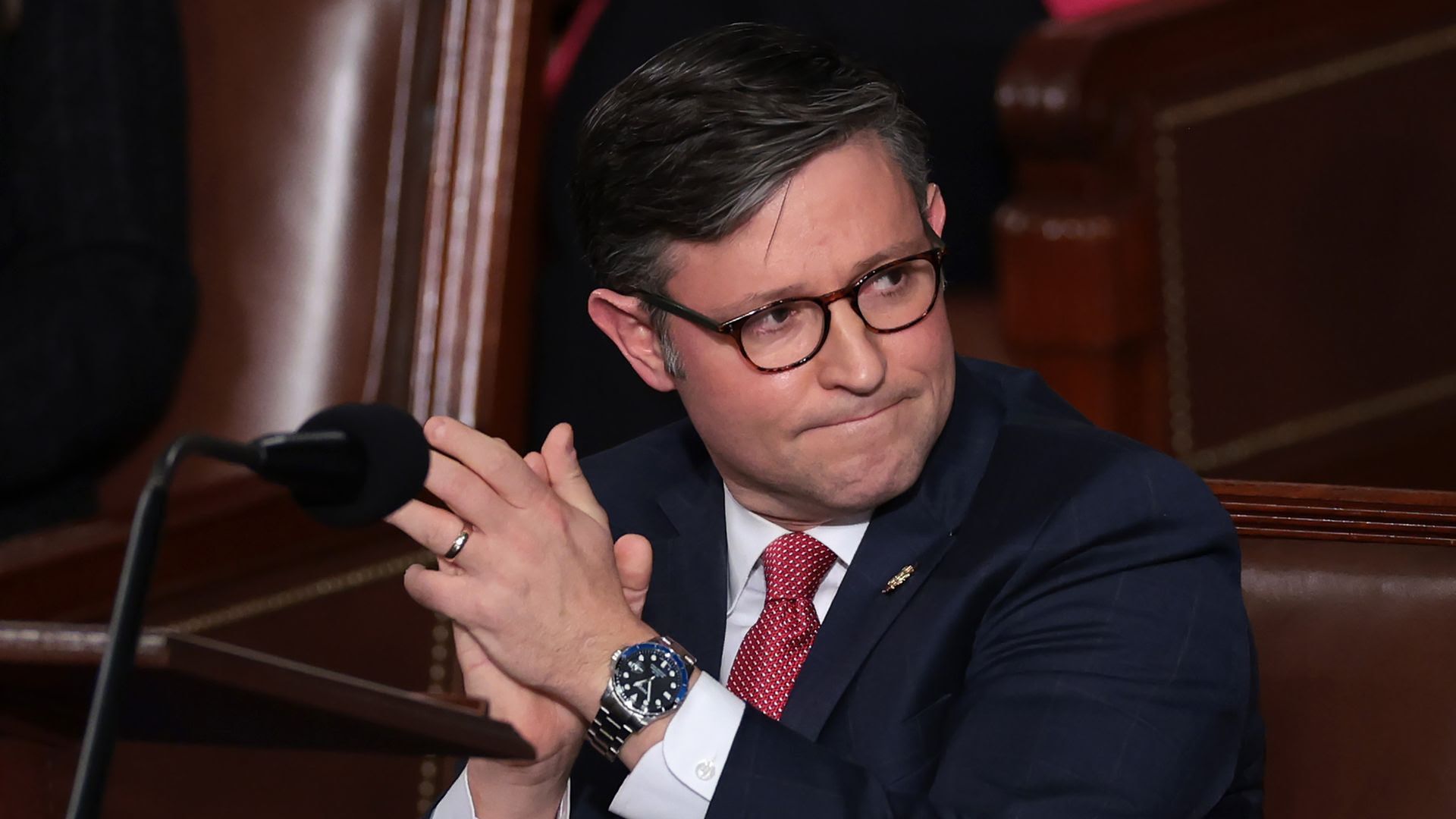
Johnson applauds in the House chamber during Wednesday's speaker election. Photo: Win McNamee/Getty Images
Mike Johnson hasn't been a major player on health care issues during his four terms in Congress, but the new House speaker has a record of supporting staunchly conservative health policies on abortion, gender-affirming care and federal health programs, Axios' Victoria Knight and Peter Sullivan write.
Zoom in: Johnson, who has an A+ rating on Susan B. Anthony's Pro-Life Scorecard for this Congress, is an original co-sponsor of a bill that would essentially ban all abortions, and he supports codifying the Hyde Amendment and cutting off federal dollars to Planned Parenthood.
- He's also co-sponsor on legislation that would ban federal coverage of gender-affirming care and prohibit medical schools from training future doctors to provide such care.
In 2019, two years after the Affordable Care Act repeal effort failed, the conservative Republican Study Committee that he chaired pitched a health care plan that would have scrapped many of the law's protections for pre-existing conditions, including a provision barring insurers from charging sick people more.
- The plan also would have limited Medicaid spending through per-capita caps and ended the enhanced funding for the ACA's Medicaid expansion.
- Under his chairmanship, the RSC called for raising Medicare's eligibility age to 67 and transitioning the program to a "premium support" system of private plans competing alongside traditional Medicare.
A version of this story was published first on Axios Pro. Unlock more news like this by talking to our sales team.
4. Biden admin's new cybersecurity tools

Illustration: Aïda Amer/Axios
The Biden administration is ramping up efforts to harden defenses around the U.S. health care infrastructure, releasing an updated cyber "toolkit" to help the sector better defend against hackers, Tina writes.
Why it matters: Health care is a high-value, target-rich industry facing increasing attacks, and the problem is increasingly being recognized as a threat to patient safety when providers are forced to divert or shut down care.
- Top officials from HHS and the Cybersecurity and Infrastructure Security Agency said Wednesday they have been working to better coordinate and clarify industry guidance.
- They jointly released the toolkit that includes ways for the health sector to mitigate risk, such as vulnerability scanning, best practices, and a framework for accessing and improving cyber resiliency.
5. Inside a new recovery high school
Circling up at a teen sobriety group. Photo: Emily Harris/Axios
Teenagers fighting drug addiction say going to school can be one of their biggest obstacles, with access to drugs and social, academic and emotional stress creating specific challenges.
- Amid a national surge in youth overdoses, Oregon is upping its investment in recovery high schools, which incorporate abstinence strategies and recovery counseling into the daily curriculum, Axios Portland's Emily Harris writes.
Why it matters: Research has found that among students with substance use disorder, recovery high schools can significantly decrease drug use and increase school attendance compared to other high schools.
- The idea began in the 1980s and has spread to more than three dozen schools in 20 states.
- Oregon's first recovery school opened in 2019, and state lawmakers this year approved funding for nine more nonresidential public recovery high schools by 2029.
- As is the case in many other states, treatment options for Oregon teenagers fall far short of need.
How it works: Recovery high schools are not treatment facilities. Similar schools across the country typically follow local curriculum and graduation requirements and include daily group support sessions and one-on-one sobriety coaching during the school day.
What they're saying: "It's a lot more flexible and less stressful" than regular public high school, said one sophomore at Portland's Rivercrest Academy, which opened last month. "Everyone there is going through something similar, so we can all relate and help each other."
6. Catch up quick
🏛️ The Biden administration is asking for $1.55 billion to address the drug crisis as part of a broader funding package. (NBC News)
🧪 This $1,000 test finds signs of cancer in your blood. Doctors are split on it. (Wall Street Journal)
🤖 Robots and AI are slowly starting to shoulder more of the back-end work in pharmacies. (Axios)
Thanks for reading Axios Vitals, and to health care editor Jason Millman and copy editor Matt Piper. Please ask your friends and colleagues to sign up.
Sign up for Axios Vitals

Healthcare policy and business analysis from Tina Reed, Maya Goldman, and Caitlin Owens.