Axios Vitals

June 24, 2024

Happy Monday. Today's newsletter is 1,043 words or a 4-minute read.
1 big thing: Postpartum care spotlight
America has become much more aware of the health risks facing new mothers, but the health care system is still trying to catch up.
Why it matters: More than half of pregnancy-related deaths in the United States occur up to one year after birth, a largely preventable tragic toll that disproportionately affects Black and Native American women.
Catch up quick: Postpartum care has traditionally been limited to a physical and mental health checkup at an OB-GYN six weeks after giving birth.
- That milestone was meant to encourage rest for new moms and infants but isn't scientifically supported, experts said. And this one appointment β which up to 40% of patients miss β may not be enough to flag potential long-term risks and complications, they said.
- "Our system isn't set up for ease of people to get the postpartum care that they need or desire," said Ashley Gresh, an assistant professor at Johns Hopkins University who studies the postpartum period.
State of play: Medical societies and governments have been revising postpartum care guidelines, calling for more care and better insurance coverage.
- Nearly every state Medicaid program now provides one year of postpartum coverage, and more money has flowed to postpartum care in recent years.
- Startups are offering services ranging from meal subscriptions to digital mental health care for postpartum women. Dedicated postpartum centers that mimic other cultures' focus on holistic post-pregnancy care are cropping up across the United States.
Yes, but: There's a long way to go, experts say.
- Centene, the nation's largest Medicaid insurer, is exploring alternative ways of paying for postpartum care, said its OB-GYN medical director, Dawn Steiner.
- CMS next year will start a 10-year pilot testing new ways Medicaid can pay for maternity care, including the postpartum period.
Maternal care needs "a change in culture," said Tamika Auguste, an OB-GYN who helped draft updated care guidelines in 2018. "Other disciplines outside of obstetrics are just now realizing that they, too, have a role in maternal mortality."
2. Rising health prices cost jobs
Rising health care prices have measurably increased unemployment in the United States, according to a new study in the National Bureau of Economic Research.
Why it matters: Surging health care costs don't just hit Americans in their pocketbooks β they could be costing them jobs, especially for middle-income workers.
- The country's employer-sponsored health insurance system creates a "direct link" between health care prices and labor market dynamics outside of the health sector, the researchers said.
- Previous research has found that growing health care costs have also stifled their wages.
The new research found that a 1% increase in health care prices lowers an employer's headcount by about 0.4%.
- These job losses are concentrated among people earning less than $100,000, contributing to inequality, the researchers said.
- For the average county, a 1% increase in health care prices reduces aggregate income by approximately $8 million annually.
What they're saying: "It's vital to understand that rising health care prices aren't just impacting patients. Rising prices are hurting the employment outcomes for workers who never went to the hospital," said co-author Zarek Brot-Goldberg, an assistant professor at the University of Chicago.
3. ACA preventive services saved
Health insurers must continue to provide coverage of certain preventive services like cancer screenings and behavioral counseling at no cost, a federal appeals court ruled Friday.
Why it matters: The decision in the closely watched case preserves the Affordable Care Act's free preventive services requirement, but a lower court was tasked with considering the legality of other no-cost preventive services.
Catch up quick: Two Christian-owned companies had sued the federal government over the requirement that their health plans fully cover preventive medicines for HIV.
- They argued the mandate was invalid because the panel that issued it, the U.S. Preventive Services Task Force, hadn't been Senate-confirmed.
The latest: The appellate court overturned a national injunction that was issued by a federal judge but never took effect, and it agreed that the panel needs Senate confirmation.
- It also called on the lower court to revisit whether the federal government has properly approved requirements that insurers cover other preventive care services outside of the USPSTF's scope, like vaccines and contraception.
4. Charted: Abortion travel distances


State abortion bans enacted since Roe v. Wade was overturned have left residents of nearly a quarter of U.S. counties having to travel more than 200 miles to find an abortion provider, according to a Middlebury College tracker.
Why it matters: The Supreme Court's Dobbs decision β issuedΒ two years ago today β left a patchwork of abortion access that poses heightened logistical and financial challenges for patients seeking care in clinics, many of whom come from areas with lower incomes and more diverse populations.
- Residents in 712 (22.7%) counties had to travel more than 200 miles to access the procedure β a more than threefold jump from June 2021.
- That number alone may understate access problems, with states like Florida, Georgia and South Carolina implementing six-week bans in the past year.
5. FDA OKs menthol vapes
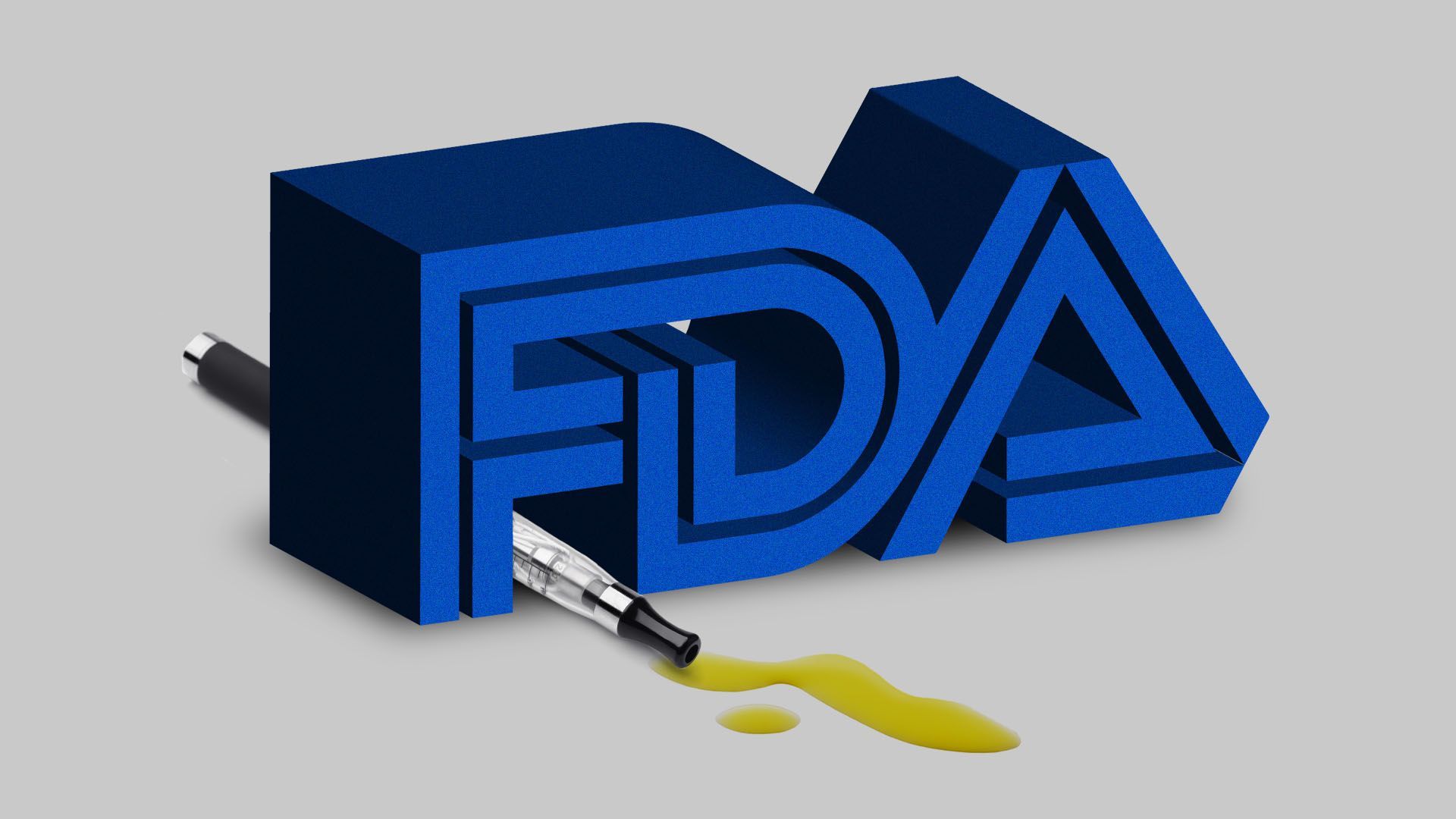
The FDA on Friday authorized the sale of the first menthol e-cigarettes for adults, saying evidence showed they could reduce the health consequences of traditional cigarette smoking.
Why it matters: It's the strongest government endorsement to date of manufacturers' argument that e-cigarettes are effective smoking cessation tools, despite their appeal to youths.
Details: The agency's decision covers four products from NJOY Holdings, which was acquired last year by tobacco giant Altria. While the authorization allows the products to be legally sold in the U.S., FDA said it doesn't mean they are safe or "FDA approved."
- Anti-smoking groups criticized the move, saying it appears inconsistent with the FDA's conclusions that flavored e-cigarettes, including menthol products, have fueled a youth vaping epidemic.
6. While you were weekending
π§ββοΈ California's first-in-the-nation minimum wage for health workers will now start as early as Oct. 15 under a new budget agreement. (Associated Press)
π° Kaiser Permanente plans to make North Carolina's Cone Health the second system to join its new Risant Health venture. (Modern Healthcare)
π₯΅ Heat-related ER visits have spiked across parts of New England, the Midwest and Mid-Atlantic states, according to a CDC tracker. (New York Times)
π Eli Lilly asked FDA to approve its weight-loss drug for obstructive sleep apnea, as new data showed the drug resolved the condition in about half of patients. (CNBC)
Thanks for reading Axios Vitals, and to health care editor Jason Millman and copy editor Matt Piper. Please ask your friends and colleagues to sign up.
Sign up for Axios Vitals