Axios Vitals

May 07, 2026



It's already Thursday. Today's newsletter is 879 words, a 3.5-minute read.
1 big thing: GOP's midterm health care dilemma

Health care affordability is shaping up to be a defining midterm election issue, yet many Republicans are wary of wading into major health policymaking before facing voters.
Why it matters: Many GOP operatives think it'd be crazy to take a huge swing at health care costs between now and November. But some Republicans are making the argument that it's crazier not to.
The big picture: Polls, policymakers from both parties and influential outside groups all say the same thing: Health care costs are too high, and Washington needs to do something and meet the moment.
- But conventional wisdom and politics argue the opposite for many Republicans, at least before November.
- Not only is it risky to do anything big this close to an election, but any legislation aiming to significantly lower health care costs would almost certainly divide the caucus and test the razor-thin GOP House majority.
- That means they may instead have to play the hand they've already been dealt with voters who are desperate for relief.
Where it stands: The White House is already gearing up to sell its drug pricing deals with pharmaceutical companies as major victories for patients.
- Those deals featured commitments to manufacture drugs in the U.S., participate in the direct-to-consumer platform TrumpRx, offer drugs at "most favored nation" prices to state Medicaid programs and launch any new drugs going forward at prices comparable to other high-income countries.
- The Trump administration has also been leaning into combating health care "waste, fraud and abuse" in federal health programs.
- The administration's actions are "probably enough of an argument on health care," said Lanhee Chen, a former GOP health care consultant.
Between the lines: Republicans' health accomplishments to date have done little to reduce what the vast majority of patients pay for health care, either through their premiums or out-of-pocket costs.
- But talk has ramped up over the last several months about how to reduce underlying costs, as have outside groups' calls for relief.
2. Novo Nordisk buoyed by Wegovy pill launch
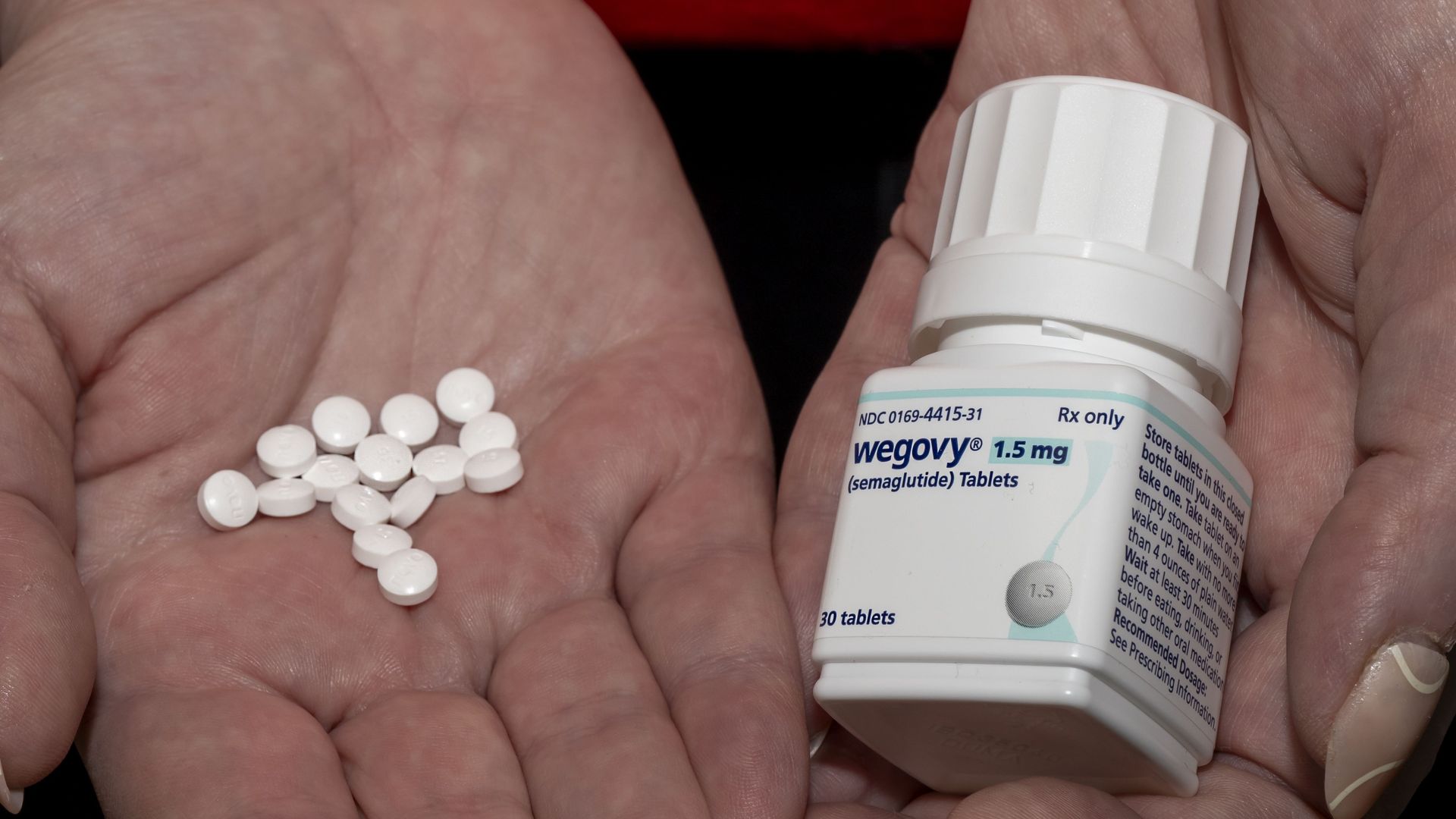
The rollout of the new Wegovy pill and surge of first-time prescribing led Novo Nordisk to raise its sales and profit forecasts yesterday and say it had found a "sweet spot" pricing the GLP-1 drug.
Why it matters: The weight-loss pill is becoming a barometer for how the Danish drug giant fares in a battle with Eli Lilly for one of pharma's most lucrative segments.
- The first-quarter results also provided a reality check on whether the company's drug pricing deal with the Trump administration could be a drag on business.
Driving the news: More than 1 million Americans were estimated to have taken the Wegovy pill since it launched early this year and some 80% of users were "GLP-1-naive," said Jamey Millar, Novo's executive vice president of U.S. operations.
- The company adjusted its guidance for the year, saying overall sales would fall 4% instead of 5%, and that operating profit would drop 12% instead of the 13% it previously estimated.
What's ahead: The FDA is moving to limit large-scale compounding of weight-loss drugs with Novo's and Lilly's active ingredients — a move that could help both companies defend market share against cheaper knockoffs.
3. OpenAI cuts down on made-up health claims


OpenAI is making its default ChatGPT model more accurate and more personal — changes that could increase people's reliance on it for medical questions.
Why it matters: More than 230 million people already turn to chatbots for health concerns each week, sometimes getting "hallucinations" with made-up facts, or answers that are technically correct but lack important context.
- Acting on a hallucination could exacerbate an illness, delay needed care or make people question their judgment.
Driving the news: OpenAI updated ChatGPT's default model to respond with more accuracy, more personalization and fewer gratuitous emoji, the company said this week.
- Its GPT-5.5 Instant produced 52.5% fewer hallucinated claims than an earlier version on high-stakes prompts in health care, law and finance.
- It also reduced inaccurate claims by 37.3% in especially challenging conversations users had flagged for factual errors.
- The new model "matches the scale of the task," the company said in a blog post.
Yes, but: Lower hallucination rates can also create new problems.
- Users may trust answers more even when the model is still capable of getting things wrong.
4. Quote du jour

"It is intuitive to assume that early detection always improves health. But this assumption is incorrect. Whole-body MRI will identify cancer in approximately one or two people out of 100 in the general adult population, but there is no evidence that it reduces mortality or improves health."— Researchers in yesterday's JAMA on the merits of full-body MRIs, which have become a splurge for some focused on longevity
5. Catch up quick
🦠 Deleted posts on X show Trump's new surgeon general pick suggested the administration was hiding the extent of measles spread until after the midterm elections. (CNN)
👀 About seven Americans who left a cruise ship with a cluster of hantavirus cases are back on U.S. soil, and states have been trying to find and test them. (MedPage)
💉 A lifesaving injection given to newborns to prevent uncontrollable bleeding has become collateral damage of the anti-vaccine movement. (ProPublica)
Thanks for reading Axios Vitals, and to editors Adriel Bettelheim and David Nather and copy editor Matt Piper. Please ask your friends and colleagues to sign up.
Sign up for Axios Vitals