Axios Vitals

September 11, 2023

Good morning, Vitals gang. Today's newsletter is 1,019 words or a 4-minute read.
Situational awareness: The CDC's vaccine advisory committee meets Tuesday to make recommendations about updated COVID-19 vaccines.
- Also: A federal judge on Friday will hear oral arguments on the U.S. Chamber of Commerce's lawsuit opposing Medicare drug negotiations.
1 big thing: Fentanyl as a political weapon

Photo illustration: Axios Visuals
The country's fentanyl crisis has become a potent political weapon, reflecting its deep and emotional impact on millions of Americans, Axios' Caitlin Owens writes.
Why it matters: The opioid epidemic was once a rare topic that united Republicans and Democrats. But as fatal overdoses climb, the discourse around fentanyl has become more politicized and, at times, less aligned with reality — especially when Republicans talk about its connection to the U.S.-Mexico border.
Driving the news: House Republicans' border hearings have regularly invoked fentanyl smuggling alongside migration issues, and GOP presidential candidates repeatedly brought up fentanyl during their first debate last month.
- Florida Gov. Ron DeSantis called for military involvement against cartels, declaring "we're going to leave them stone-cold dead."
- The White House's recent warning about the high stakes of a government shutdown zeroed in on how it would disrupt work on "life and death priorities like fighting the fentanyl crisis."
The big picture: The discussion and legislation around opioids has increasingly shifted from prevention and treatment to reducing the supply of fentanyl coming into the U.S.
One House Republican aide who has long worked on the opioid issue said the shift is partly because of how the epidemic has changed.
- People are dying of fentanyl who didn't even know they were consuming it. That's a different problem than addressing people needing care for opioid use disorder, the aide said.
Yes, but: This shift has also brought with it highly charged conversations about the border and law enforcement. Experts say prominent Republicans have inaccurately conflated the flow of illicit fentanyl from Mexico with the migration crisis.
- Although most fentanyl comes from Mexico, the vast majority enters the U.S. through legal ports of entry.
- "If illegal immigration disappeared tomorrow, the fentanyl supply would be unaffected," said Keith Humphreys, a professor of psychiatry and behavioral services at Stanford.
2. Sanders drops opposition to NIH nominee
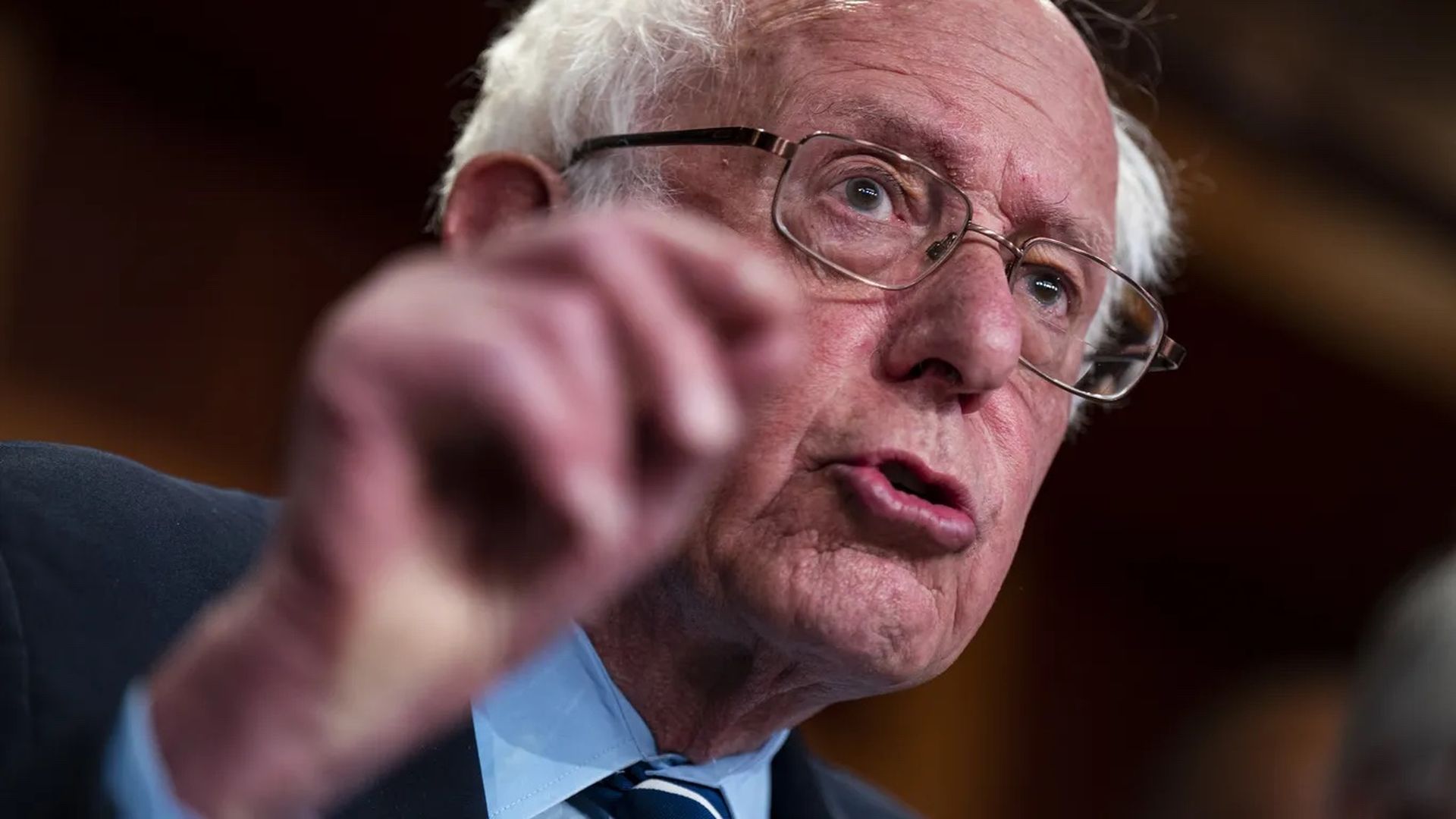
Sen. Bernie Sanders at a May 18 press conference. Photo: Al Drago/Bloomberg via Getty Images
The stalled nomination of President Biden's pick to lead the National Institutes of Health is moving forward after Senate HELP Committee Chair Bernie Sanders (I-Vt.) said his panel will hold a hearing with her next month, Axios' Peter Sullivan writes.
Why it matters: It's a major step forward for Monica Bertagnolli, whose nomination was held up by Sanders over drug pricing concerns. The Sanders announcement was prompted by the Biden administration securing a key pricing concession for an experimental COVID-19 therapy it's backing.
Flashback: Sanders back in June said he would not move forward with Bertagnolli's nomination to lead the $48 billion biomedical research agency until the administration produced a robust plan for lowering drug prices.
- Bertagnolli, who heads the National Cancer Institute, was nominated in mid-May to fill a position that's been vacant since the end of 2021.
Driving the news: Regeneron, which is developing a monoclonal antibody for preventing COVID-19, agreed to the HHS demand that it wouldn't price the drug in the U.S. any higher than what it charges in other high-income countries.
- Regeneron recently received $326 million from HHS through its NextGen initiative supporting research into more effective COVID vaccines and treatments.
Sanders, who has been pushing for similar "reasonable pricing" clauses for all drugs developed with taxpayer support, also cited a commitment from the White House to do more on lowering drug prices but did not provide more details.
A version of this story was published first on Axios Pro. Get news like this by subscribing.
3. FDA advisers to reconsider decongestants
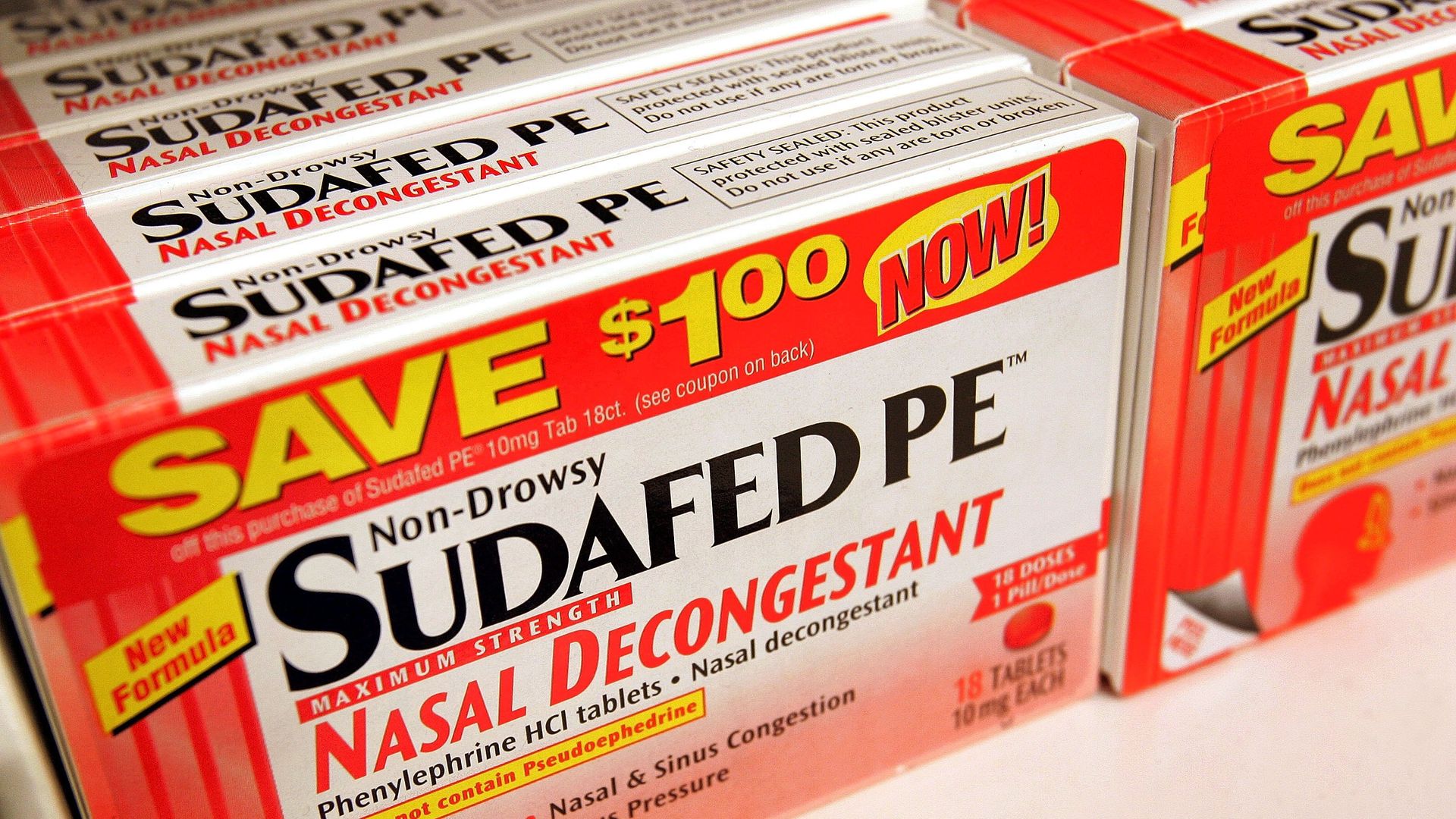
Photo: Tim Boyle/Getty Images
FDA advisers will consider whether an ingredient in commonly used decongestants should be reclassified after the agency found it is ineffective.
Driving the news: Oral formulations of phenylephrine, which is in drugs like Sudafed PE and some versions of NyQuil, doesn't work at standard or even higher doses, the FDA said in briefing documents posted ahead of the two-day advisory meeting that starts today.
- There have been long-running questions about the effectiveness of phenylephrine, and the FDA review raises potentially big implications for the over-the-counter drug market.
- Research firm IRI found that OTC pills that treat cough, sinus and flu symptoms — a category that includes phenylephrine — generated about $5 billion in sales in 2021, according to the Wall Street Journal.
- If the FDA advisory committee agrees the ingredient is ineffective, that could lead to the agency revoking the drug's designation as "Generally Recognized as Safe and Effective." That would mean higher regulatory barriers for including phenylephrine in OTC products.
Catch up quick: The FDA said it's been monitoring the ingredient since the agency last reviewed it in 2007.
- Since then, the FDA said, there have been three large trials of oral phenylephrine that it described as "by far the largest and most carefully conducted trials" of the ingredient ever conducted.
- The trials "confirm that orally administered PE is not effective at any dose that can be developed and still provide a reasonable margin of safety," the FDA wrote.
The FDA said it hasn't identified any safety issues with the ingredient, but it said it's concerned about possible unintended consequences of revoking its OTC status.
4. Biden admin urges workplaces to stock naloxone

Photo illustration: Annelise Capossela/Axios. Photos: Scott Olson, Spencer Platt/Getty Images
Federal health officials are calling on employers to stock up on the opioid reversal drug naloxone, comparing it to workplaces preparing emergency plans in case of a fire.
Why it matters: Narcan, a nasal spray version of naloxone, just became available over-the-counter at major retailers, and a second OTC nasal spray is expected early next year, Tina writes.
Our thought bubble: Considering that a two-dose package of Narcan retails for $44.99 — a price that may put the treatment out of reach for some — employers may be more more willing to pick up the cost.
5. While you were weekending

Illustration: Annelise Capossela/Axios
💵 An Arkansas hospital sued thousands of patients over unpaid medical bills during the pandemic, including hundreds of its own employees. (CNN)
🏥 Kaiser Permanente agreed to a $49 million settlement after an investigation found it improperly disposed of patient information and hazardous medical waste, including body parts. (Sacramento Bee)
🏛️ A federal appeals court ruled that White House pressure on social media sites to remove misleading COVID info likely violated the 1st Amendment. (USA Today)
🚫 New Mexico's governor temporarily banned carrying guns in public in Albuquerque, declaring gun violence a public health emergency. (Associated Press)
Thanks for reading Axios Vitals, and to health care editor Jason Millman and senior copy editor Bryan McBournie. Please ask your friends and colleagues to sign up.