
Axios Vitals

September 14, 2020
Good morning. I hope you had a great weekend. Thanks again to everyone who has sent me dog pics! They have drastically improved my Fridays.
Join me and Axios’ Mike Allen tomorrow at 12:30pm ET for a live, virtual event on the state of medicine and chronic pain, featuring Rep. Michael C. Burgess (R-Texas), Arthritis Foundation president and CEO Ann M. Palmer and Linda Porter, a director at the National Institutes of Health.
- Register here.
Today's word count is 810, or a 3-minute read.
1 big thing: Six months that changed everything

Illustration: Sarah Grillo/Axios
Yesterday marked six months since President Trump declared a national emergency over the coronavirus. If those six months feel like a blur to you, you’re not alone, Axios' Sam Baker writes.
The big picture: The sheer scale of what the U.S. has been through since March — a death toll equivalent to 65 Sept. 11 attacks, millions out of work, everyday life upended, with roiling protests and a presidential election to top it all off — can not only be hard to process, but hard to even keep track of.
Here’s a partial timeline to help make sense of these past six months.


2. Drug pricing politics aren't dead
President Trump released an executive order yesterday ordering the Department of Health and Human Services to begin the process of limiting what Medicare pays for prescription drugs relative to other countries.
Why it matters: It's September of an election year. That means that this executive order is, at best, a statement of Trump's intention to keep trying to achieve something big on drug prices should he get a second term.
- But given that he's had four years already to act on what was also a big issue in 2016, there's plenty of reason to be skeptical of this ever translating into official policy.
- "President Trump's executive order on drug pricing does not by itself do anything. It has to be followed up by regulations, which will take time. Trump has a history of bold talk on drug prices, only to pull back when it comes to putting actual regulations in place," the Kaiser Family Foundation's Larry Levitt tweeted.
Details: The order calls for Medicare to receive the "most-favored-nation" price for certain drugs.
- This price is defined as "the lowest price, after adjusting for volume and differences in national gross domestic product, for a pharmaceutical product that the drug manufacturer sells in a member country of the [OECD] that has a comparable per-capita gross domestic product."
The bottom line: Trump and Joe Biden have both pitched aggressive drug pricing policies — a good reminder that once we get the pandemic under control, the issue is bound to become front-and-center again.
3. Kids can spread the virus to their households
Children can and do transmit the coronavirus to members of their household, a new report by the Centers for Disease Control and Prevention confirms.
Why it matters: As the coronavirus spreads through schools across the country, the people who live with exposed children — some of whom may be older or have preexisting conditions — are also at risk of catching the virus.
Details: The study looked at coronavirus outbreaks associated with three child care facilities in Utah.
- It found that 12 children acquired the virus in these facilities, and then transmitted it to at least 12 of their non-facility contacts — about a quarter of such contacts.
- One parent was hospitalized, and two asymptomatic children transmitted the virus.
The bottom line: If you are a parent or a grandparent who is sending their child to school, and there is a coronavirus outbreak at that school, you are also at risk of catching the virus. That is a terrible predicament for millions of caregivers across the country, especially those who are vulnerable.
4. Gen Z says it's taking the pandemic seriously


Members of Generation Z say they're taking the coronavirus seriously, trying to get others to do the same, and are willing to make short-term sacrifices in order to help safely resume some parts of pre-pandemic life, according to a Harris poll shared with Sam.
Why it matters: These findings are a stark contrast with the college-town outbreaks and scenes of crowded bars that have helped create a narrative of careless young people spreading the virus.
By the numbers: More Gen Z respondents said the pandemic was causing them stress because they feared for the health and safety of their families (81%) than said they were stressed about their own personal situations, like missing graduation or other key milestones (67%).
- The majority said they were strictly following all the important safety protocols, like wearing masks and maintaining social distancing and trying to get others to follow along, as well.
- 85% said they'd be willing to take all their classes online if it meant they could socialize in person sooner.
The bottom line: "We’ve dramatically underestimated this generation’s anxiety and resolve," Harris Poll CEO John Gerzema said.
5. Catch up quick
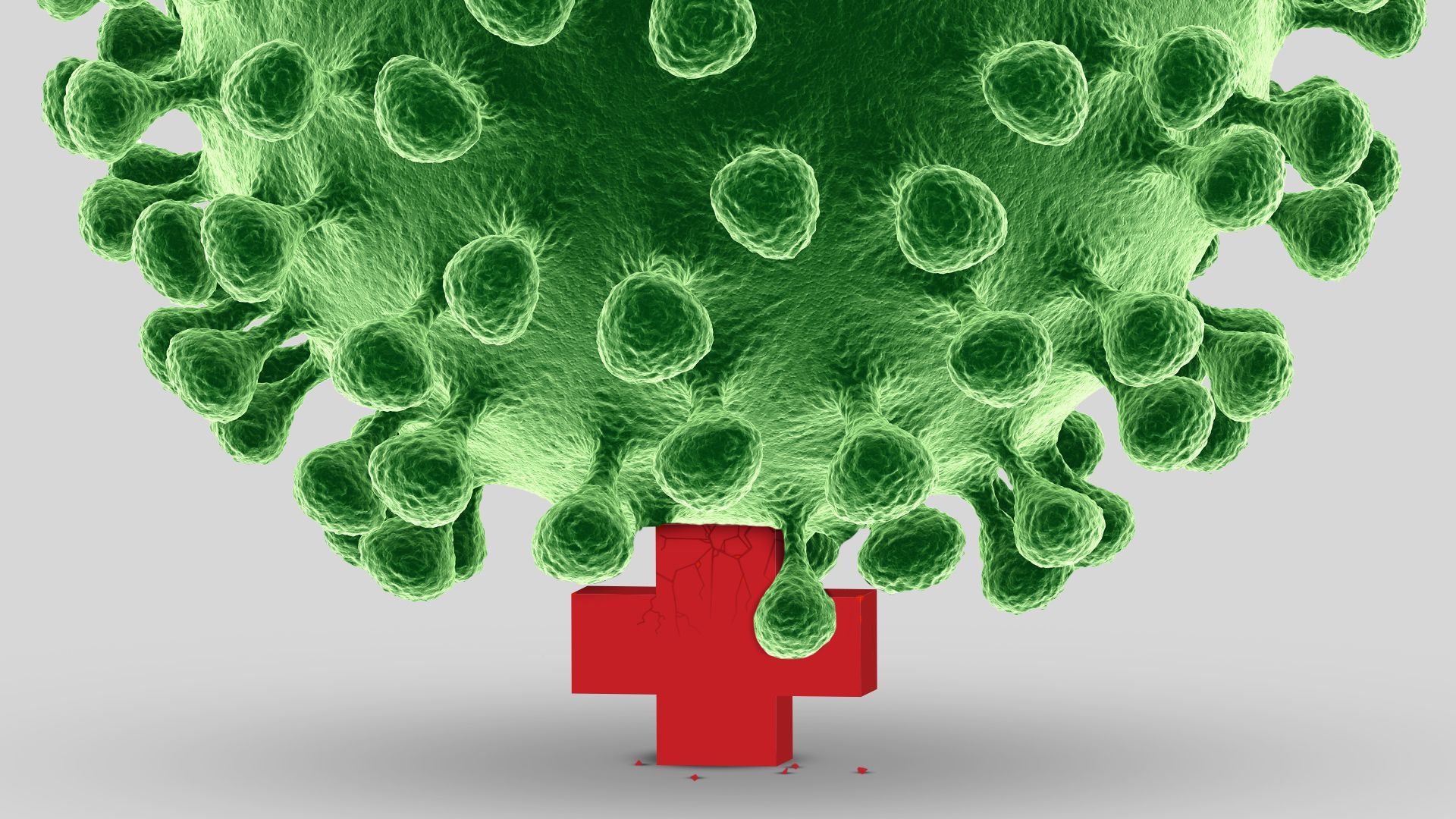
Illustration: Aïda Amer/Axios
Pfizer CEO Albert Bourla told CBS News' "Face the Nation" Sunday that his company will know whether its coronavirus vaccine is effective by the end of October and that it has already manufactured hundreds of thousands of doses in anticipation that the vaccine will receive FDA approval.
Trump-appointed health department aides interfered with the CDC's weekly COVID-19 reports “in what officials characterized as an attempt to intimidate the reports’ authors and water down their communications to health professionals,” Politico’s Dan Diamond reported late on Friday.
AstraZeneca announced on Saturday it's resuming its COVID-19 vaccine trials after pausing earlier in the week when a participant fell ill.
Anthony Fauci, director of the National Institute of Allergy and Infectious Diseases, told MSNBC on Friday that it's unlikely life in the U.S. will go back to normal by the end of 2020, saying pre-coronavirus conditions may not return until "well into 2021, maybe even towards the end of 2021."
Dozens of lockdown protesters in Melbourne, Australia, were arrested after facing off with riot police for a second straight day on Sunday, per Nine News.
Sign up for Axios Vitals

Healthcare policy and business analysis from Tina Reed, Maya Goldman, and Caitlin Owens.

