Axios Vitals

January 09, 2024

Happy Tuesday, Vitals crew! Today's newsletter is 1,001 words or a 4-minute read.
1 big thing: The harm of diagnostic errors

Illustration: Annelise Capossela/Axios
Hospitalized patients who died or were transferred to the ICU during their stay experienced a diagnostic error nearly a quarter of the time — and in most cases the error caused harm, according to a new study that's prompting calls to rethink how health systems keep patients safe.
Why it matters: Hospitals can be risky places for patients, and the new study sheds light on how commonly human error in medicine harms and even kills patients, Tina writes.
- It comes nearly 25 years after the landmark report "To Err Is Human" sparked a revolution in how health care sought to reduce potentially dangerous mistakes.
"Delayed diagnoses and misdiagnoses are more common than we would like to think, which is incredibly humbling," said Andrew Auerbach, lead author of the JAMA Internal Medicine study and professor at the UCSF School of Medicine.
- Researchers examined nearly 2,500 patient records for adults hospitalized with general medication conditions across 29 academic medical centers.
- Of the 550 patients who had a diagnostic error (23%), 436 experienced temporary or permanent harm as a result (18%).
- Of the 1,863 patients who died, a diagnostic error was deemed a contributing factor about 7% of the time.
Between the lines: Further study is needed to understand whether certain patients or certain conditions may be prone to missed or incorrect diagnoses.
- In an accompanying article, JAMA editors called the study results "striking" as they also pointed out it looked only at especially sick patients, some of whom "may have had poor outcomes regardless of the errors."
- "As the complexity of medical practice grows, we have a responsibility to patients to examine our role in contributing to patient harm through diagnostic error and invest in research and quality improvement initiatives," wrote editors Grace Zhang and Cary Gross.
2. Addiction treatment scarce for teens

Illustration: Shoshana Gordon/Axios
Ten states plus Washington, D.C., don't have any residential addiction treatment facilities for adolescents, and 13 other states don't have any that accept Medicaid, according to a new Health Affairs study.
Why it matters: Families have limited treatment options as youth fentanyl overdoses are on the rise, as Axios' Caitlin Owens recently wrote.
- And even where residential treatment facilities are available, long waitlists and prohibitive costs can put care out of reach for many.
By the numbers: Of the 160 adolescent residential addiction treatment facilities researchers identified, just over half accepted Medicaid, including only 1 in 5 for-profit facilities.
- For families who pay out of pocket for care, the mean daily treatment cost is $1,211 at for-profit facilities versus $395 at nonprofits.
- Nearly half require upfront payments for those paying without insurance. The costs average $34,729 at for-profit facilities — which were more likely to require them — and $9,897 at nonprofits.
Yes, but: For-profit facilities were more likely than nonprofits to have beds available.
- At facilities with a waitlist — which were predominantly nonprofits — the average wait for a bed was about a month. Nearly 60 percent of facilities that accept Medicaid had a waitlist.
- The researchers found that only seven states had a facility that accepted Medicaid, had a bed open the same day and offered the opioid addiction drug buprenorphine.
- "These results, taken together, indicate that parents searching for treatment options during a crisis may be compelled to pursue the first available treatment, even at exorbitant costs and even though many facilities do not offer evidence-based treatment," the researchers wrote.
3. Senate Dems target inhaler prices
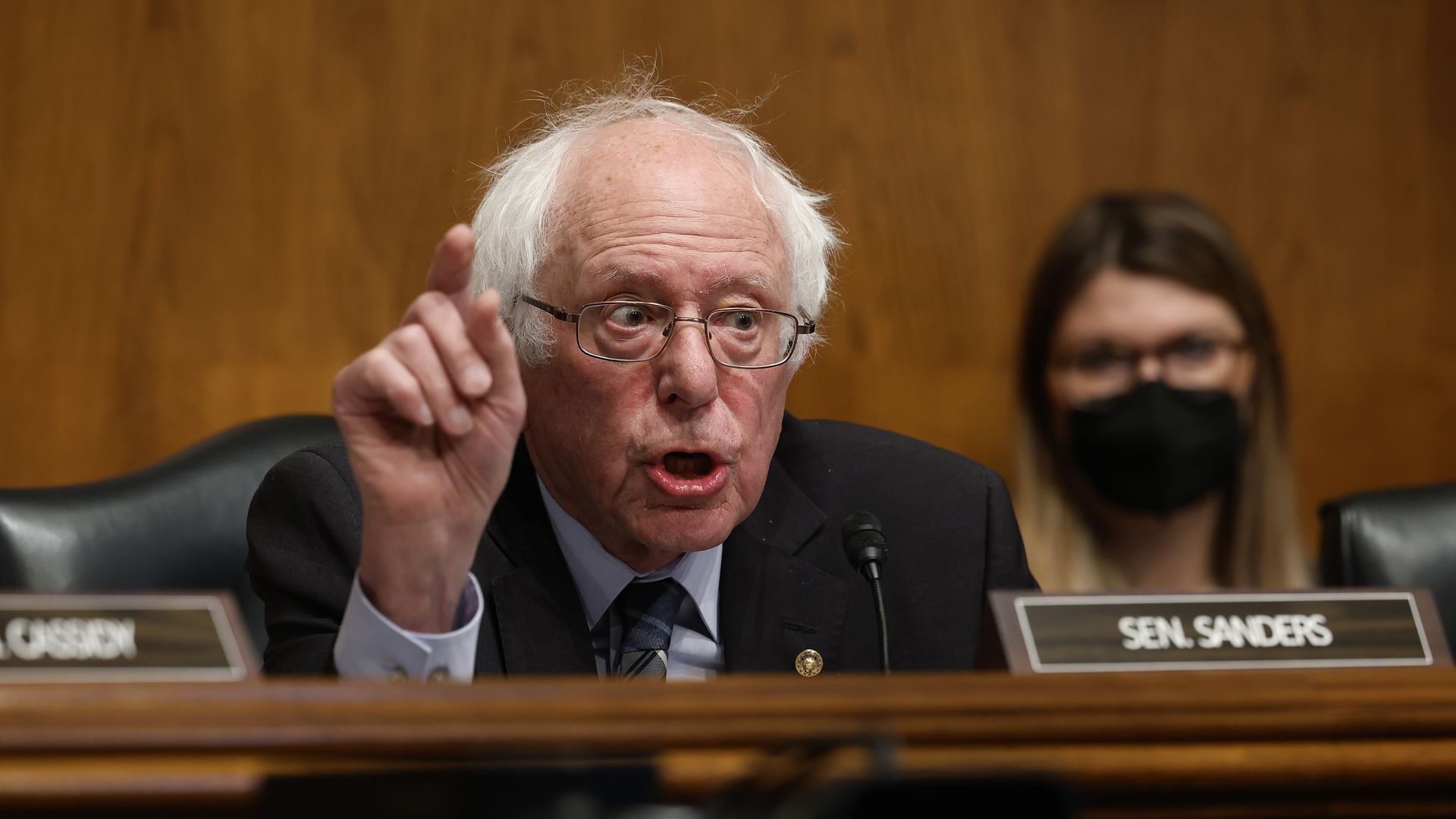
Sen. Bernie Sanders. Photo: Chip Somodevilla/Getty Images
The Senate health committee is investigating how drug companies price their inhalers, accusing them of artificially keeping U.S. prices much higher than those abroad.
Driving the news: Chairman Bernie Sanders (I-Vt.) and several Democratic colleagues on Monday sent letters to the four biggest manufacturers of inhalers: AstraZeneca, Boehringer Ingelheim, GlaxoSmithKline and Teva.
- Sanders in a statement said that GSK charges $319 for Advair HFA in the United States and just $26 in the U.K. Boehringer's Combivent Respimat is $489 here but only $7 in France, Sanders said.
- The senators say 25 million Americans with asthma and 16 million with chronic obstructive pulmonary disease use inhalers, and that high prices have forced some patients to skip or ration doses.
- They also asked the companies about internal decision-making regarding strategies for extending patent protections or moving patients from old products to new ones.
4. FDA update on CAR-T investigation
Photo: Sarah Silbiger/Getty Images
The FDA has identified "at least a few cases" where CAR-T immunotherapies may have caused blood cancers, but it still believes the benefits of the treatments outweigh the risks, a top agency official said Monday.
Flashback: The agency announced in late November it was probing a possible link after it received reports of serious adverse events with the treatments, which reprogram a patient's immune cells to fight cancer cells.
What's happening: FDA biologics head Peter Marks said the FDA is investigating 22 cases of blood cancers after patients received CAR-T treatment, per Endpoints.
- In some cases where genetic sequencing was available, the CAR construct was present in cancerous cells — and onset was soon after receiving the therapy. So, "it does look like there's a causal relationship" in some cases, he said.
- Marks said the FDA may ask for more safety monitoring but he encouraged drug development programs to continue.
5. Pic du jour: CES edition

Photo: Frederic J. Brown/AFP via Getty Images
A brain implant from CEA that helps patients with spinal cord issues walk again was among the many health tech gadgets on display at CES, the massive annual tech show in Las Vegas.
- Other gizmos that caught our eye: An AI-powered headband enhancing sleep quality, hand sensors that help rehabilitating stroke patients, and smart collars for your pets.
6. Catch up quick
🩸 The American Red Cross says it's facing a severe blood shortage, as other blood donation groups also say their supply is running low after the pandemic affected collections. (USA Today)
🤖 A new nonprofit venture backed by the Mayo Clinic and tech giants will test AI tools in health care. (Stat)
💰 Walgreens will pay Humana $360 million to settle a lawsuit alleging it overcharged for prescription drug reimbursements. (Reuters)
🇺🇸 Legendary gymnast Mary Lou Retton said she couldn't afford health insurance before her hospitalization for pneumonia last year. (Today)
Thanks for reading Axios Vitals, and to health care editor Jason Millman and copy editor Matt Piper. Please ask your friends and colleagues to sign up.