Axios Vitals

March 12, 2025

🐫 Happy Wednesday! Today's newsletter is 949 words or a 3.5-minute read.
Calling all San Diego-based readers: Join Tina and Axios' Erin Brodwin Friday at 9am PT for an event about the challenges in today's treatment landscape and the current state of pain, featuring Stanford University's Beth Darnall, chronic pain advocate Tom Norris and UC San Diego's Fadel Zeidan.
- What smart questions do you want us to ask? Hit reply and let us know!
1 big thing: Pint-sized pharmacies

Retail pharmacies are embracing the idea that less is more as they grapple with online competitors, lagging reimbursement, sluggish consumer demand and employee burnout.
Driving the news: CVS Health is rolling out roughly a dozen downsized stores, testing the theory that getting back to the basics of dispensing drugs will be more sustainable than selling greeting cards and cosmetics.
The big picture: National retail pharmacies are struggling to find a winning business model in an increasingly challenging environment and amid weakening "front of store" sales.
- CVS Health alone is shedding 270 stores around the country this year.
- "There is a lot of concern about how CVS is going to navigate its way out of its own challenges," Peter Bonis, chief medical officer at Wolters Kluwer Health, told Axios.
State of play: CVS plans to begin opening 5,000-square-foot stores, which will be about one-half to one-third the size of the current average location. Each will feature a full-service pharmacy with limited over-the-counter products available for purchase, the company said.
- And each "will be designed to meet the community's specific pharmacy needs," officials told Axios in a statement.
- CVS officials also plans to open 30 additional locations this year, including inside Target stores.
- This makes sense as a way to optimize for the higher-margin drug business while benefiting from the less expensive leases and smaller staff needed for a smaller store, Bonis said. "It's about maximizing return on retail square footage," he said.
Yes, but: This raises concerns that CVS, which owns the pharmacy benefit manager CVS Caremark, will further use its model to steer patients buying high-value drugs including specialty medications to their stores over independent pharmacies, said Douglas Hoey, CEO of the National Community Pharmacists Association.
- It also raises questions about whether CVS may wind up investing in higher-density neighborhoods rather than underserved markets, further expanding pharmacy deserts.
- "The new pharmacies will be introduced in select neighborhoods to help bridge gaps in care," CVS said in a statement to Axios.
2. AI failed to detect critical health conditions

AI systems designed to predict the likelihood of a hospitalized patient dying largely aren't detecting worsening health conditions, a new study found.
Why it matters: Machine learning models trained exclusively on existing patient data didn't recognize about 66% of injuries that could lead to patient death in the hospital, according to the research published in the journal Nature Communications Medicine.
- Hospitals increasingly use tools that harness machine learning, a subset of AI, to predict how patient conditions will change.
Zoom in: Researchers looked at several machine learning models commonly cited in medical literature for use in predicting patient deterioration and fed them publicly available sets of data about the health and metrics of patients in ICUs or with cancer.
- The researchers then created test cases for the models to predict potential health issues and risk scores if some patient metrics were altered from the initial data set.
- The models for in-hospital mortality prediction could only recognize an average of 34% of patient injuries, the study found.
What they're saying: The research shows "purely data-driven training alone is not sufficient," said Danfeng (Daphne) Yao, an author of the study and a computer science professor at Virginia Tech University.
3. FDA pick may anger anti-abortion advocates


A Justice Department attorney who defended the availability of abortion pills in a high-profile case during the Biden administration will be the FDA's top lawyer, a choice made by commissioner-designate Marty Makary.
Why it matters: The future of access to medication abortion — specifically mifepristone — is a hot-button issue facing the Trump administration and was a key line of questioning at Makary's Senate confirmation hearing last week.
- The decision to select Hilary Perkins as FDA chief counsel has been deeply controversial within the administration. HHS officials didn't like the choice but were overriden by the White House, sources said.
The Senate health committee is due to vote on advancing Makary's nomination on Thursday.
- Democrats pressed Makary during his hearing on whether he'd accept many mainstream scientists and health groups' conclusion that mifepristone is safe and current FDA policies are appropriate.
- But many Republicans also care deeply about the issue — from the opposite perspective. It's not hard to see some members having questions about the selection of Perkins, even though she argued the case under the Biden administration as a career DOJ employee.
4. A new day for M&A

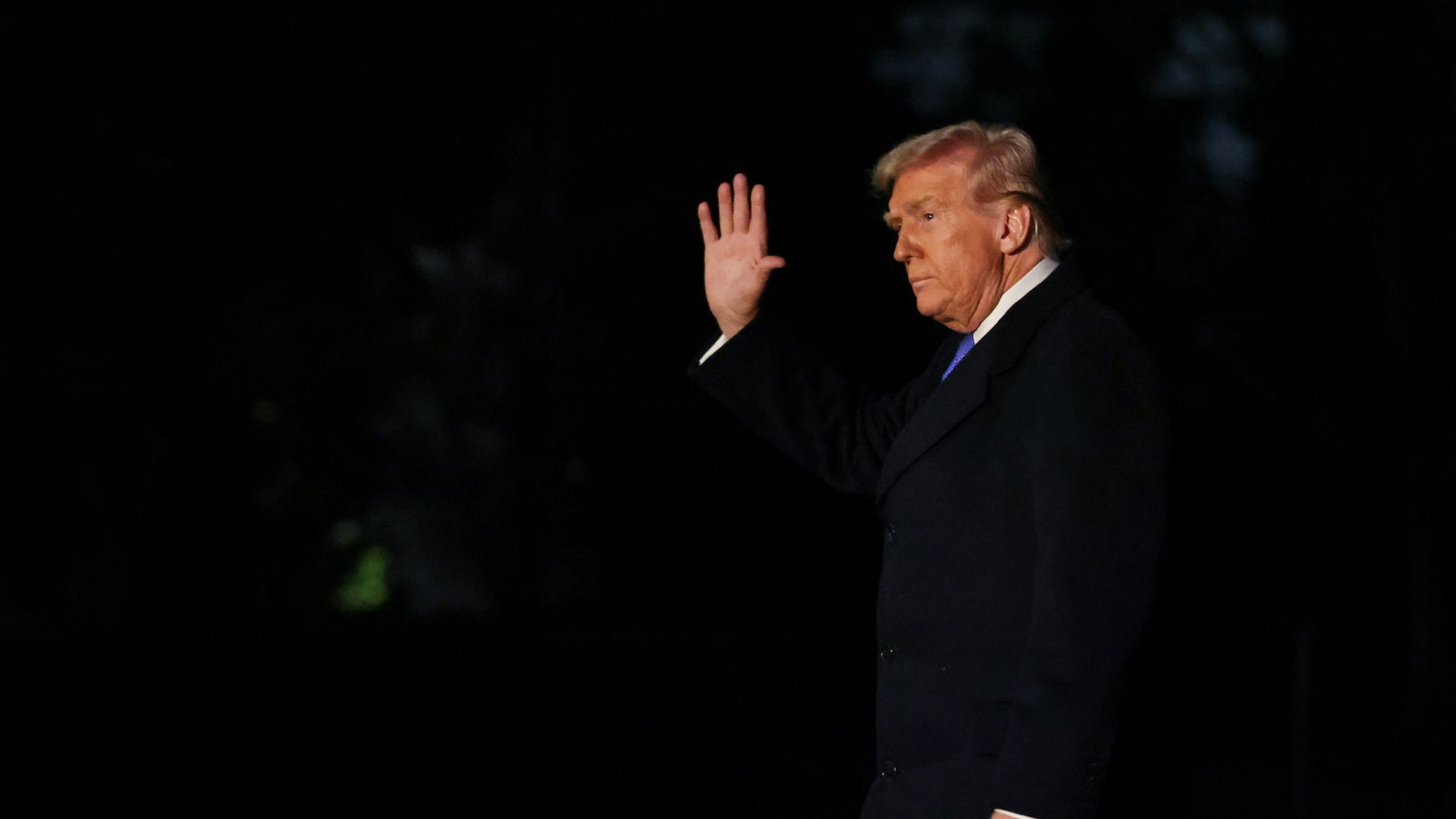
President Trump's new Federal Trade Commission chair Andrew Ferguson told a group of big business CEOs on Tuesday that he wouldn't let proposed deals "die on the vine," but warned them not to expect automatic approval for big mergers.
Why it matters: The FTC under the Biden administration placed significant scrutiny on health care deals.
What they're saying: "If we think conduct or merger is going to hurt Americans economically, I'm taking you to court," Ferguson told a gathering of Yale's CEO Caucus in Washington on Tuesday morning, according to a recording of his remarks obtained by Axios.
- "But if we don't, we'll get the hell out of the way," he said in the closed-door meeting, which included JPMorgan Chase's Jamie Dimon, Goldman Sachs' David Solomon and Dell's Michael Dell.
Go deeper: The FTC under Trump made its first move to challenge private equity in health care last week, suing to block the $627 million acquisition of a maker of specialized coatings for catheters and other medical devices.
5. Catch up quick
🎤 A Nashville nonprofit and Universal Music Group teamed up to connect musicians to mental health resources. (Axios)
🤒 Oklahoma reported its first two measles cases associated with the Texas-New Mexico outbreak. (The Oklahoman)
👉 NIH will terminate or limit grants related to vaccine hesitancy and uptake. (WaPo)
💉 RFK Jr.'s claims about vaccine panel conflicts of interest are inaccurate. (NPR)
Thanks for reading Axios Vitals, and to senior health care editor Adriel Bettelheim, managing editor Alison Snyder and copy editor Matt Piper. Please ask your friends and colleagues to sign up.
Sign up for Axios Vitals