Axios Vitals

August 11, 2026


Good Tuesday morning. Today's newsletter is 764 words, a 3-minute read.
1 big thing: Trump dives back into vaccine minefield


President Trump's call for a controversial overhaul of the childhood immunization schedule puts high-risk vaccine policy changes front and center just three months before the midterm elections.
Why it matters: The most immediate impact of yesterday's executive order may be political, if childhood vaccines are as popular as polling suggests.
- But the announcement could further erode trust in vaccines and public health, in the midst of foodborne and infectious disease outbreaks, including measles.
- And it undercuts the agencywide reset HHS has been charting over the past several months, through filling vacancies with more mainstream picks and promoting efforts to lower prescription drug prices and make the food supply healthier.
Driving the news: Trump yesterday signed an executive order calling for a slimmed-down childhood vaccine schedule and breaking the measles-mumps-rubella vaccine into three separately administered shots.
- It also advises states to review federal vaccine recommendations and update their requirements for school enrollment.
- At an Oval Office signing event, Trump suggested the MMR vaccine could be "quite lethal," though, when pressed, acknowledged he had no evidence, adding there are "some people that say it is that way."
- "The worst thing that would happen would be, nothing happens," he told reporters. "We're not going to lose anything. At the same time we could gain tremendous — save hundreds of thousands of lives, millions of lives."
Reality check: The overwhelming majority of scientists and public health experts say the benefits of vaccines greatly outweigh the risks, and though the shots do have rare side effects, no link to autism has been found in numerous studies.
- "It is simply astonishing that this administration would continue to respond to ongoing measles outbreaks and the return of other vaccine-preventable diseases by playing politics with children's lives," said Richard Besser, CEO of the Robert Wood Johnson Foundation.
2. FDA proposes required food ingredient reporting

The Trump administration yesterday proposed requiring food companies to tell the FDA when they determine ingredients are safe to eat and doing away with an oft-criticized voluntary notification program.
Why it matters: Food safety advocates have long complained that the "generally recognized as safe," or GRAS, designation is a major blind spot.
- But the new proposal doesn't detail what FDA will do with ingredients it finds questionable.
Driving the news: Administration officials, flanked by Make America Healthy Again-aligned influencers, said the change would bring needed transparency at a time when almost 60% of Americans' diet consists of ultra-processed foods.
- "The proposal will give the agency greater visibility into the substances that are entering our food supply," said Health Secretary Robert F. Kennedy Jr.
Between the lines: Kennedy also announced that HHS and the USDA submitted the federal government's first definition of ultra-processed foods for final review, but did not release that definition to the public.
- Some nutrition and consumer groups were skeptical, saying food companies could continue to sell products without premarket reviews.
- "It's hard not to draw the conclusion that the food industry had a good day," said Scott Faber, Environmental Working Group's senior vice president of government affairs.
3. Forget air taxis. Meet the flying medic.

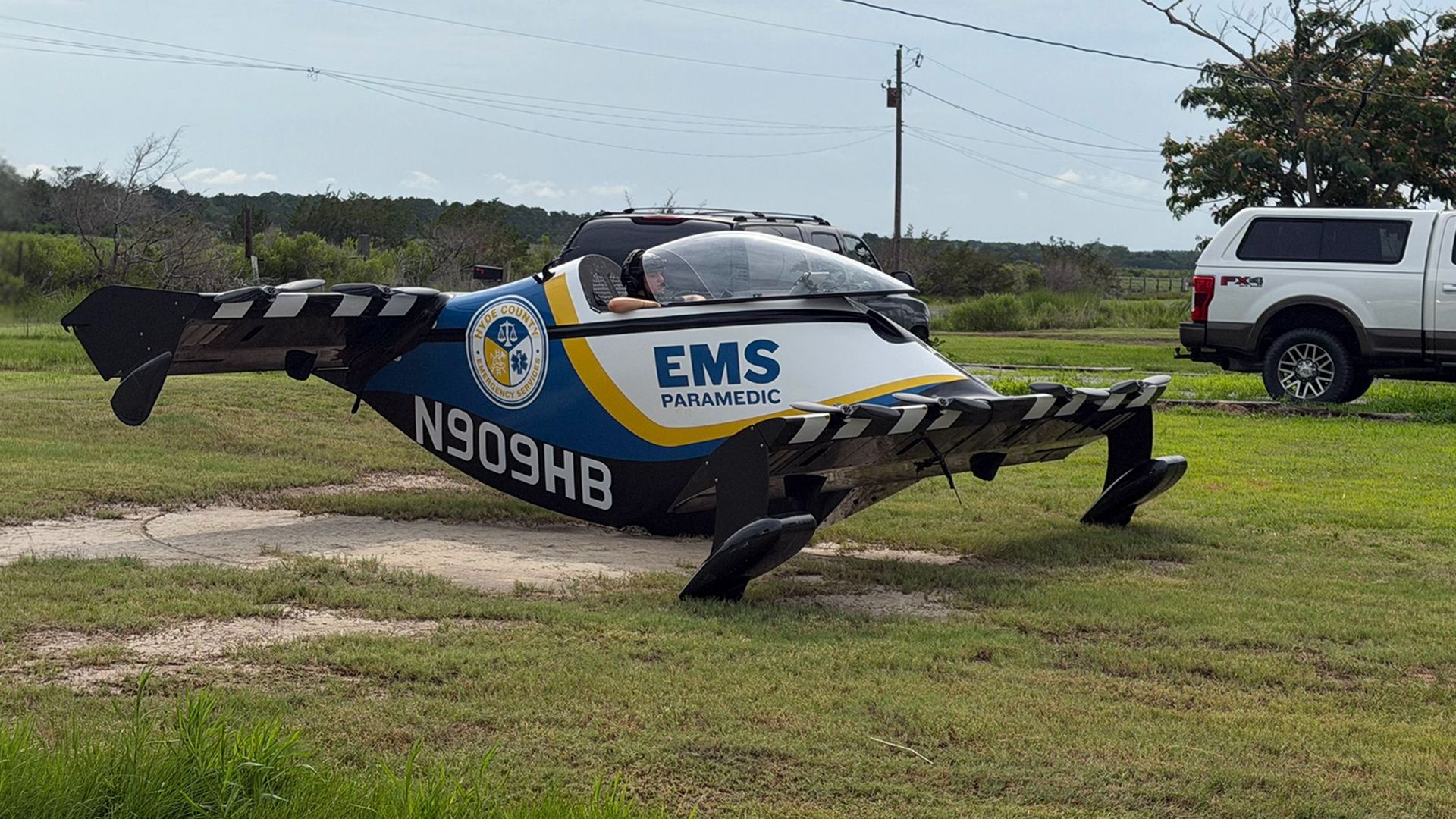
A paramedic responding to a 911 call in coastal North Carolina recently piloted a "Jetsons"-like personal aircraft to the scene, landing in the patient's yard to begin treatment roughly 20 minutes before ground ambulances arrived.
Why it matters: That fast airborne response offers a glimpse of the future of emergency medical care in rural America, where hospitals are far away and time is critical to save lives.
Driving the news: Officials in Hyde County, 1,500 swampy acres including the Outer Banks' Ocracoke Island, say it's the first in the U.S. to use an eVTOL (electric vertical takeoff and landing aircraft) during live 911 emergency calls.
- Both patients — one experiencing a diabetic emergency and the other a cardiac emergency — had positive outcomes, according to the county's EMS chief, Brook Cox.
- The experience points to a potentially more realistic near-term market for eVTOLs than urban air taxis: helping rural emergency responders reach patients faster.
4. Catch up quick
🌶️ Taylor Farms, which has been linked to the cyclosporiasis outbreak, voluntarily recalled several products made with jalapeños that have been tied to a multistate salmonella outbreak. (NYT)
🦠 The fastest-growing Ebola outbreak on record started in February, months before it was officially declared, the World Health Organization said. (AP)
🚼 Rep. Alexandria Ocasio-Cortez is among a growing number of people freezing their eggs to preserve the possibility of having children later. (Axios)
Thanks for reading Axios Vitals, and to editors Adriel Bettelheim and David Nather and copy editor Matt Piper. Please ask your friends and colleagues to sign up.
Sign up for Axios Vitals