Forget air taxis. Meet the flying medic

Add Axios as your preferred source to
see more of our stories on Google.
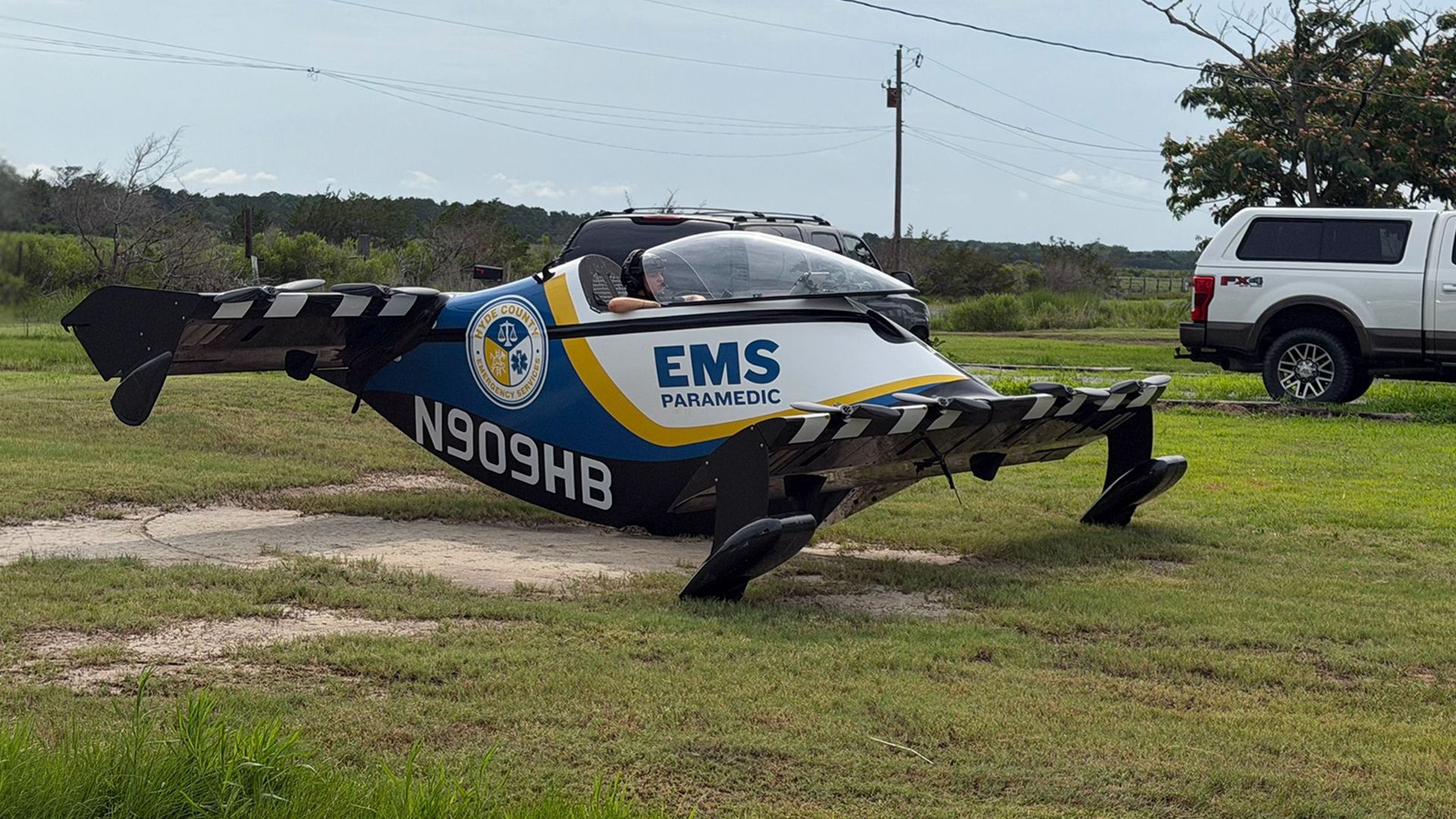
Pivotal's single-passenger electric aircraft helps paramedics respond to medical emergencies faster than an ambulance. Photo: Courtesy of Pivotal
A paramedic responding to a 911 call in coastal North Carolina recently piloted a "Jetsons"-like personal aircraft to the scene, landing in the patient's yard to begin treatment roughly 20 minutes before ground ambulances arrived.
Why it matters: That fast airborne response offers a glimpse of the future of emergency medical care in rural America, where hospitals are far away and time is critical to save lives.
Driving the news: Officials in Hyde County, 1,500 swampy miles including the Outer Banks' Ocracoke Island, say it's the first in the U.S. to use an eVTOL (electric vertical takeoff and landing aircraft) during live 911 emergency calls.
- As part of a county pilot project, flight-trained paramedic Quinn Reece flew the ultralight plane to two emergency scenes, carrying advanced life support equipment that helped stabilize the patients until other emergency personnel arrived.
- Both patients — one experiencing a diabetic emergency and the other a cardiac emergency — had positive outcomes, according to the county's EMS chief, Brook Cox.
How it works: The single-passenger BlackFly is marketed by Palo Alto-based startup Pivotal Aero.
- Compared with larger electric air taxis being developed by Joby or Archer Aviation, Pivotal's BlackFly is a simple, lightweight design.
- It doesn't need a runway; the entire aircraft tilts for vertical takeoff and landing. And there are no complex rotating wings to reorient thrust for flight.
- It can take off and land on pavement, dirt or grass, and it also floats.
- If something goes wrong, an on-board parachute can lower the 254-pound aircraft safely to the ground.
Between the lines: Because BlackFly (and its successor, Helix) qualifies under existing Federal Aviation Administration rules for ultralight aircraft, Pivotal faces a lower regulatory bar than Joby or Archer, which need to certify a new class of aircraft.
What they're saying: Reece, also a drone pilot, said her biggest takeaway from the project "was seeing firsthand how this technology can change the way we think about emergency response, especially in rural communities."
- Pivotal CEO Ken Karklin agreed. "When a flight-trained paramedic can fly directly to a patient rather than drive around rivers, farmland and other geographic barriers, advanced medical care begins sooner. This is an entirely new approach to first response."
The bottom line: The North Carolina pilot points toward a potentially more realistic near-term market for eVTOLs than urban air taxis: helping rural emergency responders reach patients faster.
Editor's note: This story has been corrected to reflect that Hyde County in North Carolina constitutes 1,500 square miles (not acres).
