Axios Vitals

March 24, 2025

🤧 Welcome back, Vitals readers. Allergies getting you yet? Today's newsletter is 1,130 words or a 4.5-minute read.
Situational awareness: A key CDC vaccine advisory committee meeting postponed by the Trump administration last month has been rescheduled to April 15-16, per the Federal Register.
- While the agenda covers COVID-19 vaccines, human papillomavirus, influenza and an update on the measles outbreak, it no longer includes recommendation votes for flu shots, the Washington Post reports.
1 big thing: New friction over replicating research

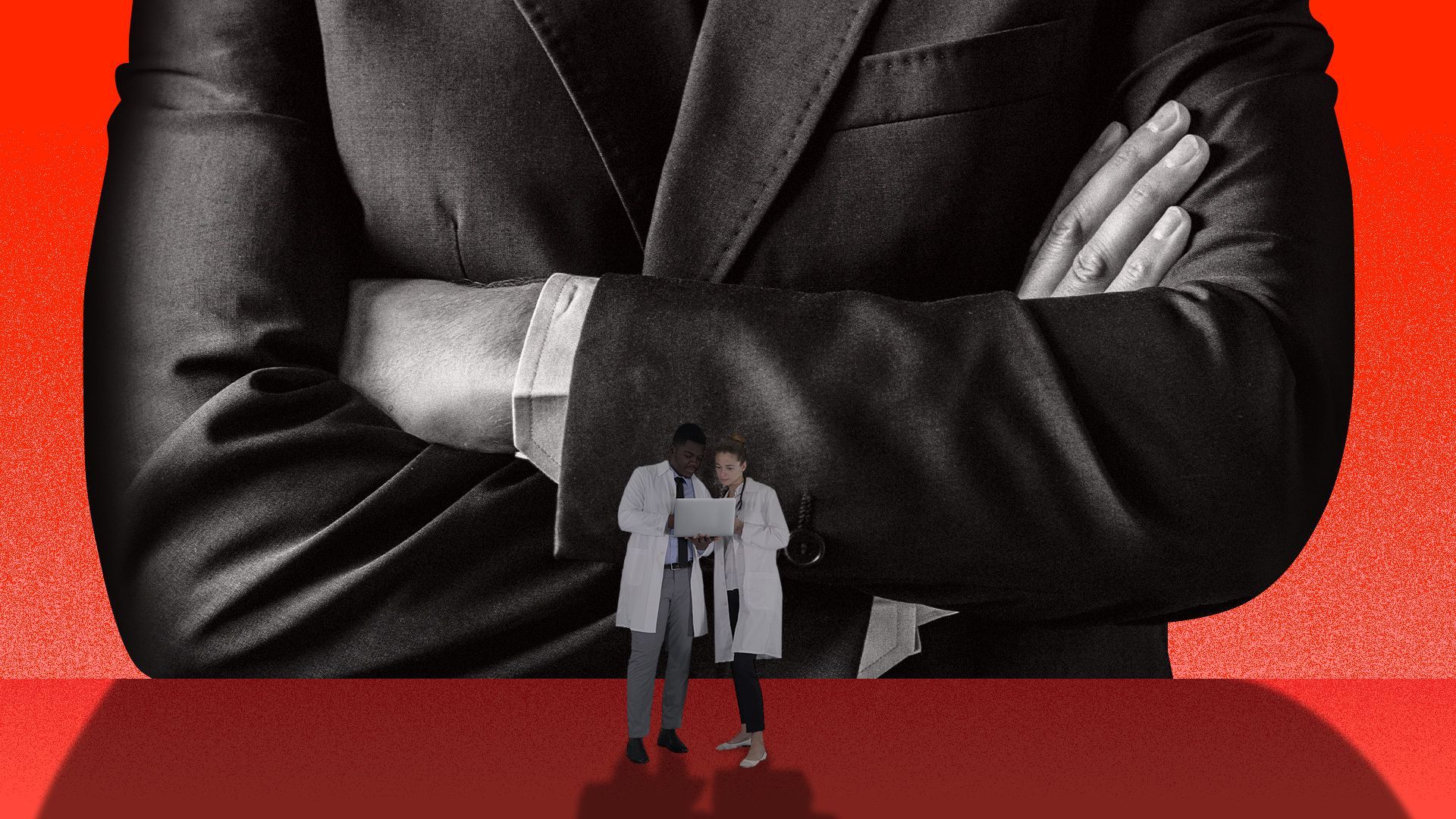
The Trump administration wants to spend more federal dollars replicating medical research. A key question will be which studies get repeated and, with limited resources, at what expense.
Why it matters: Many findings can't be replicated — a problem scientists say needs to be addressed. But trying could consume increasingly scarce resources as the administration cuts spending and freezes federal grants.
- And some warn repeating accepted studies into how diseases originate or drugs work could undermine science for political gain.
- "We should ask questions, ensure reproducibility, and grow our evidence base with replication," said David Higgins, a pediatrician and health services researcher at the University of Colorado Anschutz Medical Campus, in an email.
Catch up quick: HHS Secretary Robert F. Kennedy Jr. and NIH director nominee Jay Bhattacharya say they want to make replication a pillar of what the institutes do, pointing to fraud in the research community.
- "The gold standard means real scientific research with replication of studies, which very rarely happens now at NIH," Kennedy said during a Senate confirmation hearing in January.
- "We should be giving at least 20% of the NIH budgets to replication," he added, citing a landmark paper on Alzheimer's disease that was later found to contain doctored images, calling many subsequent studies into question.
- In one early sign of the administration's priorities, the CDC is reportedly planning a broad study into connections between vaccines and autism, despite substantial evidence disproving any link.
What they're saying: "CDC will leave no stone unturned in its mission to figure out what exactly is happening" with the increase in autism cases in the U.S., HHS spokesperson Andrew Nixon told Axios in an email. "The American people expect high quality research and transparency and that is what CDC will deliver."
NIH last year launched a program that invited researchers to nominate their own studies for replication — and promised up to $50,000 plus overhead costs to contract with an outside organization to repeat the work, according to Science. Interest was "modest," the outlet reported.
2. New docs are still drawn to OB-GYN programs
Interest in reproductive health remains robust in the post-Dobbs era, based on figures showing newly graduated doctors are filling OB-GYN residency programs to capacity and deflating predictions that the field would suffer from state abortion bans.
Why it matters: While state-by-state breakdowns aren't yet available, graduating MDs and DOs appear to be drawn by the ability to care for women across their lifespan and for the way it combines primary care with surgery.
By the numbers: New data from the National Resident Matching Program shows a record 47,208 medical school graduates applied for 43,237 available positions during this year's Match Day.
- 99.9% of the 1,587 OB-GYN residency positions were filled.
- MD seniors accounted for roughly 70% of those who matched in OB-GYN residencies, while DO seniors accounted for about 20% of matches. International medical graduates accounted for 6% of matched applicants in the specialty.
Yes, but: Data has previously shown fewer new doctors across all specialties applied to medical residency programs in states with abortion bans and restrictions.
- Residency applicant volume fell more than 5% in some states after the Supreme Court decision to strike Roe v. Wade prompted some states to enact abortion bans and created a thicket of restrictions to navigate.
- Doctors tend to practice in the states where they complete their training, which could exacerbate disparities in reproductive health care access.
The big picture: Primary care saw a record number of positions filled with 20,300 categorical positions offered, up 877 over last year. Primary care specialties saw a 94% fill rate.
- Emergency medicine interest continued an upswing with an increase of 42 positions from last year and a 98% fill rate.
3. RFK backs school phone bans on disputed basis
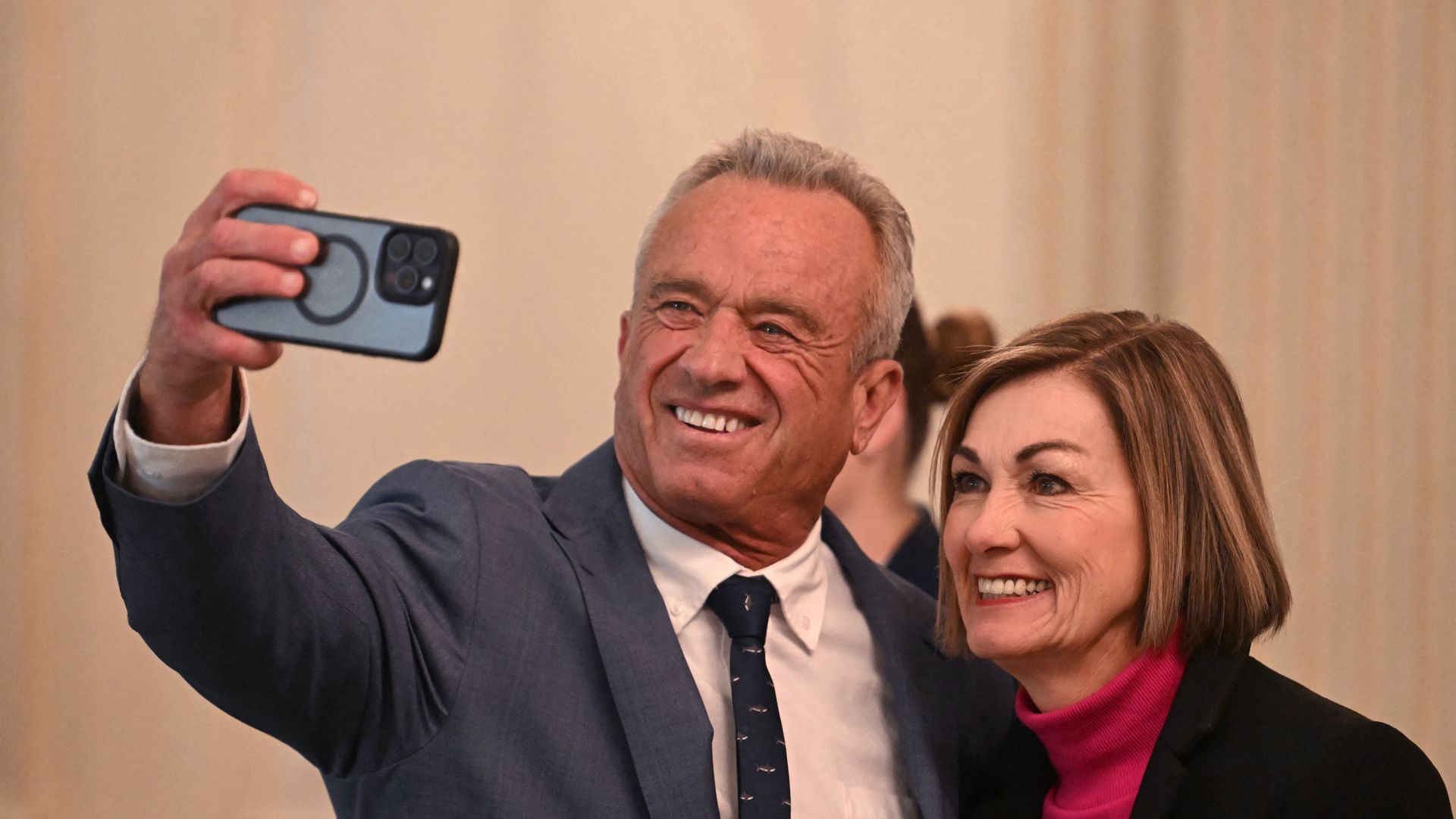
RFK Jr. is raising eyebrows for remarks backing school cellphone bans that cited information based on both well-established research along with more scientifically dubious claims.
Why it matters: It's the latest instance in which Kennedy mentioned debunked health claims, after previously offering lukewarm support of the measles vaccines and suggesting vitamin A could be used to treat measles.
Driving the news: In an interview with "Fox & Friends" late last week, Kennedy said cellphone use and social media use on phones has been associated with poorer performance in school, depression and suicidal ideation — which is supported by science.
- But he also claimed they can cause cancer, which isn't supported by peer-reviewed research.
- "Cellphones also produce electromagnetic radiation, which has been shown to do neurological damage to kids when it's around them all day and to cause cellular damage and even cancer."
Yes, but: The statement is in direct conflict with information posted by the National Cancer Institute last year saying "the evidence to date suggests that cellphone use does not cause brain or other kinds of cancer in humans."
- A study by the National Institute of Environmental Health Sciences found a link between the high doses of radiation from cellphones and cancer in rats, but said the findings can't be directly applied to humans in part because the doses were much higher in rats.
- An analysis commissioned by the World Health Organization and published last year found no connection between cellphone use and brain cancer.
4. Could AI be your therapist?

A new digital divide is forming between people who trust AI for emotional support and those who don't.
Why it matters: AI startups are pushing their tools not just as productivity enhancers, but also as therapists, companions and life coaches.
Driving the news: Two new studies from OpenAI, in partnership with MIT Media Lab, found users are turning to bots to help cope with difficult situations because they say the AI is able to "display human-like sensitivity."
On one hand, more than half (55%) of 18-to-29-year-old Americans feel comfortable chatting with AI about mental health concerns, according to a 2024 YouGov survey.
- On the other, many mental health professionals view reliance on bot-based therapy as a poor substitute for the real thing.
- AI can't effectively substitute for a human therapist because "a therapeutic relationship is about ... forming a relationship with another human being who understands the complexity of life," argues sociologist Sherry Turkle, who has studied digital culture for decades.
The other side: Some experts argue generative AI can help with thorny emotional questions because it's been trained, in part, on literature.
Yes, but: LLMs have also been trained on Reddit, Facebook, Twitter and 4chan.
5. While you were weekending

💊 J&J plans a $55 billion investment to expand its U.S. manufacturing. (Axios)
👉 Montana's state medical board twice renewed a doctor's license despite evidence he had hurt and potentially killed patients. (ProPublica)
🏥 A chaotic restructuring order from DOGE threatens to degrade mental health services for veterans. (NYT)
🦠 A company testing an oral COVID-19 vaccine laid off 10% of its staff after the Trump administration ordered a halt to research. (Fierce Biotech)
Thanks for reading Axios Vitals, and to senior health care editor Adriel Bettelheim, managing editor Alison Snyder and copy editor Matt Piper. Please ask your friends and colleagues to sign up.