Axios Vitals

April 16, 2026



Happy Thursday! Today's newsletter is 1,163 words, a 4.5-minute read.
⚡️ Join Axios Live in Washington, D.C., on Wednesday, April 22, at 7:30am ET for an event on access to specialty care, featuring Rep. Greg Murphy (R-N.C.), Rep. Kim Schrier (D-Wash.) and No Patient Left Behind executive director Priscilla VanderVeer. RSVP.
1 big thing: RFK Jr. returns to Hill with less clout
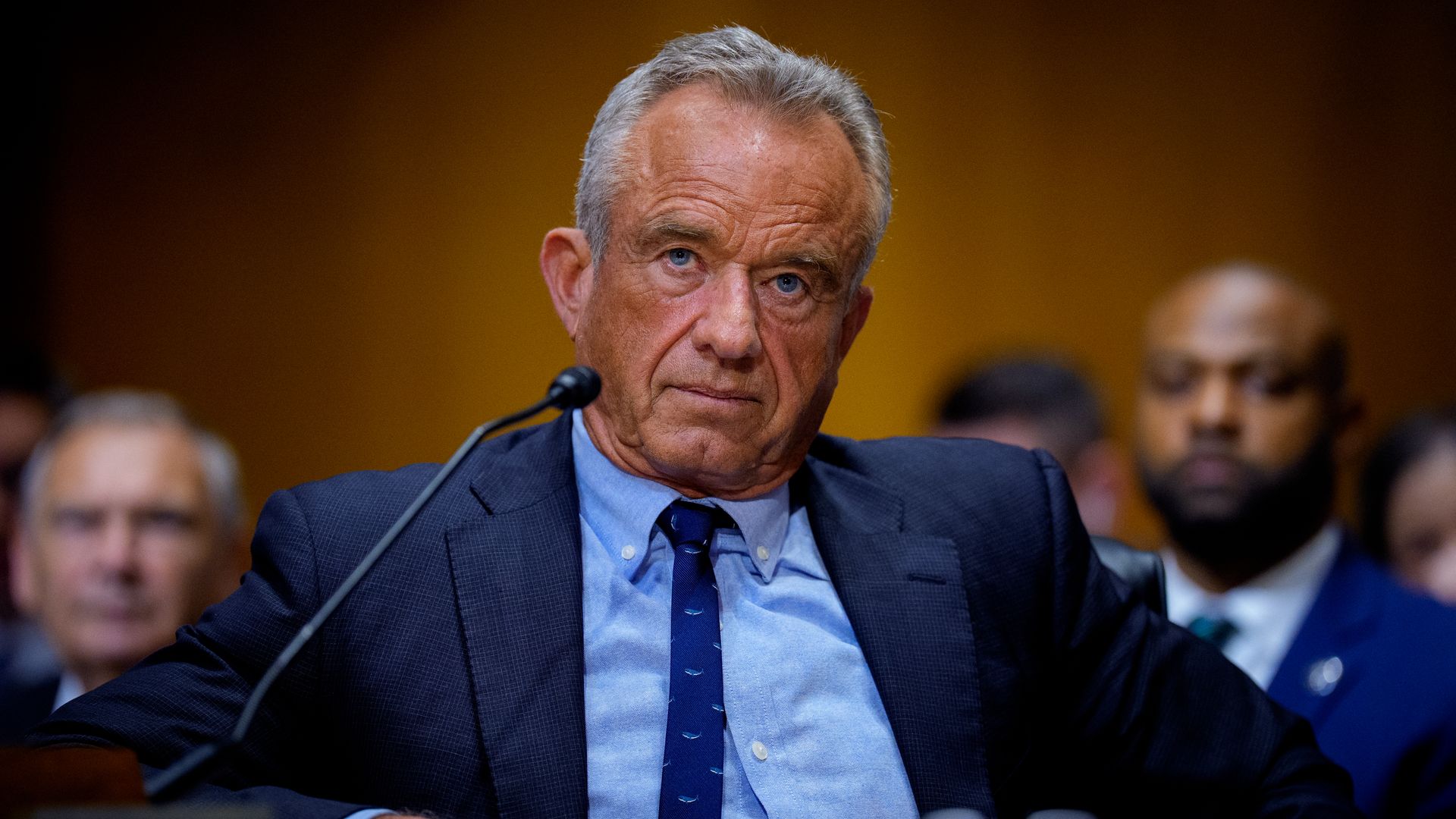
Health Secretary Robert F. Kennedy Jr. will face Congress for the first time in more than six months today with his autonomy and political influence in a very different place.
Why it matters: As the White House tries to reel in his agenda, Kennedy is expected to face a gauntlet of questions about vaccines, autism and other hot-button issues at the first of seven hearings over this week and next.
- It will be a test of how well Kennedy can stay on message as the Trump administration tries to pivot away from controversies and emphasize priorities like lowering drug prices.
Driving the news: Kennedy will appear before the House Ways and Means and Appropriations committees today before heading to the Senate next week.
- Democrats and some Republicans are eager to press him on controversial moves since he last testified before the Senate Finance Committee in September.
- One likely topic is January's dramatic overhaul of the childhood vaccine schedule that dialed back 17 recommended vaccinations to 11.
- Kennedy also directed the CDC to update its website to suggest a widely debunked link between vaccines and autism.
- His handpicked vaccine advisers also voted to drop the recommendation that all infants receive the hepatitis B vaccine at birth.
Between the lines: Kennedy and his "Make America Healthy Again" movement have experienced setbacks in court and within the administration since the last time he appeared on the Hill.
- A federal judge last month temporarily blocked the childhood vaccine changes.
- The Trump administration has also elevated senior adviser Chris Klomp to be Kennedy's de facto chief of staff, overseeing key personnel moves and focusing on issues like drug prices.
Kennedy has lashed out at his critics during congressional hearings and could be drawn into new showdowns over vaccine policy.
2. Ex-deputy surgeon general considered for CDC



Former deputy surgeon general Erica Schwartz has emerged as the leading contender to be the next director of the CDC, according to two sources familiar.
Why it matters: The agency has been without a full-time political leader since the ouster of Susan Monarez last August, and several top officials have resigned as Kennedy seeks to remake the federal health bureaucracy.
- A more mainstream nominee with a public health background like Schwartz could ease tensions between the administration and Congress over vaccine policies and sharp cuts to federal health agencies.
Driving the news: Kennedy and Klomp settled on Schwartz after an extensive search, per multiple news reports. President Trump still has to sign off on the pick.
- Schwartz was deputy surgeon general during the first Trump administration and spent 24 years in the uniformed service, becoming a rear admiral of the Coast Guard, where she served as the chief medical officer.
- She has an MD from Brown University and a law degree from the University of Maryland.
3. HHS brings on an affordability czar

The Trump administration is bringing on a new official to focus on health care affordability, HHS tells Axios.
Why it matters: The personnel move suggests the administration is attempting to respond to voters' concerns about health care costs ahead of the midterm elections.
Driving the news: HHS has appointed Casey Mulligan as chief economist and chief regulatory officer. He'll advise Kennedy and other agency leaders on affordability issues.
The big picture: Health care affordability is emerging as a key political issue as health care costs continue to rise.
- Policymakers and think tanks on both sides of the aisle have been responding with aggressive policy ideas, though tackling underlying health costs would be an enormously difficult political endeavor.
Details: Mulligan was on the Council of Economic Advisers during the first Trump administration and was most recently the U.S. Small Business Administration's chief counsel for advocacy.
4. Walmart seeks to do more in GLP-1 race


Walmart is making a play to own what it calls the "last mile" of the GLP-1 boom, telling Axios exclusively it's launching a platform that goes beyond prescriptions to combine virtual care and nutrition.
Why it matters: Weight-loss treatments like Ozempic, Wegovy and Zepbound are exploding, but the real friction is everything around them. The retail giant is betting it can simplify that fragmented system.
The big picture: Walmart unveiled an expansion of its Better Care Services platform today, adding new weight-management offerings for customers on or exploring GLP-1s, Kevin Host, Walmart's senior vice president of pharmacy, told Axios.
- The platform connects customers with vetted providers offering weight management, mental health and urgent care, including partners like Aaptiv, Berry Street, Curai Health, MyCare by Twin Health and Wheel.
State of play: As demand for GLP-1s surges, telehealth companies and platforms are racing to offer access.
- Walmart says it will only offer FDA-approved GLP-1s — not compounded versions.
- Its approach also combines provider access with pharmacy, delivery and retail — something telehealth-first players can't easily match.
How it works: Customers can connect with third-party providers for prescriptions and ongoing care, while Walmart handles prescription fulfillment, including in-store pharmacy support and delivery in as little as an hour.
5. The quiet rise of "social prescribing"


The next prescription you get might be for a fishing rod, or some other goods or services you won't find at a pharmacy.
The big picture: With the rise of "social prescribing," physicians are sending patients to choirs, art studios, walking clubs and lakesides.
- Overstretched health systems and a worsening loneliness epidemic are forcing a hard look at how social interventions can improve mental and physical health.
Zoom in: The U.K. has been leading the charge globally. The National Health Service has offered social prescribing since 2019, as part of a $6 billion primary care expansion.
- That push has produced more than 5.5 million referrals in England over five years — far exceeding the original 900,000 target.
- Social prescribing started in impoverished areas to help people with complex medical needs who also faced social and economic obstacles. The most common prescriptions still are for housing advice and debt counseling.
- But nature activities and arts engagement are also common, according to the umbrella organization National Academy for Social Prescribing.
Yes, but: It's hard to establish an evidence base to justify paying for such services because "success" can be subjective, and there's no control group to measure outcomes against.
6. Catch up quick
💵 1 in 7 people who signed up for Affordable Care Act plans this year didn't pay their first monthly bill after enhanced federal subsidies expired. (WSJ)
🧪 The FDA is taking the first step toward potentially allowing compounding pharmacies to produce peptides that are currently restricted because of safety concerns. (WashPost)
⚖️ Colorado's Supreme Court heard arguments in a case over whether a children's hospital should be forced to reinstate gender-affirming care. (Denver Post)
Thanks for reading Axios Vitals, and to editors Adriel Bettelheim and David Nather and copy editor Matt Piper. Please ask your friends and colleagues to sign up.
Sign up for Axios Vitals