Axios from Tel Aviv
February 23, 2022

Welcome back to Axios from Tel Aviv.
- This week's edition (2,101 words, 8 minutes) takes us to Ukraine, Vienna, Bahrain and Greece.
1 big thing: Israel's Ukraine response avoids the word "Russia"
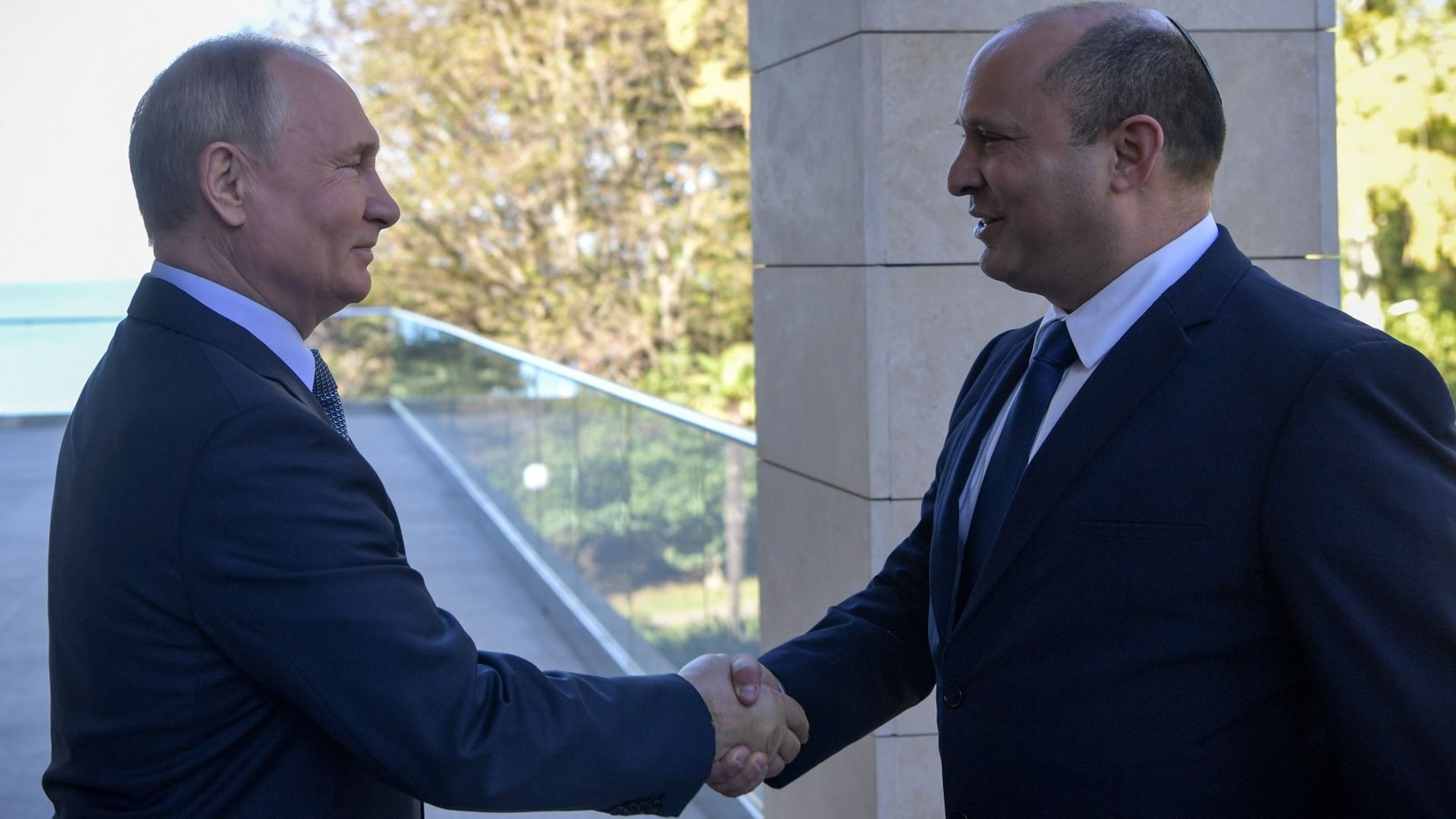
President Bennett (right) meets President Putin last October. Photo: Israeli government handout via Getty Images
In its first response to the Russian invasion of Ukraine, the Israeli government expressed support for Ukraine's territorial integrity but declined to condemn Vladimir Putin or even mention the word "Russia."
Why it matters: The Foreign Ministry statement hinted at Israel's attempt to balance aligning itself with its biggest ally, the U.S., while maintaining good relations with another superpower, Russia, with which it has an important security relationship.
The statement:
“Israel shares the concern of the international community regarding the steps taken in eastern Ukraine and the serious escalation in the situation. Israel hopes for a diplomatic solution which will lead to calm, and is willing to help if asked. Israel supports the territorial integrity and the sovereignty of Ukraine."— Foreign Ministry spokesperson Lior Haiat
Between the lines: Russia holds enormous influence in neighboring Syria, where it allows Israel to operate freely against Iranian activity.
- Israel's pragmatic approach to Russia was also underscored when Israeli officials asked Moscow for help evacuating Israeli citizens in the event that Russia invades, prompting Ukraine to summon the Israeli ambassador.
- Israel also notified the Russian government before evacuating its embassy in Kyiv on Monday night, and it even gave the Russian government the coordinates of Israel's temporary mission in Lviv in western Ukraine to ensure it isn't bombed, Israeli officials tell me.
- Israel also shared the evacuation plans with the Ukrainians, who expressed disappointment.
Behind the scenes: Today's statement was approved in a high-level meeting convened by Prime Minister Naftali Bennett, which included Foreign Minister Yair Lapid, Defense Minister Benny Gantz and Finance Minister Avigdor Lieberman.
- Israeli officials say the statement was intended to show which side Israel was on in the conflict without burning any bridges with Russia, and it was not the result of U.S. pressure. The language can be strengthened in case of further escalation, the officials said.
- A senior U.S. official confirmed the Biden administration hasn't pressed Israel on Ukraine. The official said the U.S. understands Israel’s situation with Russia in Syria and is satisfied with what the Israelis were saying and doing in private.
State of play: Israel had planned to evacuate the embassy on Tuesday morning but Lapid decided to begin immediately after Putin's threatening speech on Monday.
- The Israeli diplomats left secretly at midnight in several motorcades and arrived in Lviv on Tuesday.
- Preparations for an evacuation had already taken place days earlier, including the burning of classified documents and removal of sensitive equipment, Israeli officials say.
What to watch: The government also proposed an immediate transfer of humanitarian assistance to Ukraine and said it was in contact with the Ukrainian government on that issue.
- In the statement, the Israeli Foreign Ministry also said it was concerned about the welfare of the thousands of Israeli citizens living in Ukraine and of the Jewish community in the country.
2. U.S. cautious as fate of Iran deal set to be decided
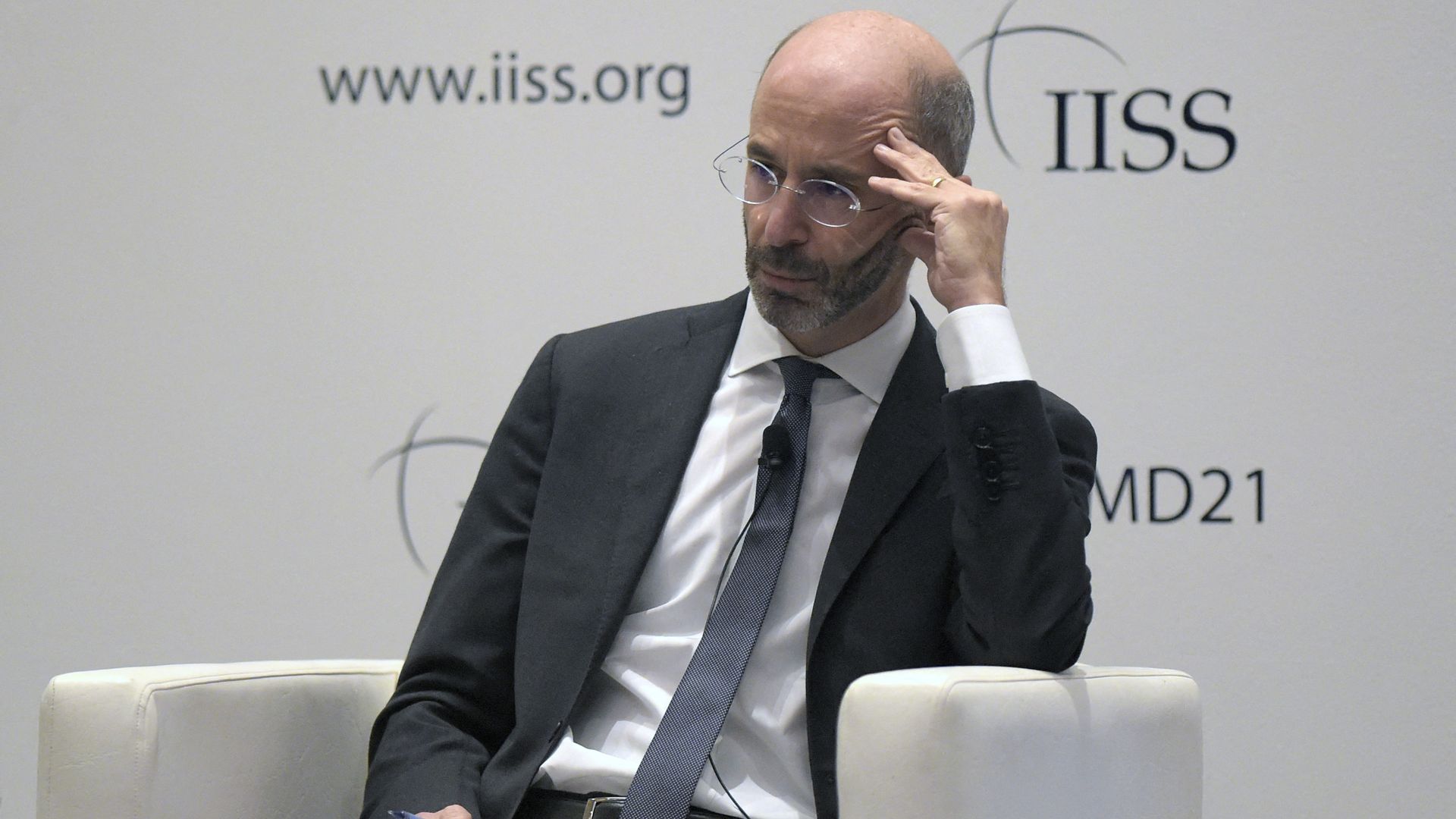
U.S. Iran envoy Rob Malley. Photo: Mazen Mahdi/AFP via Getty Images
The U.S. and Iran are close to a return to the 2015 nuclear deal but several “difficult issues” remain unresolved, a senior Biden administration official told me this morning.
Why it matters: At the moment, neither side seems willing to compromise on its remaining red lines, and the official said the outcome could still be no deal at all.
The latest: Iran's chief negotiator, Ali Bagheri Kani, is expected to return to Tehran on Wednesday night for what could be final consultations about the nuclear deal.
State of play: Out of all the comments emerging from the delegations in Vienna, those from U.S. envoy Rob Malley and his team have been the most skeptical that a deal is imminent to restore the 2015 Joint Comprehensive Plan of Action (JCPOA).
- The senior U.S. official told me that the statements from Iranian officials and some European negotiators saying a deal could be reached within days are "very premature speculations."
- "There is very little time left to resolve the remaining issues given the pace of Iran’s nuclear advances and what it means for the viability of the JCPOA. Until these issues are dealt with, there is no deal," the official said.
- EU political director Enrique Mora, who is coordinating the Vienna talks, tweeted on Tuesday that the negotiations were near an end but "the result is still uncertain" and "key issues need to be fixed."
The other side: Iranian Foreign Minister Hossein Amir-Abdollahian said on Wednesday that Iran is "optimistic" but won’t cross its red lines in the Vienna talks.
- "We hope that a few sensitive and important issues will be resolved in the negotiations with realism from the Western parties," he said.
While the Biden administration has closely guarded any details on the remaining gaps in the talks, Israeli Prime Minister Bennett revealed some of them publicly in a speech on Monday.
- Bennett said the U.S. had thus far rejected an Iranian demand that an International Atomic Energy Agency investigation into the potential military dimension of Iran's nuclear program be closed.
- He also said Iran was demanding that its Islamic Revolutionary Guard Corps be taken off the U.S. blacklist of terror organizations.
- Bennett didn't say whether the U.S. had agreed to that demand, but did say the U.S. and the European signatories had agreed to allow Iran to keep its advanced centrifuges in storage rather than destroy them.
- "The emerging deal is likely to create a more violent and less stable Middle East," Bennett said.
A State Department spokesperson refused to comment on Bennett’s claims about the negotiations but pushed back on his criticism, claiming most Israeli security officials who were in office when Donald Trump withdrew from the deal now recognize the terrible implications.
- “We must not make a similar mistake by rejecting another opportunity to make diplomatic progress," the spokesperson said.
Worth noting: While the Vienna talks are continuing under the shadow of the Ukraine crisis, there are no indications that two events have directly influenced one another up to now.
3. Bahrain summons new U.S. ambassador for meeting activists
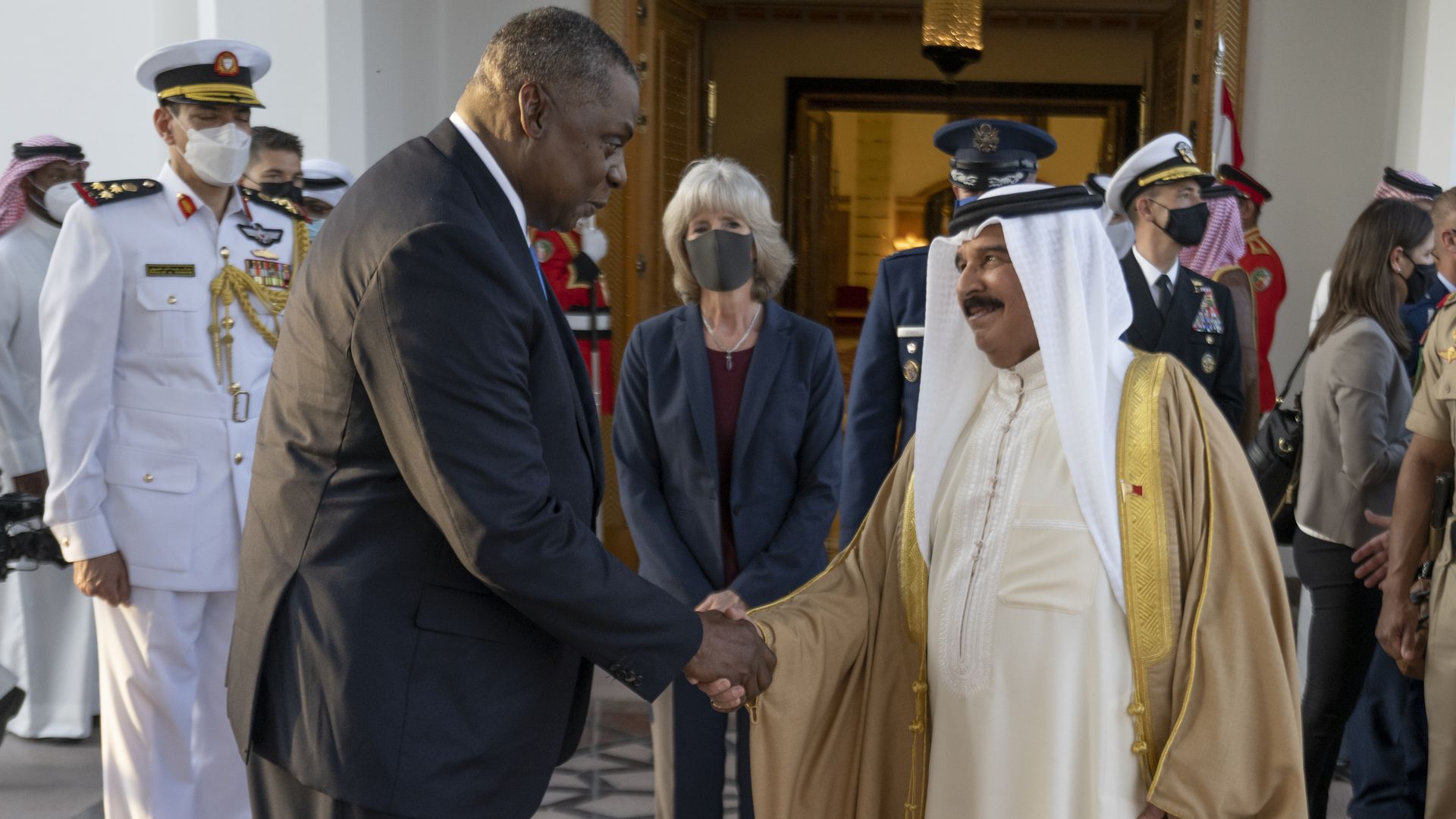
King Hamad bin Isa Al Khalifa meets with Secretary of Defense Lloyd Austin last September. Photo: DOD handout via Getty Images
New U.S. Ambassador to Manama Steven Bondy got into a diplomatic spat with the Bahraini government in his second week on the job after he met with a group of civil society and human rights activists.
Why it matters: Bahrain has been highly sensitive to engagement between Western governments and members of the opposition ever since the Arab Spring in 2011, when the Obama administration supported the anti-government protests in the country and pressed for reforms.
- The protests came mainly from members of the Shiite majority who demanded more civil liberties and a greater say in politics. The kingdom cracked down on the protests and accused Iran of inflaming them.
Driving the news: Bondy gave his credentials to King Hamad bin Isa Al Khalifa on Feb. 9. Several hours later, he met in his residence with four political and human rights activists.
- A Bahraini news website, the Delmon Post, days later reported that the activists had raised the difficulties faced by Bahraini civil society and the issues of government crackdowns and use of the death penalty.
- Bondy was criticized by several columnists in the Bahraini press, and some of the activists who attended the meeting issued statements of clarification.
Shortly after the story was published, the Bahraini interior minister issued a statement accusing Bondy of interference in internal affairs reminiscent of the 2011 events, “which everyone rejects after it claimed lives and losses."
- The ambassador was summoned last Wednesday for a meeting with Foreign Minister Abdullatif al-Zayani.
- Al Zayani told him the meeting was “inconsistent with international laws and norms” and stressed that he needs to "take into account the sovereignty of states and non-interference in internal affairs, in addition to Bahrain's laws," according to the Foreign Ministry.
- A source briefed on the situation told me the meeting cleared the air a bit and ended the incident. When Bondy met Crown Prince Salman bin Hamad Al Khalifa last Sunday, the incident went unmentioned in the Bahraini readout.
- The State Department declined to comment.
4. Cracks in Israel's coalition start to show
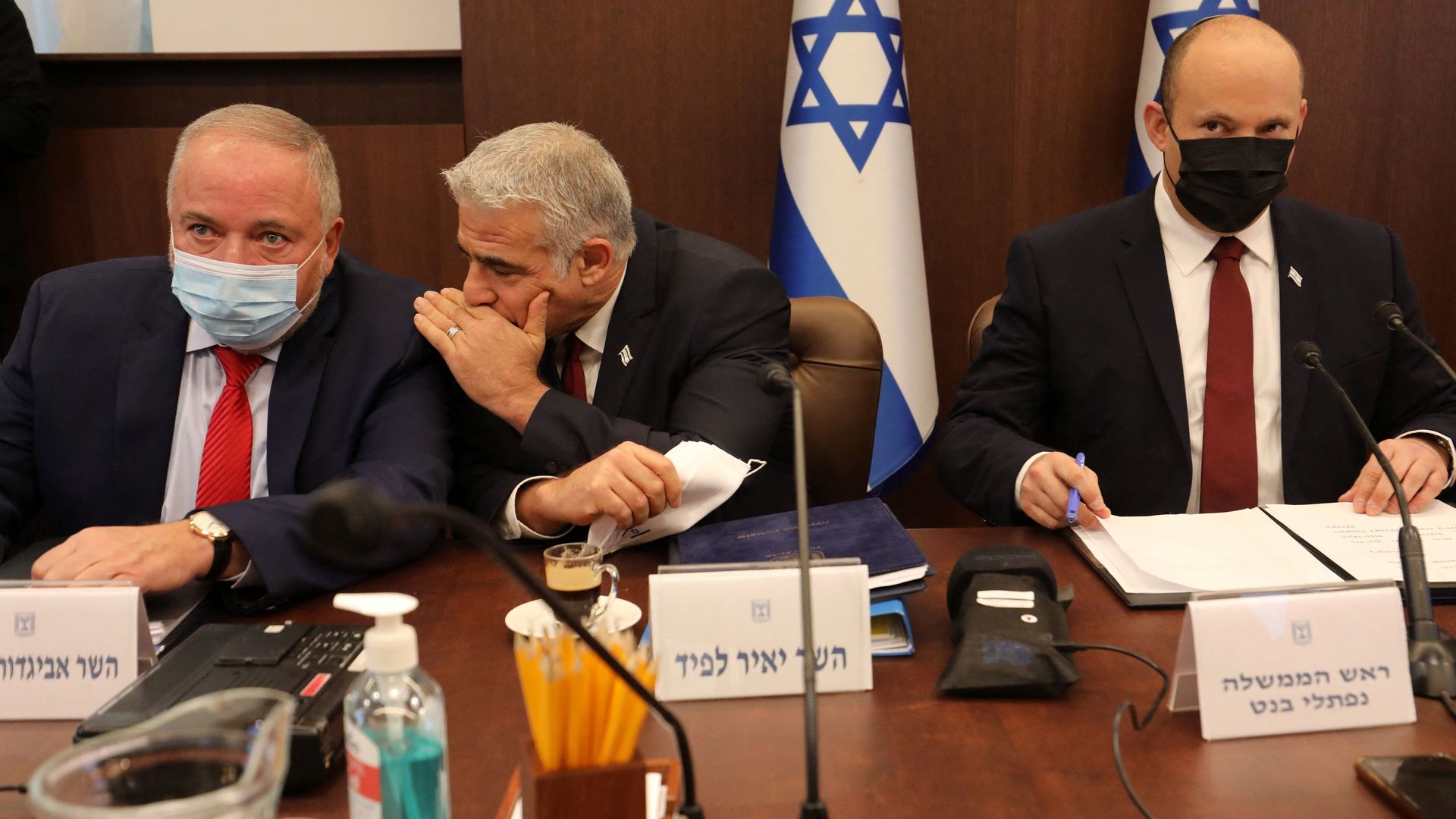
Prime Minister Naftali Bennett (right), Foreign Minister Yair Lapid (center) and Finance Minister Avigdor Lieberman at a Cabinet meeting. Photo: Gil Cohen-Magen/pool via Getty Images
Eight months after it was sworn in, Israel's fragile unity government is showing its first cracks.
Why it matters: The government has lost its voting majority on key issues, and while there is no imminent threat of collapse, the coalition could go down that path if internal frictions can't be contained.
Driving the news: Two weeks ago, the Ra'am Islamic party decided to stop voting with the coalition because several promises they received for joining the coalition have not been fulfilled. As a result, the government lost its majority on several votes and had to postpone them.
- Then on Monday, Defense Minister Benny Gantz started a rebellion of his own. He said his Blue and White party wouldn't vote with the coalition unless commitments he received on increased pensions for military officers were fulfilled. That forced more votes to be postponed.
- On Tuesday, the situation escalated when Eli Avidar, a minister without portfolio, resigned from the Cabinet.
- Avidar, a political independent who was very active in the movement to oust former Prime Minister Benjamin Netanyahu, attacked Bennett as no different from Netanyahu and claimed Bennett would not abide by his rotation agreement to hand power to Foreign Minister Yair Lapid in 16 months.
- Because the coalition has just a 61/59 majority in the Knesset, Avidar will now have major leverage in any future vote.
What’s next: Bennett and Lapid are expected to convene the heads of all the coalition parties in the coming days in an attempt to reach a grand bargain to reset the political agenda and stabilize the government.
Worth noting: In what was widely seen as an attempt to resolve another problem in the coalition, Lapid announced he was appointing Ghaida Rinawie Zoabi — a left-wing member of the coalition who recently rebelled and caused the government to lose an important vote — as Israel’s consul general in Shanghai, shifting her out of the Knesset.
5. Israel's diplomatic dance between Greece and Turkey
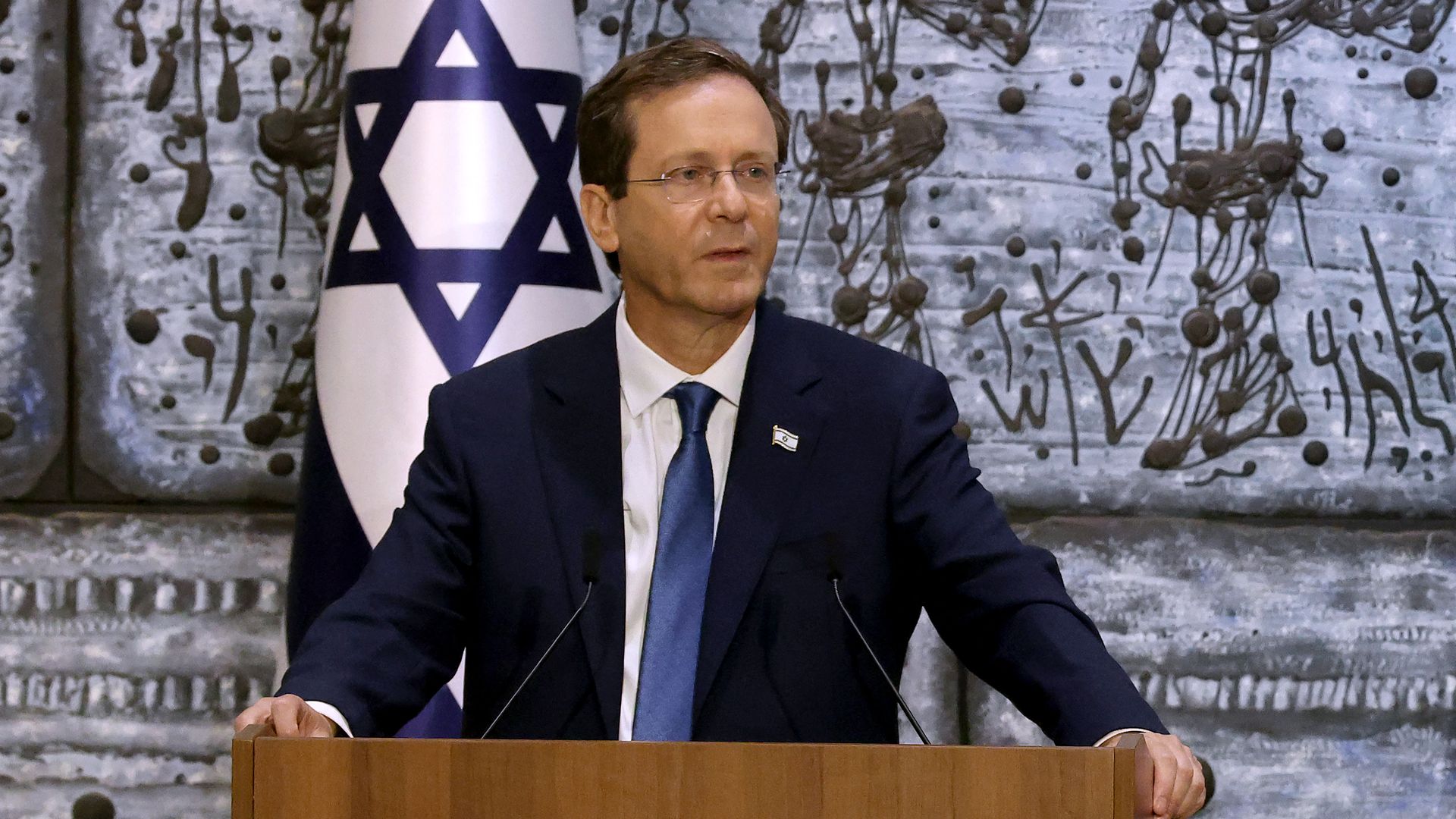
President Isaac Herzog. Photo: Emmanuel DunandAFP via Getty Images
Israeli President Isaac Herzog will travel on Thursday to Athens to reassure the Greek government that any improvement in ties with Turkey will not come at the expense of the alliance with Greece, Israeli officials tell me.
Why it matters: Herzog is expected to travel to Ankara on March 9 to meet with President Recep Tayyip Erdoğan as part of an effort to mend relations. That will be the first meeting between presidents of the two countries since 2007.
- Israel-Turkish relations have gone through a series of crises in recent years, most recently when the U.S. moved its embassy to Jerusalem and Erdoğan, who often speaks out in support of the Palestinians, expelled the Israeli ambassador from Ankara.
- Mutual tensions with Turkey had been the backdrop for a strategic alliance on energy and security issues built over the last decade between Israel and Greece, Turkey's longtime rival in the eastern Mediterranean.
- When Israeli Defense Minister Benny Gantz met Greek Prime Minister Kyriakos Mitsotakis last Friday on the sidelines of the Munich Security Conference, he stressed that rapprochement with Erdoğan would not affect relations with Greece, one of Gantz's aides tells me.
Herzog will bring that same message to Athens.
- He'll meet with Mitsotakis, President Katerina Sakellaropoulou, Speaker of Parliament Konstantinos Tasoulas, and opposition leader and former Prime Minister Alexis Tsipras.
Meanwhile, a senior Turkish delegation headed by Erdoğan’s senior adviser Ibrahim Kalin made a rare trip to Israel last Thursday to prepare for Herzog’s visit to Ankara.
- Israeli officials who attended the meetings with Kalin say they were positive and focused on what both sides were prepared to do to improve relations.
- One of the main issues discussed was the presence in Turkey of operatives from the Hamas military wing. Israeli officials say they want Turkey to prevent Hamas from using its territory as a platform for military activity against Israel, or at least to monitor the operatives more closely.
- The Israelis also raised concerns that Erdoğan will resume his public attacks on Israel the next time there is a crisis in Jerusalem or Gaza. The Israeli officials say the Turkish side understands the need to change the way disagreements are handled publicly.
What they're saying: Erdoğan told reporters on Tuesday during his trip to Africa that he attaches great importance to Herzog's visit and believes it can lead to progress on the Palestinian issue.
- Israeli officials hope they'll be able to see eye to eye with Turkey on issues like Syria and Iran.
- “We are very open-eyed about the relationship with Turkey. It’s not going to be a honeymoon, but the circumstances in the region have changed and good things can come out of improving relations," a senior Israeli official told me.
What’s next: On March 2, Herzog is expected to travel to Cyprus for meetings with President Nicos Anastasiades and convey to him the same message of reassurance about Israel’s diplomatic engagement with Turkey, Israeli officials say.