Axios from Tel Aviv

June 01, 2022

Welcome back to Axios from Tel Aviv.
- This week's edition (2,149 words, 8 minutes) starts with two security-related scoops. It then looks at the Biden-Bennett relationship one year on and Palestinian President Mahmoud Abbas' "tough" call with U.S. Secretary of State Tony Blinken.
- Sign up to receive this newsletter.
1 big thing: Scoop... Pentagon weighs downgrading rank of U.S. Palestinian security post
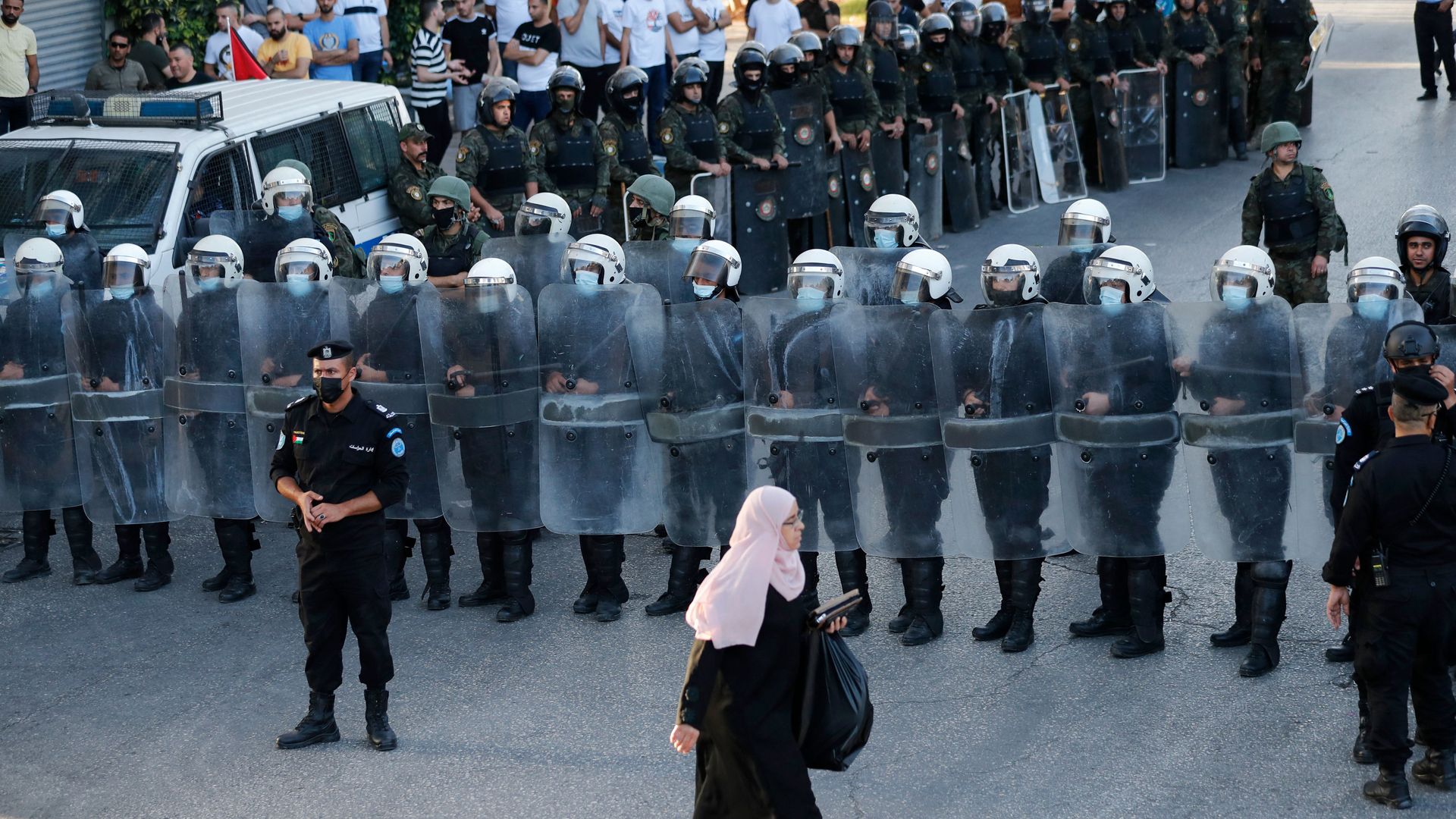
Members of the Palestinian Authority security forces block a road as demonstrators rally in Ramallah on July 3, 2021. Photo: Ahmad Gharabli/AFP via Getty Images
The Pentagon is considering downgrading the post of the official in charge of security coordination with the Palestinian Authority from the rank of three-star general to that of a colonel, four current and former U.S. officials and two Israeli officials told me.
Why it matters: The State Department and the Israeli Defense Ministry are concerned such a decision could hurt security cooperation between the U.S. and Palestinians and damage security coordination between Israeli and Palestinian officials as tensions escalate in the occupied West Bank.
Driving the news: In recent months, Gen. Mark Milley, the chairman of the Joint Chiefs of Staff, has laid out a plan for reducing the number of generals and admirals per the 2017 National Defense Authorization Act, current and former U.S. officials say.
- The Trump administration decided a big part of the cut needed to come from U.S. generals and admirals posted in bases and positions around the world.
- The plan includes downgrading the rank of the U.S. security coordinator with the Palestinians from a three-star general to that of a colonel, according to current and former U.S. officials.
- The ranks of the U.S. military attachés in Saudi Arabia and the United Arab Emirates would also be downgraded.
Background: The U.S. security coordinator (USSC) post was created in 2005 in an effort to rebuild and reform the Palestinian security services after the second intifada.
- The coordinator has always been a three-star U.S. general who reported to the secretary of state and the chairman of the Joint Chiefs of Staff.
- The coordinator's senior rank allows direct access to the top military and political echelons in the U.S., Israel and the Palestinian Authority.
- The security coordinator team also includes military experts from eight different NATO countries.
Behind the scenes: The State Department has been pushing back against the Pentagon plan, mainly on the issue of the USSC post with the Palestinians, but also about other posts in the Middle East, the U.S. officials said.
- Secretary of State Tony Blinken sent a letter to Secretary of Defense Lloyd Austin stressing reservations over the plan, according to current and former U.S. officials.
- Other U.S. officials, including U.S. Ambassador to Israel Tom Nides and the current U.S. security coordinator Lt. Gen. Michael Fenzel, have also expressed concerns over the Pentagon plan, different sources say.
- Colin Kahl, the undersecretary of defense for policy, is expected to present different options for preserving the USSC and other positions in the Middle East to Austin later this week, a former U.S. official said.
- The Israeli government is also concerned about the plan's potential ramifications, a senior Israeli official said. The Palestinians also object, according to another source.
What they're saying: "At a time when Israelis, Palestinians and many Arab states are all looking for signs that the U.S. remains committed to the region, downgrading the USSC and other regional military attachés makes little sense," said former U.S. Ambassador to Israel Dan Shapiro who currently serves as a distinguished fellow in the Atlantic Council's Middle East programs.
- Shapiro told me the USSC, in particular, continues to play a critical role in maintaining Israeli-Palestinian security cooperation. “Especially on the eve of President Biden's first trip to the region, it would send exactly the wrong message," he said.
- He added that the Biden administration seems to understand that, and “there are apparent efforts underway to reverse these ill-advised decisions they inherited."
- The State Department and Department of Defense did not respond to requests for comment.
2. Scoop: U.S. and UAE discuss strategic security agreement
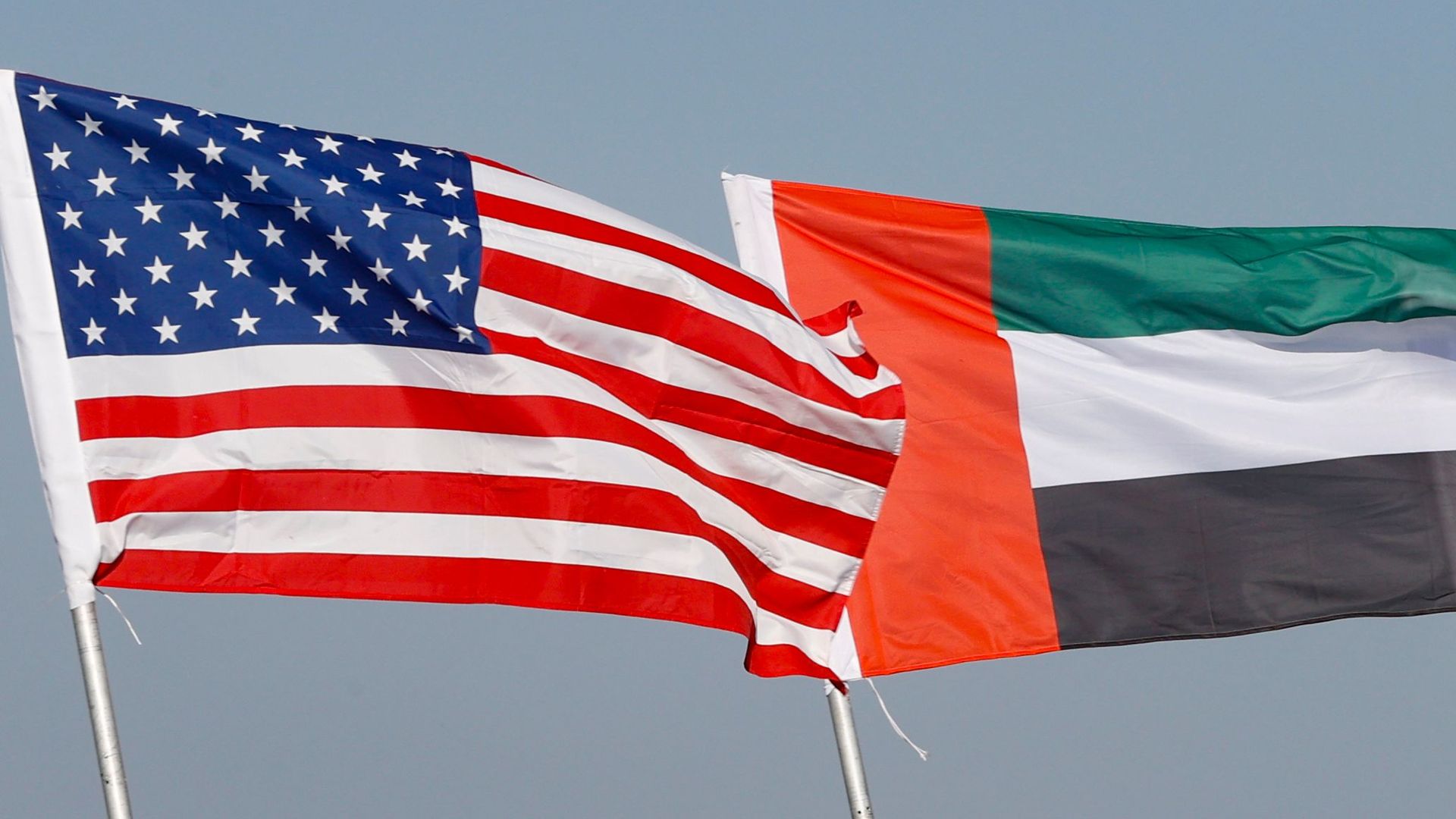
Photo: Jack Guez/AFP via Getty Images
The Biden administration and the United Arab Emirates are discussing a possible strategic agreement that would give the Gulf country certain U.S. security guarantees, two current and former U.S. officials told me.
Why it matters: The discussions began last November, but became more serious after the UAE and Biden administration eased tensions in late March. Relations had been strained over what the Emiratis saw as a slow and weak U.S. response to the Houthi missile and drone attacks on Abu Dhabi in January.
Driving the news: In recent months, the Biden administration and the UAE began discussing what they called a “Strategic Framework Agreement."
- It came at the suggestion of the Emiratis, who see any deal as a sign that the U.S. is committed to the Gulf country's security, current and former U.S. officials said.
- The Biden administration has already sent a draft agreement to the UAE, according to the officials. White House Middle East coordinator Brett McGurk visited Abu Dhabi last week to discuss the issue.
- The draft agreement includes a component on defense and security but also covers economic, trade, science and technology issues, a source briefed on the issue said.
What to watch: The Biden administration is ready to give certain commitments to the UAE as part of an agreement, but it is still unclear how far the U.S. will be willing to go.
- Discussions are expected to continue in the coming weeks.
- The White House declined to comment.
Worth noting: The UAE already has an agreement with France that includes a defense commitment if the UAE is attacked.
3. U.S. and E3 to push for IAEA resolution on Iran
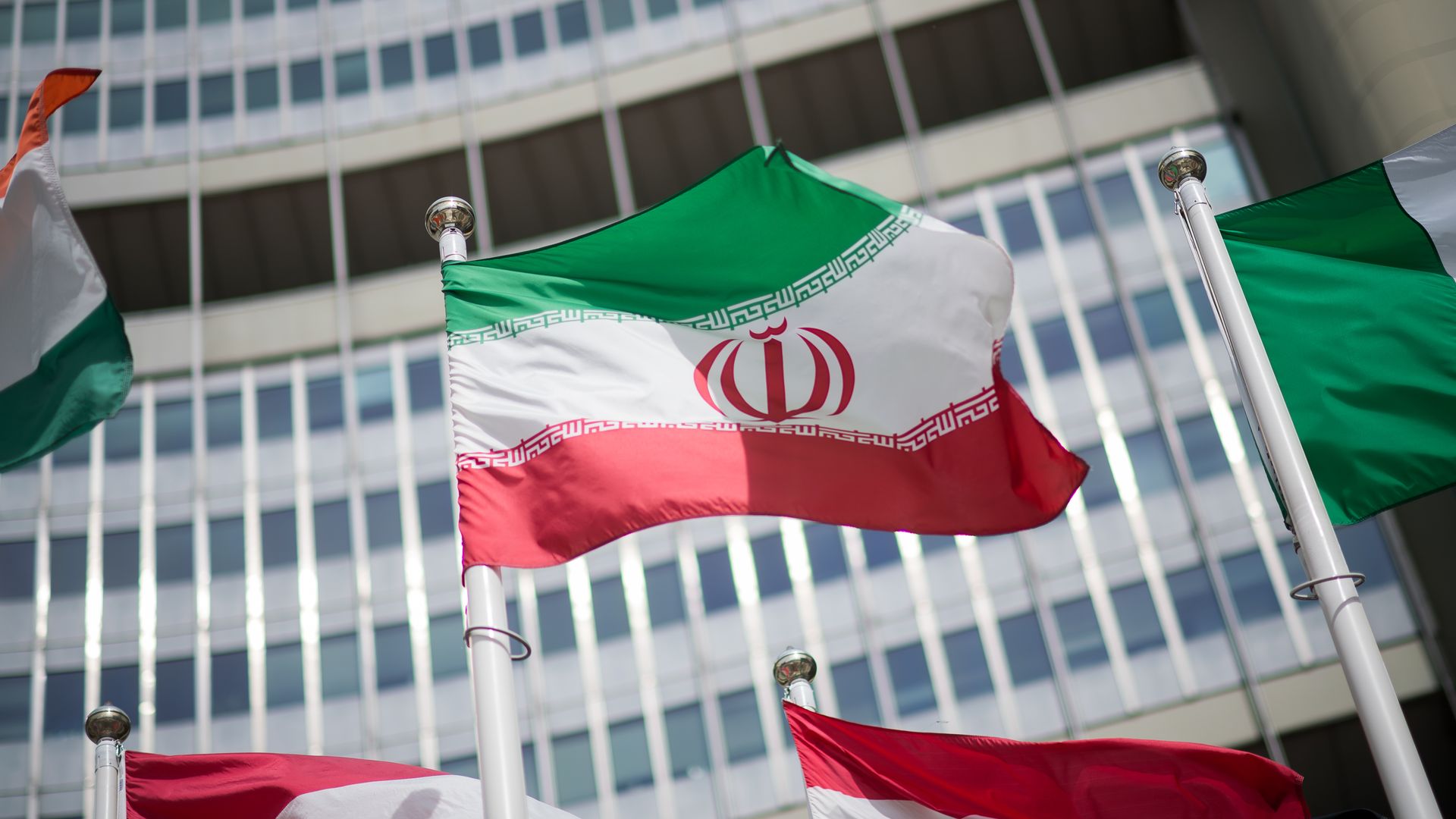
The flag of Iran is seen in front of the International Atomic Energy Agency headquarters. Photo: Michael Gruber/Getty Images
The U.S. and its E3 allies — France, Germany and the U.K. — are expected to push for a resolution at the International Atomic Energy Agency board meeting next week that calls on Iran to fully cooperate with UN inspectors regarding suspicions of undeclared nuclear activity, E3 diplomats say.
Why it matters: It's been two years since a resolution about Iran’s lack of cooperation has been passed by the IAEA board. The Biden administration has until now refrained from taking such a step in order to avoid sabotaging the Vienna nuclear talks.
- But the weekslong stalemate in the talks and two recent alarming IAEA reports about Iran appear to have led to the decision to push for the resolution.
Driving the news: One report by UN inspectors circulated among IAEA board members on Monday stated that Iran managed to produce 43 kilograms (95 pounds) of 60% enriched uranium. If Iran enriches this amount to the level of 90%, it will have almost enough material for one nuclear bomb.
- The other report said Iran hasn’t given serious answers to UN inspectors' questions about the origin of uranium particles found in three suspicious undeclared sites in Iran.
Behind the scenes: The IAEA board meeting was one of the main issues discussed during talks between U.S. and Israeli officials at the White House yesterday, two sources briefed on the discussions said.
- The Israeli officials stressed they want the Biden administration to push for a stronger censure resolution against Iran at the IAEA board meeting next week, the sources added.
- But the U.S. stressed it thinks a stronger censure resolution could totally shut the door on getting a nuclear deal — something the Biden administration doesn’t want, the sources said.
In the days leading up to the talks at the White House, the Israeli Prime Minister’s Office started a public diplomacy campaign focused on the claim that Iran deceived the IAEA.
- It started with a story in the Wall Street Journal that was based on documents the Israeli Mossad stole from Iran’s nuclear archives and showed how the Iranians misled UN inspectors 17 years ago.
- Several days later, the Israeli Prime Minister’s Office published the original documents in Persian alongside translations in English.
- Prime Minister Naftali Bennett shared on social media a short video in which he showed the documents and said it was proof that Iran was lying to the IAEA.
What they're saying: State Department spokesperson Ned Price said yesterday the U.S. will work closely with its allies and partners and the IAEA board “to ensure that the board takes appropriate action in response” to the new IAEA reports.
The other side: Iran Foreign Ministry spokesperson Saeed Khatibzadeh said in a statement that Iran will respond firmly and proportionately to any nonconstructive move at the IAEA board meeting.
- "Those who view the IAEA board and the director general's reports as tools of political games against Iran will be responsible for the consequences," he said.
4. U.S. top priority on Israel is survival of Bennett coalition
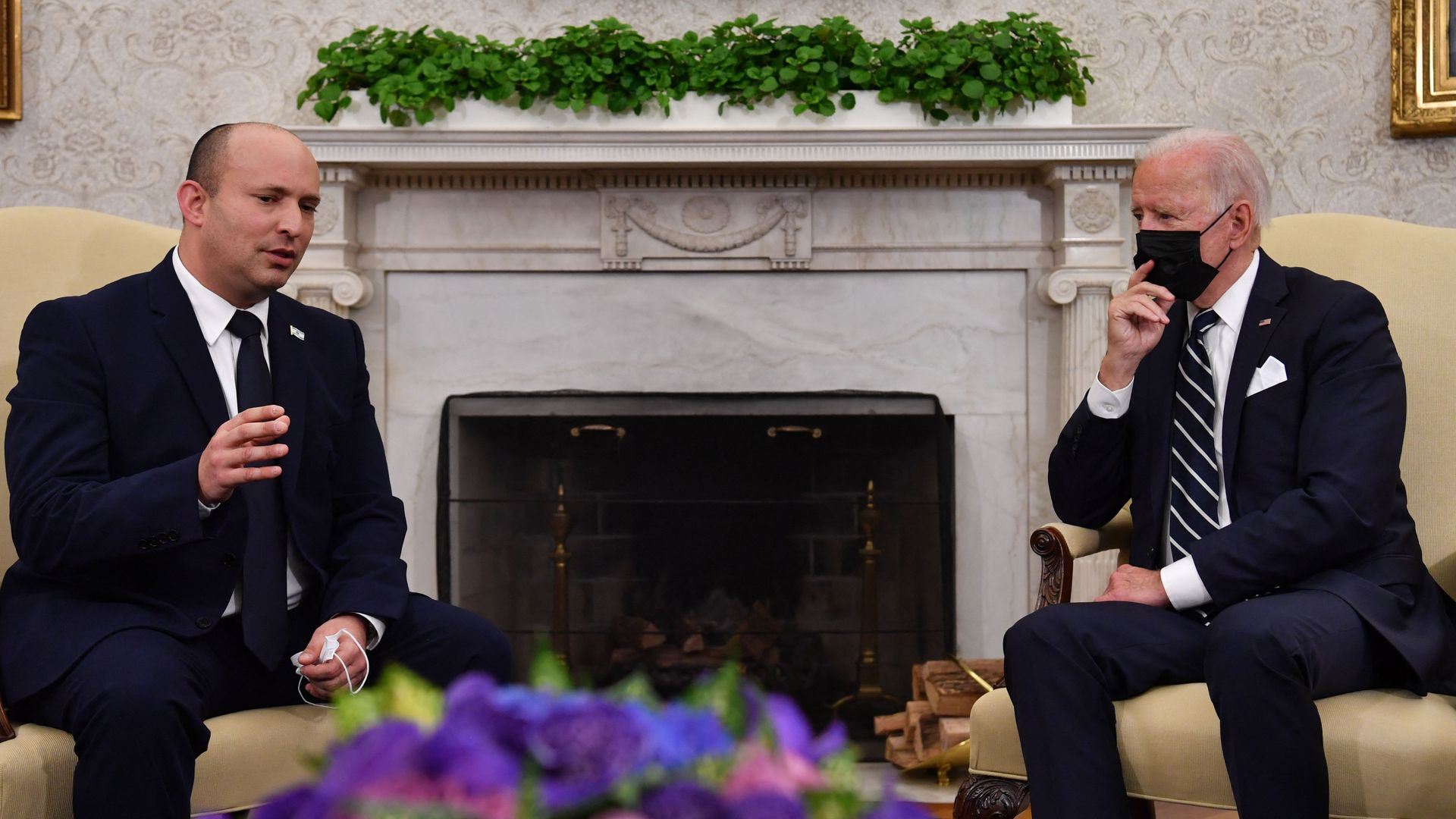
Biden meets with Bennett at the White House on Aug. 27, 2021. Photo: Nicholas Kamm/AFP via Getty Images
As Prime Minister Naftali Bennett's unlikely government reaches the one-year mark this month, the Biden administration's main priority in its relations with Israel continues to be the coalition's survival.
Between the lines: U.S. officials won't say so that bluntly, but it's clear they prefer Bennett's broad coalition to the return of former Prime Minister Benjamin Netanyahu at the head of a radical right-wing government.
- The White House has refrained almost entirely from publicly criticizing the Bennett government on the Israeli-Palestinian conflict, where it is politically vulnerable.
- As months have passed and the Israeli government's fragility has grown, the administration has become even less critical.
State of play: Crises threaten to topple Bennett's coalition nearly every week — most recently the government's inability to renew a law regulating settlements in the occupied West Bank.
- Some left-wing members of the coalition have reservations about the law, and the right-wing opposition — which broadly supports settlements — says it won't give Bennett the votes he needs to pass it.
- Justice Minister Gideon Sa'ar, who heads a right-wing party, has said the government won't survive if it can't pass the law.
Behind the scenes: In their communications with Washington, Bennett and his aides have often justified certain actions or inactions — particularly on the Palestinian issue — based on the fragility of the coalition.
- That was the case when Israel objected to the reopening of the U.S. Consulate in Jerusalem, announced new building permits in the West Bank settlements, and allowed the Israeli nationalist "flag march" to proceed last Sunday through the Muslim Quarter of Jerusalem's Old City.
- In all these cases, the Biden administration either kept its disagreements private or issued very weak statements. It has also avoided steps that could destabilize the coalition.
What they're saying: In several recent public events, U.S. Ambassador to Israel Tom Nides explained the Biden administration’s approach.
- At an Atlantic Council event in early May, Nides said, “I really respect this government. It’s working. I was anxious and thrilled working with them in a difficult situation. I am a big fan of this government, and we hope to continue working with them."
- At a Carnegie Endowment event that same week, he noted the pressure Bennett's government was under and said, "I don’t envy Bennett. He is a friend of the U.S. and we are friends of his," adding, "We really like this government."
- Former U.S. Ambassador to Israel Dan Shapiro tells me that while certain bilateral disagreements remain, Biden and his team appreciate the way Bennett and Foreign Minister Yair Lapid are conducting the relationship. “There is genuine admiration for the diversity this government represents," Shapiro says.
What’s next: U.S. officials say Biden's planned visit to Israel later this month will take place regardless of the domestic political situation in Israel.
- "While he'll stay out of Israeli domestic politics, and has no illusions about U.S. influence over it, it doesn't hurt to have partners with whom he has such a good rapport," says Shapiro.
5. Abbas presses Blinken over Israeli "provocations" in "tough" call
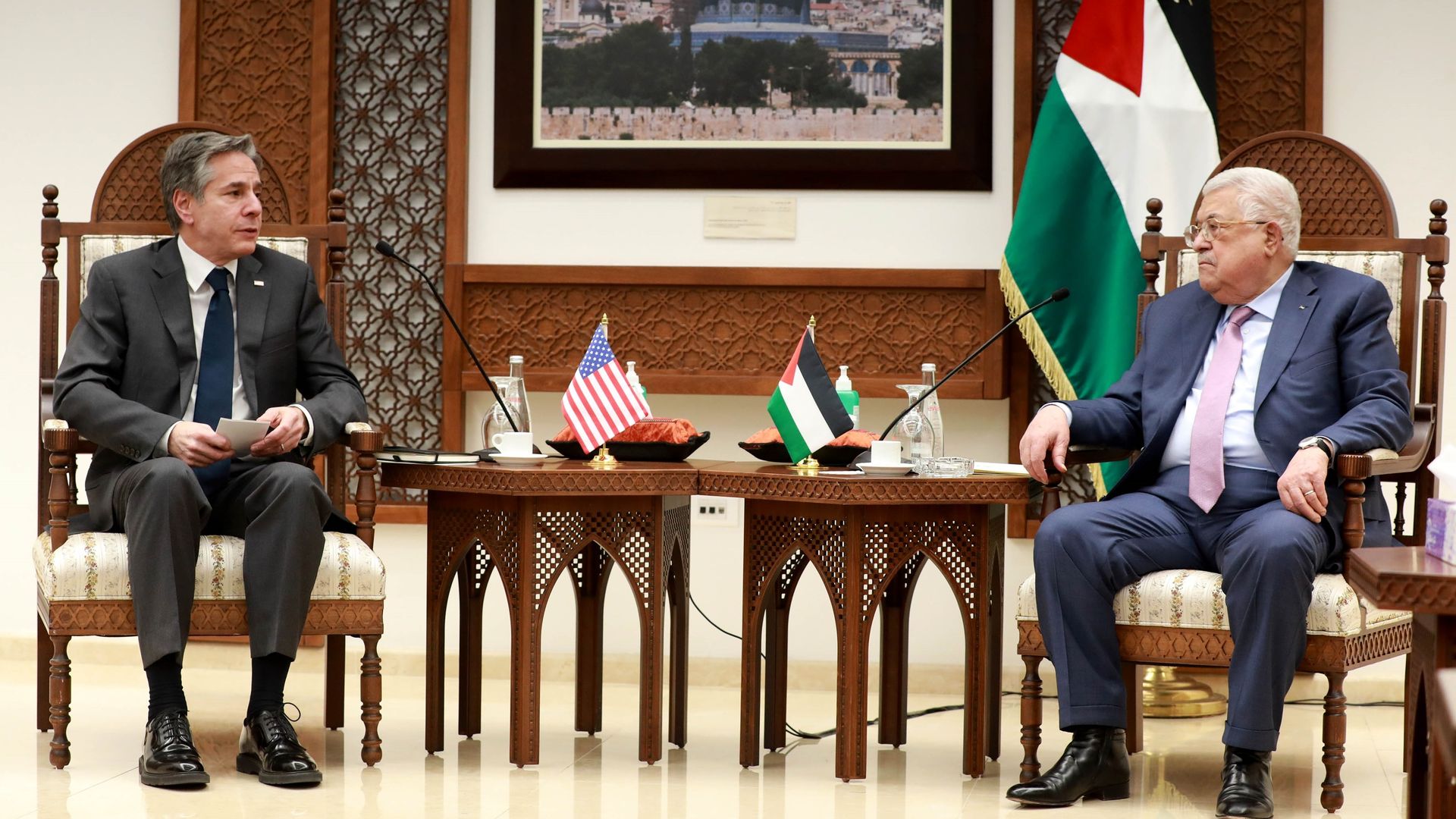
Abbas (right) meets Blinken in Ramallah last March. Photo: Issam Rimawi/Anadolu Agency via Getty
Palestinian President Mahmoud Abbas protested what he called the Biden administration's inaction and “silence” over contentious Israeli steps in the occupied West Bank and East Jerusalem in a call with Blinken yesterday that an American and a Palestinian source described as "tough."
- Behind the scenes: Palestinian officials have in recent days conveyed angry messages to their U.S. counterparts over Washington's responses to Sunday's "flag march" of Israeli nationalists in Jerusalem, Israel's violations of the status quo at Al-Aqsa Mosque, and Israel's refusal to engage with the peace process, the sources say.
What they're saying: Abbas told Blinken he was considering taking retaliatory steps against Israel "in light of the U.S. silence about the Israeli provocations," according to the Palestinian readout of the call.
The provocations Abbas cited include events at the Al-Aqsa Mosque compound, or Temple Mount, in Jerusalem, one of the holiest sites in both Islam and Judaism.
- Abbas told Blinken “radical Israeli settlers" were attacking the mosque, praying at the compound and raising the Israeli flag there under the protection of Israeli police. Meanwhile, Abbas said, Israeli security forces were not allowing Palestinians to worship freely.
- The Palestinian president pushed in particular for Biden to fulfill his campaign promise to reopen the U.S. Consulate in Jerusalem.
State Department spokesperson Ned Price issued a much shorter statement about the call, saying Blinken and Abbas discussed "the importance of Israelis and Palestinians working to maintain calm and de-escalate tensions."
- Blinken also "underscored the importance of concluding the investigations" into the killing of Palestinian American journalist Shireen Abu Akleh, Price said.
What to watch: Ahead of Biden's visit, the administration wants to announce a “special representative for Palestinian affairs," U.S. and Israeli officials tell me.
- Hady Amr, who currently holds the Israel-Palestine file at the State Department, is expected to be appointed to the new role, as was first reported by the Times of Israel.
- The administration sees that as an interim step on the path to reopening the consulate.