Axios from Tel Aviv

October 19, 2022

Welcome back to Axios from Tel Aviv.
- This week's edition (2,012 words, 7½ minutes) brings you three scoops — a Ukrainian request for Israeli defense systems, Saudi Arabia and OPEC, and a U.S. apology to Israel.
Sign up to receive this newsletter.
1 big thing... Scoop: Ukraine asks Israel for Iron Dome defense system

Israeli Iron Dome defense system is seen in southern Israel on Aug. 7.
The Ukrainian government sent Israel on Tuesday an official request for air defense systems that will allow it to counter any Iranian ballistic missiles and Iranian attack drones used by Russia in Ukraine, according to a copy of the letter I obtained.
Driving the news: The letter says Russia has switched to a new method of attacks in Ukraine, including using Iranian-made drones against cities and civilian infrastructure.
- "According to available information ... there is a high probability of prompt deliveries to the Russian Federation of Fateh-110 and Zolfaghar ballistic missiles from Iran," said the letter sent by the Ukrainian Embassy in Israel to the Israeli Foreign Ministry.
- "Ukraine is highly interested in obtaining from Israel (in shortest possible terms) defence systems, in particular: Iron Beam, Barak-8, Patriot, Iron Dome, David's Sling, Arrow Interceptor and Israeli support in training for Ukrainian operators," the letter said.
- Some of the systems in the letter, like the Iron Beam, are not yet operational, and others, like the Patriot, are made in the United States.
The letter stressed the Ukrainian request is based on the consideration that "positive experience gained by Iran of using ... weapons in Ukraine will lead to further improvement of Iranian systems."
- This will "significantly contribute in strengthening Iran’s potential of producing offensive weapons and, as a result, will increase the security threats for the State of Israel and the Middle East region," the letter said. "The Ukrainian side expects a positive reaction from Israel to this proposal."
The big picture: Israel has given Ukraine humanitarian aid and helmets and bulletproof vests for medical teams, but it has so far refrained from providing advanced weaponry and defensive weapon systems to Ukraine, fearing a clash with Russia that could harm Israel’s security interests in Syria.
What they're saying: Israeli Defense Minister Benny Gantz said in a meeting with EU ambassadors on Wednesday that Israel supports Ukraine via humanitarian aid and the delivery of life-saving defensive equipment, but emphasized that Israel will not deliver weapon systems to Ukraine due to a variety of operational considerations.
- "I plan to review and approve an additional package [of defensive equipment]. We will continue to support Ukraine within our limitations," Gantz said, according to a statement by his office.
- Gantz added Israel sent a request to the Ukrainians to share information about their needs for air defense alerts. “Once we gain this information, we will be able to assist in the development of a life-saving civilian early-warning system," he said.
State of play: The Washington Post reported earlier this week that Iran is expected to expand its support for Russia’s war and provide the Russians with precision-guided, short- and medium-range missiles in addition to the drones it has already provided Moscow.
- Iran has repeatedly denied providing such weapons to Moscow. Iran’s Supreme Leader Ali Khamenei responded for the first time on Wednesday to reports of Iranian drones being used by Russia in Ukraine. He didn't deny or confirm their use.
2. Scoop: Saudis pressed Arab nations to publicly support OPEC+ cut
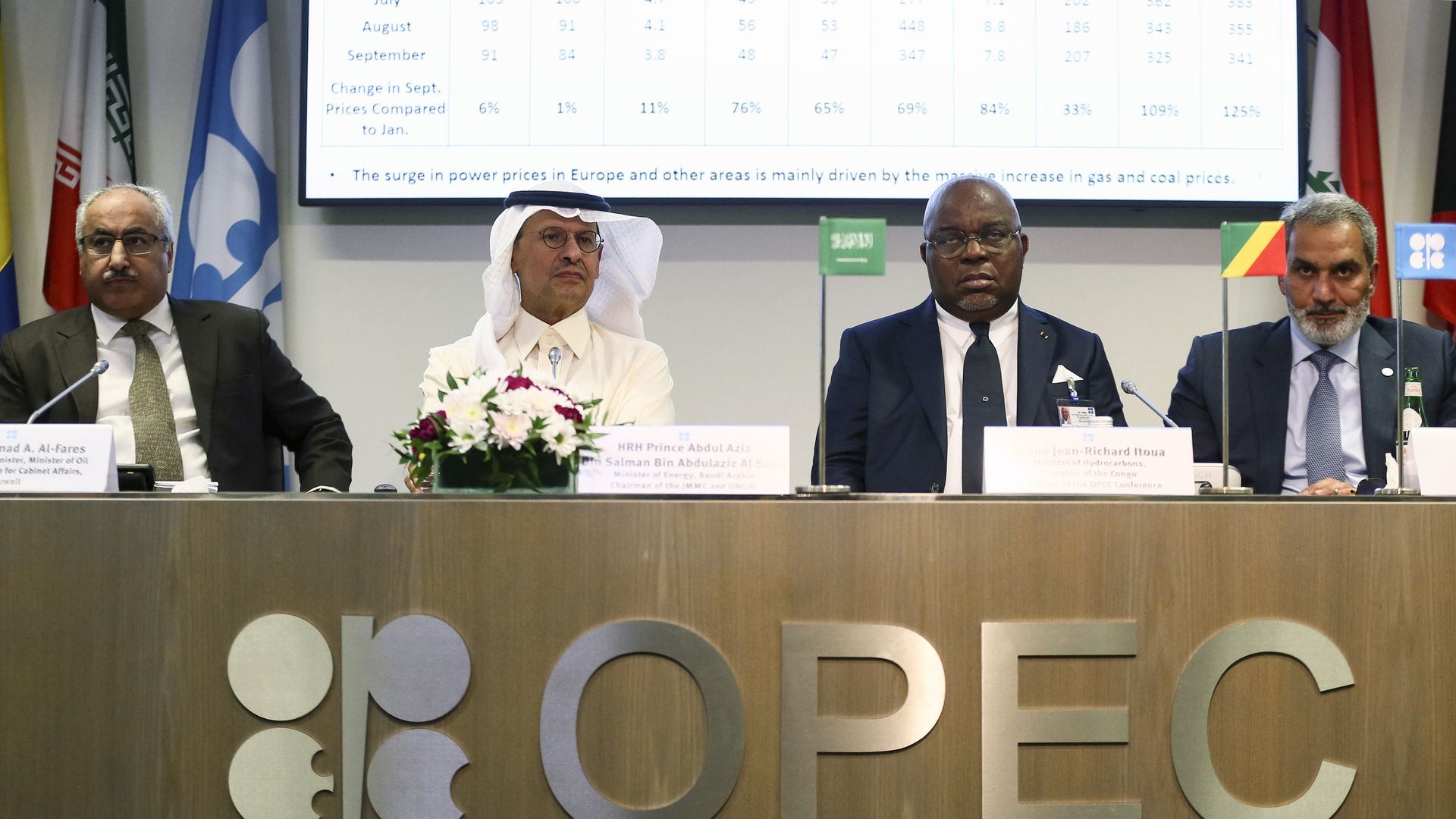
Saudi Energy Minister Prince Abdulaziz bin Salmand (2nd from left), Secretary-General of OPEC Haitham al-Ghais (right) and other officials hold a press conference on Oct. 5. Photo: Askin Kiyagan/Anadolu Agency via Getty Images
Saudi Arabia privately pressed several Arab countries to issue statements supporting the recent OPEC+ decision to cut oil production, according to a former U.S. official and an Arab official.
Why it matters: The goal of the Saudi push was likely to avoid being isolated by the U.S. and show that the decision, which angered the Biden administration, was a collective decision by all Arab nations in OPEC+.
The big picture: The Biden administration blames Saudi Arabia for the move, which the U.S. claims will strengthen Russia.
- The Saudis claim the U.S. anger has nothing to do with Russia but is due to domestic political concerns about rising gas prices ahead of the midterm elections.
Catch up quick: Two weeks ago, OPEC+ announced production cuts of 2 million barrels per day starting in November.
- The U.S. lobbied OPEC+ members, mainly Saudi Arabia, to wait another month to evaluate the situation of the oil market before deciding on any cuts in production.
- The Saudis who lead the OPEC+ group disregarded U.S. requests and went ahead with the production cut.
- The move created a crisis between the U.S. and Saudi Arabia, with the Biden administration announcing it was reviewing its relationship with Saudi Arabia and President Biden vowing to take action against the Saudis.
Behind the scenes: In an attempt to push back on U.S. accusations, Saudi officials in recent days approached Arab countries that are OPEC+ members and several Arab countries that are not, and asked for public statements of support.
- An official from one of the Arab countries said the Saudi pressure was on a very high level and the Saudis pressed very hard.
- A former U.S. official briefed on the issue said Saudi officials pressed Arab countries to echo their message that the OPEC+ decision was purely an economic one and based on market conditions and not political.
Iraq, Kuwait, Bahrain, the United Arab Emirates, Algeria, Oman, Sudan, Morocco and Egypt all issued statements stressing the decision was made in consensus and was technical, not political.
- Jordan also issued a statement of support for Saudi Arabia but called for a direct dialogue between the U.S. and Saudi Arabia to solve the crisis.
What they're saying: A spokesperson for the Saudi Embassy in Washington declined to comment.
- But the Saudi Embassy tweeted a statement on Monday stressing it views the relationship with the U.S. as strategic and that the OPEC+ decision was based on economics, not politics.
3. Scoop: U.S. apologizes to Israel over human trafficking report
Photo: Mandel Ngan/AFP via Getty Images
The State Department privately apologized to Israel over the mention of a Palestinian trans woman who committed suicide in the preamble of a new report about human trafficking, according to Israeli officials and Israeli Foreign Ministry documents obtained by Axios.
Driving the news: The report, published in July, said Israel did not recognize the woman as a trafficking victim, which would have given her a work permit. But Israeli officials say she was in the process of gaining asylum at the time of her death.
- The Israeli officials were angry about the State Department's decision to leave Israel on “Tier 2” of its ranking system. Tier 2 includes countries that do not fully meet the Trafficking Victims Protection Act's minimum standards but are making significant efforts to bring themselves into compliance.
- Israel was especially angry the Palestinian woman's case was mentioned in the opening section of the report.
The big picture: Page 15 of the report tells the story of Amira, a Palestinian trans sex trafficking victim who fled to Israel from the occupied West Bank when she was 19 years old due to her fear of persecution.
- According to the report, she asked the Israeli authorities to recognize her as a trafficking victim. “Instead of helping her, authorities arrested, indicted, and deported her because of her illegal immigration status," the report states.
- The report adds that only with the help of an Israeli nongovernmental organization, the Israeli government granted Amira a temporary stay permit but did not recognize her as a trafficking victim, which would have afforded her a work permit, housing and other forms of assistance under the law.
- “After months of living in various NGO shelters without the right to legally work or make money of her own, she died by suicide," the report says.
Behind the scenes: After the report was published, the Israeli Foreign Ministry summoned a diplomat from the U.S. Embassy for a meeting to protest the contents of the document, Israeli officials said.
- According to a summary of the meeting Axios obtained, Israeli officials from the Ministry of Justice and Foreign Ministry told the U.S. diplomat they were "stunned" to see the mention of the Palestinian trans woman in the introduction of the report.
- The Israeli officials claimed the details of Amira's case were inaccurate and "a grave violation of her right to privacy."
- The Israelis also protested that the word "Palestine" was used in this part of the text "which is inappropriate in a State Department report," the summary of the meeting said.
Last month, Emily Korenak, the State Department official who wrote the Israel section of the report, apologized for the inclusion of the Palestinian trans woman's case as an example of Israel's human trafficking standards, the summary added.
- Korenak said it was "a serious failure" by the State Department, per the summary.
The U.S. Embassy in Israel declined to comment and the State Department did not immediately respond to a request for comment.
4. What to watch with less than 2 weeks until Israel's elections
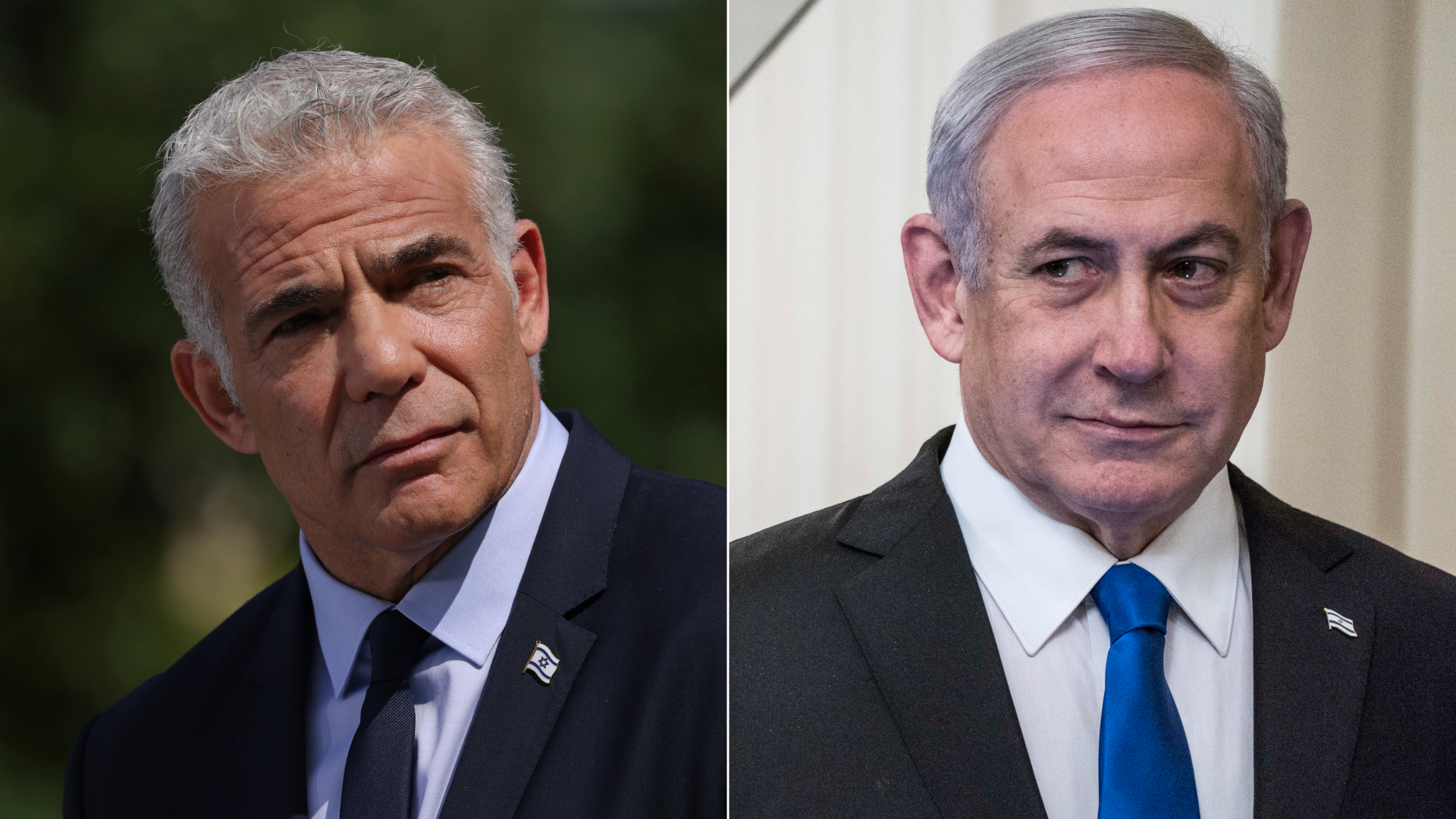
Yair Lapid and Benjamin Netanyahu. Photos: Sean Gallup/Sarah Silbiger/Getty Images
With less than two weeks before Israel's fifth election in four years, the polls show former Prime Minister Benjamin Netanyahu just shy of a majority — meaning his hopes of returning to power hinge on the final push to rally his base.
Why it matters: As opposition leader, Netanyahu is campaigning while on trial for bribery, fraud and breach of trust. If his right-wing bloc gets 61 seats in the Knesset, he may proceed with legislative efforts to suspend his trial.
- Two extreme-right candidates who are part of Netanyahu's bloc have already announced that if Netanyahu forms the next coalition, they will propose laws to make it harder to prosecute politicians for corruption, possibly ending Netanyahu's trial.
The other side: Yair Lapid, who became caretaker prime minister in July, doesn't actually have to win the election to keep his job — at least for several months. If Lapid's bloc falls short of a majority but keeps Netanyahu from reaching 61 seats, he'll almost certainly remain in office until a new election can be held.
- He's been running a "Rose Garden campaign," projecting that he's focused on running the country and not on petty politics.
- Hosting President Biden in Jerusalem, addressing the UN General Assembly and sealing a maritime border deal with Lebanon were key moments in his campaign.
State of play: Both leading candidates are trying to energize an electorate that has grown tired of continuous elections and largely tuned out the race over the summer and during the High Holidays.
- The polls have hardly budged for months. They show Netanyahu's bloc a few seats ahead of Lapid's but still just short of a majority.
- Both campaigns say the race is really starting now.
What to watch: Netanyahu’s main effort is to get supporters of his Likud party who skipped the most recent elections to return to the polls. He says that would be enough for him to win a majority.
- One of Lapid's main goals will be to raise the turnout among Israel's Arab minority, which is currently projected to be the lowest in years at around 40%. If the turnout really is that low, it boosts Netanyahu's chances of winning 61 seats.
- Lapid will also want to ensure his Yesh Atid party, which is polling second to Likud with around 25 seats, remains the dominant force in the anti-Netanyahu bloc.
5. Hamas official visits Syria for the first time since 2012
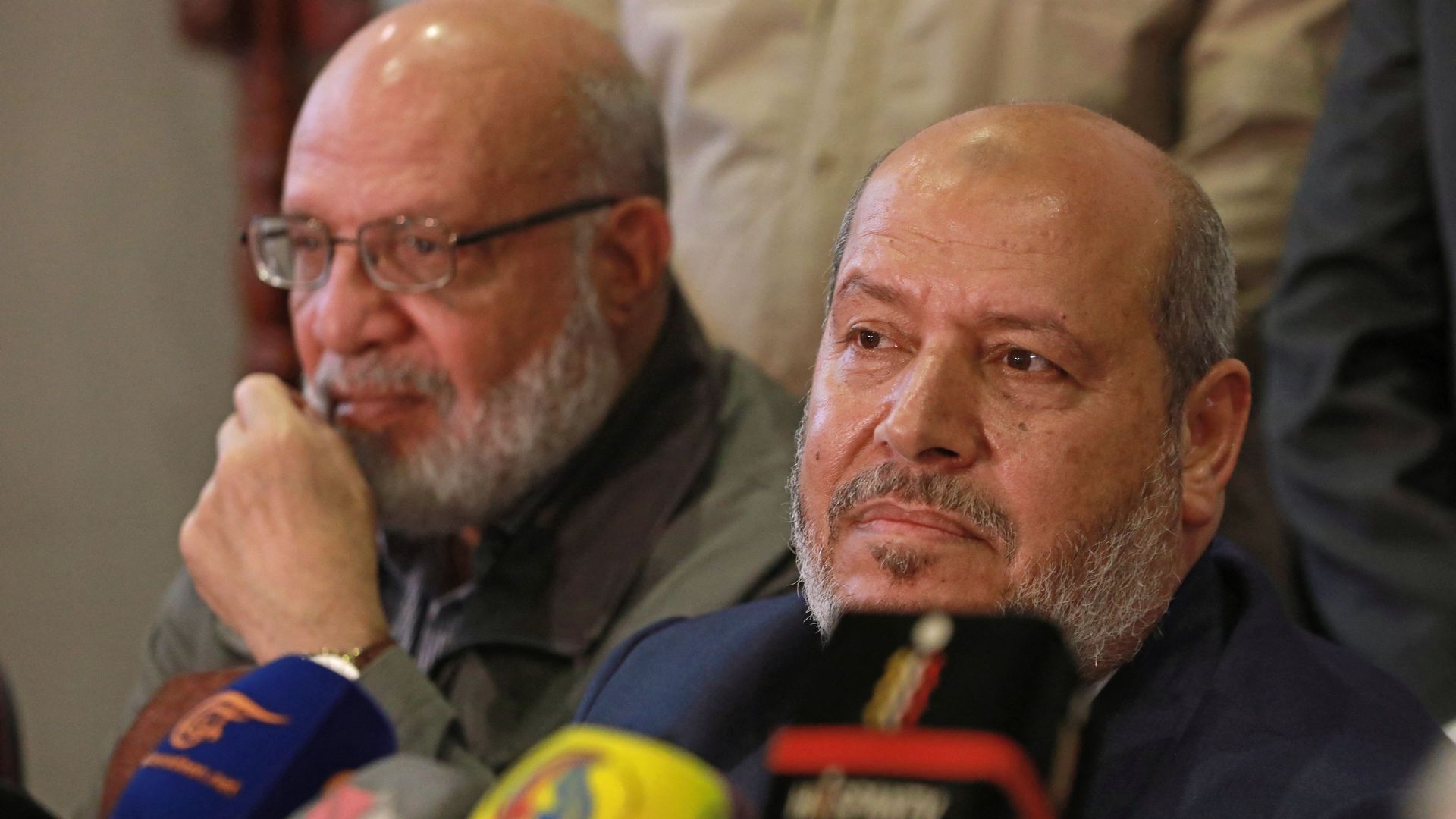
Hamas Arab relations chief Khalil al-Hayya (right) and Abdulaziz al-Minawi, senior official of the Palestinian Islamic Jihad movement, hold a press conference during a visit to Damascus on Oct. 19. Photo: Louai Beshara/AFP via Getty Images
A senior Hamas official visited Syria today for the first time since the organization moved its political headquarters from Damascus in early 2012 due to the country's civil war.
Why it matters: The visit is part of an effort by the Palestinian militant and political organization, which controls the Gaza Strip, to mend its decade-old rift with Syrian President Bashar al-Assad's regime.
Driving the news: Assad met today with Khalil al-Hayya, the head of Hamas’ Arab and Islamic relations office in Gaza, along with representatives of other Palestinian factions.
- After the meeting, al-Hayya stressed that both sides have decided to put the past behind them and that Assad expressed his commitment to support the Palestinian resistance.
Flashback: The Assad regime used to be one of Hamas' most powerful backers. The group's main headquarters outside of the occupied West Bank and Gaza was in Damascus, with hundreds of its militants posted there.
- But when the Syrian uprising broke out and most of the Arab world condemned Assad, Hamas didn't want to be affiliated with the regime.
The big picture: With Assad having largely succeeded in brutally suppressing the uprising, several Arab governments and other key regional actors have been reestablishing relations with his government.
- Since June, Hamas has conducted quiet talks with the Syrian government, mediated by Hezbollah. Last month, Hamas announced it would resume relations with the Syrian government.