Axios from Tel Aviv

October 26, 2022

Welcome back to Axios from Tel Aviv.
- This week's edition (1,822 words, 7 minutes) brings you my interview with Ukraine's foreign minister.
- It also scoops what the Emirati foreign minister told Benjamin Netanyahu in Israel, and it dives into the latest on the Lebanon-Israel maritime border deal and Israeli President Isaac Herzog's visit to Washington.
Sign up to receive this newsletter.
1 big thing: Ukraine "concerned" about GOP threats to cut aid

Illustration: Sarah Grillo/Axios
Ukrainian Foreign Minister Dmytro Kuleba told me he is concerned about recent threats by senior U.S. Republican lawmakers to cut aid to Ukraine if they win control of the House in next month's U.S. midterm elections.
Why it matters: Any U.S. cuts to Ukraine aid would deal a significant blow to Kyiv and could alter the course of the war.
Driving the news: House minority leader Kevin McCarthy signaled in an interview with Punchbowl News last week that Republicans are not going to "write a blank check" to Ukraine at a time of economic recession.
- “We are concerned with these statements. We believe they are unfair. But I think we'll fix it and I am certain that we will handle these risks effectively and that aid to Ukraine will not be cut," Kuleba told me.
The Ukrainian foreign minister noted that Ukraine has historically received bipartisan support in the U.S. Congress. "And we will work with both Republicans and Democrats to make sure that the aid continues," he said.
- "People make political statements before elections and pursue different policies after the elections. There may be some voices, they may be influential. I don't say that we are not concerned. We are. But I think we will be able to handle it," he added.
The big picture: There was strong bipartisan support for giving aid to Ukraine early in the war, but House Republicans have expressed skepticism about providing additional military support as the war drags on.
- In May, 57 House Republicans voted "no" on a $40 billion aid package to Ukraine.
- The number of lawmakers opposed to such packages is poised to rise after the midterms, especially if more skeptical GOP candidates are swept into Congress, Axios' Andrew Solender and Zachary Basu write.
Yes, but: Senate Minority Leader Mitch McConnell (R-Ky.) has recently called for "additional air defenses, long-range fires, and humanitarian and economic support" for Ukraine.
- For his part, President Biden has repeatedly reaffirmed his administration's support for Kyiv and last week alluded to McCarthy's remarks, saying: "I don’t understand the threat that they’re saying they may have to stop funding the Ukrainians in their war against this brutal dictator.”
Go deeper: I also spoke to Kuleba about Israel and Netanyahu and Russia's "dirty bomb" claims.
2. Scoop: Emirati FM tells Bibi ultra-right coalition is concerning
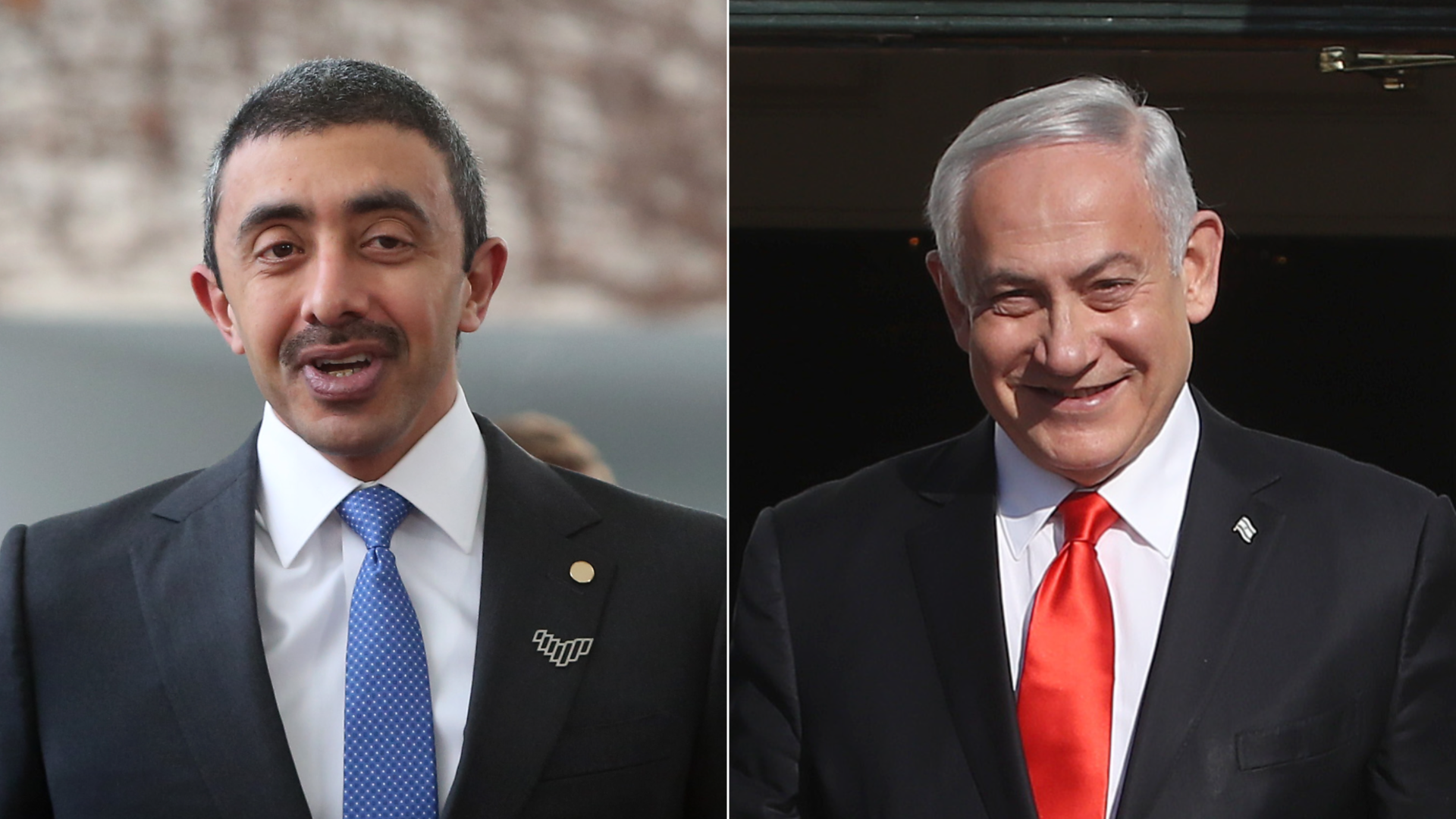
Sheikh Abdullah bin Zayed and former Israeli Prime Minister Benjamin Netanyahu. Photos: Adam Berry/Michael Reynolds/Getty Images
Emirati Foreign Minister Sheikh Abdullah bin Zayed (ABZ) during a recent trip to Israel expressed concerns to opposition leader Benjamin Netanyahu about the possibility of ultra-right extremists being included in a new government if he wins the upcoming elections, three sources briefed on the meeting told Axios.
Why it matters: Netanyahu's relationship with ABZ dates back to 2012. Eight years later, they signed a peace treaty between the two countries. It's seen as Netanyahu's biggest political achievement as prime minister.
Driving the news: Netanyahu will need the support of Jewish Power party leader Itamar Ben Gvir and his political partner, Bezalel Smotrich, in order to form a government if Netanyahu's right-wing bloc wins a 61-seat majority in the Knesset.
- In such a scenario, both Jewish supremacists are expected to become ministers and members of the Security Cabinet.
Behind the scenes: During his visit to Israel last month, ABZ spoke with Netanyahu for more than two hours, according to the sources briefed on the meeting. One of the main issues discussed was the upcoming elections.
- The Emirati foreign minister told Netanyahu he was concerned that politicians with radical right extremist views and rhetoric could be included in a new Israeli government, the sources said.
- One of the sources said it appeared that ABZ was specifically referring to Ben Gvir.
- Netanyahu listened to ABZ's concerns but didn't respond, the source said.
- A different source briefed on the meeting said ABZ's message seemed to signal that the inclusion of radical right-wing elements in the government could influence the bilateral relationship.
What they're saying: An Emirati official told me they don't comment on private conversations and stressed the UAE respects the Israeli domestic political process and doesn’t get involved in it.
- The official said the UAE’s relationship with Israel is long term and strategic and the country wants to have good relations with the Israeli people as a whole.
- Netanyahu's office declined to comment.
State of play: Ben Gvir and Smotrich lead the "Religious Zionism" list, which is expected to win up to 14 Knesset seats in the election, according to the latest polls. The list would become the third-largest party in the Israeli parliament.
- It would also mark an unprecedented rise in power of the extreme right and could have a dramatic influence on the government if Netanyahu wins.
- Smotrich, who has a history of making racist remarks about Arab citizens of Israel, recently announced he wants to be the defense minister, a role that also oversees Israeli policy in the occupied West Bank.
- Ben Gvir, who was convicted in 2007 of supporting a terror organization and inciting racism, said he wants to be the minister of internal security, a post that would also put him in charge of the Israeli policies around Jerusalem's holy sites, including the Al-Aqsa Mosque compound.
Read more: Menendez warns Netanyahu against working with Jewish supremacists
3. Herzog meets Biden at the White House
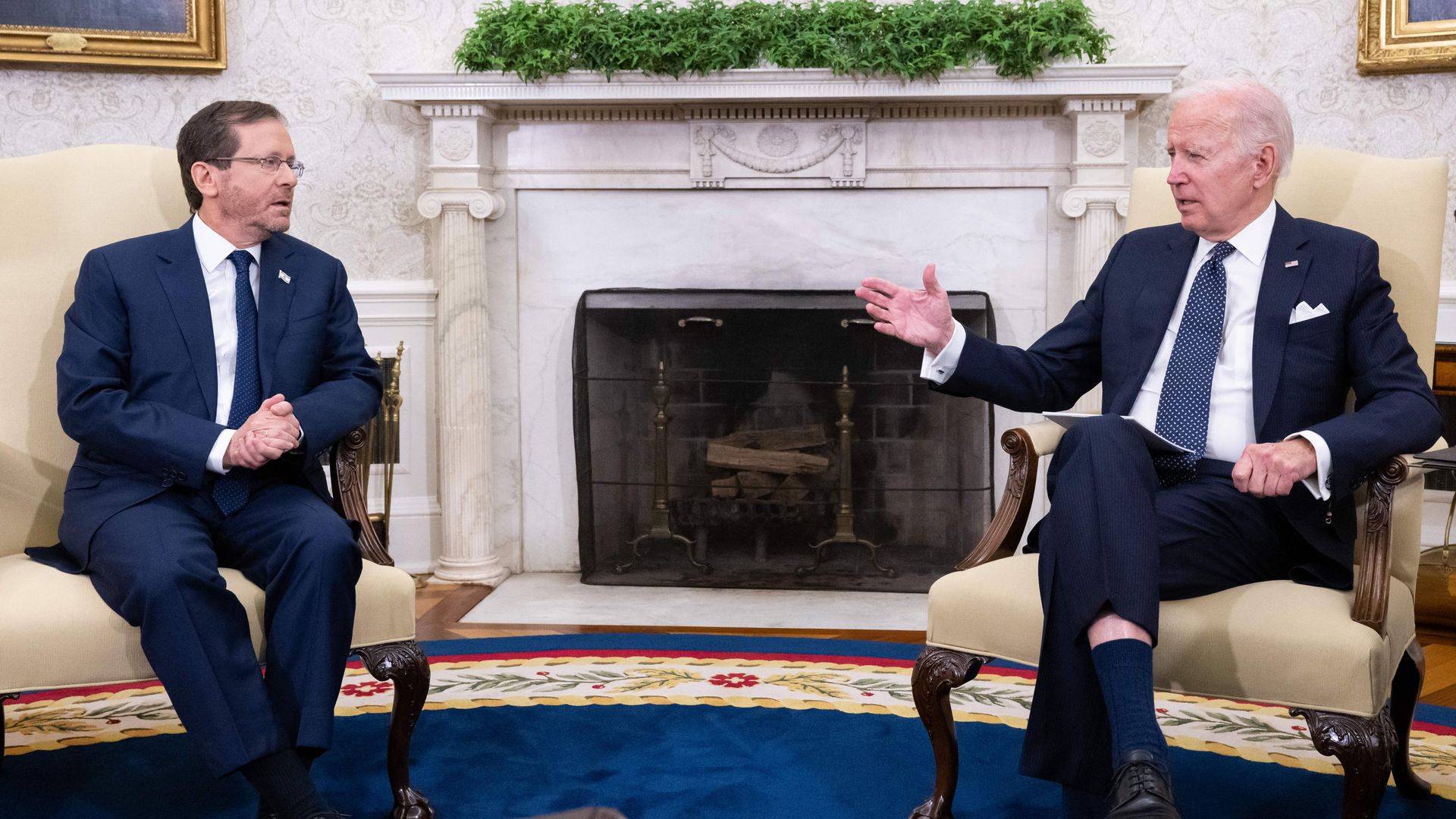
President Biden meets with Israeli President Isaac Herzog in the Oval Office on Oct. 26. Photo: Saul Loeb/AFP via Getty Images
Israeli President Isaac Herzog is meeting President Biden at the White House today.
Why it matters: The meeting comes less than a week before the Israeli elections.
- The Biden administration has expressed concerns that if opposition leader Benjamin Netanyahu wins the elections and forms a right-wing government, it will include Jewish supremacist politicians.
- In such a situation, Herzog will become an even more critical player in the U.S.-Israel relationship.
- Herzog's visit to Washington this week is his first since assuming office.
State of play: Herzog met yesterday with Secretary of State Tony Blinken and discussed Iran's involvement in the war in Ukraine, the maritime border agreement between Israel and Lebanon, and the escalating tensions in the occupied West Bank, the State Department and Herzog’s office said.
- Blinken told Herzog he is concerned about the situation in the West Bank and emphasized the need for all parties to urgently de-escalate the situation, State Department spokesperson Ned Price said.
The big picture: Herzog’s aides said he wants to use the visit to send a message ahead of the elections in both the U.S. and Israel that the relationship between the countries should continue to be bipartisan.
- “My visit here in a sensitive political period in both Israel and the U.S. is meant to stress that our friendship will continue regardless of the results of the elections in Israel and in the U.S.," Herzog told House Speaker Nancy Pelosi (D-Calif.) on Tuesday.
4. Israel, Turkey to relaunch security cooperation during Gantz visit
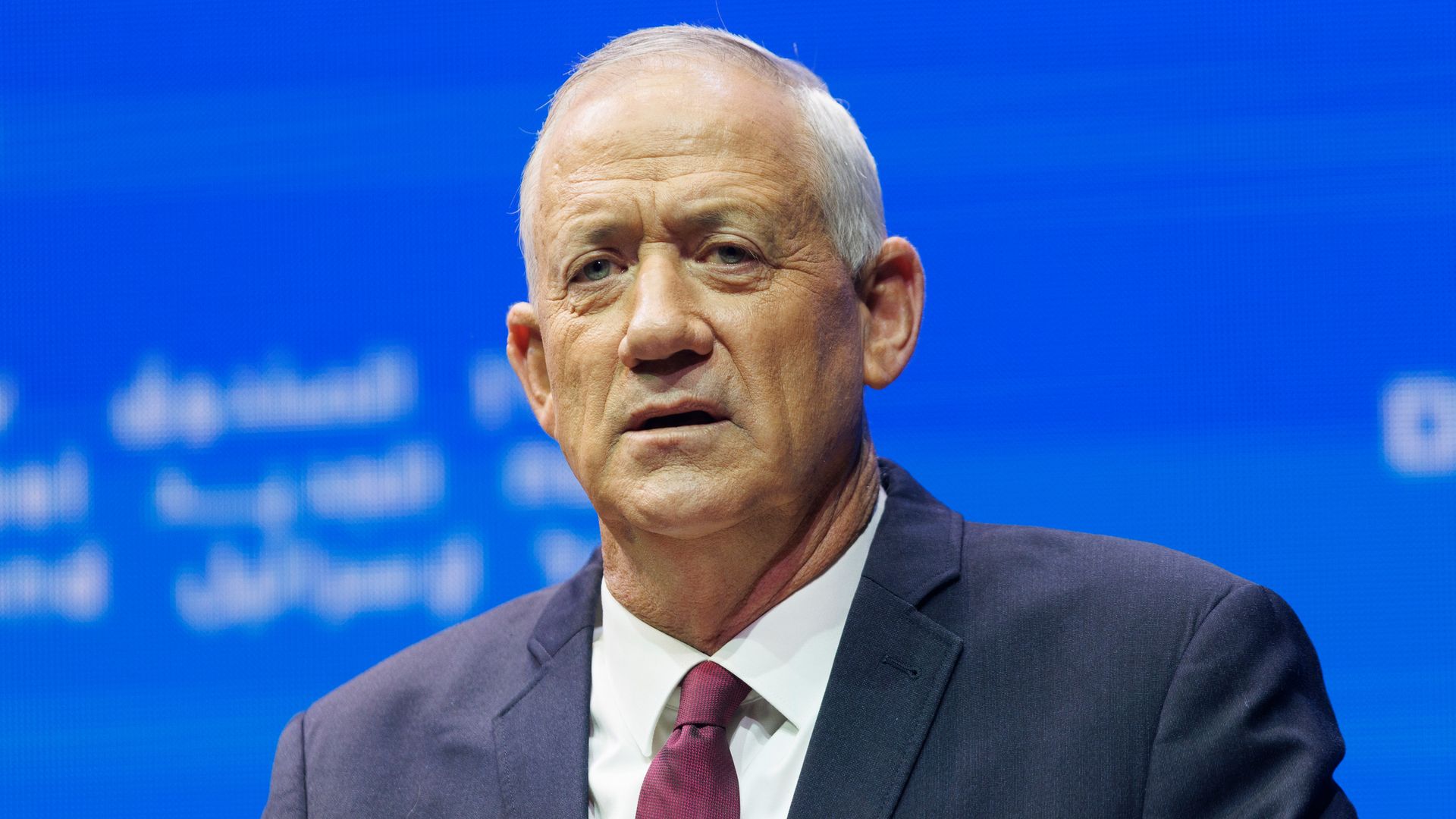
Israeli Defense Minister Benny Gantz. Photo: Kobi Wolf/Bloomberg via Getty Images
Israeli Defense Minister Benny Gantz traveled to Ankara today to meet his Turkish counterpart and relaunch security cooperation between the countries.
Why it matters: It's the first visit by an Israeli defense minister to Turkey in a decade.
- The visit and the resumption of defense ties between the countries are another step in the process to normalize relations, which started more than a year ago.
Driving the news: Gantz will meet Turkish Defense Minister Hulusi Akar in Ankara on Thursday.
- Israeli defense officials say the main issues that will be discussed are the bilateral defense ties, regional developments in Iran and Syria, and tensions between Turkey and Greece.
Behind the scenes: During Gantz’s visit to Azerbaijan several weeks ago, President Ilham Aliyev and the Azerbaijani minister of defense said Israel should resume security cooperation with Turkey, Israeli officials said.
- The Israeli officials said Turkey and Israel are Azerbaijan’s top security partners and the government in Baku wanted to see its two allies working together.
- After the Baku visit, a senior Israeli ministry of defense official traveled to Ankara for talks and reached an agreement on renewing the dialogue between the two defense ministries, Israeli officials said.
- This paved the way for Gantz's visit to Ankara.
Between the lines: Ahead of the trip, Gantz spoke to his Greek counterpart and briefed him on the goal of the visit, Israeli officials said.
- Greek officials say they are very concerned by the escalating rhetoric and threats by Turkey against Greece in recent weeks. They expect Israel to send a message to Turkey about the need for de-escalation.
- Israeli defense officials said they plan to raise the issue during Gantz's visit to Turkey.
What to watch: Israeli defense officials said Gantz's visit and the relaunching of talks between the defense ministries are the first step and stressed the process will be gradual and slow.
- The officials noted that military-to-military cooperation is still suspended and so are weapon sales to Turkey. “This will take time," they said.
5. Israel and Lebanon to sign U.S.-mediated maritime deal tomorrow
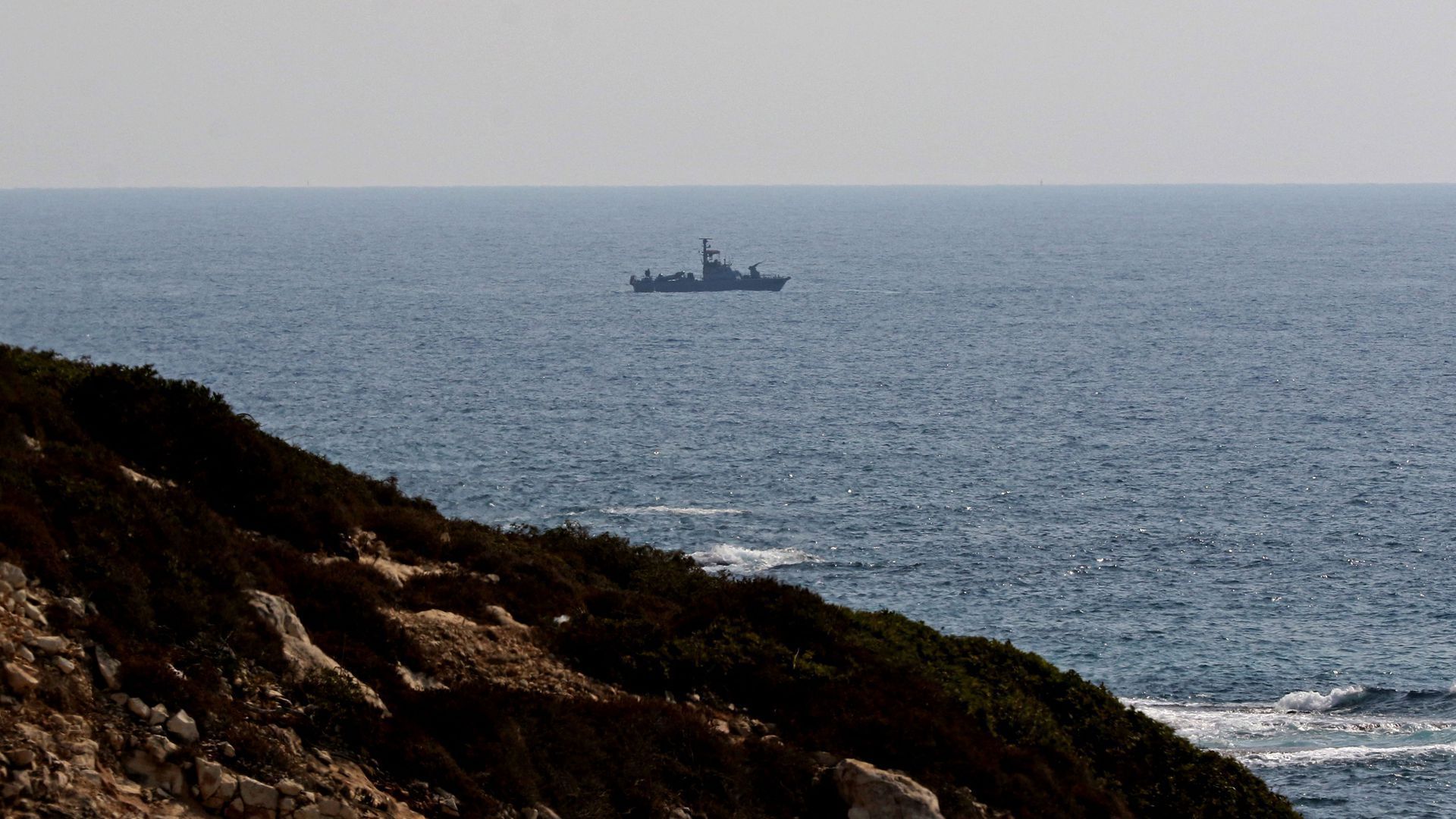
An Israeli navy vessel patrols in the Mediterranean Sea at the maritime border between Israel and Lebanon, off the southern Lebanese town of Naqoura, on Sept. 4. Photo: Mahmoud Zayyat/AFP via Getty Images
Israel and Lebanon will sign the U.S.-mediated maritime border agreement tomorrow.
Why it matters: It will end more than a decade of U.S. diplomatic efforts with several rounds of direct and indirect talks between Israel and Lebanon.
- The dispute was over a potentially gas-rich, 330-square-mile area of the Mediterranean Sea with an estimated revenue reaching at least $3 billion.
- Once signed, the historic deal between the two traditional enemies will allow the beginning of natural gas exploration in the area that was disputed.
Between the lines: This agreement is unique because it is a delineation of a border between two countries in a state of war. Israel and Lebanon will stay at war even after the deal is signed.
- Israel, Lebanese and U.S. officials say the agreement prevented a potential military escalation between Israel and Hezbollah that could have had regional implications.
- Hezbollah had turned the start of production of the Karish gas rig, a major Israeli gas project that Israel said was located south of the disputed area, into a red line prior to the deal. Hezbollah vowed to go to war if the rig came online and Lebanon's economic rights weren't respected in the negotiations over the deal.
- Israel yesterday greenlighted the start of production at the Karish rig. Energean PLC, the company in charge of the rig, said production began today.
State of play: The maritime agreement was reached two weeks ago but had to go through a 14-day review by the Israeli Knesset.
- The Israeli Supreme Court last Sunday rejected several appeals against the agreement and ruled the government could legally approve it without a vote in the Knesset.
- The Israeli government will convene tomorrow morning for the final vote on the agreement.
- Shortly after, representatives from both Lebanon and Israel will arrive at the UN base in Naqoura, Lebanon, on the border between the countries.
- Each delegation will meet separately with U.S. energy envoy Amos Hochstein and give him an identical letter accepting the agreement.
Behind the scenes: The Biden administration and the Israeli government have been negotiating a separate letter of assurances that deal with U.S. security commitments to Israel and a commitment to prevent the future revenues from potential natural gas sales from going to Hezbollah, Israeli officials said.