Axios Sports

November 24, 2021
🦃 Happy Thanksgiving Eve! Today's special edition examines the state of women's soccer in America. Hope you enjoy.
Note: We'll be off the rest of the week. See you back here Monday.
Today's word count: 1,965 words (7 minutes).
Let's sports...
1 big thing: Women's soccer stares down change
Illustration: Eniola Odetunde/Axios
The next few months could be among the most important in American women's soccer history, with significant change on the horizon for both the NWSL and USWNT.
State of play: Collective bargaining agreements tend to be tedious, and lawsuits can drag on. But as 2022 approaches, that's where the action is.
- The NWSLPA will negotiate its first-ever CBA this offseason, which comes on the heels of a scandal-ridden campaign that exposed the need for cultural and structural change.
- The USWNT is also negotiating a new CBA, all while remaining at the forefront of a global push for gender pay equity. The team's 2019 discrimination lawsuit against U.S. Soccer is still ongoing.
The backdrop: Interest in women's sports has been on the rise for years, and there's a sense that we've reached a turning point.
- Ratings are up, coverage is increasing, female athletes are commanding more attention and sponsors are spending more money.
- "The stakeholders on the commercial side of sports are constantly searching for the next frontier," Dan Cohen of Octagon Sports told WashPost. "It is clearly women's sports."
The big picture: As the NWSL and USWNT players pursue transformative change, both on and off the field, they can set a new standard for women's sports — not just in America but around the world.
The last word: "The idea that women athletes are expected to just be appreciative that they have an opportunity ... we're past that point," Cheryl Cooky, editor of the Sociology of Sports Journal, told Axios' Erin Doherty.
2. NWSL: A reckoning, and an offseason of change
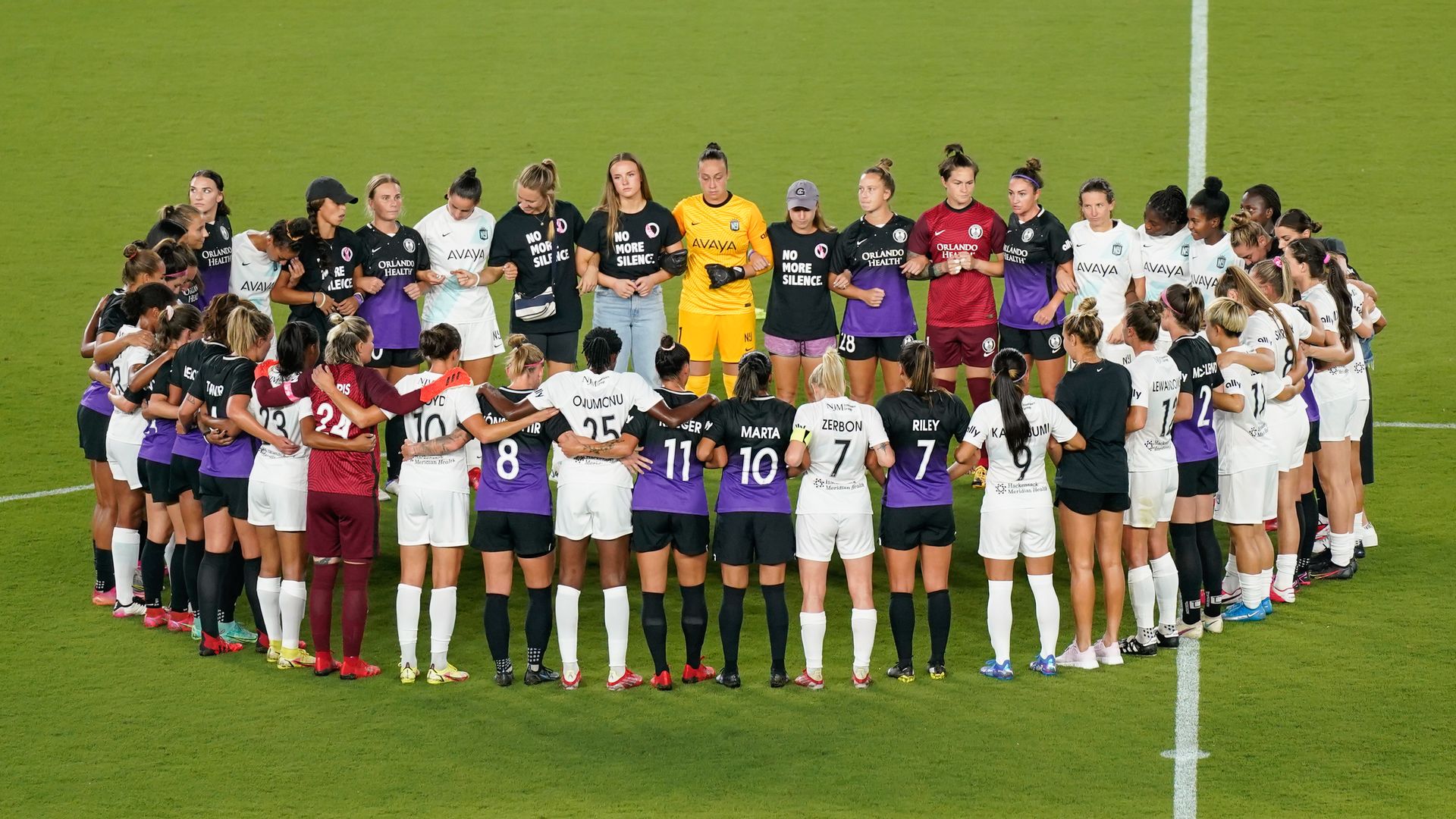
Photo: Roy K. Miller/ISI Photos/Getty Images
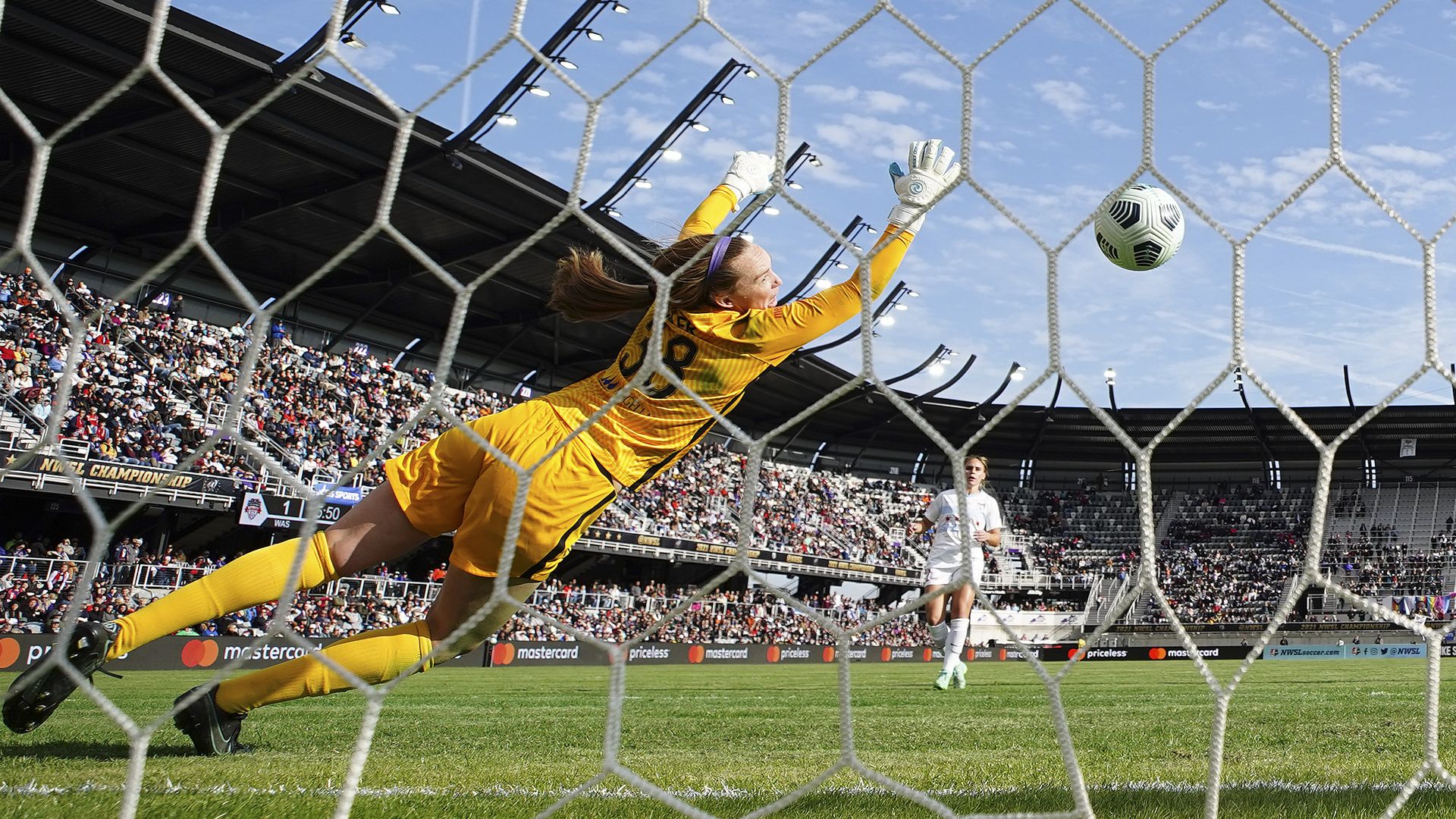
Saturday's NWSL title game featured 138 minutes of brilliant soccer between two teams — the Washington Spirit and Chicago Red Stars — who are now searching for new head coaches, Axios' Jeff Tracy writes.
- Richie Burke (Spirit) was fired in September after an investigation into allegations of harassment and a toxic culture.
- Rory Dames (Red Stars) resigned Monday amid accusations of verbal and emotional abuse by several players.
Why it matters: The championship was a microcosm of the NWSL's ninth season, which combined superlative play on the field with institutional failures off of it.
The backdrop: In April, at the behest of players, the league introduced an anti-harassment policy to help ensure a safe work environment. The move proved to be monumentally impactful and long overdue.
- The situation came to a head in September, when a report detailed now-former North Carolina Courage coach Paul Riley's history of sexual coercion, leading to postponed games and moments of silence.
- Five coaches and a GM either resigned or were fired as a result of the new policy, which gave players a formal avenue to report abuse. Then-commissioner Lisa Baird also resigned in the wake of the scandal.
The big picture: The NWSL entering year 10 is no small feat, given its predecessors, the WUSA and WPS, lasted just three years each. Now, the league and its players hope to lay the foundation for the future.
- The ongoing investigation into the flood of accusations is the first priority, which could bleed into the offseason and perhaps beyond.
- The NWSLPA and NWSL are negotiating their first-ever CBA with things like increased salaries and free agency in mind.
- The league will grow to 12 teams next season with new clubs in San Diego and Los Angeles, the latter of which has a female-led ownership model that could shape the future of women's sports.
- Sponsorship is leveling up, with Nike recently signing the largest commercial agreement in NWSL history. Similar deals could follow as viewership continues to rise.
- The owners of the NWSL's Kansas City team are building a $70 million stadium on the city's waterfront, which will be the world's first top-division soccer stadium constructed for a women's team.
The bottom line: The most tumultuous season in league history has set the stage for a new era.
3. Stat du jour: Perspective
Kelley O'Hara's championship-clinching goal. Photo: Tim Nwachukwu/Getty Images
10,360 fans attended Saturday's NWSL Championship at Lynn Family Stadium in Louisville.
For perspective: In the NBA's ninth season, the decisive game of the 1955 Finals drew 6,697 fans.
- That was a long time ago, sure, and the stadiums were different sizes.
- But it's a friendly reminder of the NWSL's youth. We're still in the early innings.
4. USWNT: A new CBA, and an equal pay fight
Illustration: Aïda Amer/Axios
The USWNT and USMNT are currently negotiating new CBAs as well, with the men's already expired and the women's expiring on Dec. 31.
State of play: The U.S. Soccer Federation announced in September that it had offered both teams the same proposal in an effort to align them under a single CBA. Complicating things is that the men and women have long had different priorities.
- The men earn most of their money from club soccer, so their most recent CBA focused on higher match fees and bonuses (aka "pay-to-play").
- The women — who earn far less as pros — desire more financial security, so their current CBA has higher guaranteed salaries and more benefits.
Between the lines: While U.S. Soccer can decide how money is funneled to its national teams, it has no control over the elephant in the room: FIFA's World Cup prize money, which differs drastically for men and women.
- France's soccer federation was paid $38 million from a $400 million prize pool after its men's team won the 2018 World Cup.
- A year later, U.S. Soccer was paid $4 million from a $30 million pot after the USWNT won the Women's World Cup.
The backdrop: In addition to World Cup prize money, the USWNT's equal pay lawsuit also hangs over negotiations.
- Players sued U.S. Soccer in March 2019, contending they had not been paid equitably compared to the men, and asking for more than $64 million in damages.
- A federal judge threw out the pay claim in May 2020, ruling the women rejected a pay-to-play structure similar to the men's in favor of the one they received (higher base salaries, etc.).
- U.S. Soccer claims the women were actually paid more than the men from 2010-18. Of course, that's because the women won two World Cups, while the men won one game in 2014 and missed 2018 entirely.
What's next: The USWNT players have appealed the decision, and a three-judge panel is likely to hear oral arguments in the coming months.
The bottom line: U.S. Soccer is negotiating its future, while battling in court over its past.
5. Interview: Cindy Parlow Cone
Photo: Meg Oliphant/Getty Images
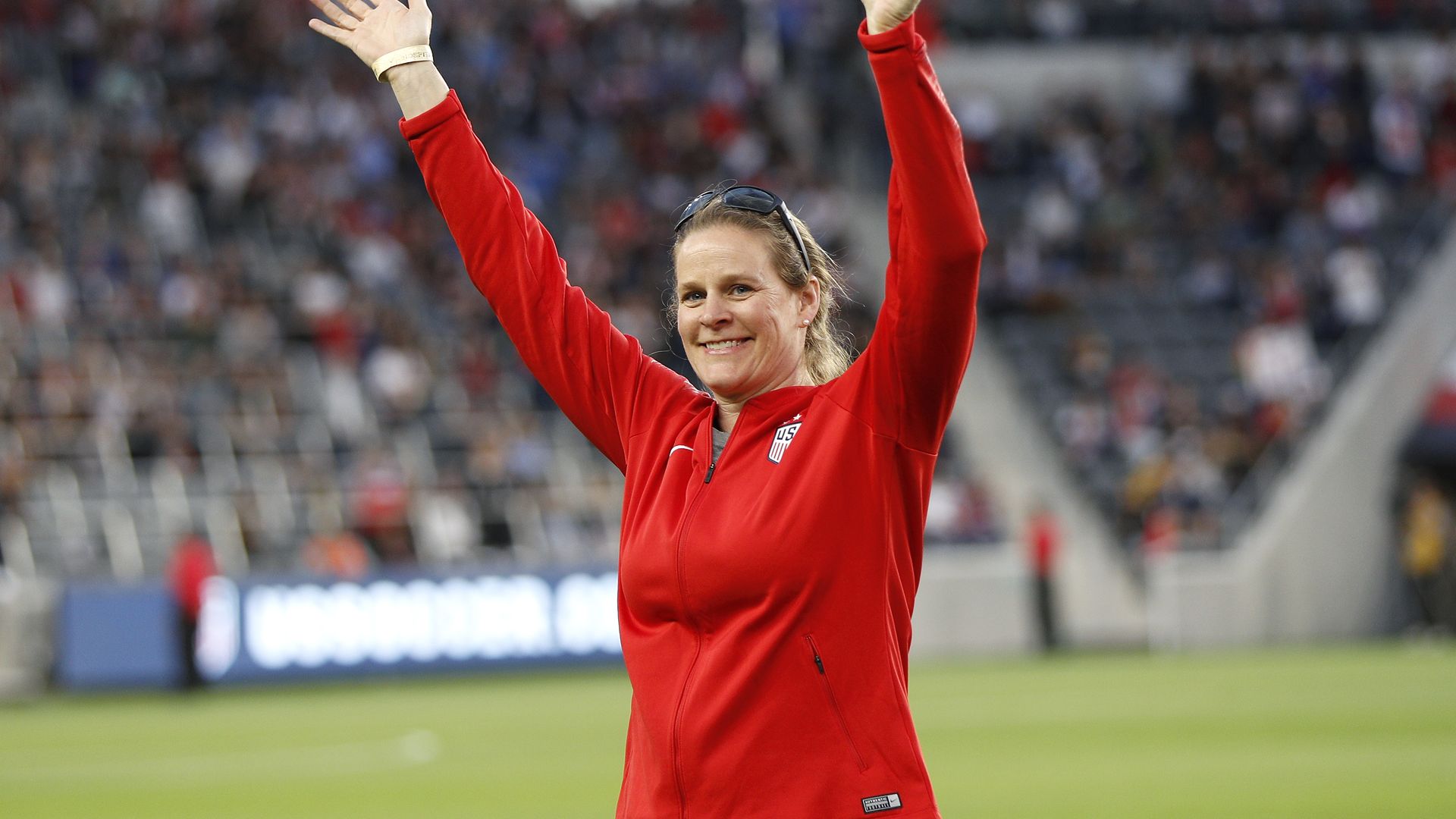
I spoke with Cindy Parlow Cone, the president of U.S. Soccer (and former USWNT star), about the ongoing CBA negotiations and equal pay lawsuit.
There's a lot going on right now. Where do things stand at the U.S. Soccer Federation?
It's an unprecedented time. I don't know of another organization negotiating two CBAs simultaneously, while also trying to resolve litigation. At the same time, we're undergoing changes in our business structure and bringing our media rights back in. So it's certainly an interesting time at U.S. Soccer.
The equal pay debate has largely been framed as USWNT vs. USSF. Is that accurate? Or is U.S. Soccer's stance misunderstood?
This is not the women's team vs. the federation. We're on the same side, and the sooner people realize that, the better off we'll be. We believe in equal pay and would love the opportunity to hook arms with the USWNT and work towards equalizing not only the FIFA World Cup prize money, but overall investment in the women's game.
What's keeping that from happening? What's the biggest challenge in the quest for equal pay?
The FIFA World Cup prize money is the biggest hurdle, because that's where the massive difference in pay is. I think FIFA will get there, but until they do, we've told the men's and women's players' associations that we're not signing a CBA unless we all come to terms on how we're going to equalize the prize money [on our end].
In September, the federation announced that it had offered the men and women identical contracts. Can you speak to that?
We would love to have both teams under the same contract. We know there may be small differences because the women want something the men don't want and vice versa ... But having them in the same room, understanding what each side wants and is being offered will hopefully get us to the point where both players' associations say "this is equal."
Is true "equal" pay even possible given the differences between the men's and women's games?
Yeah, you bring up some of the complexities of getting to an agreement. How do you make pay equal for two teams that compete against different teams, in different countries, on different schedules, in different tournaments, with different pay structures? It's challenging, but we have to find a structure that works for everyone.
One potential solution to the FIFA prize money problem is the men voluntarily taking less money so the women get more. Is that what needs to happen?
I feel like every advancement a woman has made throughout history, they have needed male advocates. You look through our history and the history of other countries, and you see that time and time again. The majority has to look out for the minorities, and this is another case of that.
6. Exclusive poll: America's team

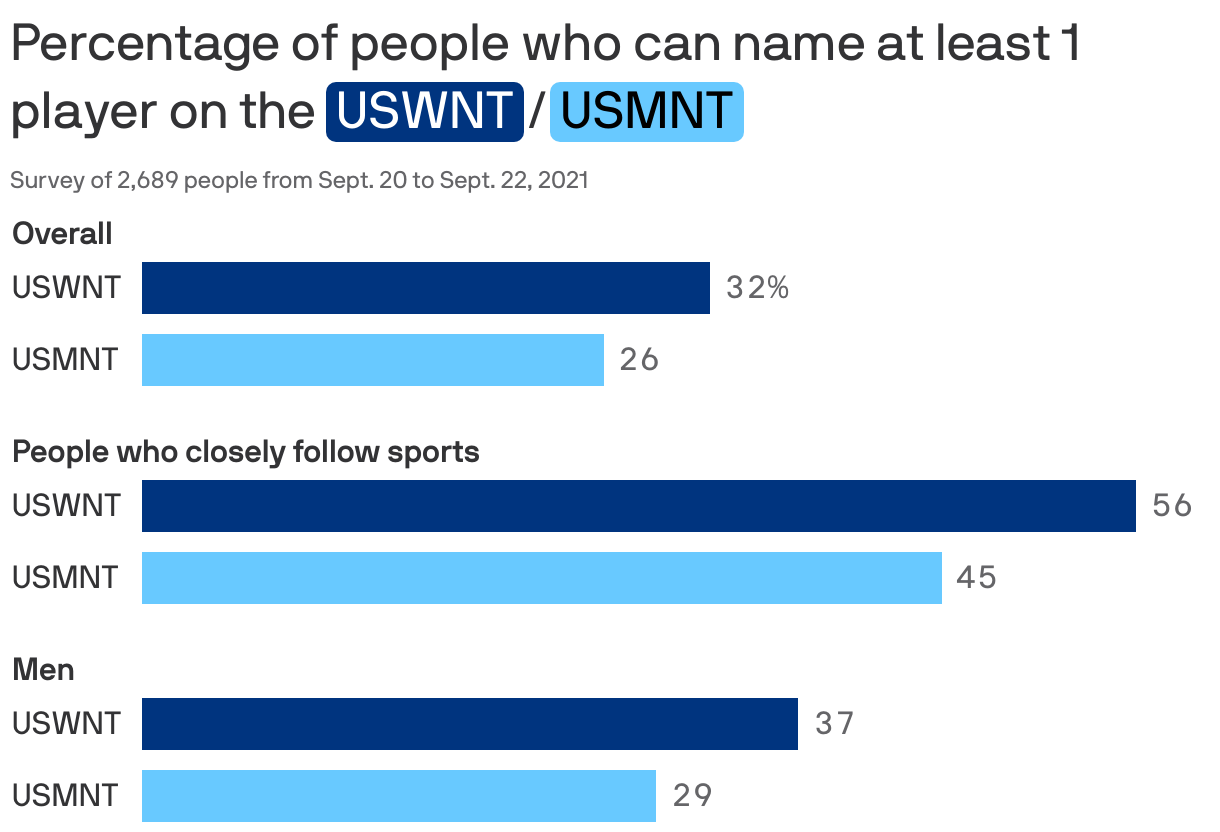
No matter how you slice it, more Americans can name at least one player on the USWNT than on the USMNT, per a recent Axios/Momentive poll, Jeff writes.
By the numbers: Overall, 32% of the 2,689 respondents could name at least one USWNT member, while 26% could name at least one USMNT member.
- Among those who closely follow sports: USWNT (56%) vs. USMNT (45%)
- Among men: USWNT (37%) vs. USMNT (29%)
The big picture: This isn't all that surprising given the women's recent run of success and the men's recent run of failure. The men could close the gap next year, assuming they make the World Cup.
Of note: The difference in recognition and celebrity status extends to Instagram, where the USWNT also takes the cake.
- The top three most-followed women (Alex Morgan, Megan Rapinoe, Julie Ertz) have 12.7 million followers.
- The top three most-followed men (Christian Pulisic, Weston McKennie, Sergiño Dest) have 7.7 million.
7. Looking ahead: The next generation


The USWNT roster for a pair of friendlies against Australia this month offers a glimpse of the future, Jeff writes.
By the numbers: Just 10 of the 22 players headed to Australia were on the Tokyo 2020 team. The other 12 all have 10 or fewer caps.
- The most notable absences are Megan Rapinoe and Alex Morgan, left off to give younger players more experience, plus Carli Lloyd, who retired last month.
- Other big names missing: Alyssa Naeher, Crystal Dunn, Kelley O'Hara, Julie Ertz, Christen Press, Tobin Heath and Sam Mewis, absent for reasons ranging from injuries to opt outs.
The big picture: While plenty of veterans will play in the 2023 World Cup, the young squad headed to Australia is a reminder that the USWNT is nearing a state of transition.
- One generation will soon depart, while another takes its place — a reality for all national teams.
- Yes, but: Few groups accomplished more on the field — or fought for more off of it — than the generation currently leading the USWNT.
The bottom line: As the equal pay saga continues, it's worth remembering that many of the players fighting for a better future may only get to enjoy it from the sidelines.
8. 📆 November 1991: The first Women's World Cup
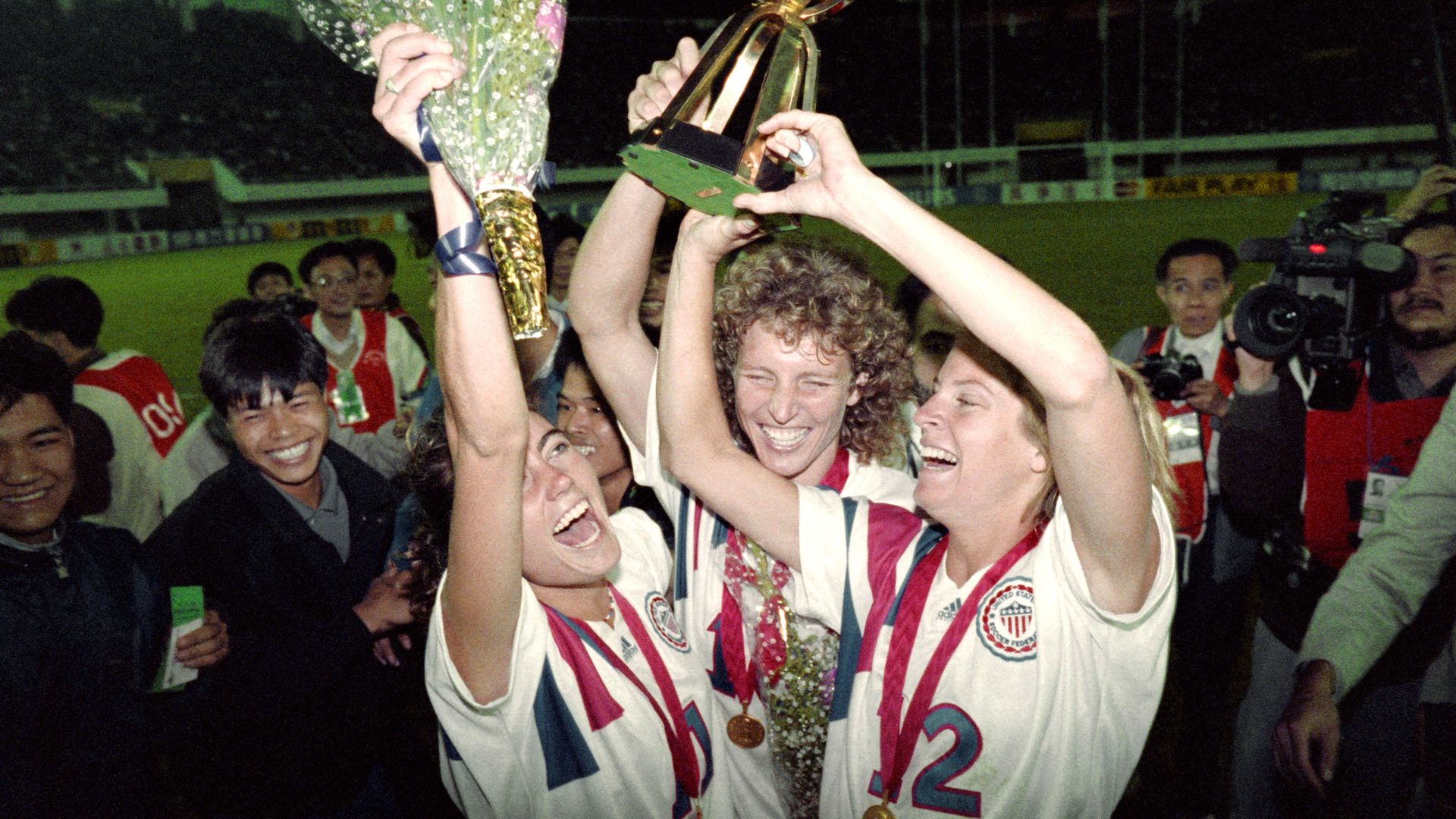
Julie Foudy (L), Michelle Akers-Stahl and Carin Jennings after winning the 1991 Women's World Cup. Photo: Tommy Cheng/AFP via Getty Images
30 years ago this month, the first Women's World Cup was held in China. The USWNT won, defeating Norway 2-1 in the final.
🎥 Watch: Final highlights (YouTube)
9. World Cup trivia

The USWNT has won four of the eight women's World Cups.
- Question: Which three countries won the other four?
- Hint: Two continents.
Answer at the bottom.
10. 1 fun thing: Each presidency's best team


We reviewed the best teams of the past 20 administrations (1901-present), and the USWNT are the reigning champs.
Food for thought: Which team will take the crown during the Biden years? Great question to ask the whole family at the table tomorrow...
Happy Thanksgiving!
Kendall "Gobble gobble" Baker
Trivia answer: Germany (2003, 2007); Norway (1995); Japan (2011)
🙏 Thanks for reading. For more sports coverage, follow us on Twitter: @kendallbaker and @jeffreytracy.
Sign up for Axios Sports

Binge on the stats and stories that drive the sports world