Axios Sneak Peek
July 03, 2023

1 big thing: Patriotism on the run
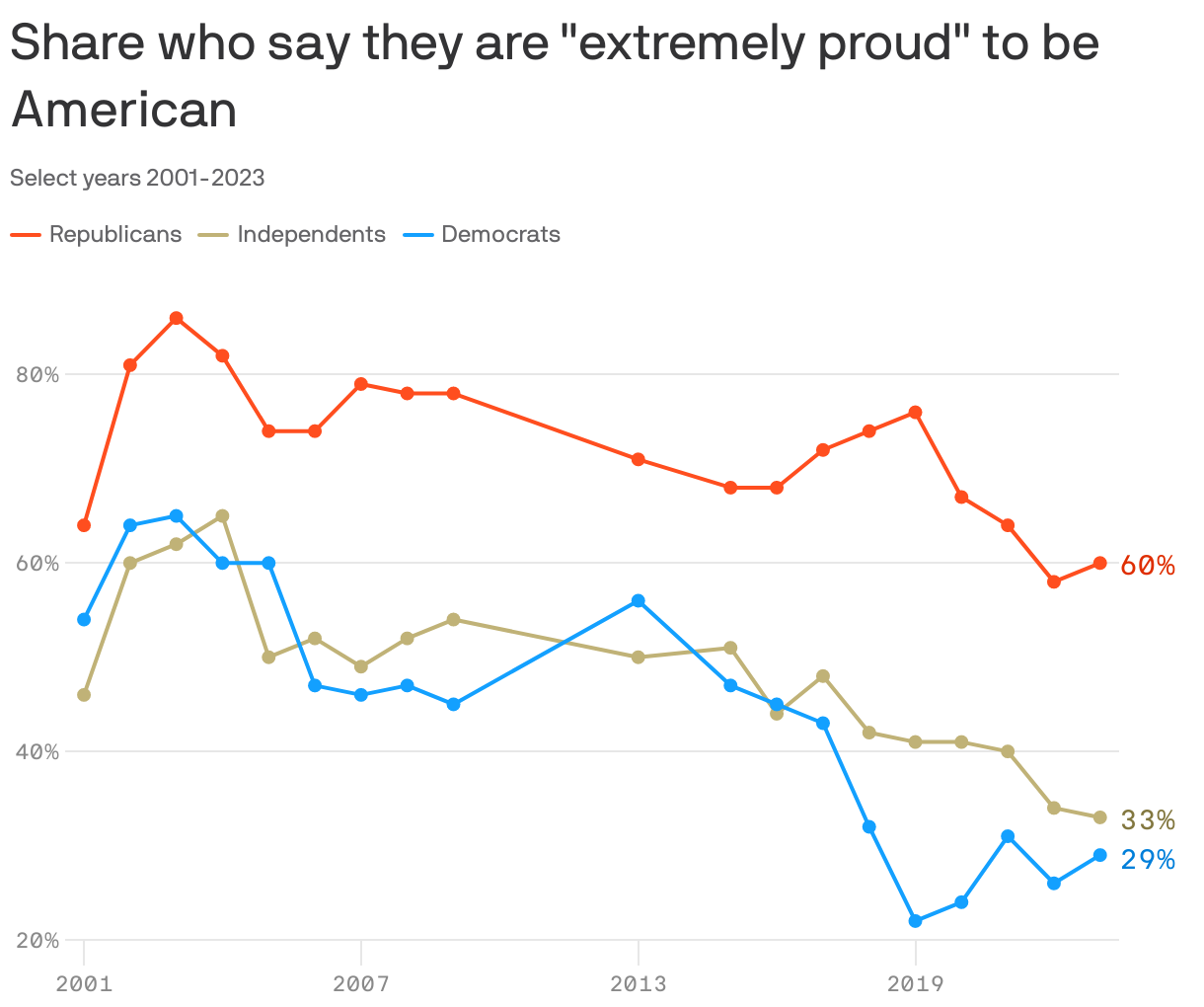
The share of people who say they're "extremely proud" to be an American has been falling for years, according to new Gallup data.
Why it matters: Less than 500 days out from an election likely to feature a 2020 rematch few Americans want, extreme national pride is near a historic low.
Zoom in: The greatest demographic differentiator for expressions of national pride is party identification, according to Gallup.
- A majority (60%) of Republicans still claim extreme national pride, but the share has fallen from a near-universal 86% 20 years ago — when patriotism peaked in the wake of the 9/11 attacks.
- The last time a majority of Democrats said they were extremely proud to be an American was in 2013, months into President Obama's second term.
Between the lines: American iconography has long been a staple of political campaigns on both sides of the aisle. But for many Democrats, former President Trump's "America First" nationalism gave divisive new meaning to the red, white and blue.
Some Democrats are trying to reclaim the flag:
- Pennsylvania Gov. Josh Shapiro and Maryland Gov. Wes Moore, two Democratic rising stars both elected in 2022, campaigned heavily on liberal policy agendas through the lens of freedom and American exceptionalism.
- President Biden's first re-election ad, titled "Flag," opens with star-spangled imagery and portrays Biden as the protector of American democracy against the threat of election deniers and anti-abortion advocates.
2. Crisis of morality


A record high 50% of Americans view the state of morality in the U.S. as "poor" — with the share rising across both major political parties and independents, according to Gallup.
Why it matters: Culture war issues and the debate over abortion rights are at the forefront of everyday American politics and the 2024 presidential campaign.
- New focus on systemic racism after the murder of George Floyd in 2020 — and the subsequent backlash from many Republicans — has helped drive a spike in concerns about racism and discrimination.
- The so-called "war on woke" — led in large part by Florida Gov. Ron DeSantis and aggressively promoted by Republicans at the national, state and local levels — has spurred a record number of bills targeting LGBTQ rights in the last few years, according to the ACLU.
Zoom in: A whopping 74% of Republicans say the state of moral values in the U.S. is "poor," nearly double what it was two decades ago.
- The top moral problem — as identified by 18% of Americans — is a lack of "consideration for others," according to Gallup.
- 11% of Republicans named a lack of faith or religion as the most important moral problem facing the U.S.
3. Changing family values


In 2021, a record-high 25% of 40-year-olds in the U.S. had never been married, according to new findings from the Pew Research Center.
- That figure was 6% in 1980.
Why it matters: Family life is changing across the country. Young people are waiting longer to get married and have kids — and typically having fewer of them.
Between the lines: Republicans who center their campaigns on a return to traditional family views are running into demographic headwinds.
4. ⛽ Stat for the road
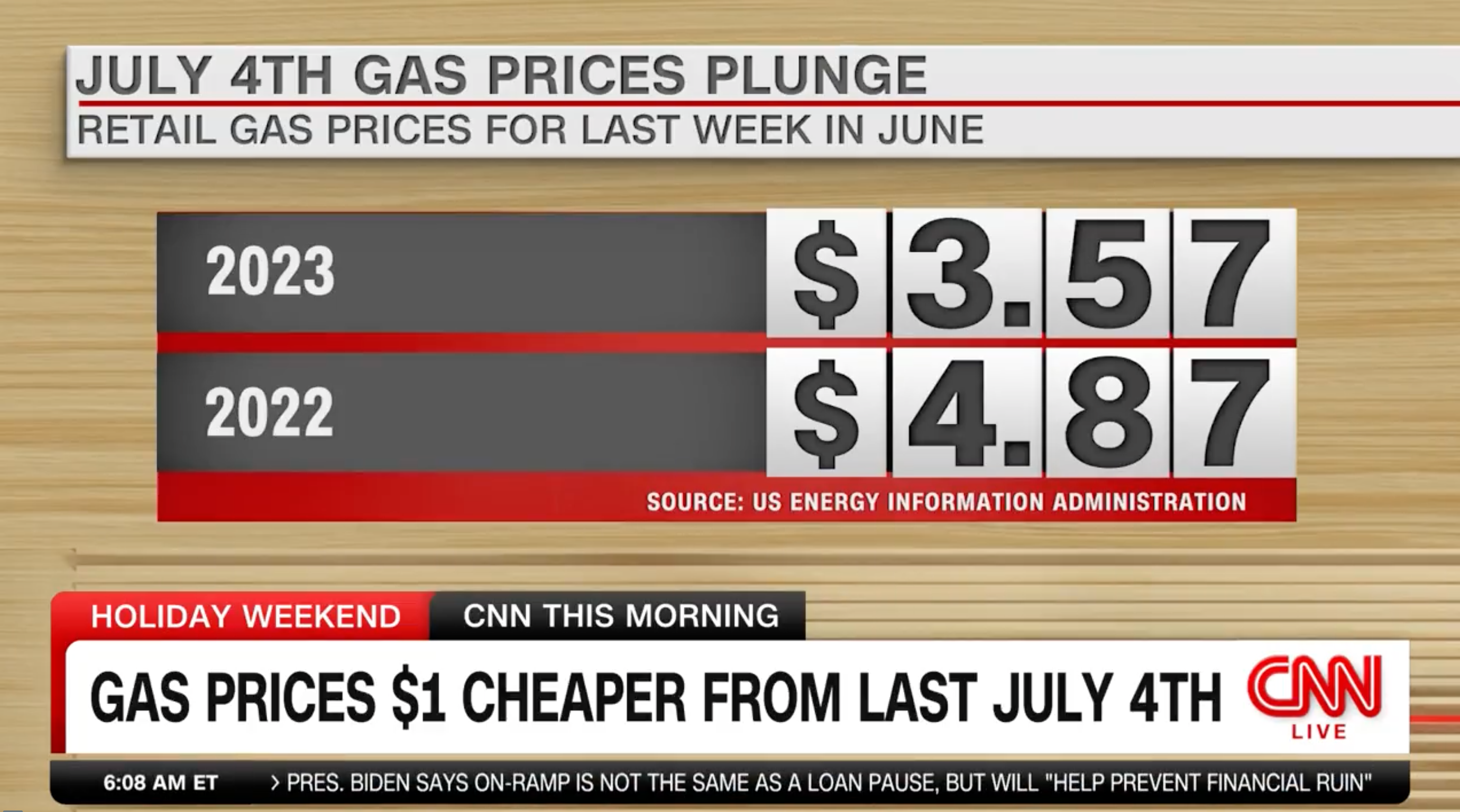
Inflation and high gas prices have dragged down Biden's approval rating through much of his presidency, but this Fourth of July is finally bringing a reprieve.
- Yes, but: Gas prices are still 35% higher than they were at the end of 2019, according to the Wall Street Journal.