Axios Seattle

October 28, 2026


Happy Wednesday!
🌧️ Today's weather: Light rain, with a high of 54.
📱 Your local news, right in your feed. From the latest headlines to things to do around town, stay in the know with us on Instagram.
Today’s newsletter is 903 words — a 3.5-minute read.
1 big thing: 🗳️ Transit tax showdown
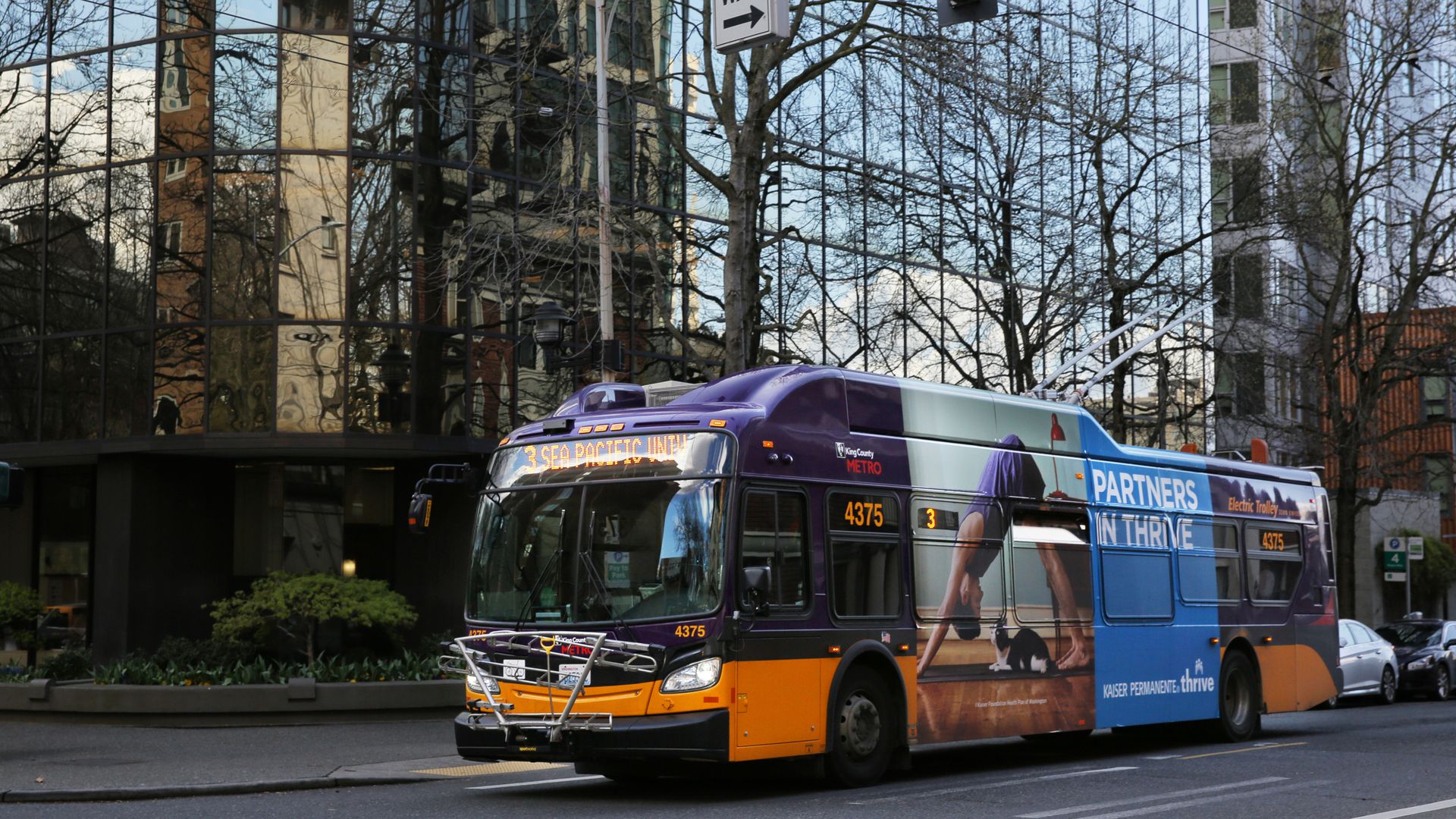
Seattle voters will decide next week whether to double a sales tax to keep buses running and expand transit service.
Why it matters: Proposition 1 would preserve thousands of existing bus trips while adding more frequent service, particularly at night and on weekends.
- If the measure fails, roughly 180,000 annual bus trips could disappear by next fall, according to the city.
Driving the news: The measure would replace a six-year transit tax approved in 2020 but expiring in March.
- The tax would double from 0.15% to 0.3% for up to 10 years, generating an estimated $138 million annually.
- The city estimates the median two-person Seattle household would pay about $58 annually, up from $29 today.
State of play: Most of the money would pay King County Metro to provide roughly 275,000 bus trips annually — or about 95,000 more than the current city-funded program.
- Additional service would focus on transit-dependent neighborhoods, with more frequent night and weekend buses and better east-west connections, per the city.
- The measure would also increase free ORCA passes from 10,000 to 22,000.
The other side: Critics question whether Metro's ridership and operating costs justify additional taxpayer support.
- Charles Prestrud of the conservative Washington Policy Center told KNKX the city should prioritize street improvements instead of sending more money to Metro.
- Opponents also argue that increasing a regressive sales tax would further burden households already struggling with high living costs.
Kirk Hovenkotter, executive director of the Transportation Choices Coalition, which supports Proposition 1, told Axios that state law currently gives cities no other way to raise significant transit funding, but his organization is pushing for more progressive alternatives.
- "What is more regressive than a sales tax is not having bus service at all," he said.
Zoom out: King County officials approved a separate 0.1% sales tax increase in June without putting it to voters.
What's next: If approved, the new tax would take effect April 1, replacing the expiring measure.
2. 🏔️ Mountain snow alert
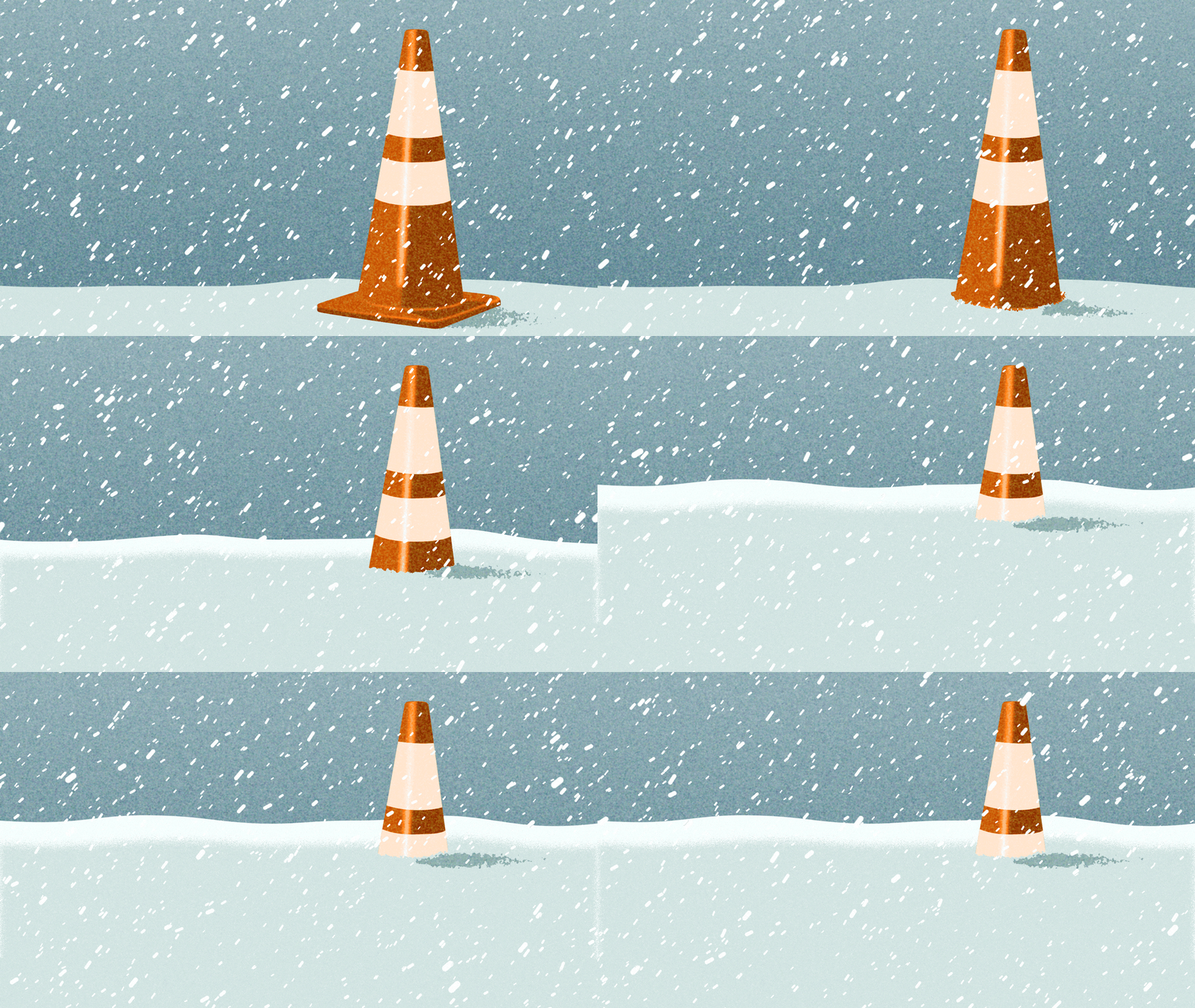
Winter is moving into the mountains, with up to a foot of snow expected in some parts of the Cascades.
Why it matters: The season's first substantial snowfall could make travel tricky through the mountain passes.
Driving the news: The National Weather Service has issued a winter weather advisory through 5 p.m. today.
- Up to 8 inches of snow is possible above 4,000 feet, with as much as 12 inches at Mount Rainier and 4 inches at Snoqualmie Pass, NWS Seattle meteorologist Kayla Mazurkiewicz told Axios.
What's next: After an unusually dry October, the Seattle area could see scattered showers through Friday, but Halloween is expected to be mostly dry.
3. Morning Buzz: 📼 Caught on voicemail
🚨 A newly obtained voicemail confirms that an aide to Mayor Wilson asked police to delay a news briefing until the mayor arrived after the deadly Bite of Seattle shooting this summer. (KIRO 7)
🪧 Climate activists repeatedly disrupted events during Seattle AI Week, protesting AI-related job losses and the environmental impact of data centers. (GeekWire)
💎 A planned 22-story luxury condo tower in downtown Bellevue has racked up $150 million in presales in just three months, despite a broader slowdown in King County's condo market. (Puget Sound Business Journal)
4. 🤨 Ballot brain busters


If reading Washington's ballot measures makes you feel like you need to go back to school, join the club.
Why it matters: Ballot measures are supposed to help voters make informed decisions, but the language can be a test of reading comprehension.
By the numbers: The titles of Washington's three statewide ballot measures average an 11.7th-grade reading level, according to a new Ballotpedia analysis.
- The titles average nearly 50 words apiece.
- The summaries are even tougher, averaging a 14th-grade reading level and 73 words.
The big picture: Washington voters have it relatively easy compared with those in Colorado, where ballot titles average a staggering 33rd-grade reading level.
- That's theoretically 17 years of schooling beyond a bachelor's degree.
- Colorado voters will decide this November whether future ballot questions should be written at an eighth-grade reading level or lower.
The bottom line: Washington's ballot language may not require a graduate degree, but a little homework couldn't hurt.
Here are our guides to each statewide initiative on this year's ballot, to help get you up to speed.
- Initiative 001: Parental rights
- Initiative 638: Banning trans girls from girls' sports
- Initiative 645: Repealing income tax on annual incomes over $1 million
5. Pic to go: ✈️ Flying in style

In the interest of science — and keeping my lunch down — I recently boarded a plane wearing what may be the world's least flattering eyewear.
These goofy-looking glasses are designed to prevent motion sickness using blue liquid that creates an artificial horizon as you move.
- The idea is to help your eyes and inner ears agree on what's happening.
Does it work? A small study found the glasses worked no better than a placebo, but after my test flight, I'm cautiously optimistic.
The bottom line: My stomach stayed put. My dignity, not so much.
🗳️ Melissa is getting ready for election night.
⛄️ Clarridge is excited about snow on the peaks.
This newsletter was edited by Geoff Ziezulewicz.
Sign up for Axios Seattle
