Axios San Francisco

February 03, 2026


🏎️ Tuesday — powered by coffee and denial. We're ready.
☀️ Today's weather: Sunny, with highs in the mid 60s, low near 50.
📬 Enjoying the Axios San Francisco newsletter? Consider becoming a member today.
🎧 Sounds like: "Danger! High Voltage" by Electric Six.
Today's newsletter is 1,085 words — a 4-minute read.
1 big thing: 📚Historic teacher strike looms
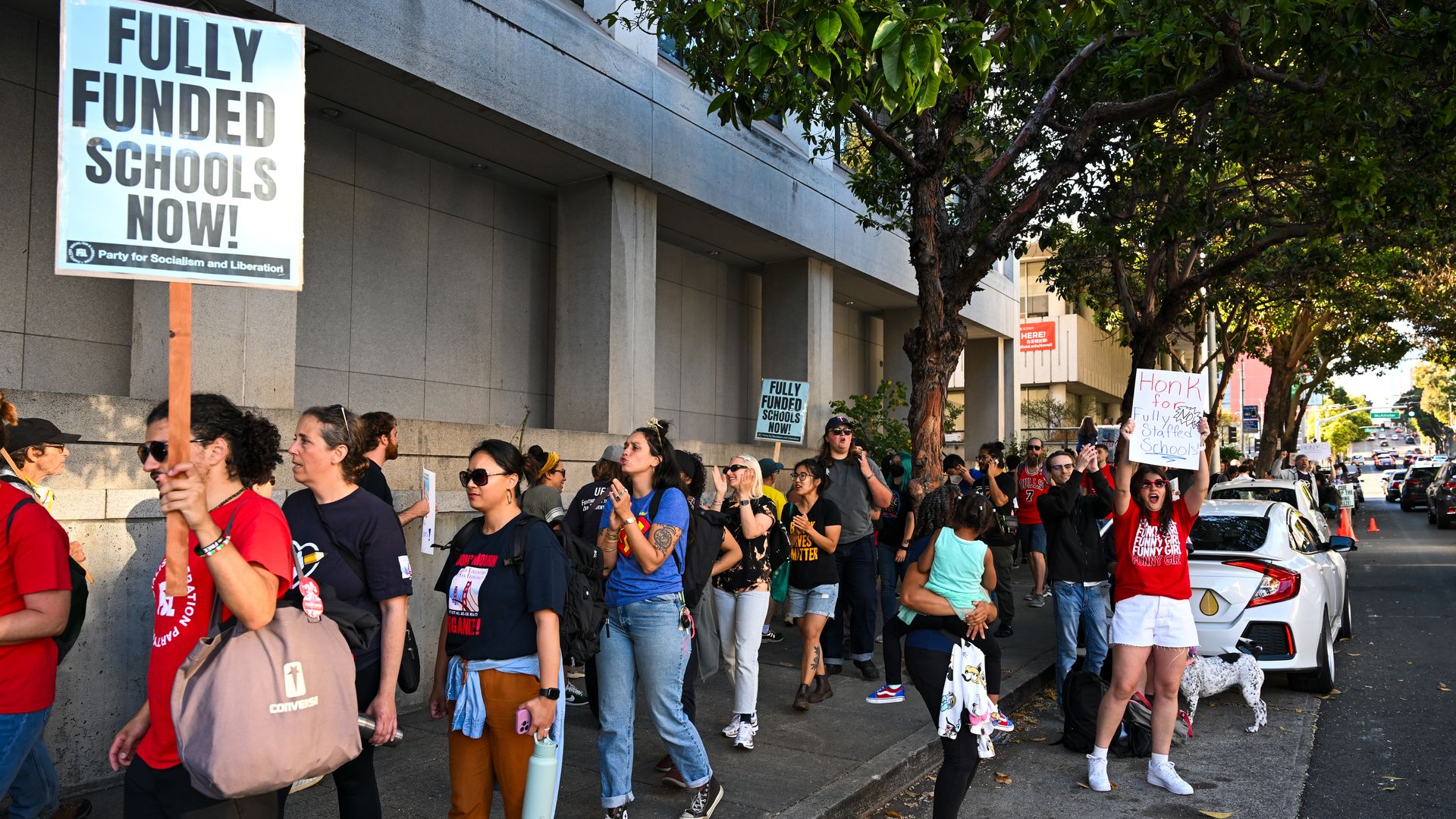
San Francisco public school teachers have overwhelmingly authorized a strike that could begin as soon as tomorrow — the first teachers strike since 1979.
Why it matters: A strike could shut down classrooms and disrupt families citywide.
Driving the news: Nearly 98% of the roughly 5,200 members of the United Educators of San Francisco (UESF) who voted approved a strike over the weekend. The move comes after months of stalled contract talks with the San Francisco Unified School District.
- Negotiations have broken down over disagreements on wages, health care benefits, staffing levels and protections for immigrant students, UESF president Cassondra Curiel told Axios.
- "Educators are frustrated," she said. "Living and working in San Francisco is very demanding in our jobs and also requires a lot of resources."
Yes, but: A strike cannot legally begin until an independent fact-finding report is released — expected Wednesday.
State of play: The union contends the school district has failed to offer raises that keep pace with the city's high cost of living and has not fully covered family health care costs. Educators have been bargaining over a two-year contract for nearly a year and operating under an expired deal from the summer, Curiel said.
- District officials counter that declining enrollment and budget constraints limit how much they can provide.
- Superintendent Maria Su has said the district hopes to avoid a strike, but warned that schools would not be able to operate normally if one occurs.
Between the lines: Families are bracing for closure-related disruptions, with parents who have fixed work schedules, limited access to childcare and children with special education needs facing the greatest hardship, Steven Ngo, a board member of the parent-led advocacy group San Francisco Parent Coalition, told Axios.
- "We want our teachers to be paid more," he said. "We just hope that the union leadership and district can get this problem solved together."
What's next: The Board of Education will hold a special meeting today on labor negotiations.
2. 🏠 Tips for first-time Airbnb hosts
The Airbnb market is popping off this week as fans arrive in town to take advantage of the festivities.
Why it matters: Airbnb prohibits open-invite parties in rentals and San Francisco itself has stringent rules for short-term rentals, so here are some tips if it's your first time renting out your home.
The big picture: Searches for stays in Santa Clara during the Super Bowl have increased 150 times compared with the same period last year, according to Airbnb data provided to Axios.
- They've also increased by over 400% in Oakland and 150% in San Francisco.
What they're saying: "It's very important to set the guest expectation early on," Peter Kwan, a 14-year Airbnb host who rents out a room in his North Beach home, told Axios.
- "Everybody's home is different, so it's not like going into a chain hotel where you can expect a consistent standard."
State of play: Alert your guests to rules regarding noise, gatherings and parking before and when they check in.
- Prepare for potential messes by using stain-resistant fabrics, Scotchguard, disposable covers or extra trash bins.
- Recommend local sports bars or other public spaces for watching the game, Kwan suggests.
3. The Wiggle: 🛒 New Japanese grocery store
🇯🇵 Hundreds of people attended the grand opening of Tokyo Central, the Bay Area's newest Japanese supermarket, at the Emeryville Bay Street mall over the weekend. (SF Chronicle)
👮♂️ SFPD will expand nighttime policing in the Tenderloin to combat drug markets and are considering creating kid zones to discourage drug use around children. (SF Chronicle)
💊 California is launching a statewide crackdown to remove kratom and its potent derivative 7-OH from store shelves following a spike in drug-related deaths. (SFGATE)
4. 💬 Talking to your kids about ICE


As the Trump administration ramps up federal immigration enforcement, experts say children across the country may be absorbing the fear and uncertainty of ICE operations — even when they don't understand all the details.
Why it matters: Experiencing traumatic events in childhood can create lasting physical and mental health challenges that extend into adulthood, Sita Patel, a clinical psychology professor at Palo Alto University tells Axios.
- Exposure to constant media coverage, unpredictability and violence creates stress and trauma that Patel says "will absolutely have an impact on many people's life course in terms of health and capacity to contribute and thrive."
Zoom out: For parents who want to initiate conversations, Omar Gudiño, interim clinical director of the Child Mind Institute, tells Axios to approach conversations gently and broadly — starting by asking kids what they've heard and what they're thinking, which often leads to a more organic discussion.
- Those moments can open the door to discussions about "general values and general themes" about how we want kids to see the world or handle the challenges of day-to-day life, Gudiño says.
- Asking kids about their specific fears can help parents find the root cause of excessive worry, and decide whether reassurance, context or distance from the news is most useful, he says.
5. 1 stat to go: 💲 Ranking robotaxi costs

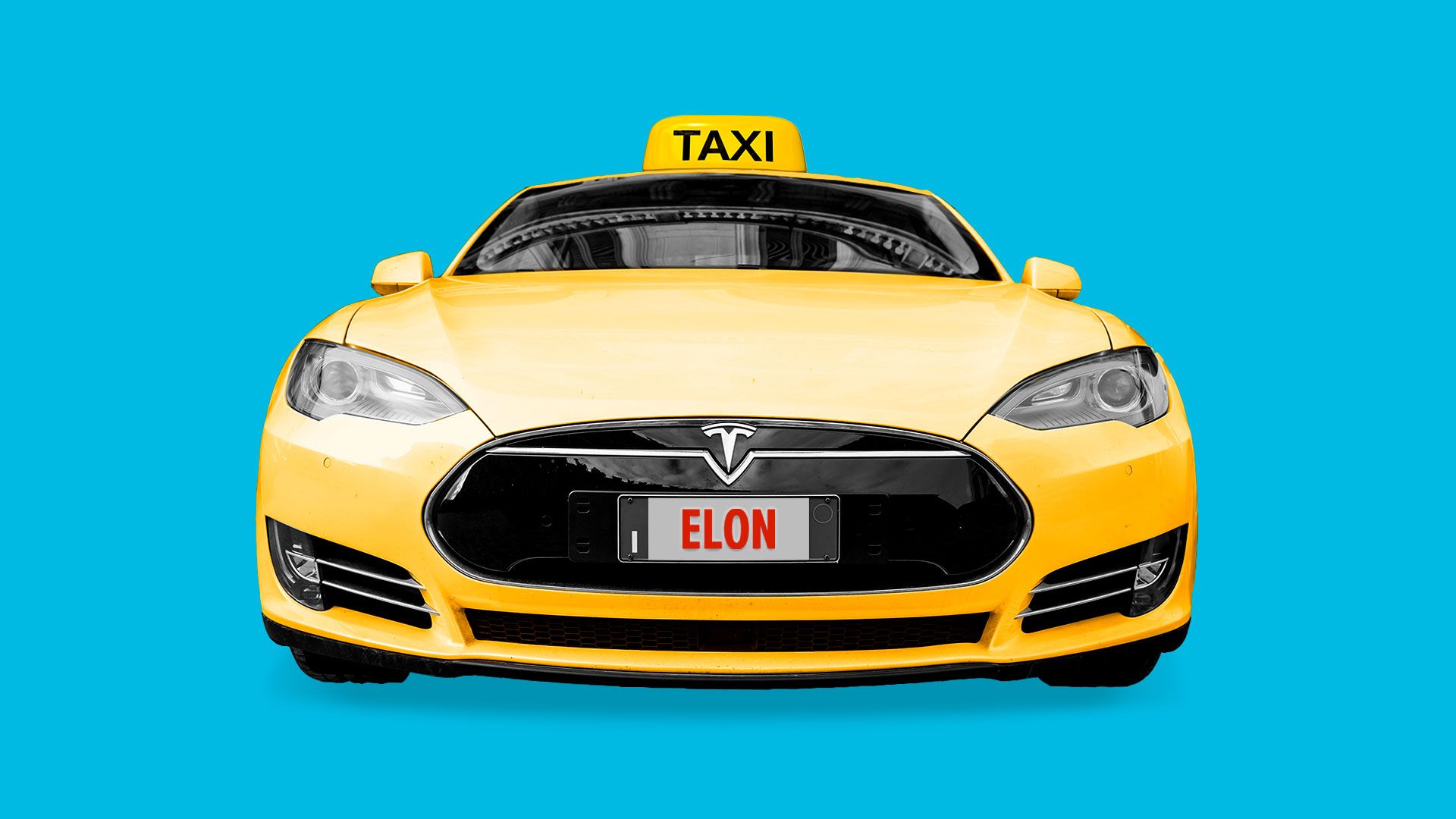
Tesla robotaxis are consistently cheaper than Uber, Lyft or Waymo in San Francisco, according to a new study of the evolving market.
Why it matters: The economics of ride-hailing are changing quickly as robotaxis hit the road. Over time, their high use and lower labor costs could make them the cheapest option.
Driving the news: Tesla, which began deploying robotaxis (with a safety monitor) last summer, consistently undercuts competitors' prices, per Obi, an app that compares real-time pricing and pick-up times across multiple ride-hailing services.
- Yes, but: The tradeoff is that Tesla customers have a longer wait time, likely due to its much smaller fleet than Waymo, Uber or Lyft.
By the numbers: A Tesla robotaxi ride in San Francisco averages $8.17.
- The next cheapest is Lyft at $15.47, followed by Uber's average of $17.47, while Waymo is the highest at $19.69.
Reality check: Tesla can't operate a fully driverless robotaxi service in California until it clears key regulatory hurdles.
🏈 Shawna had a blast scoping out the Pats and Seahawks at the NFL's opening event last night. (Sadly, she wasn't brave enough to enter enemy territory in 49ers merch.)
🥣 Nadia is making Chinese chicken herbal soup.
🇵🇷 Claire is welcoming the arrival of Bad Bunny week in SF! (Oh and there's a football game on at some point, too?)
This newsletter was edited by Geoff Ziezulewicz.
Sign up for Axios San Francisco
