Axios Portland

March 23, 2026

π Beep beep! It's Monday! Today we bring you a special newsletter from Axios transportation correspondent Joann Muller, who breaks down Waymo's rapid expansion and whether you could find yourself in a robotaxi sometime soon.
β Today's weather: Partly sunny, with a high of 58 and a low of 47.
π Happy belated birthday to our member Cynthia Lozeau!
Today's newsletter is 996 words β a 4-minute read.
1 big thing: β Potential roadblocks in Portland
Portland is grappling with whether to welcome robotaxis to the city.
State of play: While self-driving cars are permitted in about half the country, the laws would have to be changed in Oregon, where a human operator is still required behind the wheel in most cases.
- A bill that would have allowed Waymo to deploy its vehicles in the state died in committee during the recent legislative session, and several Portland city councilors testified in opposition.
- But the Portland Bureau of Transportation is weighing rule changes that would permit for-hire automated vehicles on city streets, albeit with a number of restrictions, requirements and conditions.
The latest: On Friday, the city announced it was extending the comment period for the rule changes, giving the public until April 10 to weigh in. Click here to share your opinion.
The intrigue: Waymo replaced its global head of public policy last year to deal with mounting headwinds.
- Justin Kintz previously led the policy team at Uber during its early growth period, when the ride-hailing network was unwelcome just about everywhere, and he'll likely draw on that experience to try to push local legislation that is more favorable toward robotaxis.
What they're saying: "The biggest hurdle Waymo faces is not understanding local politics," says AV policy expert Grayson Brulte, founder and CEO of The Road to Autonomy, a strategic advisory firm.
- "They're going into markets where the policy is not ready yet," he said.
2. π€ Robot vs. human
A Waymo robotaxi incident outside a California elementary school in January suggests an AI brain would react faster than a human, but it's not that simple.
The big picture: This incident fits into a much larger debate about whether autonomous vehicles can match β or exceed β the safety of human drivers.
- The answer to that question is crucial to winning the public's trust as robotaxis spread quickly across America.
Catch up quick: The National Highway Traffic Safety Administration is investigating after a Waymo robotaxi struck a child who ran across the street from behind a double-parked SUV.
- The child was uninjured, according to police.
The intrigue: Waymo claims its driverless vehicle behaved as expected, braking as soon as it detected the child from 17 mph to under 6 mph before making contact.
- A human in the same situation would have likely hit the child at approximately 14 mph, according to Waymo's computer modeling.
- "This significant reduction in impact speed and severity is a demonstration of the material safety benefit of the Waymo Driver, " the company wrote in a Jan. 28 blog post.
Reality check: Reacting quickly isn't the only way to avoid crashes, safety experts tell Axios. Context and judgment matter, too.
- A careful, competent human driver would have avoided a panic stop by adjusting their driving behavior amid the chaos of school drop-off β or taking a different route altogether, argued AV safety expert Philip Koopman, emeritus professor at Carnegie Mellon University.
3. π Waymo speeds across America

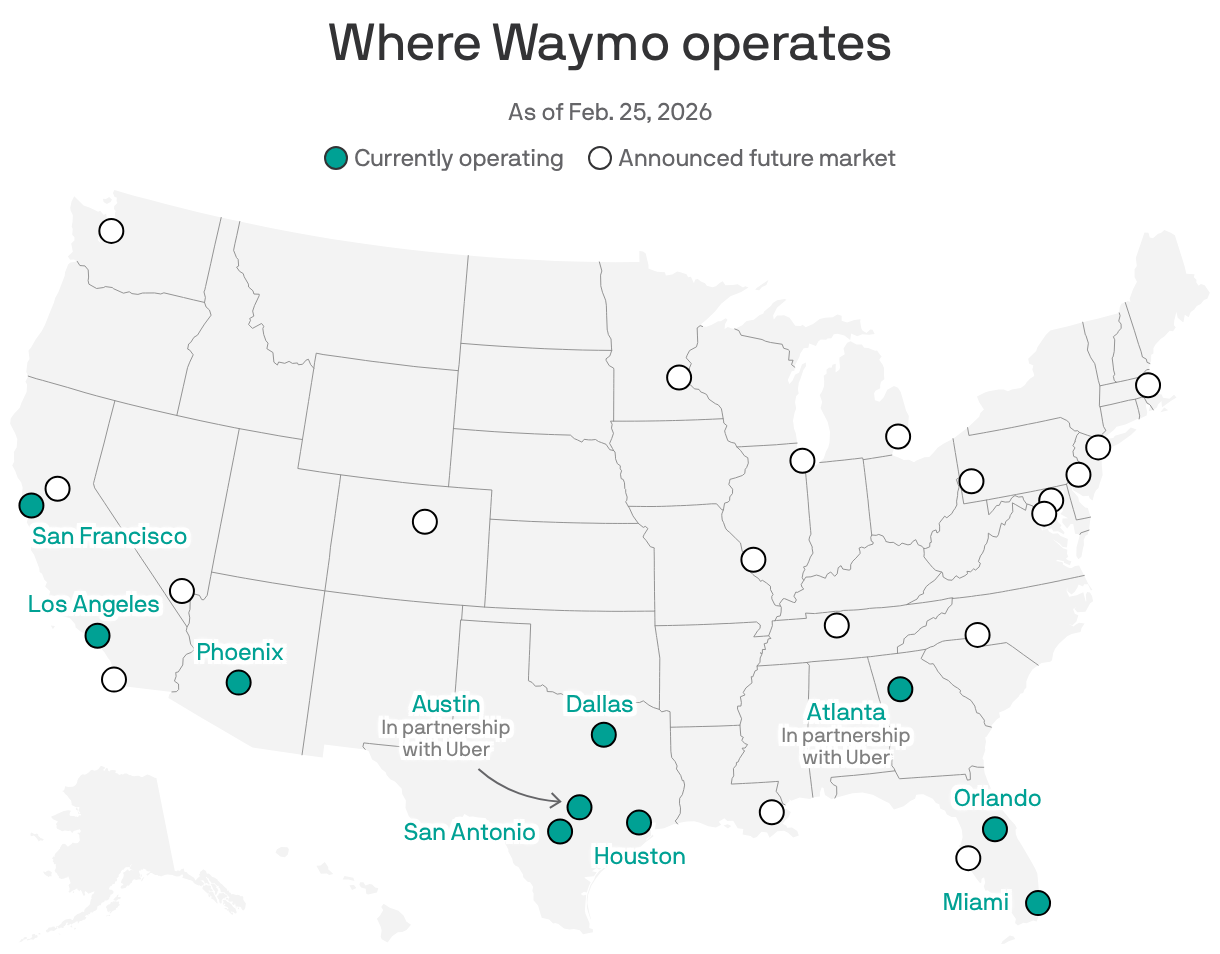
Waymo is accelerating its rollout of robotaxis in the U.S., adding four new cities in Texas and Florida as self-driving technology begins to penetrate mainstream America.
Why it matters: Armed with $16 billion in fresh capital from parent Alphabet and others, Waymo is quickly extending its lead over its competitors, which are still mostly in testing mode.
By the numbers: Now in 10 cities, Waymo has doubled the number of markets it serves in a matter of months.
- It's laying the groundwork for service in at least 20 cities.
Celebrating 5 years of Axios Local

π1 big thing: For five years, Axios has delivered smart, trustworthy local news to communities like yours β and we're just getting started.
Why it matters: Memberships sustain the journalism you rely on and help us keep delivering strong, independent reporting focused on what matters most.
- Your newsletter helps you stay informed and connected. Help us power the next five years of Axios Portland by becoming a member today.
4. π What it's like to ride
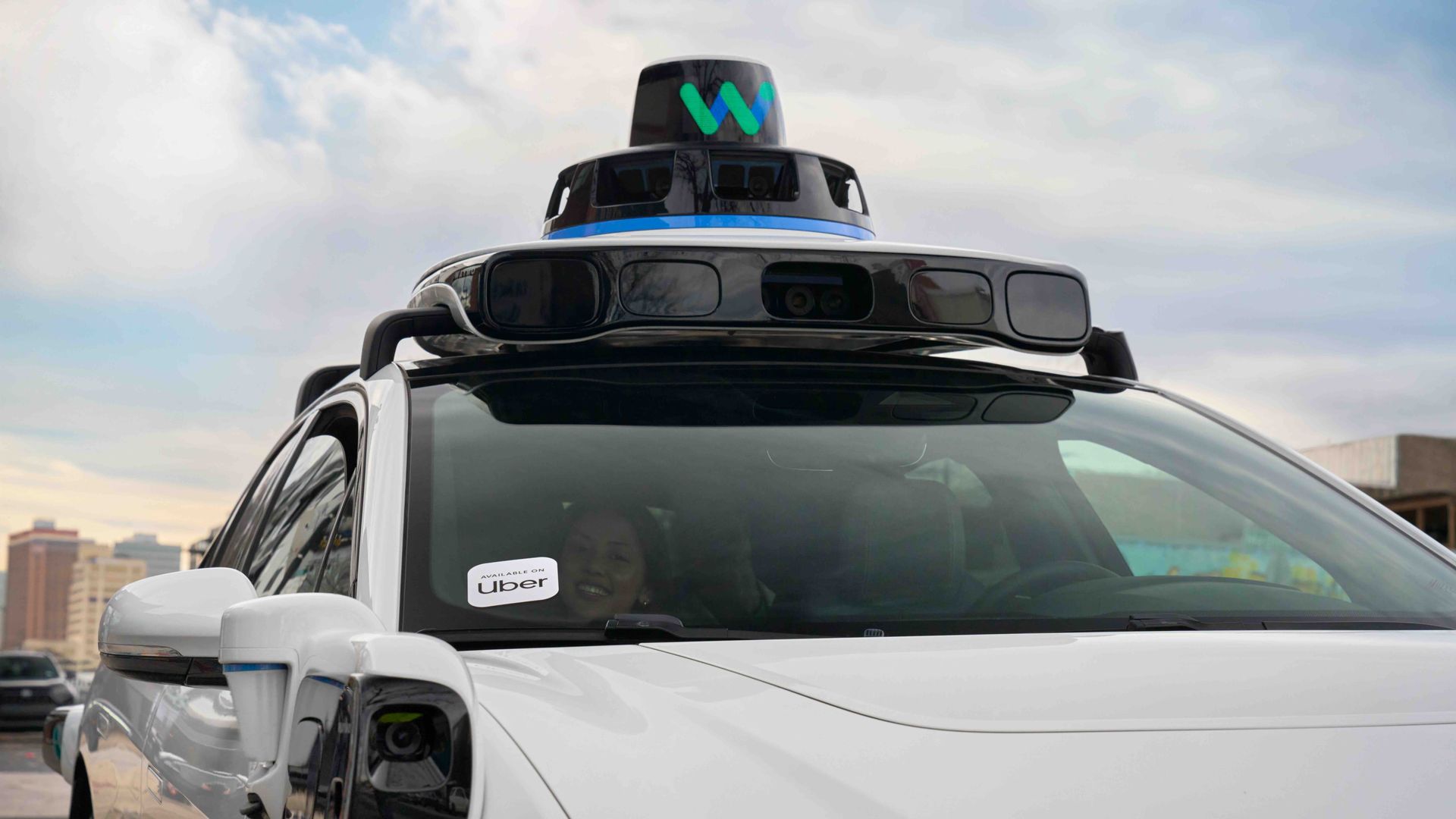
Axios Miami's Martin Vassolo tested one of the company's self-driving cars earlier this year in Little Havana.
His review: It was a smooth and surprisingly human-like ride.
- He sat in the back seat as the electric Jaguar SUV navigated around intersections, pedestrians and stopped vehicles.
- What most surprised him β other than the sight of a steering wheel moving on its own β was how the car reacted to obstacles in the road with assertive fluidity.
π At one intersection with no traffic light, the Waymo slowly moved forward to check for cars before taking a left turn across four lanes of traffic.
β Do's:
- Wear your seatbelt. It's the right call in every ride ... but the Waymo won't start moving until you do buckle up.
- Try out the back right seat. You get a good view of the steering wheel spinning to make turns (if that sight doesn't freak you out).
β Don'ts
- Sit in the driver's seat. Feel free to sit shotgun, however.
- Touch the steering wheel or other driving controls. "Somebody from rider support will get on and say, 'Please don't do that,'" Waymo's Ethan Teicher told Axios.
5. Rose City Rundown
βοΈ A federal judge in Oregon ruled the Trump administration exceeded its authority when it declared many types of gender-affirming care for young people experiencing gender dysphoria were unsafe and ineffective. (OPB)
π’ The owners of an apartment building in the Pearl are suing the city and The Salvation Army after they said the opening of a nearby overnight shelter led to livability issues that decreased their property values. (The Oregonian)
π« It's unclear if ICE officers will be deployed to PDX after President Trump said he'd send immigration agents to work at airports to relieve long wait times at security checkpoints. TSA agents are working without pay due to a lapse in funding. (OPB)
πΈ Portland's famous cherry blossoms, an unofficial symbol of spring's arrival, are at or near peak bloom on the waterfront. (KGW)
- Did you head downtown to see 'em? Send us your pics by clicking here or replying to this email.
Thanks for reading! If you enjoyed this dispatch, sign up for Joann's weekly Future of Mobility newsletter.
Sign up for Axios Portland