I tested Waymo's self-driving car ahead of Miami rideshare launch

Add Axios as your preferred source to
see more of our stories on Google.
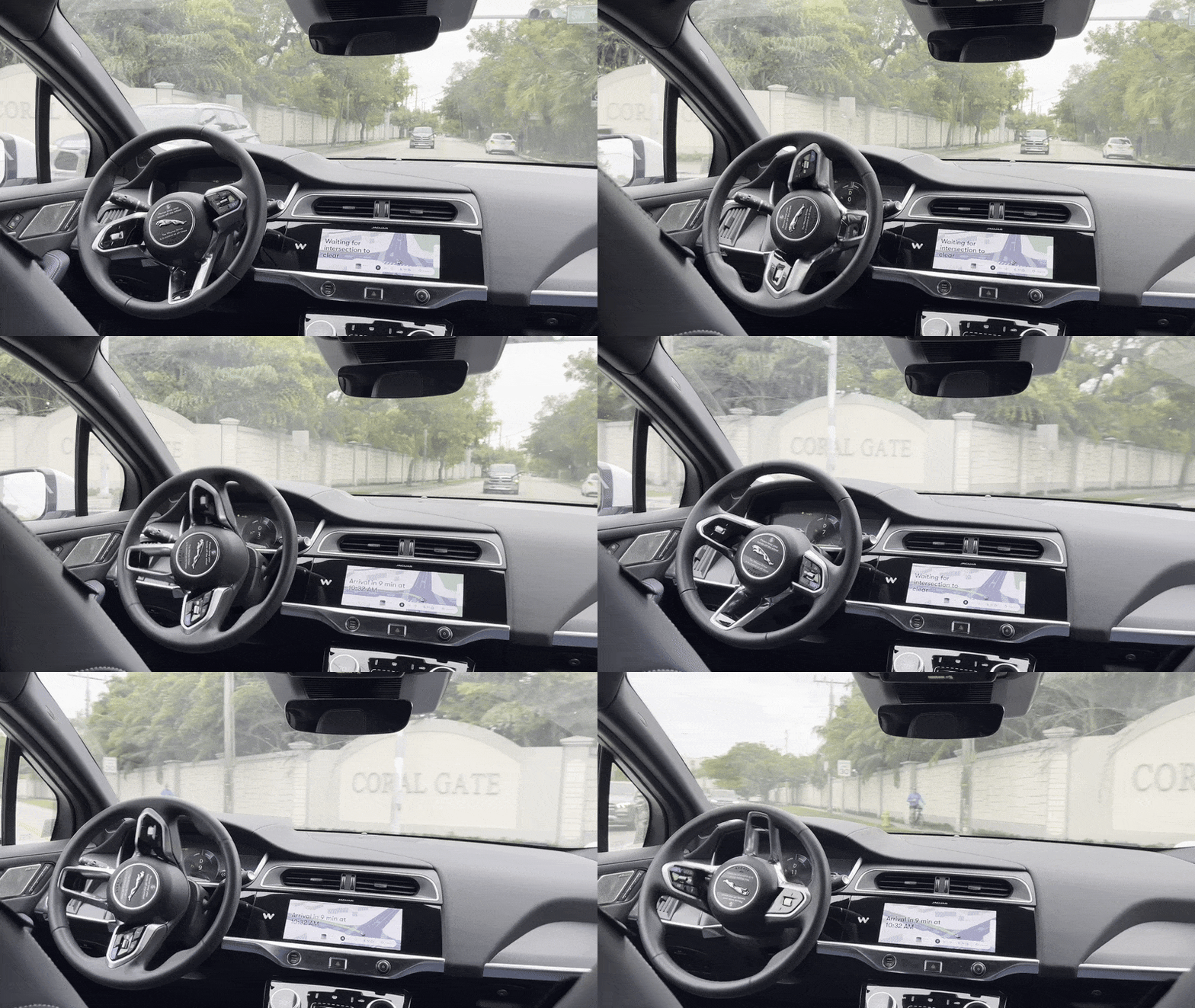
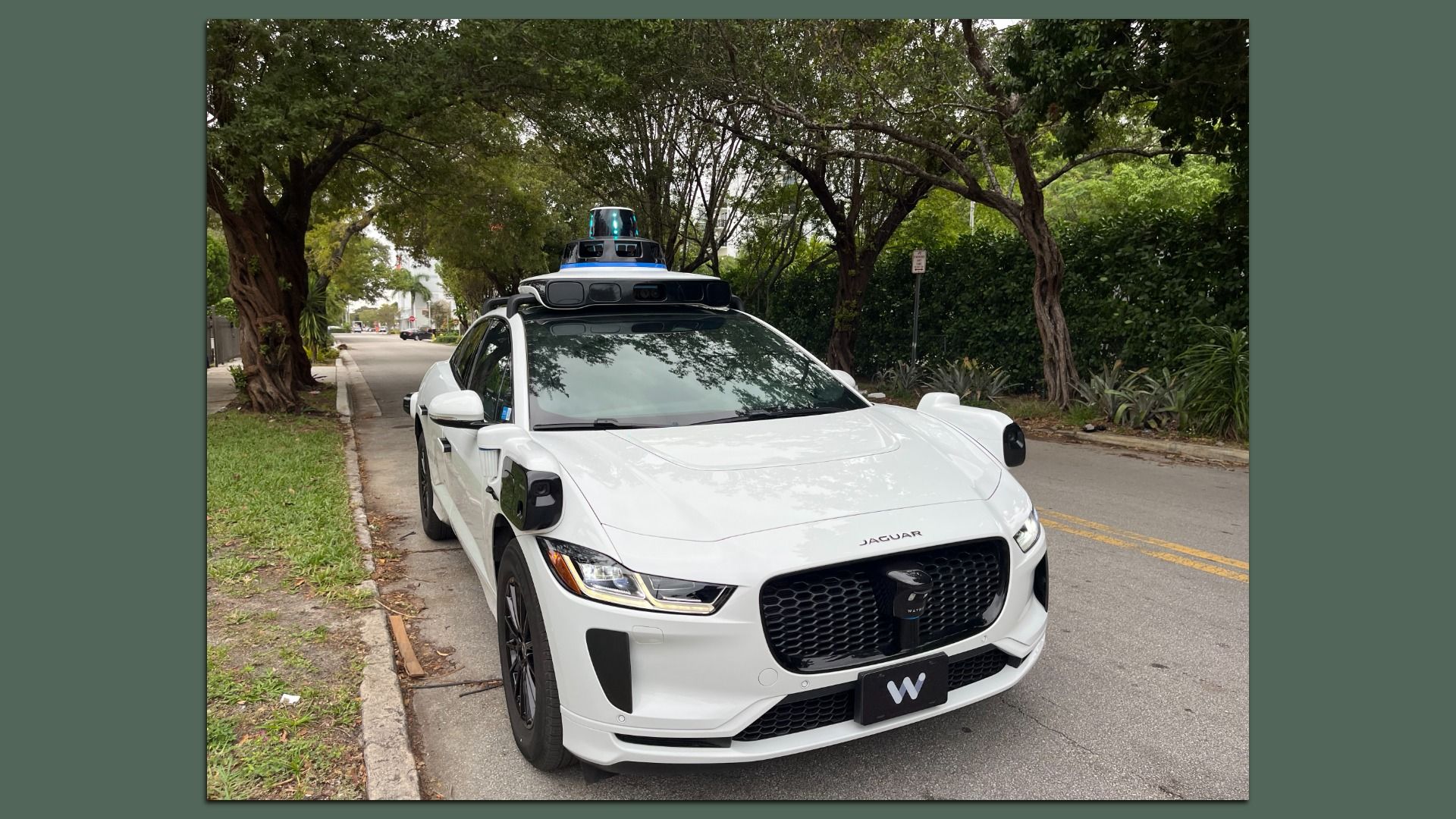
As Miami awaits the launch of Waymo's autonomous rideshare service, I tested one of the company's self-driving cars Wednesday in Little Havana.
Why it matters: Waymo, which currently operates in five U.S. cities, is expanding into five more cities in 2026, including Miami and Orlando.
My experience: The Waymo team set me up on a preplanned ride starting near Macondo Coffee Roasters on Calle Ocho and ending up at Coral Gate Park, taking about 30 minutes round-trip.
My review: It was a smooth and surprisingly human-like ride.
- I sat in the back seat as the electric Jaguar SUV (Waymo's standard car for Miami) navigated around intersections, pedestrians and stopped vehicles.
- What most surprised me — other than the sight of a steering wheel moving on its own — was how the car's AI brain reacted to obstacles in the road with assertive fluidity.
Case in point: When a delivery truck was blocking the only lane of traffic, Waymo veered into the opposite travel lane, crossing double yellow lines before passing the truck and returning to its lane.
- The car is equipped with 29 cameras and several sensors, including radar and LIDAR technology, so I assume it detected there were no oncoming cars in the way before maneuvering around the truck.
At another tricky intersection — one without a traffic light — the Waymo slowly eased forward to check for cars before taking a left turn across four lanes of traffic.
How it works: After you book a ride, the car remains locked until you unlock it through the Waymo app.
- There's also an optional setting you can enable to unlock it automatically via Bluetooth when you approach the car.
- Once inside, you can pick the music, change the temperature and increase your leg room through the app or touchscreens inside the car.
Friction point: Riders must use seatbelts or Waymo won't complete the trip.
When the car reached Coral Gate Park, it pulled into a parallel parking spot.
- It gives you about two minutes to exit, while audio cues alert you to nearby cars as you open the doors.
- If your drop-off location isn't exactly right — say it's not close enough to the entrance or the car stopped near a big puddle — you can press a button telling it to pull forward and find a new drop-off spot.
The bottom line: It was a delightful ride, but I'd like to test it out as a paying customer to see how the real-world experience compares with Uber or Lyft.