Axios Phoenix

May 28, 2026

Happy Thursday. The weekend is calling.
☀️ Today's weather: Sunny, high of 92.
🎂 Happy birthday to our Axios Phoenix members Charlotte Shaff and Denise Kirwan!
Programming note: Today we're diving into recent census population estimates to see where we're growing — and slowing.
Today's newsletter is 872 words — a 3.5-minute read.
1 big thing: Immigration plummets
Population growth in Maricopa County cooled off significantly last year.
- A nosedive in immigration is almost entirely to blame, per recent census estimates.
Why it matters: Maricopa has been one of the nation's fastest growing counties for the better part of the last decade. And the strength of our economy is in many ways tied to that growth, ASU research economist Sean Ewen told us.
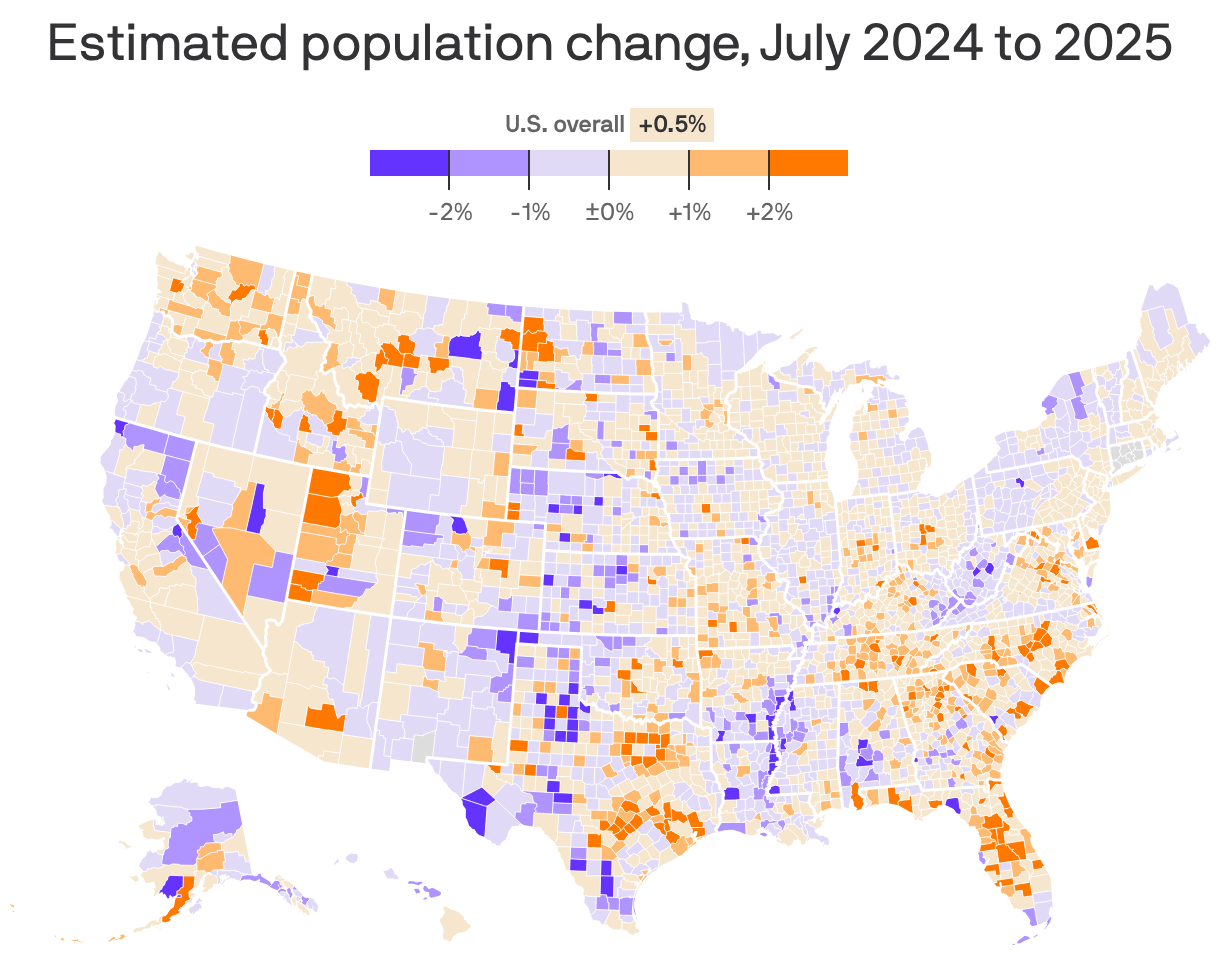
The big picture: President Trump's immigration enforcement crackdown has had a direct impact on population nationwide.
- Every U.S. metro area saw immigration decrease between 2024 and 2025, and 75% of all counties saw overall population growth slow or turn negative, the New York Times reported from the new census figures.
Zoom in: Maricopa County's net international migration (immigration minus emigration) fell from almost 46,000 in 2024 to just over 22,000 in 2025.
- The county's overall population increased by 35,411, a 40% slowdown from its peak in 2021-2022
Between the lines: While the Valley has diversified its economy since the 2008 housing crash, construction and real estate remain important industries here. And their success is predicated on a growing population, Ewen said.
- He also noted that Arizona has fewer working-age people per capita than the nation at large, and has historically benefitted from immigrant workers who add to the labor pool.
The intrigue: Trump has argued that cracking down on immigration would decrease housing demand and make homes more affordable, which would be welcome in our stubbornly hot market.
- Yes, but: That hasn't happened, and there's no evidence that it will, Mark Stapp, executive director of the Master of Real Estate Development program at ASU, told us.
In fact, it's likely that immigration decline will have the opposite effect on home prices, because the construction industry relies heavily on immigrant labor.
- Without it, the cost of building goes up, and that will be passed on to future homebuyers, Stapp said.
2. 📉 Biggest losers
While Maricopa County as a whole still grew last year, several of our most established 'burbs declined slightly in population.
⬇️ Scottsdale: -1,680
⬇️ Chandler: -1,266
⬇️ Mesa: -1,133
The majority of the county's growth came on its fringes, with newer 'burbs stealing the spotlight.
- But if you want to see the real growth, you've gotta go south...
3. Powerhouse Pinal

To find Arizona's next boomtown, look beyond Maricopa County.
The big picture: Of the 31,107 residents Arizona gained through domestic migration last year, 21,315 moved to Pinal County.
By the numbers: That contributed to the 4.9% population boom that made Pinal the seventh fastest-growing county in the country.
- Maricopa County gained more new residents overall, but barely — it beat Pinal by just 600.
- And domestic net migration to the Great State of Maricopa was just 941 people.
Zoom in: Much of Pinal's explosion in recent years has been fueled by a population boom in Phoenix's southeastern suburbs like San Tan Valley, which voted to incorporate last year and immediately became one of Arizona's biggest cities.
- But Pinal's growth is more than just spillover from the Valley — Casa Grande gained around 4,000 residents last year, Maricopa gained nearly 3,500, Coolidge added around 800 and Eloy's population grew by 450.
Between the lines: In the Phoenix area, "the land is getting gobbled up and now it's pushing out into Pinal County," said Craig McFarland, president and CEO of Pinal Partnership.
- Many people move to Pinal County for the more affordable housing and commute into the Phoenix area for work, he said.
- That includes not only suburban areas like San Tan Valley but also Maricopa, which is separated from the Valley by the Gila River Indian Community.
- But Casa Grande is a growing job center that's attracting major employers, said McFarland, the city's former mayor.
4. Chips & salsa: Glendale City Council expulsion vote

👀 Glendale City Council member Lupe Conchas faces a vote to expel him today over his election to the SRP power board. (Axios)
- The city charter bars council members from holding other paid public offices.
- Board members receive $60 per meeting.
💻 Arizona will be the Southwest hub for semiconductor worker training for the National Network for Microelectronics Education. (AZcentral)
⚽ Turkey's national team will train at Mesa's Arizona Athletic Grounds for the FIFA World Cup. (ABC15)
🗳️ Gov. Hobbs launched a multimillion-dollar TV, radio and digital ad campaign, the first of her re-election. (Arizona Mirror)
5. 1 for the road: Queen Creek is King
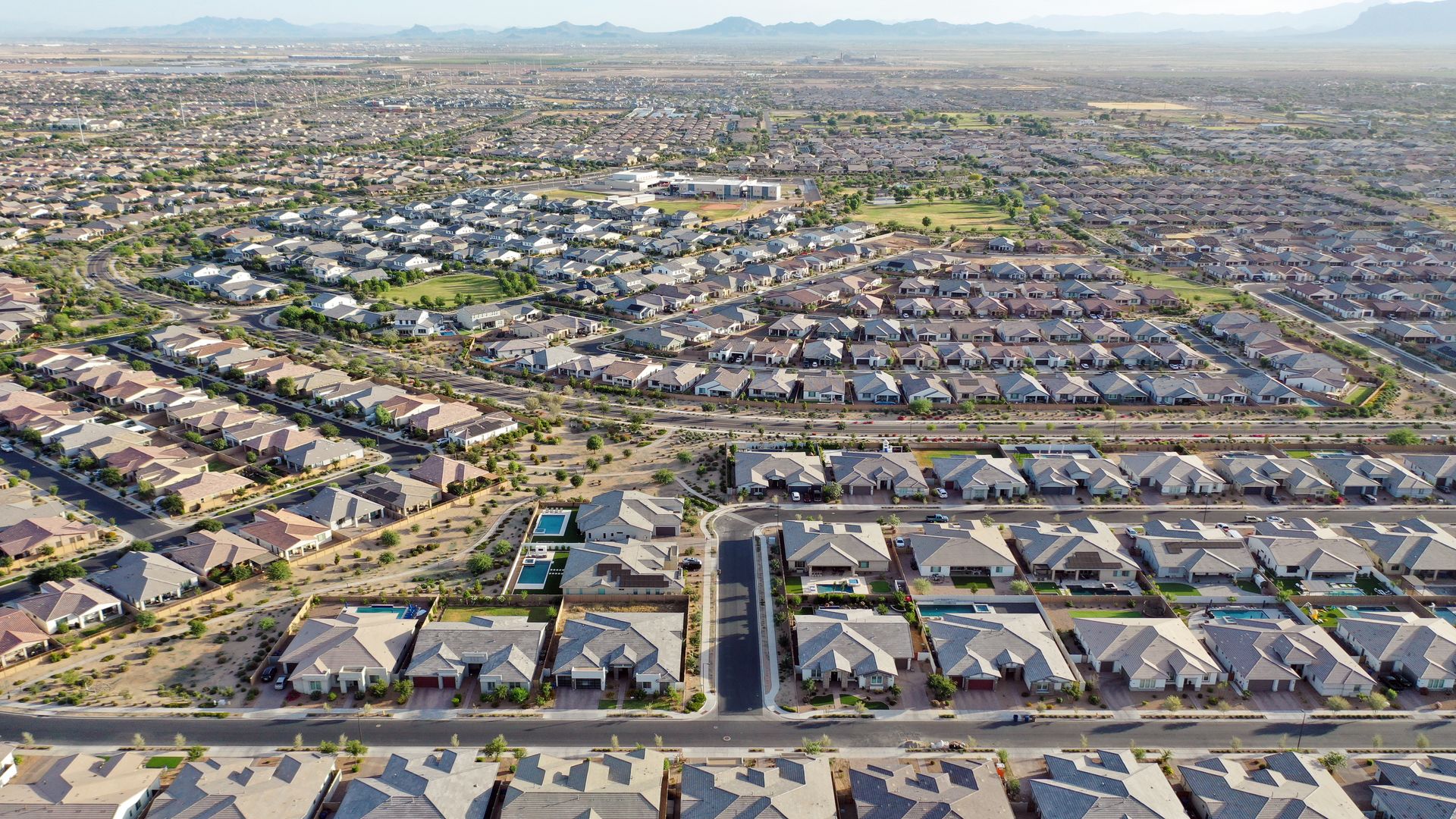
No Arizona city or town has seen growth so far this decade quite like Queen Creek.
By the numbers: The town, which straddles both Maricopa and Pinal counties, has added nearly 30,000 people since 2020, an almost 49% increase.
- Its total population is now just below 90,000.
The intrigue: Developers are taking notice. In recent months, Postino, Snooze, Bamboo Sushi and Shake Shack have announced they're moving to Queen Creek, too.
🏀 Jeremy is bummed that Koa Peat is staying in the NBA Draft instead of coming back for another season at UofA, but wishes him the best.
🐦 Jessica is admiring the baby quail that keep visiting her yard.
Thanks to Jessica for editing.
Sign up for Axios Phoenix