Axios Phoenix

July 13, 2026


1 big thing: Flagstaff space rescue


What do you do when an aging but still perfectly good space telescope is slowly falling out of the sky? You give it a little nudge, of course.
- That's what NASA is trying with its Swift Boost Mission, a $30 million Flagstaff-engineered gambit to save the Neil Gehrels Swift Observatory that launched earlier this month from the Marshall Islands.
Why it matters: Saving falling spacecraft would be a huge step for the emerging space economy, as the Trump administration reimagines NASA as a slimmed-down supporter of private endeavors in space.
- And the mission is a big chance for Flagstaff-based startup Katalyst Space Technologies to prove that there's a lucrative opportunity in rescuing and repairing troubled satellites.
Driving the news: The 21-year-old Neil Gehrels Swift Observatory — just "Swift" for short — is in danger of burning up in Earth's atmosphere as soon as later this year as its orbit decays faster than expected.
Orbital decay is a death sentence for satellites like Swift that can't change their own altitude.
- To save Swift, the agency turned to an autonomous robot called Link with a singular purpose: Find it, grab on, and give it a little pick-me-up.
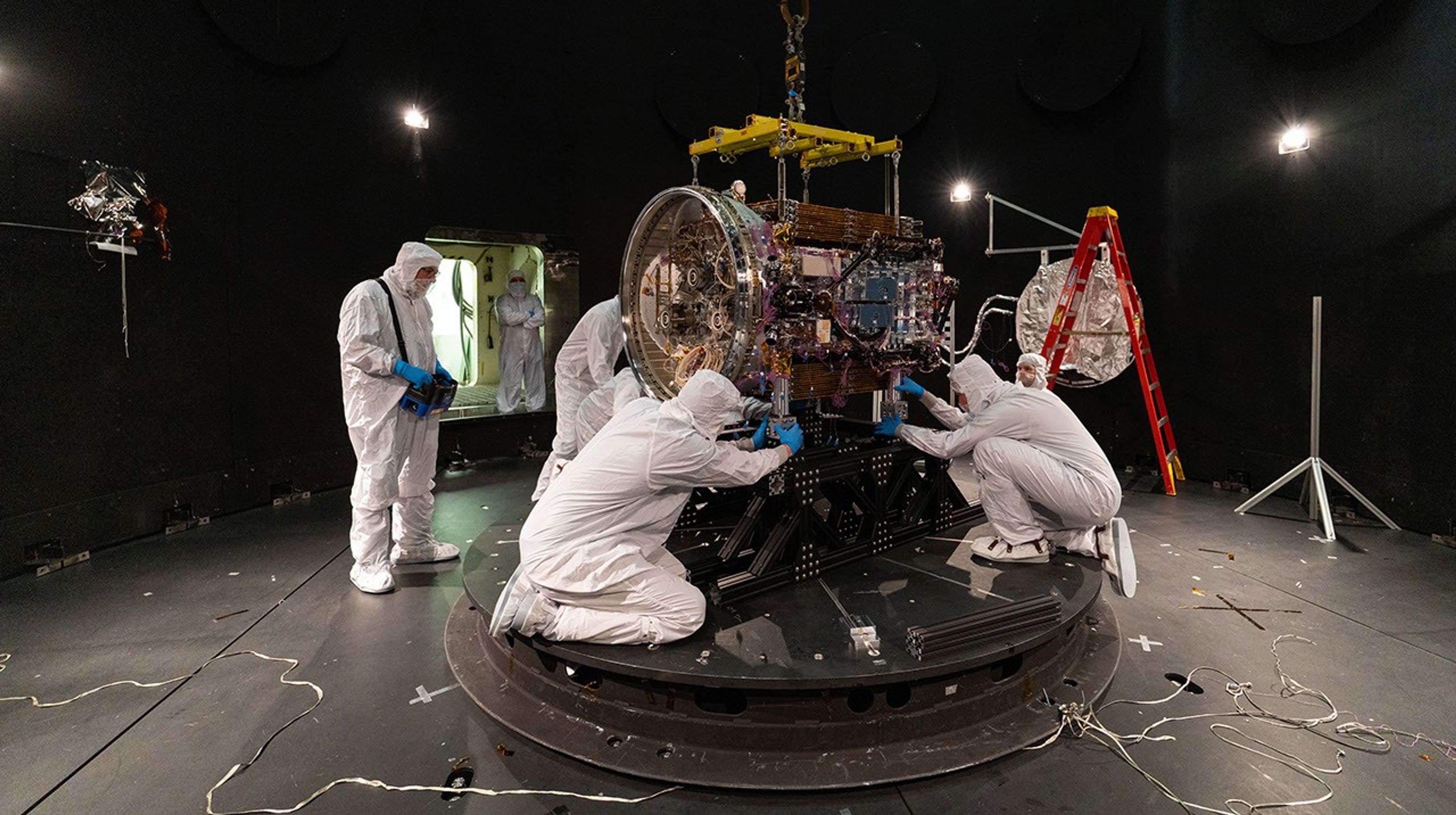
Zoom in: Link, made by Katalyst, is about 880 pounds and five feet tall, with two pinching "fingers" at each end of its three arms.
What they're saying: "By demonstrating we can quickly and cost-effectively extend [Swift's] lifetime, we're creating a blueprint for servicing spacecraft that were never designed for on-orbit maintenance," Katalyst CEO Ghonhee Lee told Reuters. said in a statement.
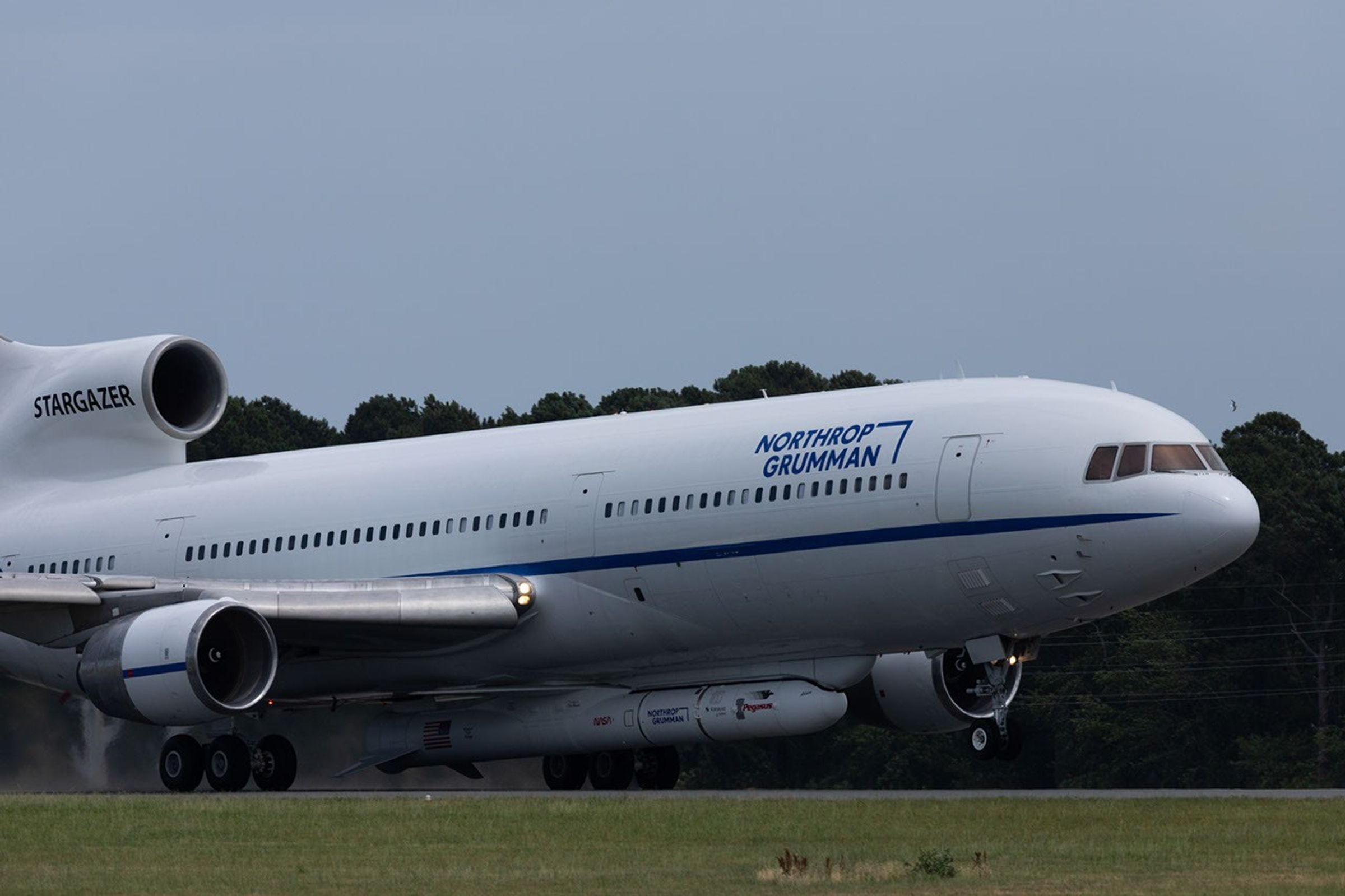
How it works: Link's quest started not with a rocket launch, but with an airplane takeoff.
- Link was loaded aboard a Pegasus XL air-launched orbital rocket attached to Northrop Grumman's "Stargazer," a Lockheed L-1011 trijet converted for the role.
- Stargazer climbed to about 40,000 feet, dropped the Pegasus, and off it went to blast Link into orbit.
What's next: If all goes well, Link will catch up with Swift and grab on in about a month, then gradually boost it back into a better orbit — saving it from fiery oblivion.
Rooted in your community

2. Latino voters' divide now cuts through identity

Latino voters aren't just splitting over President Trump. They're divided over how being Latino shapes their identity in America, according to a new Pew Research Center report.
Why it matters: This is a deeper fracture than a typical partisan divide — Latino voters are splintering over whether their ethnicity feels like a barrier, an asset or is politically irrelevant.
- That's complicating how both political parties try to reach one of the nation's most important swing constituencies ahead of the November midterms.
By the numbers: A majority of Latinos who backed President Trump in 2024 — 57% — say what happens to Latinos in the U.S. affects their own lives "not too much" or "not at all," according to the study released Thursday.
- Meanwhile, 75% of Latinos who voted for Kamala Harris say what happens to Latinos affects their lives a great deal or a fair amount.
- Six in 10 Latino Trump voters say they never or not too often feel a responsibility to look out for other Latinos in the U.S.; only 20% of Harris voters say the same.
The intrigue: Pew's findings suggest the challenge for Democrats — and the opportunity for Republicans — isn't just economic messaging.
- Latino voters are increasingly divided over whether being Latino itself is central to their political and personal lives.
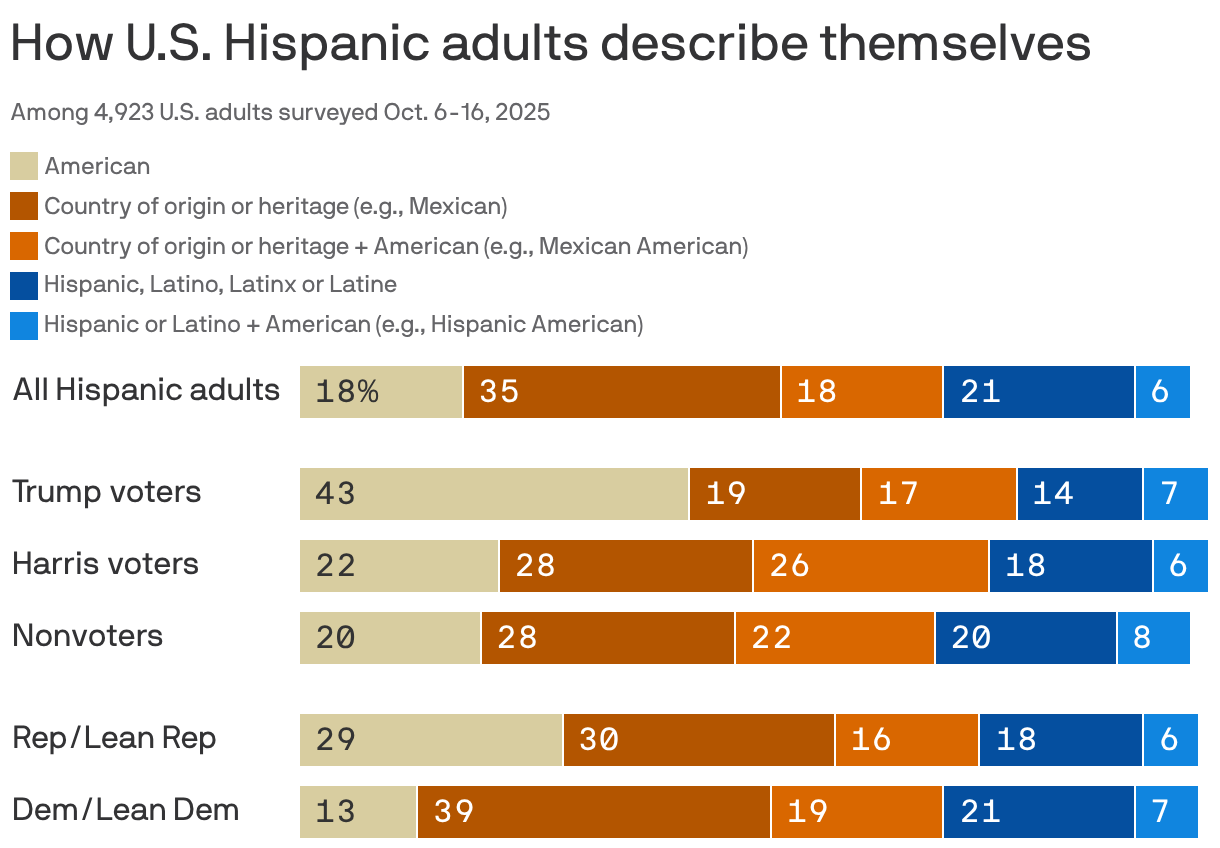
Zoom in: The divergence extends to the identity labels Latinos use in their daily lives.
- Hispanic Trump voters are nearly twice as likely as Harris voters — 43% vs. 22% — to most often describe themselves simply as "American."
- Harris voters use a wider mix of labels, with a majority (54%) using country of origin either alone or combined with American, such as "Mexican American."
The bottom line: There's no single Latino vote, and Pew's report suggests there may be no single Latino identity driving it.
3. Chips & salsa: Dust storm grounds flights

4. Where in the Valley?
Axios Phoenix
