NASA launches mission to save space telescope from fiery death

Add Axios as your preferred source to
see more of our stories on Google.
Illustration: Aïda Amer/Axios. Stock: Getty Images
What do you do when an aging but still perfectly good space telescope is slowly falling out of the sky? You give it a little nudge, of course.
- That's what NASA is trying with its Swift Boost Mission, a $30 million gambit to save the Neil Gehrels Swift Observatory that launched early Friday from the Marshall Islands after several days of weather and technical delays.
Why it matters: Saving falling spacecraft would be a huge step for the emerging space economy, as the Trump administration reimagines NASA as a slimmed-down supporter of private endeavors in space.
Driving the news: The 21-year-old Neil Gehrels Swift Observatory — just "Swift" for short — is in danger of burning up in Earth's atmosphere as soon as later this year as its orbit decays faster than expected.
- NASA says that's happening because solar activity has caused Earth's atmosphere to "puff out," increasing drag on spacecraft in low Earth orbit.
Orbital decay is a death sentence for satellites like Swift that can't change their own altitude.
- To save Swift, the agency turned to an autonomous robot called Link with a singular purpose: Find it, grab on, and give it a little pick-me-up.
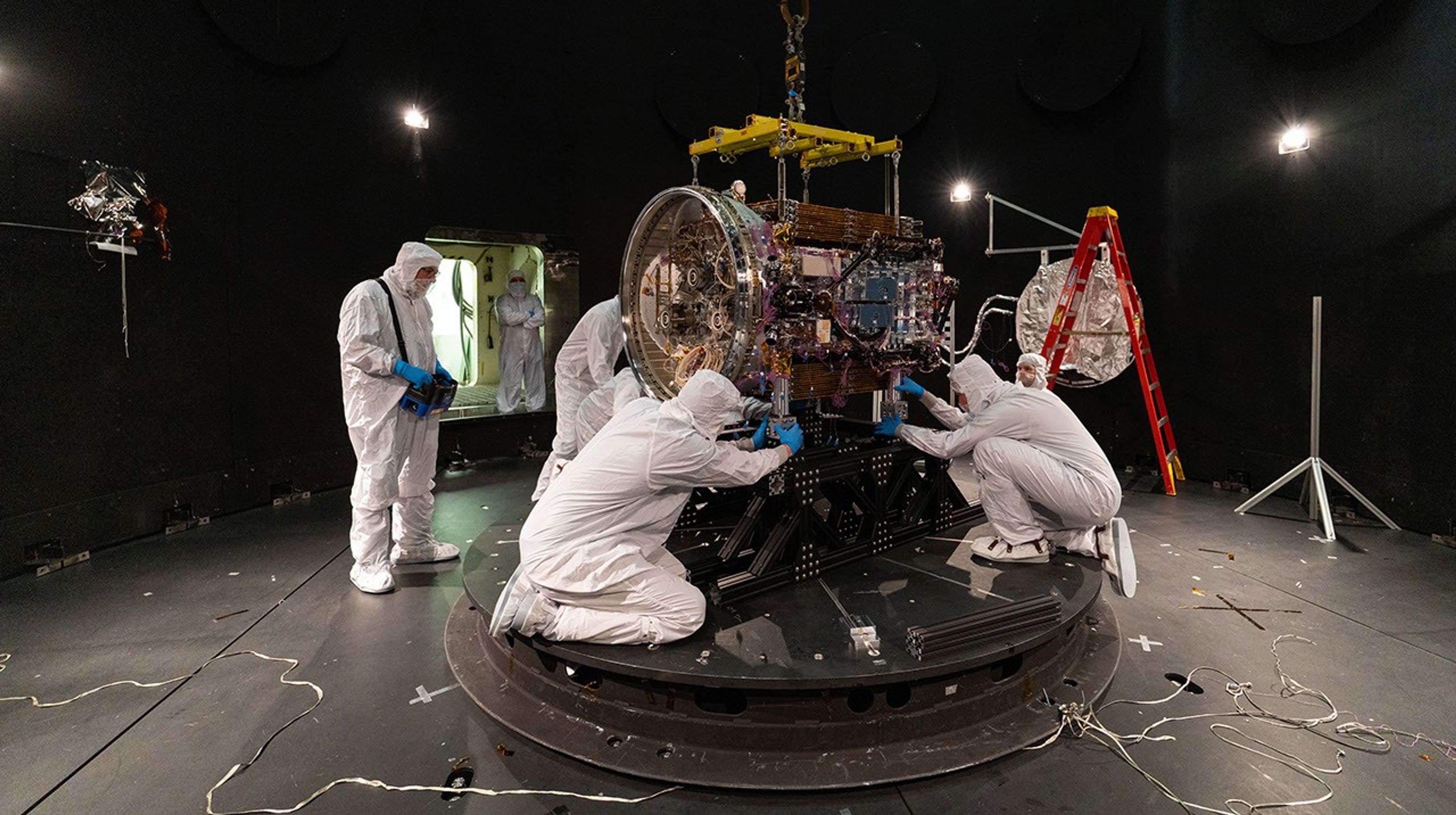
Zoom in: Link, made by startup Katalyst Space Technologies, is about 880 pounds and five feet tall, with two pinching "fingers" at each end of its three arms.
- The mission is a chance for the Flagstaff, Ariz.-based startup to prove that there's a lucrative opportunity in rescuing and repairing troubled satellites.
- Katalyst is hoping to eventually produce similar craft with prices in the "high-single-digit millions, or low-double-digit millions," CEO Ghonhee Lee told Reuters.
Threat level: Like many satellites, Swift wasn't designed with a docking port or other means for another craft to attach itself — meaning Link's mission is by no means a sure bet.
What they're saying: "By demonstrating we can quickly and cost-effectively extend [Swift's] lifetime, we're creating a blueprint for servicing spacecraft that were never designed for on-orbit maintenance," Lee said in a statement.
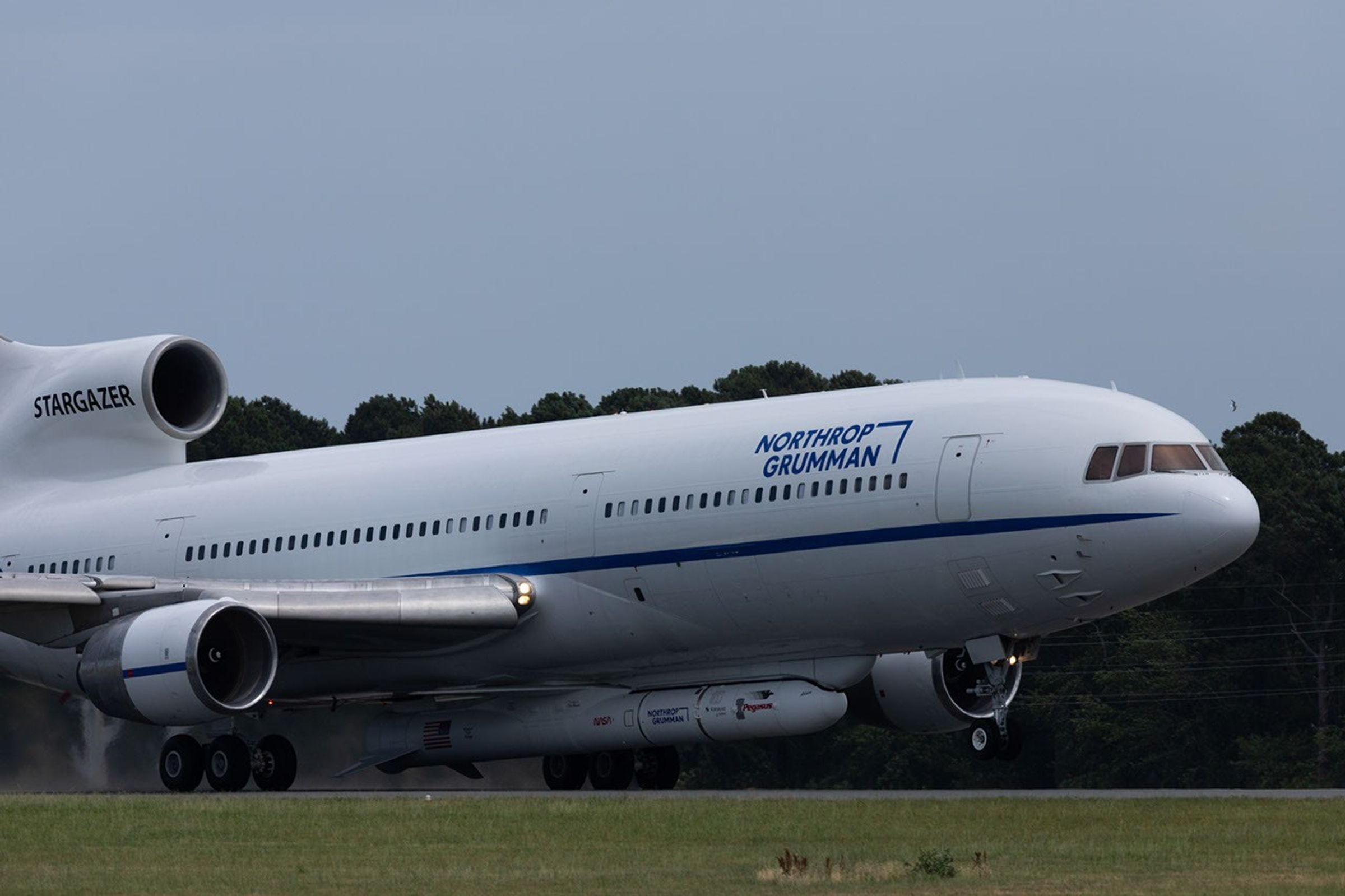
How it works: Link's quest started not with a rocket launch, but with an airplane takeoff.
- Link was loaded aboard a Pegasus XL air-launched orbital rocket attached to Northrop Grumman's "Stargazer," a Lockheed L-1011 trijet converted for the role.
- Stargazer climbed to about 40,000 feet, dropped the Pegasus, and off it went to blast Link into orbit.
Between the lines: Advanced spacefaring powers — the U.S., China, Russia — could one day use satellite-grabbing tech as a method of space combat, by disabling one another's satellites.
- Back in 2022, China demonstrated the ability to dock with a dead satellite and tow it up into a higher "graveyard" orbit, keeping it out of functioning satellites' way.
What's next: If all goes well, Link will catch up with Swift and grab on in about a month, then gradually boost it back into a better orbit — saving it from fiery oblivion.
