
Axios Phoenix

April 09, 2026

π₯ Happy Thursday! The sky is probably not falling, but it is National Chicken Little Awareness Day so keep an eye out just in case.
βοΈ Today's weather: Sunny, high of 95.
π Happy birthday to our Axios Phoenix member Kristin Carkeek!
Today's newsletter is 920 words β a 3.5-minute read.
1 big thing: Autonomous drone deliveries are coming
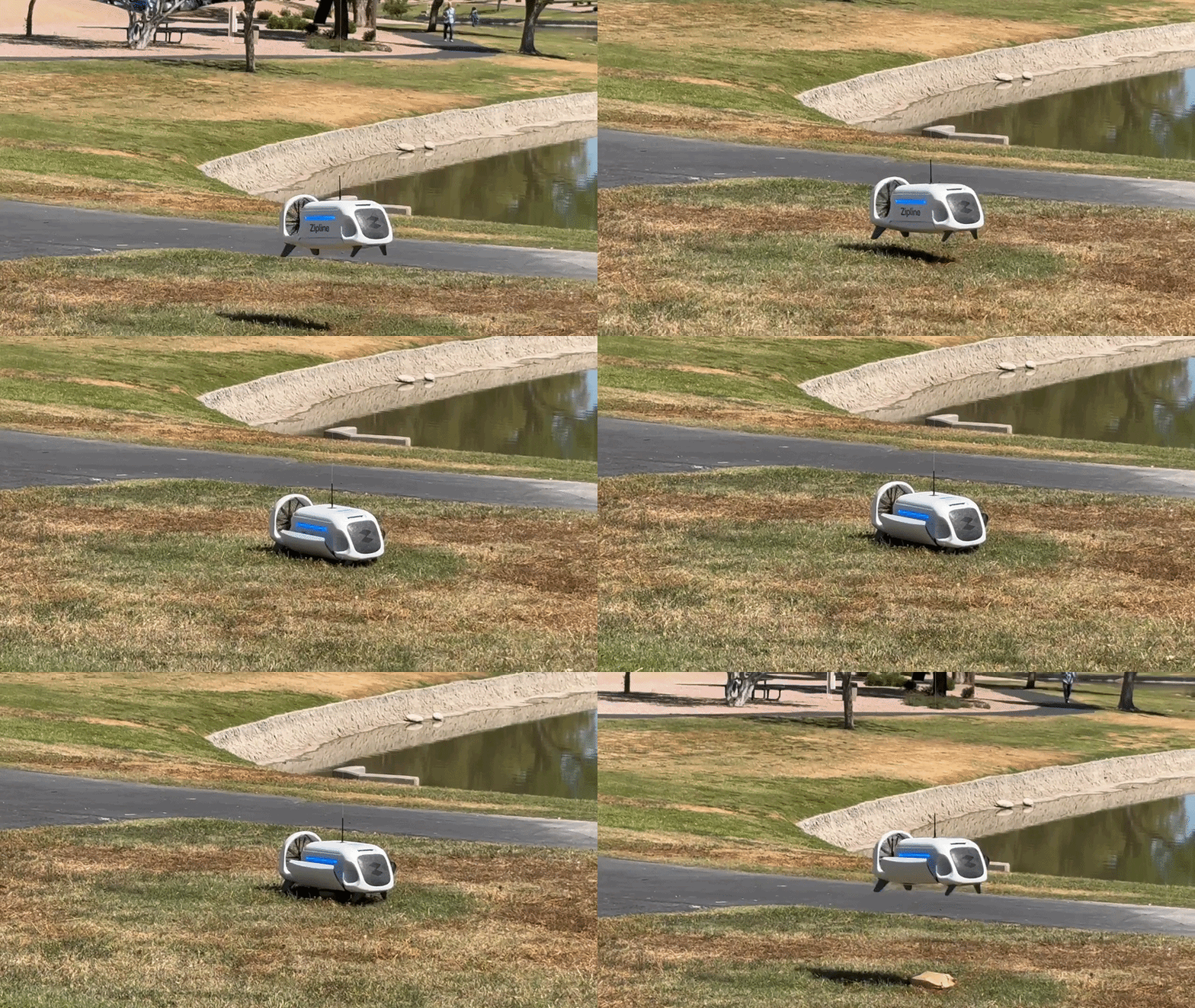
Later this year in the Valley, you'll be able to get dinner or a prescription delivered via autonomous drone, courtesy of San Francisco-area tech company Zipline.
Why it matters: The company's Phoenix expansion takes no-contact delivery to a whole new level.
- The drones can also provide deliveries to people for whom it's not safe to be out because of dangerous conditions or illness.
State of play: Zipline hopes to be operational in the Valley by the middle of the year.
- The company hosted a demonstration of its drone delivery at Arizona State University's Research Park yesterday.
- The company is working with the FAA and cities throughout the Phoenix metro area and hopes to operate Valleywide.
- Zipline plans to partner with various Phoenix-area businesses.
How it works: The autonomous drones hover about 300 feet in the air and use a cable to lower a container called a droid or "delivery zip," which carries the package, to the ground.
- Their range is up to 10 miles, though they won't necessarily go the full radius at first, Zipline spokesperson Zach Hill told Axios.
- Zipline drones currently carry deliveries of up to 5.5 pounds in Dallas, and could potentially transport up to 8 pounds in the Valley.
- The aircraft are based at docking and charging stations and can pick up deliveries from kiosks or "zipping points" at businesses.
Zoom out: Zipline is already operating in the Dallas area and northwest Arkansas, and is expanding to Houston this year.
- The company also delivers in Ghana, Rwanda, Nigeria, Kenya, CΓ΄te d'Ivoire and Japan.
The company has made 2.3 million drone deliveries globally with no incidents of property damage or human injury, Zipline's Shane Conley told reporters at Wednesday's demonstration.
- If problems arise, the drones can abort their missions and return to their docks. They're also monitored by pilots who can make those calls.
- As a last resort, they can deploy parachutes and float to the ground.
- Hovering at 300 feet and delivering via cable keeps the aircraft out of people's yards and reduces noise for people on the ground, Hill said.
2. Clean energy team's big win

Clean energy advocates won a majority of the seats in Tuesday's election for the Salt River Project power board, prevailing over the side heavily backed by the conservative organization Turning Point.
Why it matters: SRP provides energy for about 1.1 million Phoenix-area customers, and the district board sets the utility's electricity rate and power generation policy.
Driving the news: In a race that pitted a liberal, pro-renewable energy slate against a more traditional, conservative-backed team, the clean energy side won five of seven seats, per SRP's final unofficial results released last night.
- That gives the pro-renewable side an 8-6 majority on the Salt River Project Agricultural Improvement and Power District, candidates from both sides told Axios.
- The business-backed, or "traditional" side, as incoming Vice President Barry Paceley described it, won the races for president and vice president, but the VP doesn't vote unless they're filling in for the president, according to SRP.
The intrigue: Both sides had support from outside groups.
- The conservative-backed slate was supported by Turning Point Action, the political arm of Turning Point USA, the right-wing group co-founded by slain activist Charlie Kirk, and by the pro-business Arizonans for Responsible Growth.
- The clean energy slate had support from actress Jane Fonda's climate PAC, the Democratic women's organization Arizona List and the organized labor group Worker Power, according to board member Sandra Kennedy, the clean energy slate's candidate for president.
By the numbers: Turnout more than quadrupled over 2024 β about 36,000 ballots were cast this year compared to around 7,500 two years ago, SRP told Axios.
3. Chips & salsa: Tribal cold case support

π The FBI has deployed 14 additional agents to the Phoenix field office to assist with a backlog of cold cases on tribal lands. (KJZZ)
π₯¨ Old Heidelberg Bakery will close at the end of the month after 57 years of serving German treats in Phoenix. (Phoenix New Times)
β¨ The Phoenix City Council is considering a modernization plan for downtown Phoenix that would include redeveloping the Phoenix Convention Center South building. (AZcentral)
π· Postino will open a new wine bar in downtown Goodyear. (Phoenix Business Journal)
4. πΆοΈ Space spice
NASA sent five hot sauce varieties on Artemis II, deeming the spicy staple an essential item.
Why it matters: Even in space, flavor matters.
The big picture: Tabasco, Sriracha, Cholula, Frank's RedHot and Heinz Hot Taco Sauce are on the rocket, according to Victoria Segovia, a public affairs specialist at Johnson Space Center in Houston.
How it works: Hot sauce serves practical and behavioral health functions in space, Segovia says.
- "In microgravity, astronauts often experience less acute olfactory senses due to fluid shift β similar to having a mild congestion β which can dull flavor perceptions," she told us.
- "Spicy and bold" condiments help enhance taste.
How they choose: The hot sauces are selected in collaboration with astronauts and NASA's food scientists at the Johnson Space Center Food Lab.
π Our thought bubble: We'll be lobbying for Arizona Gunslinger to make the next mission.
πΆοΈ Jeremy hopes the Artemis IV team that lands on the moon in 2028 brings some hot sauce to the lunar surface.
π Jessica is craving some lunar Cholula, delivered by drone.
Thanks to Jessica for editing.
Sign up for Axios Phoenix