Axios Northwest Arkansas

November 19, 2026


1 big thing: Arkansas fails premature birth score

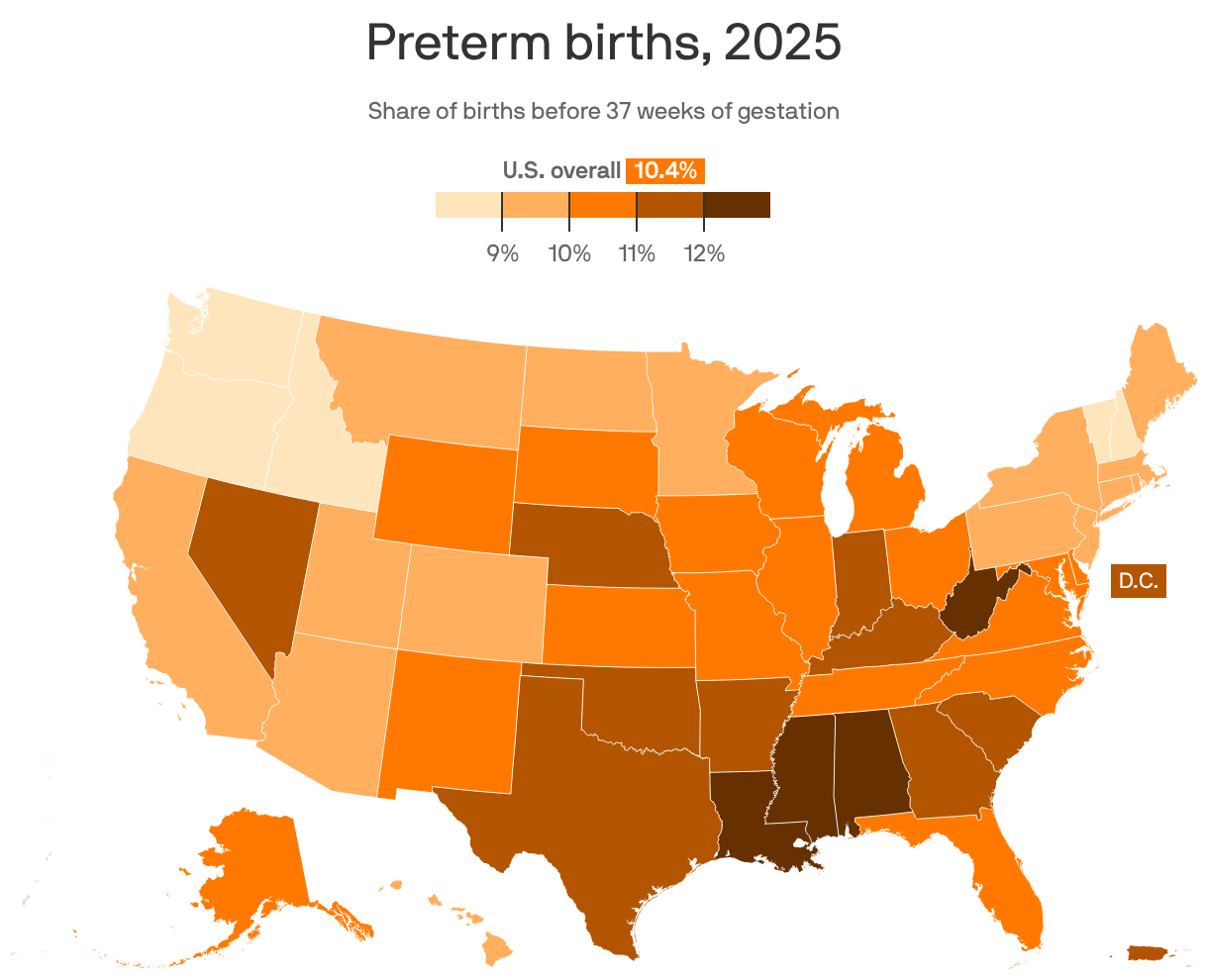
Arkansas earned an F for its preterm birth rate yet again, according to the latest March of Dimes report card.
Why it matters: Babies born before 37 weeks of pregnancy face greater risks of serious health complications, hospitalization and death in their first year of life.
Zoom in: Arkansas' rate was 11.9%, slightly lower than the 12.1% in 2023 and 2024.
- Mississippi had the highest rate at 14.9%. Vermont had the lowest at 8%.
Zoom out: The national preterm birth rate remained at 10.4% in 2025 for the fourth year in a row.
- It marked the fifth consecutive year at D+.
Between the lines: Rising rates of chronic health conditions before pregnancy are one reason the nation's preterm birth rate remains stubbornly high, Michael Warren, chief medical and health officer of March of Dimes, tells Axios.
- Nationally, high blood pressure and diabetes became more common among women giving birth in 2025. Both conditions increase the risk of pregnancy complications and premature birth.
What they're saying: "It's not just about improving care during labor and delivery," Warren says. "It's really about improving their health across the life course."
- That means addressing chronic conditions even before pregnancy.
Threat level: Arkansas' maternal mortality rate was the fourth-highest in the U.S. during 2018–2022, and its infant mortality rate was the second-highest in 2023, according to the CDC.
State of play: Public health leaders have struggled to reverse Arkansas' trend for years. In 2024, Gov. Sarah Huckabee Sanders created the Arkansas Strategic Committee for Maternal Health, and last year introduced the Healthy Moms Healthy Babies Act that will invest $45 million a year in maternal health, according to her office.
- In March, Bentonville's Heartland Forward launched a drive to slash U.S. maternal mortality in half within five years.
What we're watching: Whether strategies including expanding access to doula care and encouraging low-dose aspirin use among pregnant women at risk for preeclampsia can help bring down preterm birth rates.
2. 🏠 Charted: Home sales drop

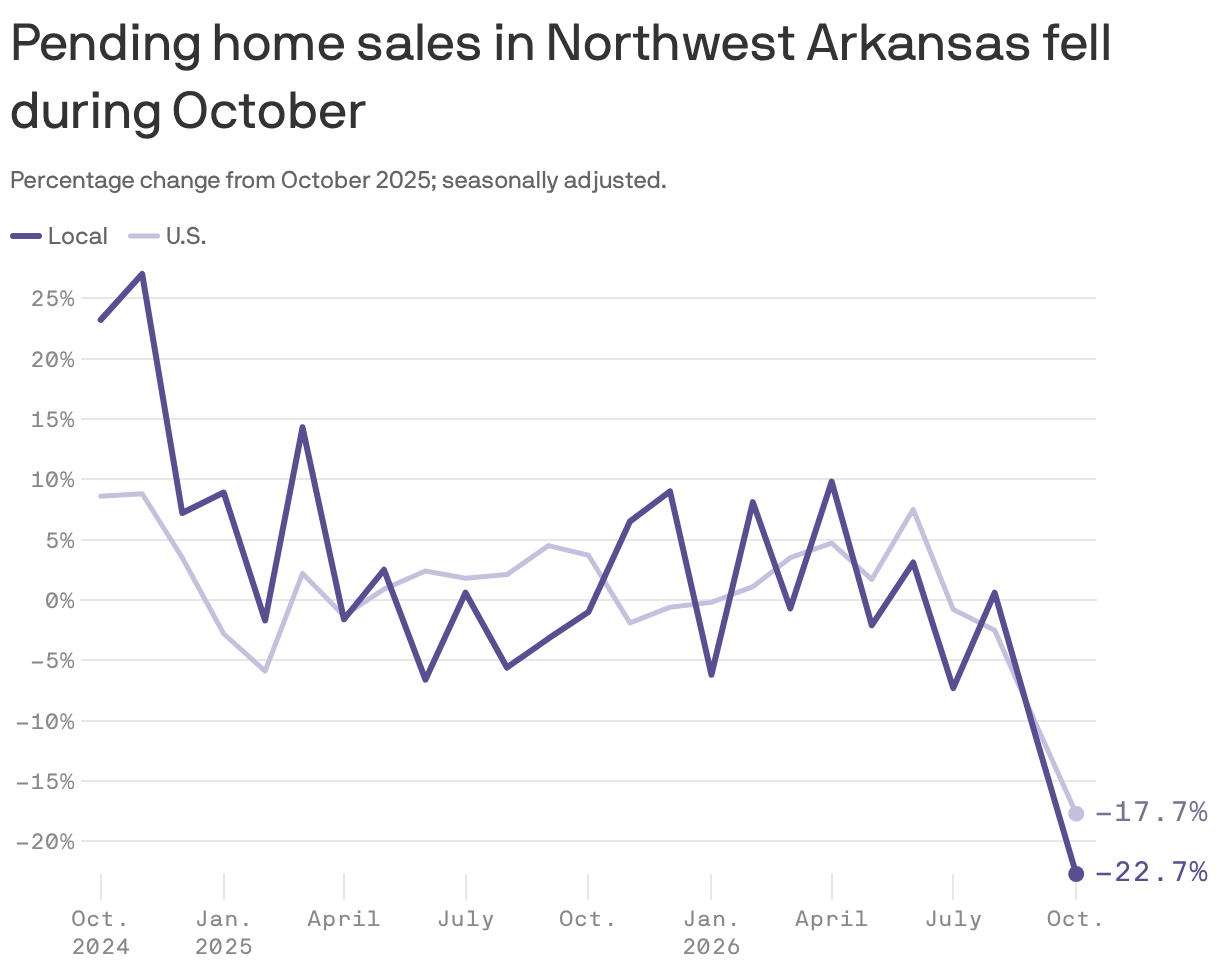
Pending sales for Northwest Arkansas-area homes in October fell 22.7% from a year earlier, Redfin data show.
Why it matters: Fewer homes went under contract as mortgage rates climbed, adding to buyers' borrowing costs.
- The average 30-year fixed mortgage rate was 7.33% in October, up from 6.86% in September.
Zoom out: National pending sales fell 17.7% from a year earlier. Separately, the National Association of Realtors reported October existing-home sales fell 8.8% from last year.
By the numbers: Redfin's October numbers show in NWA:
- Median sale prices fell 1.9% from a year earlier.
- Sales fell 10.8% from a year earlier.
- The area had 5.5 months of housing supply, compared with 4.6 nationally.
3. Kitchen Sink: Keep on newsin'


Axios Northwest Arkansas
