Axios Media Trends

October 06, 2026

1 big thing: 📧 Exclusive... Sinclair's Substack bet
2. 🤝 Laurene Powell Jobs, Bobby Kotick join Skydance's board
3. 🤑 Dealing with the debt
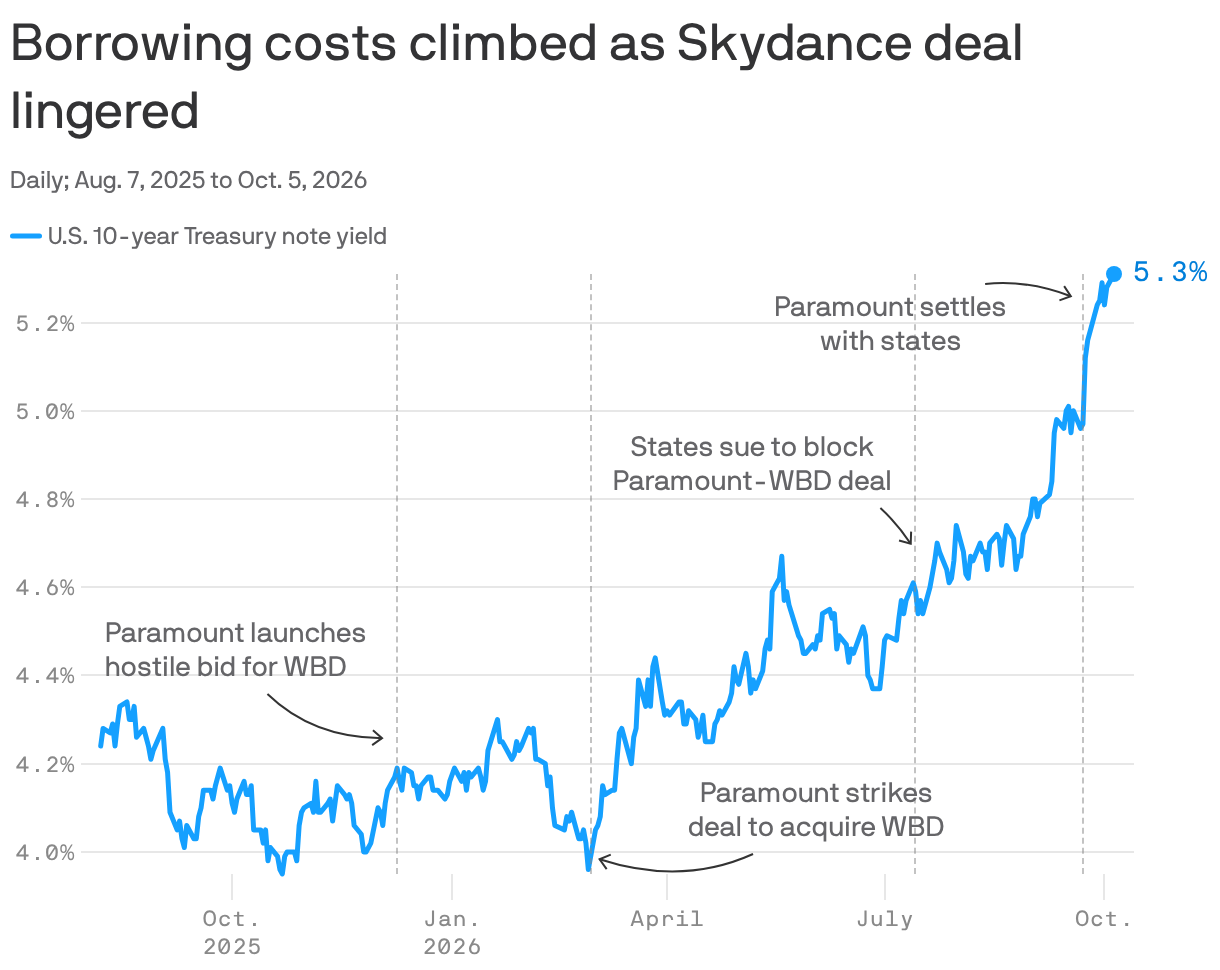
The Paramount/WBD deal, which is one of the most highly levered transactions in American history, will test the market's appetite for megamergers financed by huge amounts of debt amid rising interest rates.
- To get the transaction over the finish line, Paramount raised $52 billion in new debt, per Bloomberg. Some of that debt is very expensive, carrying a yield of nearly 9%.
- In addition to the debt it raised, Skydance will carry WBD's existing liabilities, totaling $87.5 billion in debt, according to Fitch Ratings.
The bottom line: Ellison has proven himself to be one of the most savvy dealmakers in American history. His next test is whether he can build a sustainable business from a mountain of debt.
4. 🎂 Fox News' ratings lead widens as it turns 30


Fox News turns 30 tomorrow with a distinction few legacy TV networks can claim: Its ratings lead over rivals has never been wider.
Why it matters: Fox News president and executive editor Jay Wallace, who has been with the network alongside CEO Suzanne Scott since launch, attributes the brand's durability to consistency in ownership and strategy.
- "We've had a pretty consistent model for 30 years," Wallace says. He credited the Murdochs' stewardship for allowing the network to be creative in developing new products and pursuing challenging stories.
By the numbers: Fox News' ratings lead over its cable news rivals hit its widest point ever last year, according to Nielsen data, and the network appears poised to maintain that historically wide margin this year, depending on the midterms.
- Last year, the network averaged 1.69 million total-day viewers, compared with 551,000 for MS NOW, formerly MSNBC, and 432,000 for CNN.
- In primetime, that margin was even wider. Fox News averaged 2.65 million daily primetime viewers, compared with 915,000 for MS NOW and 573,000 for CNN.
- Through Sept. 29, Fox is outpacing CNN and MS NOW combined this year in both total day viewership and primetime.
Yes, but: Fox's dominance among total viewers doesn't extend to the key 25- to 54-year-old advertising demographic by the same margin.
- In 2025, Fox averaged 180,000 viewers in the demo across total day and 278,000 in primetime, according to Nielsen. Both comfortably led CNN and MS NOW, but Fox has posted substantially larger demo advantages in previous years.
The big picture: Key to the network's business durability has been leaning into products and talent that resonate with the lifestyle and values of its core audience.
- That strategy has allowed the network's brand to outlast major stars, even when they exit.
- Wallace dismissed the idea that Fox News is preoccupied with competing against its former stars, like Tucker Carlson and Megyn Kelly, arguing that an increasingly fragmented media market gives both the network and independent personalities room to find their own audiences.
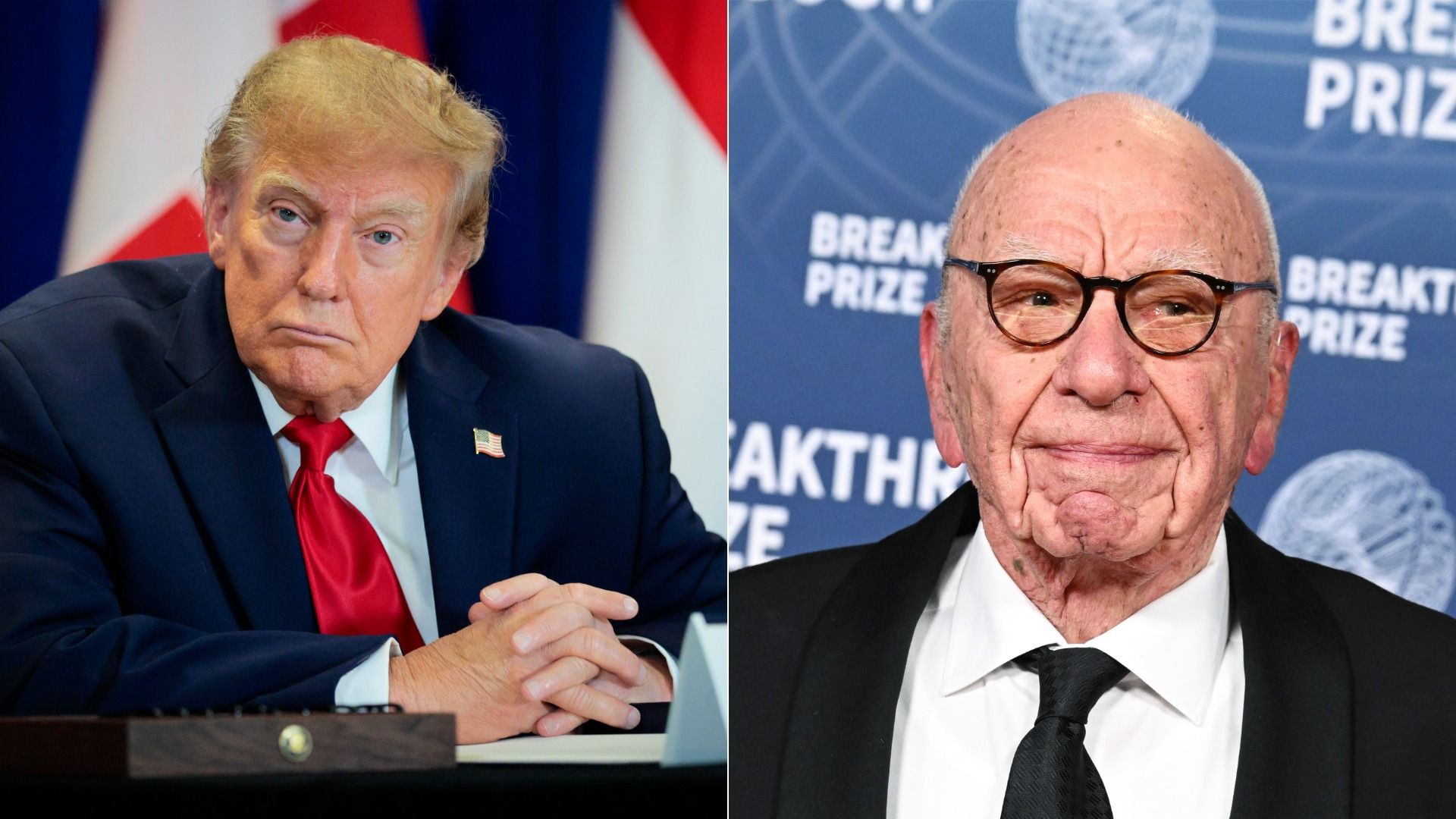
Zoom out: Fox News' close, but at times turbulent, relationship with President Trump has afforded the network significant access, while also drawing scrutiny from media critics and, at times, from Trump himself.
- Wallace pointed to anchor Martha MacCallum's recent interview with Michigan Senate contender Abdul El-Sayed as an example of Fox News' programming strategy transcending what its core audience wants to hear.
- "Someone didn't necessarily like that," he says, presumably referencing harsh criticism after the interview from Trump, "but that's what we do."
5. 🏛️ Meanwhile, a turbulent alliance lives on
6. 🛍️ Ad wars shift from attention to intent

A slew of new products announced around Advertising Week show how quickly the ad economy is shifting from selling attention to monetizing what consumers want next.
Why it matters: Budgets are rapidly moving to new platforms, putting pressure on traditional publishers.
- Internet companies with strong signals of consumer intent, such as AI search interfaces, chatbots and commerce platforms, are taking a much higher share of ad revenue.
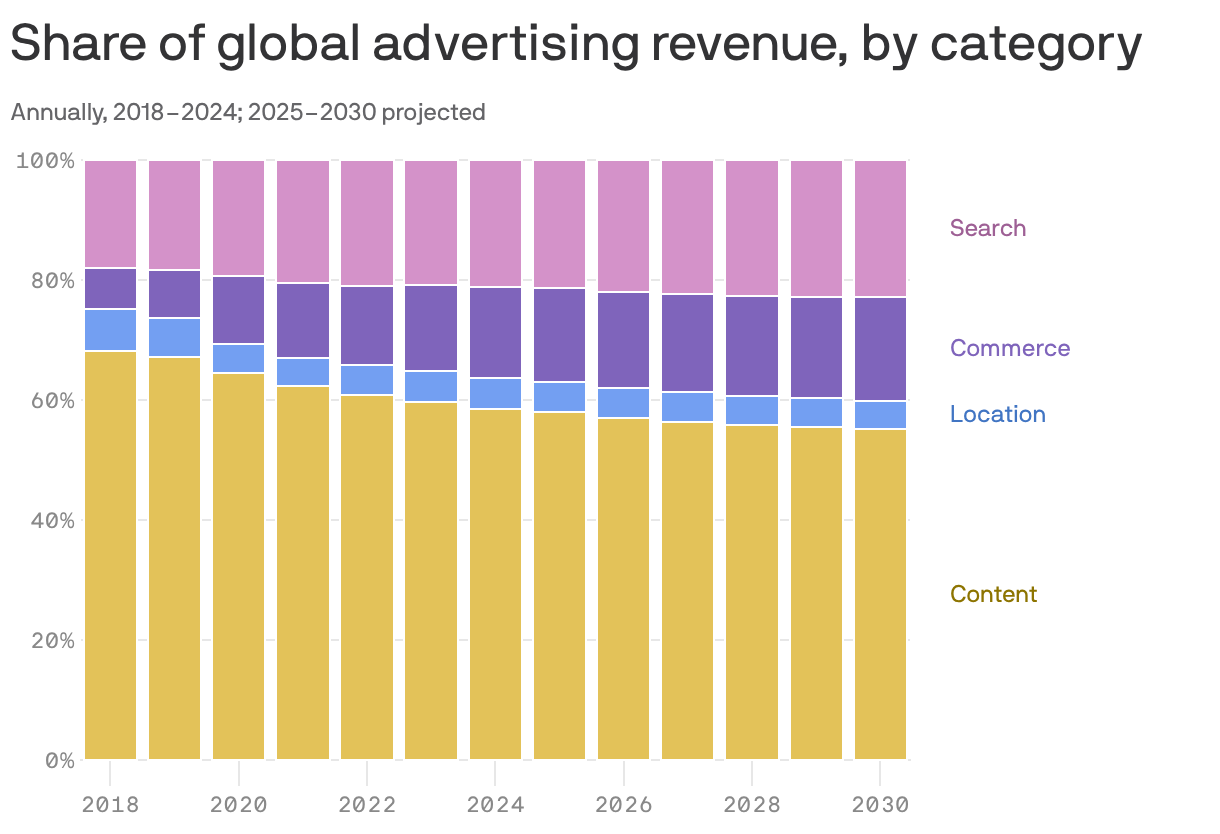
State of play: Several Big Tech firms unveiled new advertising products this week that use AI to close the gap between discovering something and buying it.
- TikTok launched agentic leads, an AI tool designed to identify, qualify and convert what TikTok explicitly calls "high-intent" prospects.
- OpenAI announced a new visual ad format for ChatGPT that will initially appear alongside image generation.
- Amazon is leaning further into its AI-powered advertising through its ads agent and a new full-funnel campaign product.
The big picture: Digital advertising's advantage has long been knowing who consumers are and commanding their attention.
- But now, chatbots give marketers a direct window into a user's real-time needs, which means efficiency often matters more than engagement.
Between the lines: For brands with loyal users, there's opportunity in this shift. First-party data is becoming more valuable because companies can pair it with real-time context.
The bottom line: Attention tells an advertiser where a consumer is. Intent tells them where they're going.
Go deeper with Media Trends Executive.
- 📈 I'll be presenting exclusive insights at Advertising Week New York tomorrow at 9:30am. Register.
7. 🏆 Emmys move to Amazon Prime
The Television Academy and Amazon Prime Video announced today a historic six-year deal for exclusive global rights to the Emmy Awards.
Why it matters: The deal expands the Emmys' distribution globally and gives the show a steady home for the first time in decades.
- For the past 31 years, the Emmys have been broadcast through a "Wheel Deal" arrangement that gave ABC, CBS, NBC and Fox rotating annual distribution rights.
Zoom in: The new arrangement, which begins in 2027, will be available for free to viewers worldwide on Amazon Prime Video.
- It will see Prime Video creating "new experiences and entry points for fans to discover, engage with and celebrate what they love about TV," the Television Academy and Prime Video said in a joint statement.
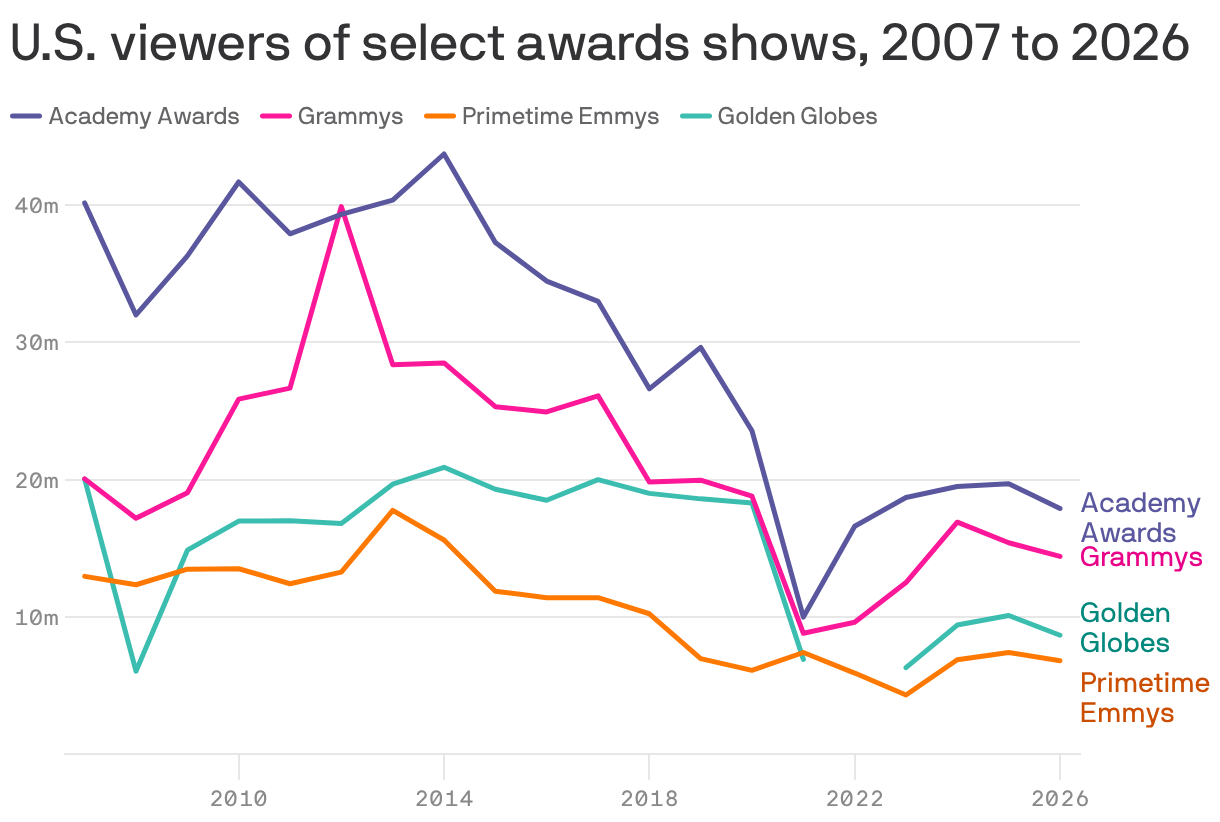
By the numbers: The Emmys have lost roughly half its audience since the 2010s, when live award show audiences peaked.
- While it has the smallest audience among the major award shows, its viewership decline hasn't been as precipitous as that of the Oscars and the Grammys.
The big picture: More awards shows are moving to streaming as viewership wanes on traditional television.
- The Oscars will move to YouTube beginning in 2029, after airing on ABC for more than 50 years.
- The Screen Actors Guild Awards moved from TNT to Netflix under a multiyear deal announced in 2023, with the ceremony beginning to stream live on Netflix in 2024.
- The Academy of Country Music Awards left CBS for Amazon Prime Video in 2022.
Axios Media Trends

Sara Fischer’s inside look at the forces reshaping media.