Axios Media Trends

November 24, 2026

1 big thing: 📞 Trump's longest call

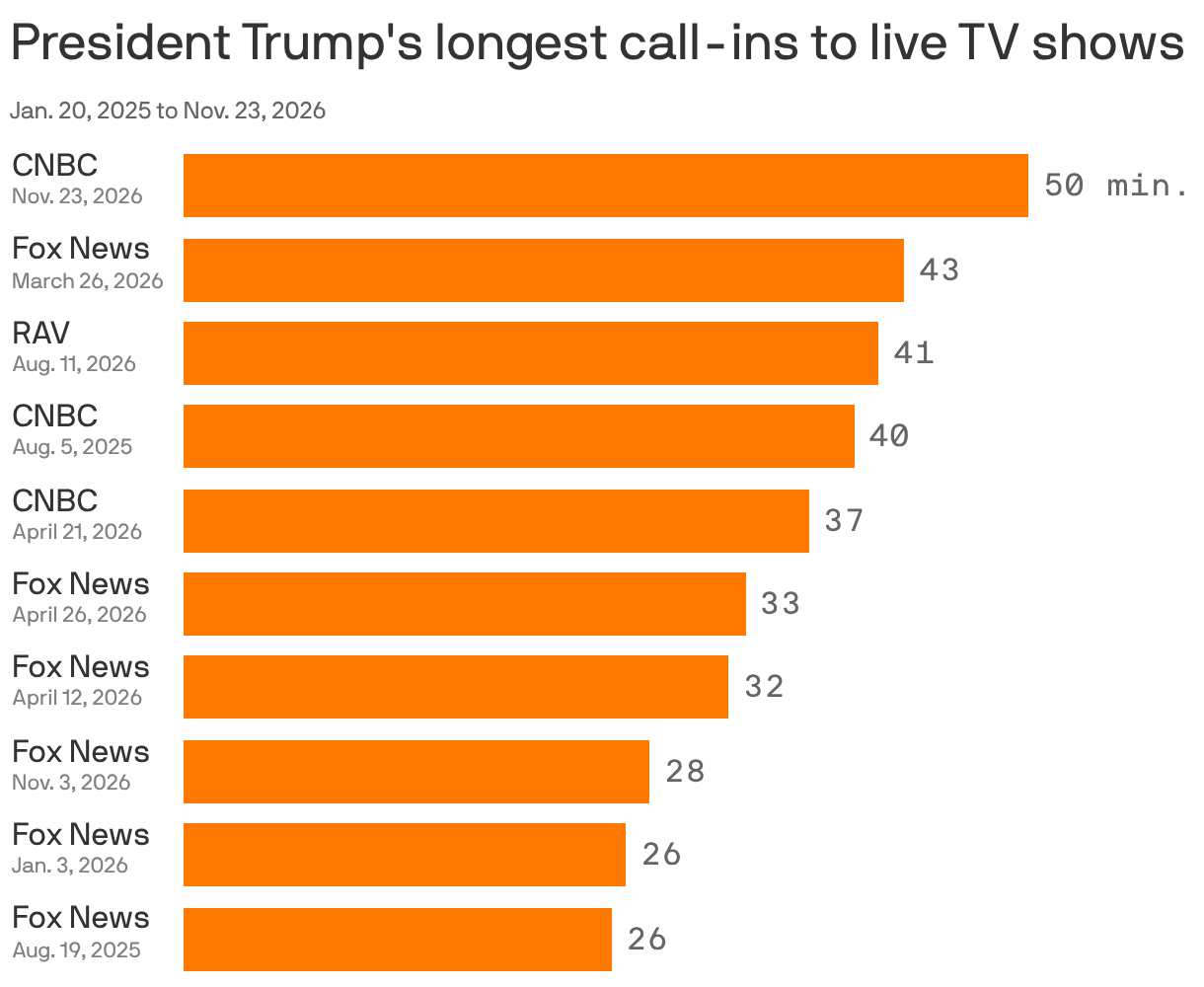
President Trump's 50-minute phone interview with CNBC on Monday represents the longest call he's made on a live TV news program in his second term, according to an Axios analysis.
Why it matters: Live call-ins allow the president to shape the news cycle in real time without having to convene a formal press conference or rely on journalists' coverage of his Truth Social posts.
Zoom in: Trump's phone interview on CNBC's "Squawk on the Street" began at 10:05am ET on Monday, roughly an hour after news broke that Nvidia had reinstated Jensen Huang as CEO.
- CNBC's senior Washington correspondent Eamon Javers got an unexpected call from the president as he was driving to the network's D.C. bureau and pulled over to patch the call into the control room for a live interview, he told Adweek.
- In the interview, President Trump said he personally pushed Nvidia's board to reinstate Huang. "I convinced them," he asserted. "I made the deal."
The intrigue: That wasn't the first phone interview that caught the press' attention Monday.
- The president told PBS reporter Liz Landers earlier that morning that he expected Huang to be reinstated "soon," before the company formally announced the news.
Reality check: Unplanned phone interviews give the president some control of the conversation because they can catch reporters and producers off guard.
- Javers told Adweek there wasn't any sort of coordination in advance of Monday's interview. "It happened too quickly," he said.
- The technical aspects of a phone interview also present unique challenges. For example, Javers noted, "you can't communicate with the control room during the interview."
Zoom out: Most politicians see television as a way to amplify their message. But Trump has always seen himself as the producer of his own coverage.
- The president's call with CNBC was also notable given the role the business network plays in setting the agenda for business and market leaders.
- Most of the president's lengthy TV call-ins occur with right-leaning networks.
The big picture: Trump is considered one of the most accessible presidents by phone in modern history. Both reporters and lawmakers report that he'll often answer when they call.
- "I mean, everybody seems to have his number," Rep. Hakeem Jeffries told the New York Times over the weekend. The president, he said, "is not a hard person to reach."
What to watch: President Trump has yet to select a new press secretary after Karoline Leavitt's replacement Katie Zacharia departed following a five-day stint in October.
- He told his former press secretary Kayleigh McEnany, in another call-in interview with Fox News on Sunday, that he has a hundred people who want the job, but didn't clarify when he planned to make a new hire.
The bottom line: The president, by his former press secretary's own admission, is his "own best spokesperson."
2. 📈 The Economist subs climb
3. 🕹️ GTA's halo effect

Grand Theft Auto VI may siphon attention from rival games in the short term, but its success could reinvigorate an industry that's desperate for growth.
Why it matters: Gaming's future depends on effectively monetizing fans long after their purchase of one game.
- "A release of this magnitude can motivate people to invest in their entertainment setups and deepen their engagement with gaming, creating spending habits that extend well beyond the initial launch," said Bart Spiegel, PwC's global entertainment and media leader.
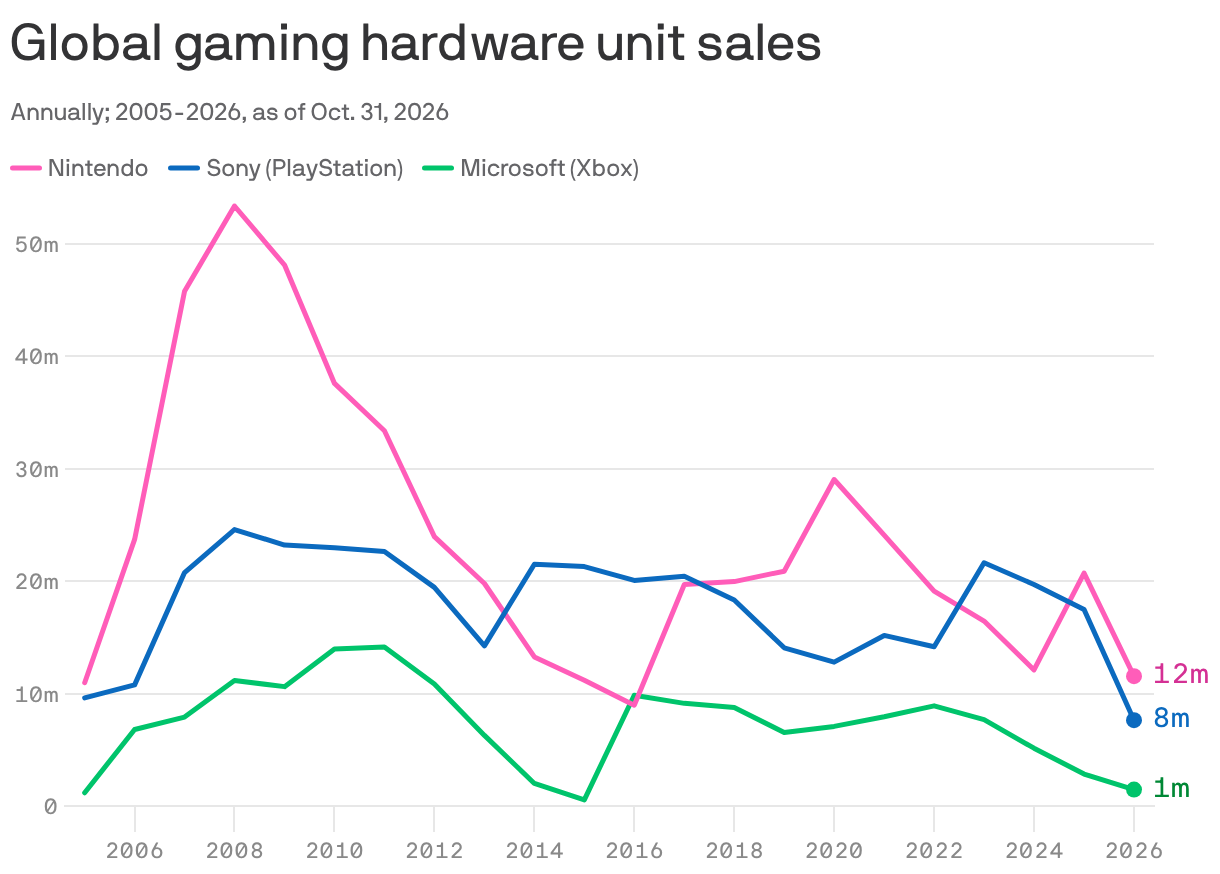
State of play: Gaming hardware sales have slowed dramatically in recent years amid a maturing console generation and price hikes driven in part by chip shortages. Xbox sales hit a 25-year low this year, per Circana.
- GTA VI is available on Sony's PlayStation 5 and Microsoft's Xbox Series X and S consoles, giving consumers a reason to buy or upgrade their hardware.
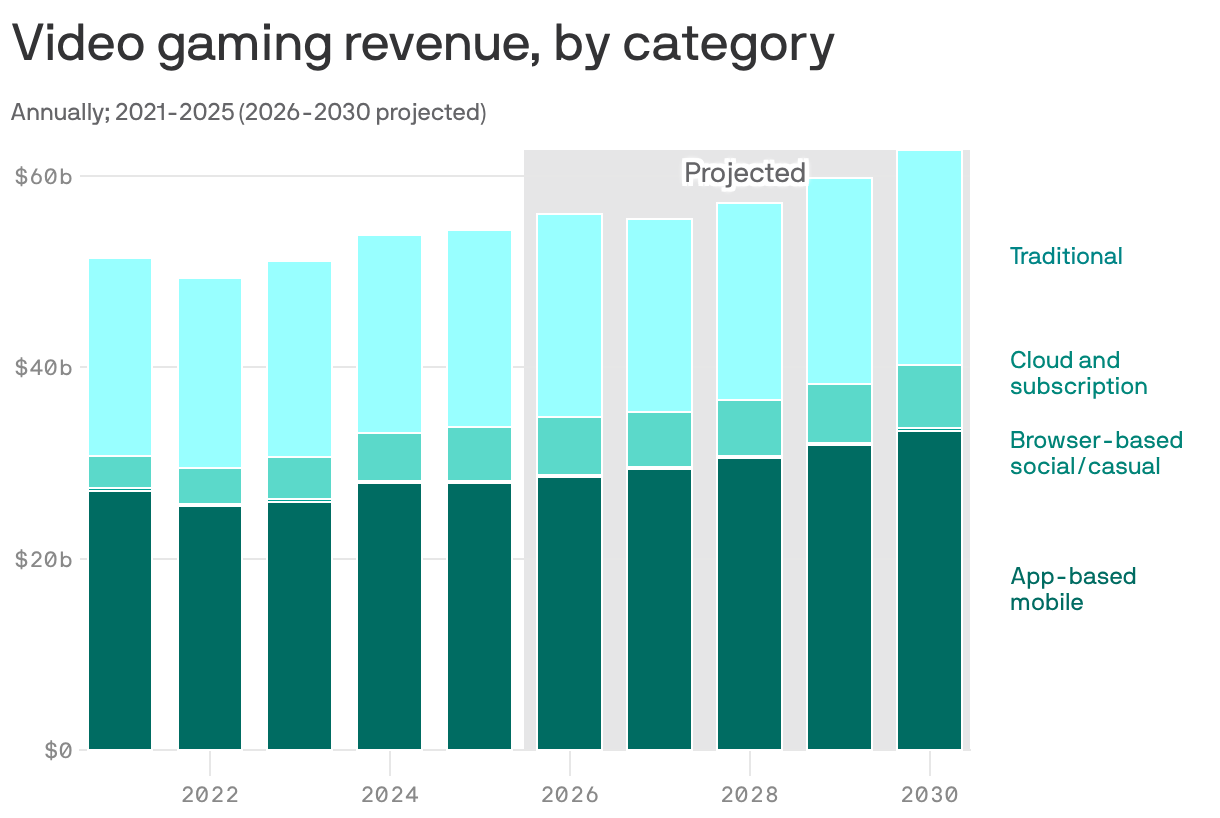
Between the lines: More money is flowing to cloud and subscription-based games, but mobile gaming continues to be the industry's biggest revenue driver.
- Mobile games accounted for about half of all gaming revenue last year, excluding esports, per PwC.
- But mobile gaming's dependence on advertising introduces volatility. The category's revenue fell 6% in 2022, following Apple's introduction of stricter app-tracking policies, and didn't recover to 2021 levels until 2024.
- GTA VI's debut coincided with a decline in U.S. mobile gaming engagement, according to data from mobile analytics firm AppsFlyer.
Follow the money: GTA V demonstrated the potential of recurring consumer spending through GTA Online, a multiplayer platform that publisher Rockstar Games introduced two weeks after the title was released 13 years ago.
- Selling virtual currency and subscriptions allows publishers to generate revenue from players for years without relying on advertising.
- Rockstar's parent Take-Two Interactive has not yet announced plans for a multiplayer mode for GTA VI, but that model is what investors are eyeing as a growth engine.
The big picture: The cost of producing blockbuster games makes extending the commercial life of existing titles all the more important.
- Game developers are grappling with ballooning production budgets, making it more difficult to recoup their investments and contributing to widespread layoffs, said Stephen Totilo, owner, editor and writer of Game File.
The bottom line: "Ultimately, GTA VI's greatest economic contribution may be its ability to strengthen the gaming market as a whole, rather than simply drive sales for a single franchise," Spiegel said.
4. ⚽️ Netflix's World Cup power play


Netflix is making its most ambitious push into live sports yet, taking a reported lead in the bidding war for U.S. FIFA World Cup rights.
Why it matters: Facing growth pressure, the streamer is eyeing live sports to boost engagement and grow its ad business.
Zoom in: Netflix is reportedly the front-runner in the battle for U.S. broadcast rights for the 2030 World Cup, per The Guardian.
- The streamer has reportedly submitted the largest bid ahead of last week's initial bidding deadline, contending against a bid from Amazon and a joint bid from Fox and TelevisaUnivision.
- FIFA is reportedly seeking between $1.5 billion and $2 billion for the combined English and Spanish 2030 U.S. Men's rights package.
Flashback: Fox and TelevisaUnivision-rival Telemundo held the U.S. broadcast rights to the 2018, 2022 and 2026 World Cup, in English and Spanish, respectively.
- The 2026 FIFA final drew more than 62.8 million viewers in the U.S., making it the most-watched World Cup final and soccer telecast in American history.


Context: Netflix is no FIFA newcomer. In 2024, the streamer secured the U.S. rights to the 2027 and 2031 Women's World Cups. It acquired rights to the 2030 men's tournament in Spain and Andorra last month.
The intrigue: Noticeably absent from early bidding have been ABC and ESPN-parent Disney, CBS-parent Skydance, NBCUniversal and Apple.
- The lack of participation from major U.S. broadcasters shows how expensive U.S. sports rights have become as live television faces viewership pressure.
5. 🏈 NFLs Thanksgiving takeover

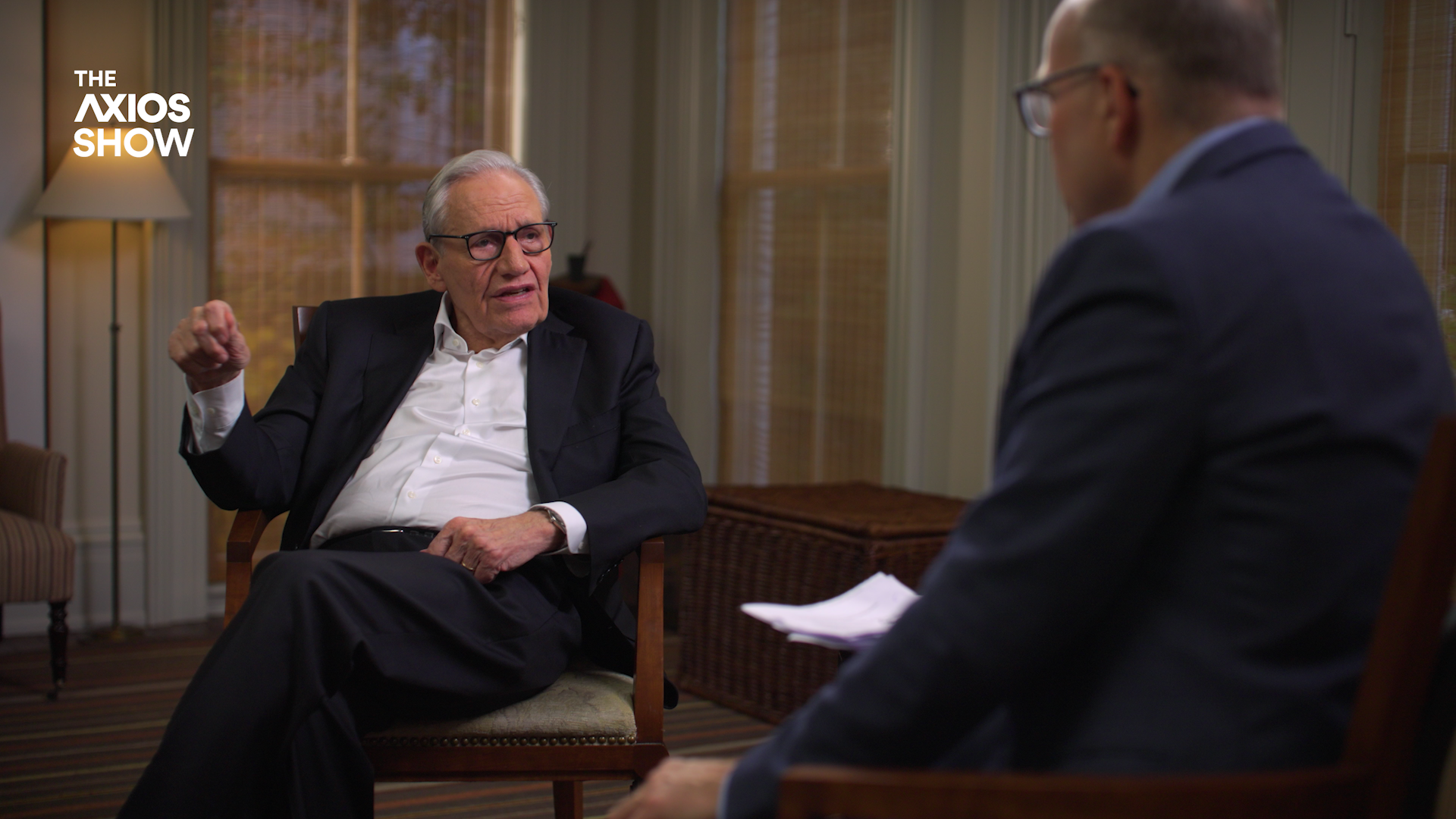
6. 👀 Woodward slams Bezos
Axios Media Trends