
Axios Markets

October 25, 2022
Hey folks. Matt here. We haven't gotten many of the brilliant reader questions that brighten up our days recently. What are you wondering about? What should we be writing more of?
Let us know, and tell us where you're from. Simply respond to this email. Today's newsletter is 1,103 words, 4.5 minutes.
๐In the latest episode of "How it Happened: Elon Musk vs. Twitter," Axios' Sara Fischer examines the challenges at Twitter that Musk could inherit โ and how he might tackle them. Subscribe.
1 big thing: Investors rethink giant bet on communist dictatorship
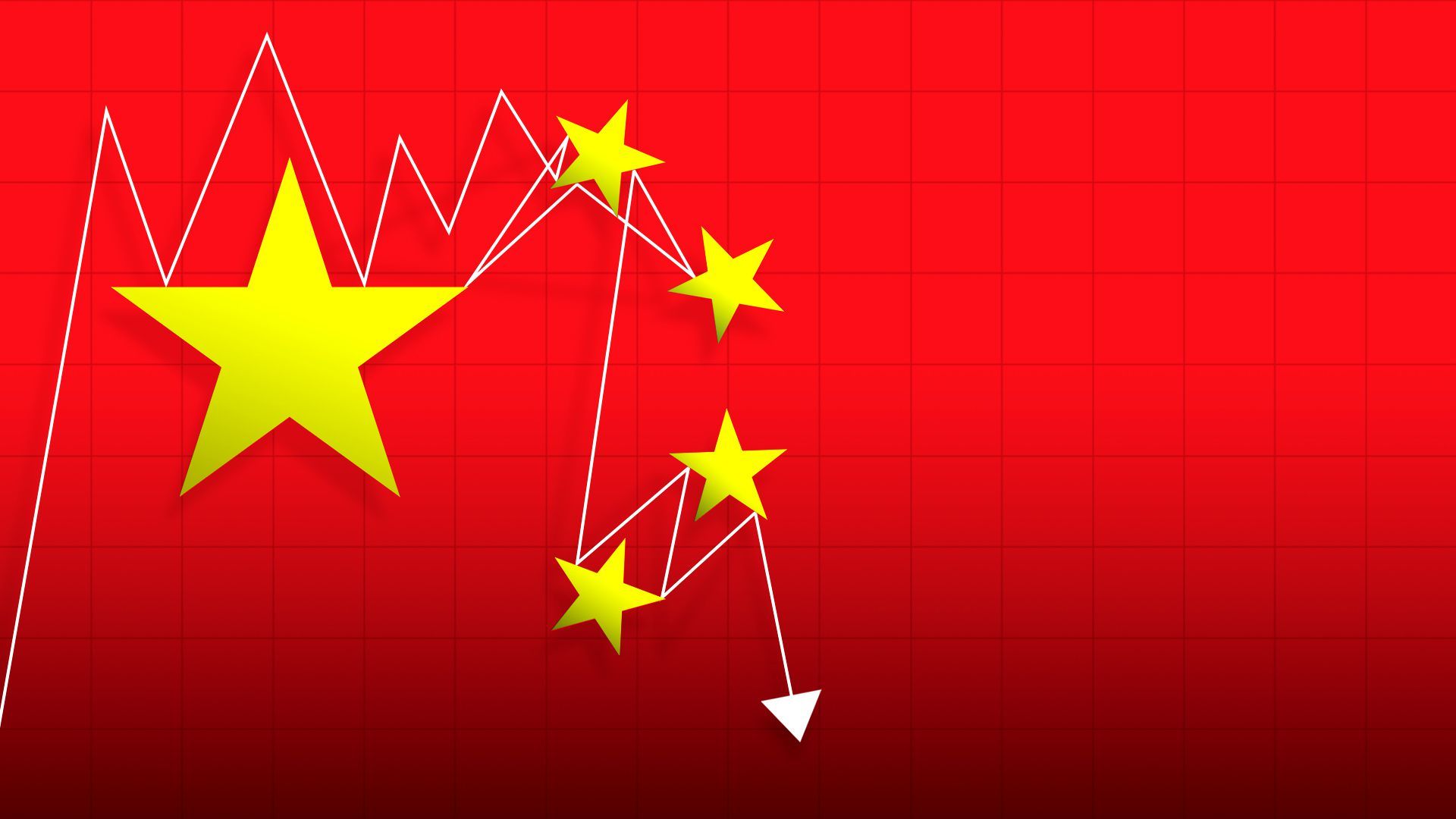
Illustration: Annelise Capossela/Axios
Global capital fled China en masse yesterday in the aftermath of Xi Jinping's quasi-coronation as the sole power in charge of China, Matt writes.
Why it matters: Market moves suggest investors were surprised by the extent to which Xi's elevation signaled a coming period of conflict with the West โ and a backdrop that could make it increasingly difficult for investors to extricate themselves from what's been the most important growth market for decades.
- Investors seem to be getting out now, while the getting is good.
State of play: A violent selloff hit Chinese markets yesterday, as a riptide of capital rushed out of the People's Republic.
- Hong Kong's Hang Seng index, traditionally the venue of choice for foreign investors in Chinese equities, plunged 6.4% โ its worst drop since the 2008 financial crisis.
- China's currency hit its weakest level against the U.S. dollar in more than 14 years (see below).
- Goldman Sachs' index of Chinese ADRs โ U.S.-listed securities tied to shares of some of the largest Chinese companies โ collapsed by 15%.
The backstory: In 1978, Chinese leader Deng Xiaoping launched China's "reform and opening" process, aimed at reversing the economic and political chaos of former Party Chairman Mao Zedong.
- As a result, China's ruling Communists shifted to a political system that relied on retirements and term limits, while tapping politically moderate technocrats to manage the country's economy and its links to global financial markets.
- The system generated enormous prosperity, turning China into an engine of global economic growth โ and lifting roughly 800 million Chinese out of dire poverty.
Yes, but: That era effectively ended over the weekend, as Xi Jinping not only won a historic third term as party leader โ but also removed the few remaining market-friendly technocrats that served on the powerful Politburo Standing Committee (the seven-man group that basically rules the country).
- "What this means is that China will face a more difficult international and domestic environment in the future, and that China and Western countries led by the US will face even greater conflict in the fields of geopolitics, high-tech, economy, and trade," wrote analysts for SGH Macro Advisors in a note to clients yesterday.
๐ญ Our thought bubble: Xi's centralization of control of China โ along with his "no-limits" partner Vladimir Putin's brutal invasion of Ukraine โ are likely to be two of the largest milestones marking the end of the era of globalization as we know it.
- Similar to Russia, this could also precipitate a period of pronounced pain for global investors who have poured hundreds of billions of dollars into China.
What they're saying: "The Great Chinese Liquidation of public and private equity is in full swing," wrote hedge fund manager Kyle Bass on Twitter.
- "Todayโs 10-20% crash in Chinese shares is just the beginning of the destruction of western capital invested in Chinese companies."
2. Charted: Yuan down


The yuan yesterday tumbled to its lowest level against the dollar in more than 14 years, Matt writes.
Why it matters: It's a sign of the magnitude of the capital outflows from China in recent days, that the tightly managed currency has been battered.
- Yes, but: China can end the sell-off, by selling some of its roughly $3 trilli0n worth of currency reserves to counteract market forces, or by clamping down on sales of currency through capital controls.
Flashback: The government used both of those tools to snuff out the last flareup of massive capital outflows, which hit the economy in 2015.
3. Catch up quick
4. Crypto takeover
Source: Bloomberg Businessweek
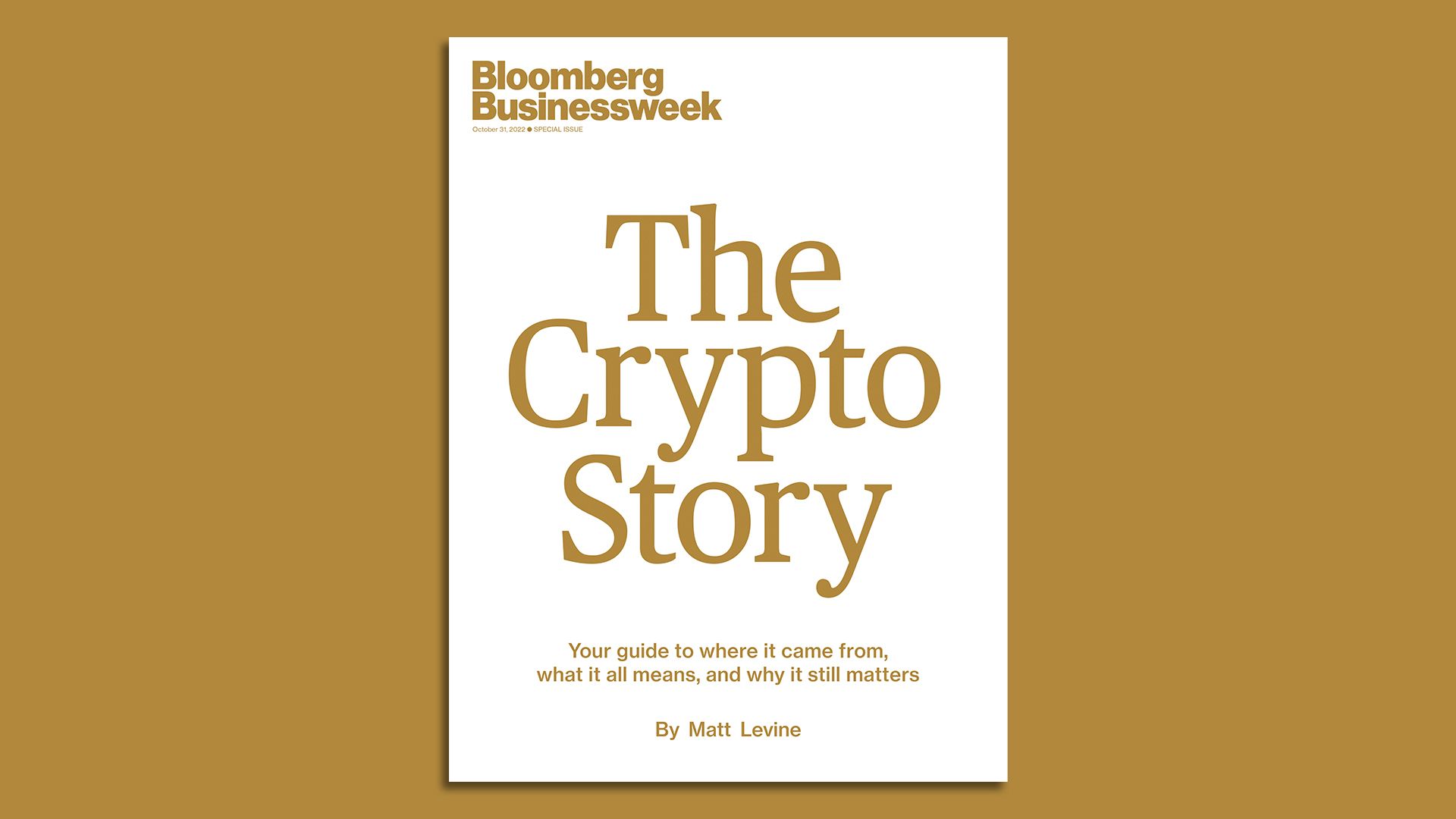
Bloomberg Businessweek devotes its latest issue, out today, to a 40,000-word essay about crypto by finance writer Matt Levine, Emily writes.
Why it matters: If you're still confused about crypto, Levine, who writes the beloved Money Stuff newsletter, offers a clear-eyed explanation. You might come away truly understanding what a crypto miner does. But that's not the only reason to read this opus.
As Levine explains, understanding crypto is also a way to take a fresh look at the financial system, writ large.
- "In the past 14 years, crypto has built a whole financial system from scratch," he writes.
- "Crypto constantly reinvented or rediscovered things that finance has been doing for centuries. Sometimes it found new and better ways to do things. Often it found worse ways."
If you like Levine for his entertaining explanations of the minutiae of finance, then you'll love his explanation of a DAO.
- It stands for โdecentralized autonomous organization,โ he tells you.
- Then writes: "DAOs arenโt decentralized autonomous organizations.โ
- Don't worry: He then breaks down the disconnect.
Bonus: He also riffs on what it would mean to have an NFT of your soul.
Zoom out: There's such a thing as " The Cover Curse," essentially the idea that by the time a person or company or trend makes it to the cover of a mainstream magazine or video game, it's peaked or on the way out.
- Levine acknowledges that he's writing post-crypto-boom โ and says that makes it a good time to talk about it. The frenzy has died down, and "we can think about what it means divorced from the lines going up."
Go deeper: The Crypto Story
5. Big Oil's big decisions


Two years after COVID prompted huge losses for oil companies, the commodity surge has helped bring a reversal of fortune, Axios' Ben Geman writes.
- Case in point: Exxon's stock reached all-time highs last week.
Why it matters: Oil giants have regained their financial mojo โ but they face tricky strategic decisions on capital deployment.
What's next: Exxon, Shell, TotalEnergies and Chevron are among the companies reporting third-quarter earnings later this week.
- Profits are again expected to be robust, albeit less than the record hauls of Q2.
What we're watching: For one, the majors' outlooks on oil production growth as European countries prepare to further thwart Russian oil sales.
- But the earnings reports also arrive amid gathering global economic clouds that are slowing oil demand growth forecasts.
- "I think the biggest thing that most of these companies are going to be worrying about is really the prospect of recession," CFRA analyst Stewart Glickman tells Axios.
The intrigue: Q3 earnings calls will be the first since passage of the big U.S. climate law, which includes wider incentives for carbon-trapping projects โ a focus of Exxon's and Chevron's diversification efforts.
- The big question: Whether the new and expanded tax credits will influence the majors' U.S. plans.
๐ฉบ 1 thing Matt appreciates: Nurses and doctors.
That goes double after my recent three-day stay at the local hospital. (My 5-year-old daughter caught one of the nasty viruses currently cramming the country's hospitals with sick kids.)
Don't worry. After three nights, a slug of steroids, a bit of oxygen and an ungodly amount of Cartoon Network, she's right as rain.
But even after a relatively minor episode like ours, it's hard not to be blown away by the care and competence of the people that looked after us. And there are people like that standing by, ready to help, in almost every corner of the country. Thank you all so much, wherever you are.
Today's newsletter was edited by Kate Marino and copy edited by Mickey Meece.
Sign up for Axios Markets

Stay on top of the latest market trends and economic insights